How Did the Ukraine War Deepen the Differences of Russia and Japan?
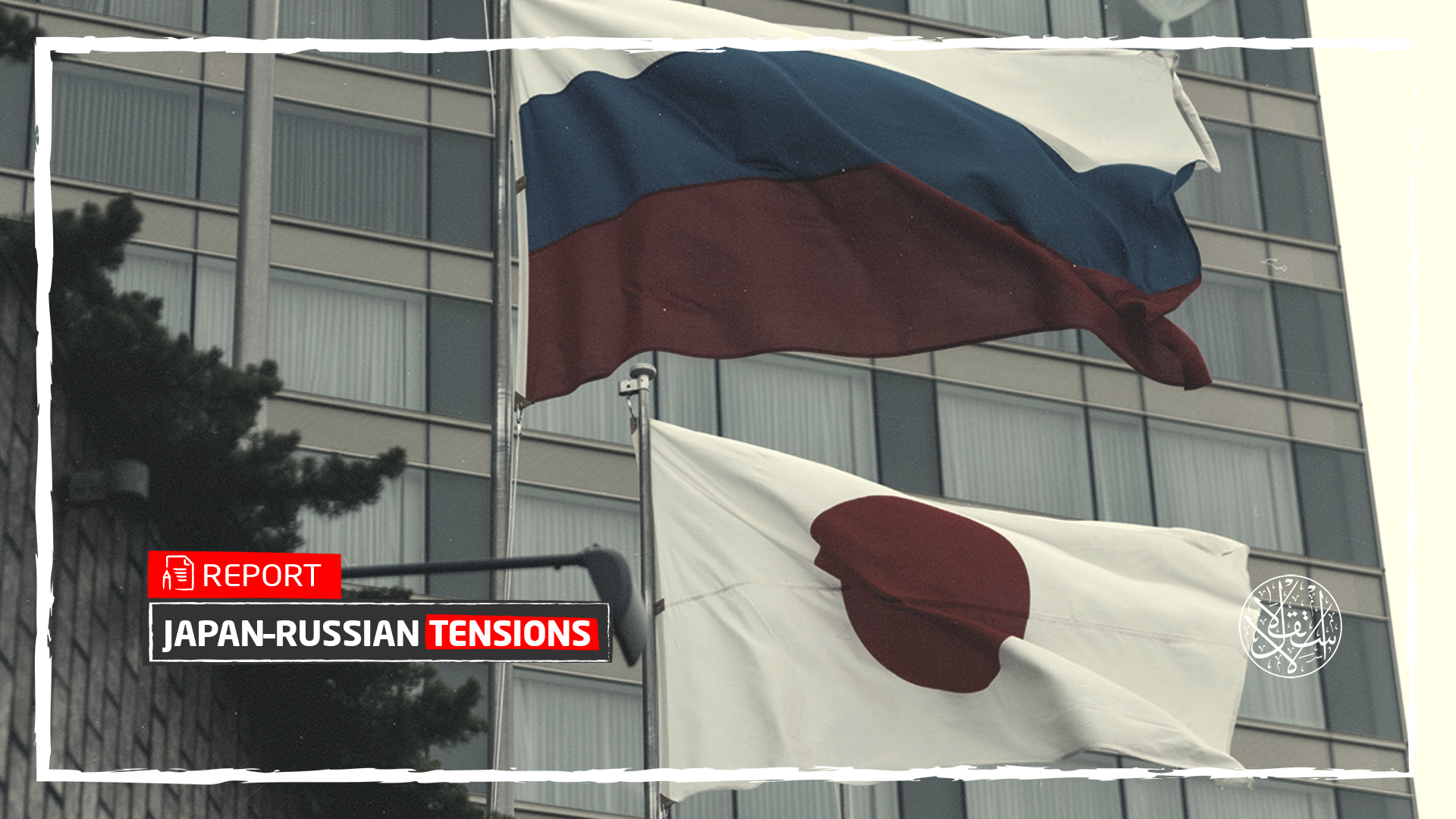
With the invasion of Ukraine on February 24, 2022, Russia's relations with the world were strained, particularly with neighboring countries, the most important of which was Japan, which engaged in intense skirmishes and political differences with Moscow, amounting to sanctions and provocative actions between the two countries.
In the midst of this, the prediction of a more tense future began between them as the crisis between the West in general and Russia intensified, and the former supported its trusted allies, led by Japan.
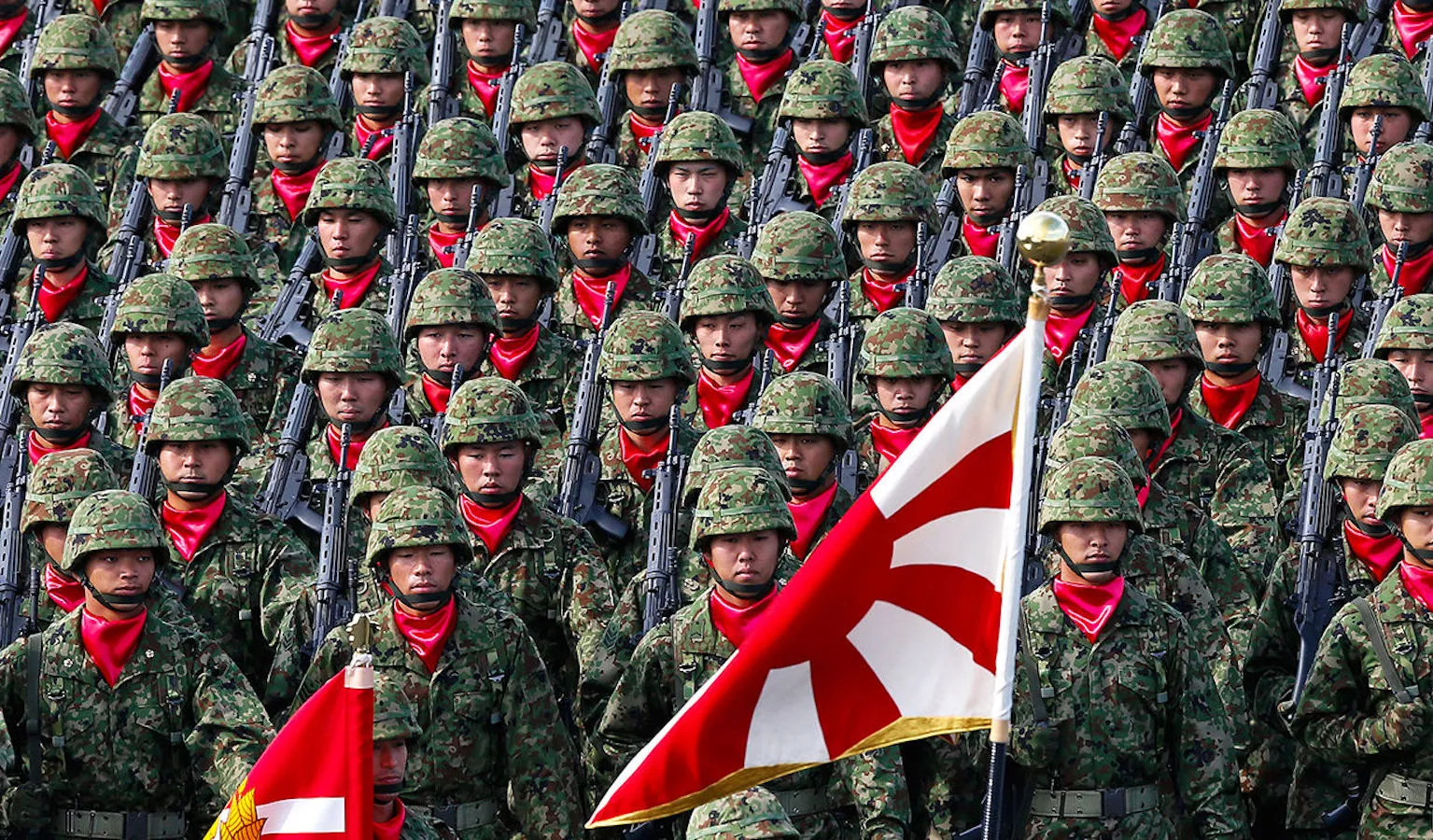
Throughout history, Japan has possessed trained, fierce and unique combat armies, and has made invasions and wars with neighboring countries.
Even during World War II (1939-1945), Japan's imperial army was one of the most powerful and solid armies, until it was completely dismantled after the defeat of the Axis forces, in 1945, and the American invasion of the country.
The Imperial Army, replaced by Japan’s self-defense forces, which were limited for defensive and security purposes, and the doctrine of world powers continued to prevent Japan from owning an army comparable to its historical armies, which had been established for many years, changed slowly with the rise of anti-American and anti-Western forces, such as Russia and China.
This is where the idea of resurrecting the Japanese army came about, and Tokyo began to develop its armed forces over the years, until it regained its power and became a force to be reckoned with.
Disputes and Messages
Differences between the two countries culminated on March 8, 2022, as the Japanese government imposed an unprecedented sanctions package against Russia in connection with Moscow's military operation against Ukraine.
Japan's Chief Cabinet Secretary Hirokazu Matsuno announced at a press conference that his country would impose further sanctions against Russia and Belarus (Moscow's ally), including freezing the assets of government officials and other institutions.
He added that Japan would ban the export of oil refining equipment to Russia and dual-use products to Belarus, as Moscow stepped up its attack on Ukraine with "clear Minsk involvement," the Japanese official said.
The sanctions had already targeted 32 individuals from Russia and Belarus, including government officials and businessmen, as well as 12 entities, including companies related to the Russian army, all of whom had been added to the list of those whose assets would be frozen in Japan.
Seven Russian banks have also been excluded from SWIFT’s global payments network to disrupt their trade and money transfers.
With those resolutions, Japan joined the United States and European countries in imposing a series of economic sanctions on Russia, including freezing Russian President Vladimir Putin's assets.
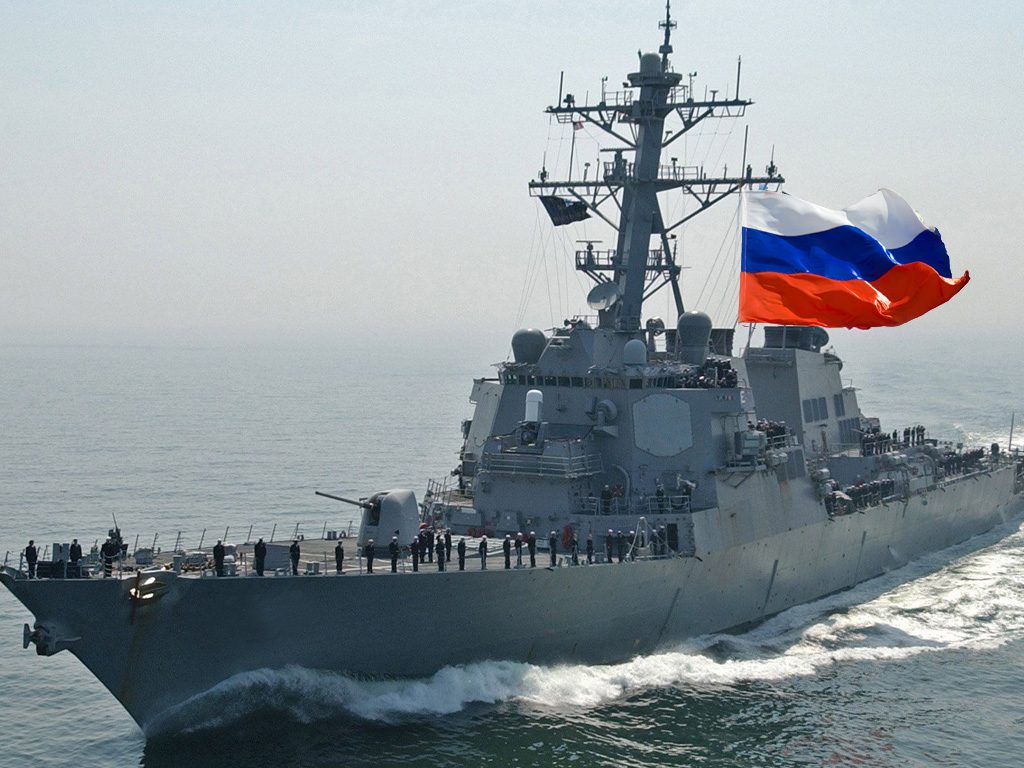
Russia did not stand idly by in the face of Japanese sanctions, and on March 17, 2022, the Japanese military monitored four large Russian warships transporting combat troops and vehicles to Ukraine, off the coast of Japan, giving strong indications that tensions had reached a high level between Tokyo and Moscow.
The Japanese military monitored a group of Russian amphibious warships heading west, and images showed transport ships released by the Japanese Defense Ministry as what appeared to be military vehicles on the deck of a ship, according to the U.S. website Washington Examiner.
"We don't know where it's headed, but its direction suggests that this is possible," said a Japanese Defense Ministry spokesman when asked if the ships could be headed for Ukraine.
According to the spokesman's statement, the ships are used to land tanks, which can carry dozens of vehicles and hundreds of troops, and can be used to land reconnaissance forces.
He also stressed that it was unusual for Russian ships to pass through the Tsugaru Strait (northeastern Japan). He saw Russia's moves off the coast of his country as a strongly worded warning message.
The situation developed on March 21, 2022, with centuries-old border disputes between the two countries, which caused historic battles and wars, in which the two sides exchanged control of the Kuril Islands, according to the Russian name, and the Northern Islands, according to the Japanese.
In protest against Japan's "unfriendly" stance, Russia announced its complete withdrawal from bilateral talks aimed at signing a peace treaty that the two countries had not concluded since the end of World War II.
The Russian Foreign Ministry said it had "no intention under the current circumstances of continuing talks with Japan on the Kuril Islands Peace Treaty."
The Ministry justified this position by "the impossibility of discussing the basic document of bilateral relations with a State that has openly taken an unfriendly position and strives to harm the interests of our country."
Japanese Prime Minister Fumio Kishida denounced Russia's move to turn the war on Ukraine into an escalation of differences in Japanese-Russian relations, calling it "an unjustified and totally unacceptable attempt."
Strong Army
With those escalating differences, Japan has been preparing for years and is preparing for the growing rising influence of Russia and China, due to hostility and historical differences between them.
Tokyo Prime Minister Shinzo Abe's policies have been strictly toward developing Japan’s military, especially after former U.S. President Donald Trump announced his opposition to continuing to protect rich countries such as Japan.
In May 2017, Abe revealed his intention to repeal or amend Article IX of the constitution, which restricts the country's arming or offensive capabilities.
With the motives for development, Japan's military force, which is a leader in military spending, is not underestimated.
In January 2022, Japan’s cabinet approved a record defense budget of 5.4 trillion yen ($47 billion) for fiscal year 2022, which included research and development funding for a new fighter jet and other game-changing weapons, as Japan strengthens its defense capabilities in response to increased Russian and Chinese military power.
Japan's armed forces are based on formations of 250,000 troops.
Japan boasts of its large fleet and destroyers, several of which the Japanese Navy plans to build in a recently announced five-year development plan.
Japan is also developing a number of super-silent submarines for monitoring and protection.
In the Air Force, Japan, with its military aviation, founded as a mini-version of the U.S. Air Force, is one of the first recipients of F-35 multi-mission aircraft from which Tokyo has acquired more than 105 aircraft.
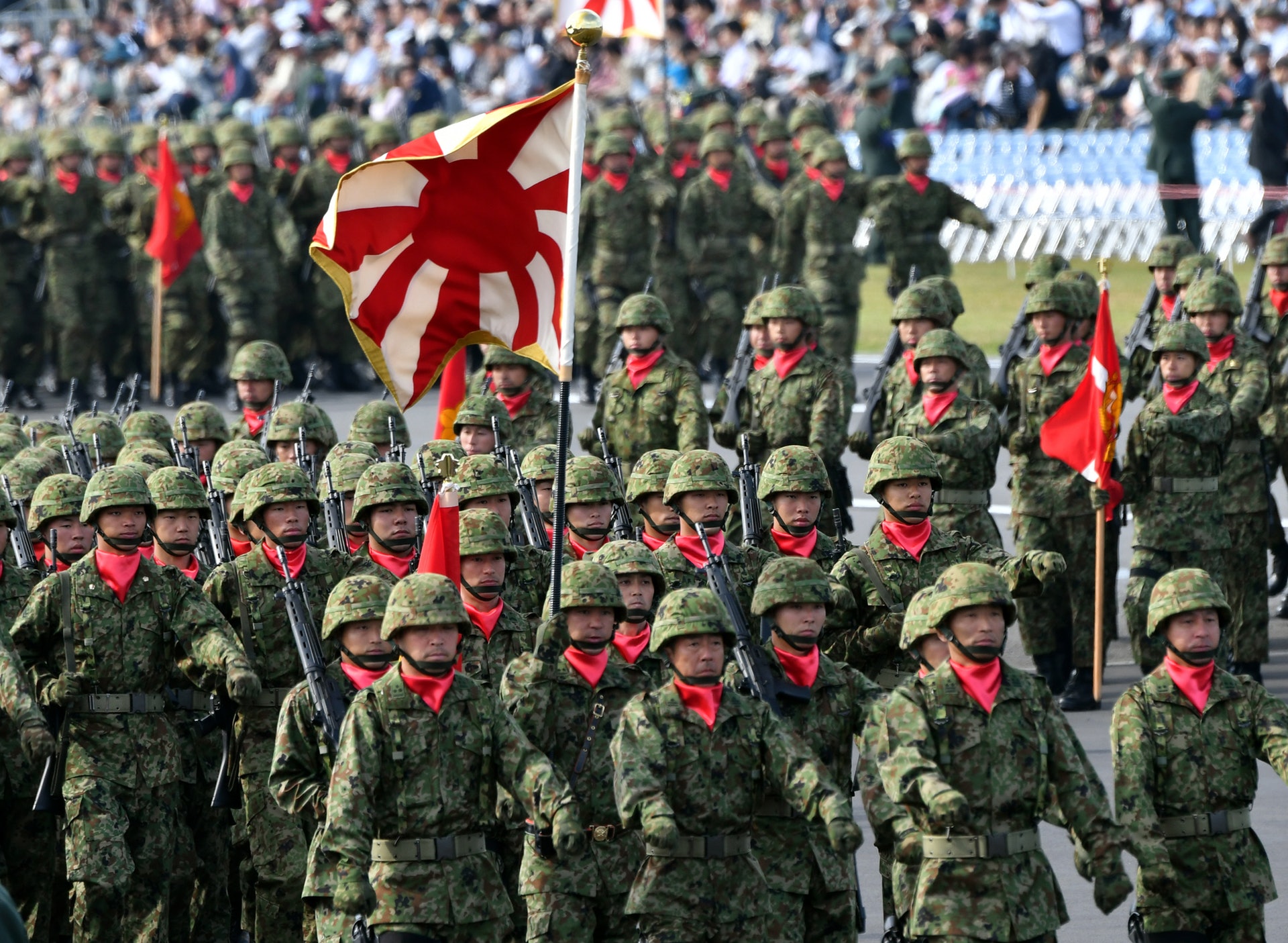
According to the 2021 ranking of the U.S. military classification site Global Fire Power, which measures the military capabilities of 138 countries around the world, the Japanese military was placed fifth for the first time, after the United States, Russia, China and India.
It is a very advanced classification, which reflects Tokyo's interest in its military capabilities and the re-establishment of an active and powerful army.
On December 6, 2021, the official EU website EuroNews reported that as North Korea, Russia and China build up their military forces day by day, calls began to be issued in Japan to "put the past aside" and support a greater role for the armed forces and secure greater budgets.
It noted that the Japanese army is strongly equivalent to the French and British armies and Tokyo continues to secure the best equipment and weapons it can buy.
It stressed that one of the main reasons for Tokyo's rise as a military power was its disagreement with Moscow, particularly the border crisis over the ownership of several islands in northern Japan.
Sources
- Japan imposes more sanctions on Russia [Arabic]
- Kuril or The North Islands: Russian-Japanese conflict open for centuries [Arabic]
- Ships carrying tanks. Russian 'strongly worded' message to Japan [Arabic]
- Video: World's fifth most powerful army showcases military power in rare event [Arabic]
- Japan approves top defense budget for 2022 to confront China [Arabic]
- Shinzo Abe breaks Article 9 barrier, puts Japan's army among the top five [Arabic]