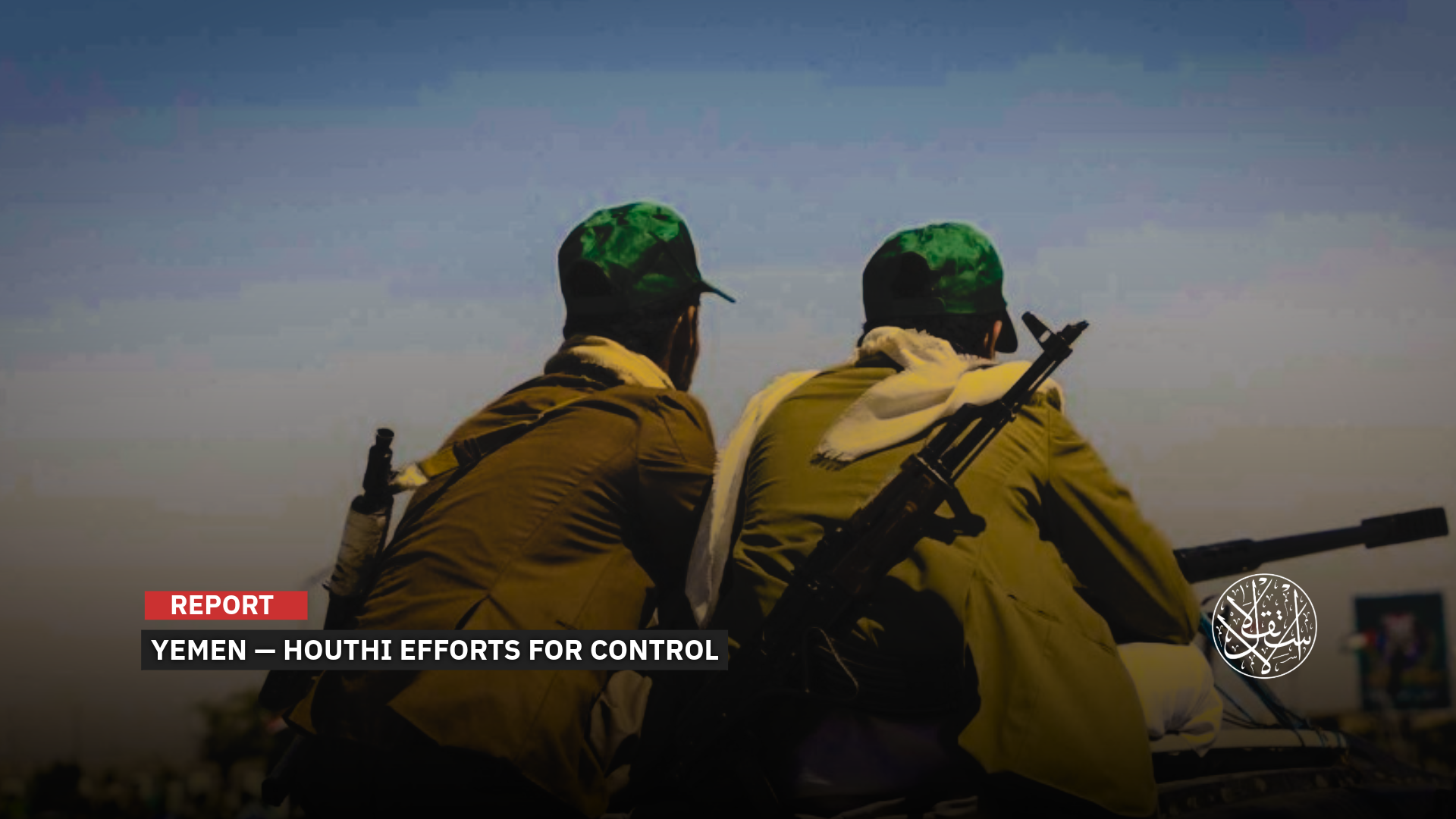
Houthis Intensify Security and Financial Pressure on the GPC Political Party: Why Now?
“The Houthis began to perceive Ahmed Ali Saleh, especially after Western sanctions against him were lifted, as a potential political threat.”
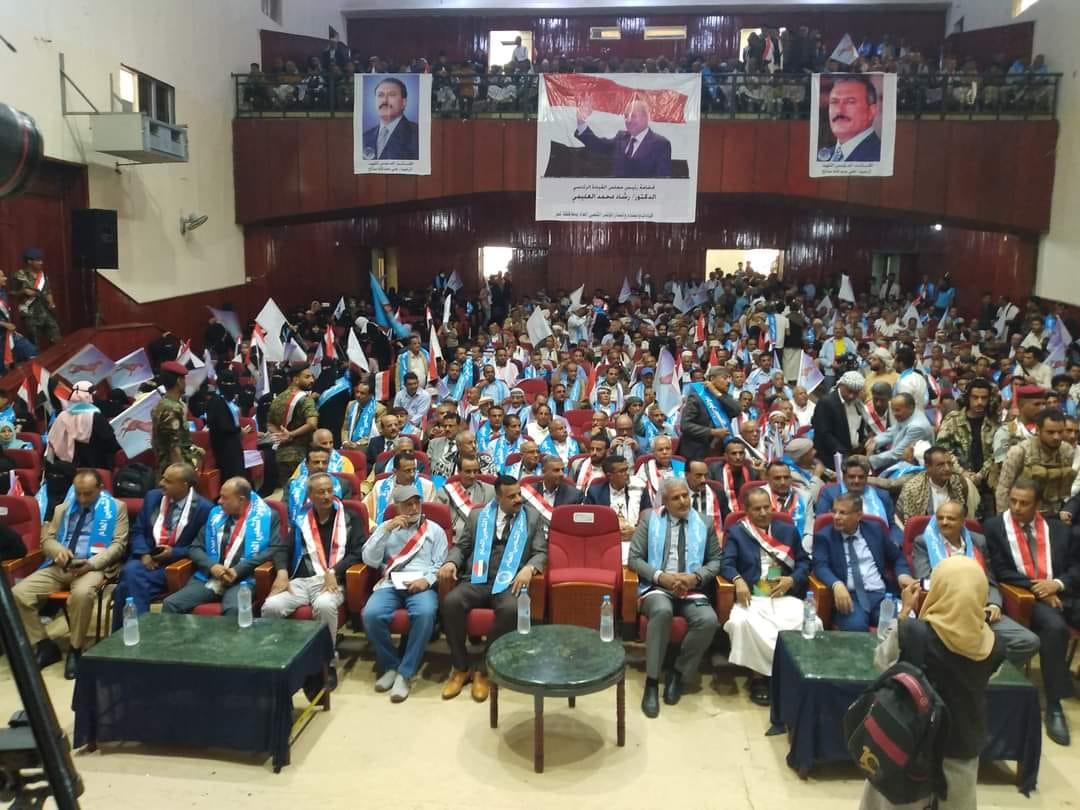
On its anniversary, the General People’s Congress in Sana’a faces an unprecedented Houthi militia crackdown, with funds seized, meetings forcibly broken up, and a death sentence looming over its vice president, Ahmed Ali Saleh.
On August 24, 2025, the party marks its forty-third anniversary. It was founded by former Yemeni President Ali Abdullah Saleh, who ruled the country until 2012, when a popular uprising forced him from power. He later allied with the Houthis, who killed him in 2017 on charges of treason.
From Ally to Enemy
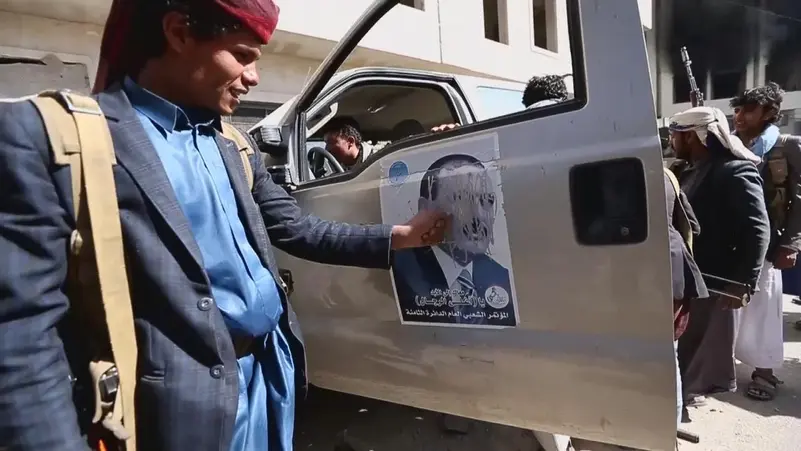
Since early August 2025, the Houthis have launched a systematic campaign to seize the properties and assets of the General People’s Congress, their former ally in the 2014 coup against the internationally recognized government, using judicial, security, and media tools under the militia’s control in several northern Yemeni cities.
According to Yeni Yemen on August 16, the Houthi-appointed judicial custodian, in coordination with loyalist lawyers, conducted a comprehensive inventory of most of the party’s assets, including the Permanent Committee building and several villas, preparing to file lawsuits to claim ownership.
The report noted that Ahmed Hamid, director of the so-called Supreme Political Council, proposed converting the Permanent Committee headquarters into a “Correction Authority,” while the head of the Endowments Authority claimed ownership of party lands in al-Hasabah, near the airport, and other neighborhoods for the benefit of the endowment.
Some party properties had previously been targeted by the Armed Forces Land Committee under Houthi leader Abu Haider Jahaf, and others were placed under judicial custody or leased despite clear proof of party ownership, as part of an organized effort to weaken the party and seize its assets.
The Houthis also confiscated funds allocated for the party’s anniversary celebrations in Sana’a on August 24, forcibly redirecting them to their so-called “Rocket Force.”
The move drew widespread resentment among the party’s grassroots members, who viewed it as part of a systematic effort to restrict political activity and marginalize the General People’s Congress within areas under Houthi control.
Observers noted that the actions reflect an escalating policy of economic control over political resources and the restriction of traditional parties’ ability to operate publicly, effectively cancelling or neutralizing any major events in the capital.
On July 31, 2025, a Houthi court issued an in absentia death sentence for Ahmed Ali Abdullah Saleh, the son of the former president and vice president of the General People’s Congress.
The position had been held by his father before his killing in 2017, and Ahmed assumed it in May 2019. He did not engage in any party organizational activity, maintaining silence with the Houthis even after his father’s death.
Incitement to Target
The Houthi escalation has been accompanied by incitement from writers close to the militia against the General People’s Congress. Ibrahim al-Hamdani accused the family of Ali Saleh of treason and profiteering, claiming they have played “the vilest and most despicable roles of betrayal and collaboration, pretending to be guardians of the republic and members of the General People’s Congress,” according to him.
In an article published on the Houthi-affiliated Masirah website on August 16, al-Hamdani argued that these actions make it necessary for the loyal and honorable members of the General People’s Congress to liberate the party from the grip of the Saleh family and publicly disassociate themselves from the criminal and treasonous path upheld by its adherents.
He called for “cutting off the path of continued treachery in the name of the General People’s Congress by the Saleh family, mercenaries of the United Arab Emirates and Israel, who seek to revive the legacy of betrayal on August 24 by committing a new treason and a major crime against Yemen and the Islamic nation, inciting unrest, chaos, violence, and internal fighting.”
Al-Hamdani added that these actions aim to disrupt Yemeni military and naval support for Gaza and to maintain the siege of the Israeli Occupation. He urged the party’s loyal members, as well as the army, security forces, and the Yemeni people, to stand united against the Saleh family and their mercenaries and to confront them decisively.
He claimed that the traitorous agents, including Ahmed Afash and Tariq Afash, have aligned themselves fully with the Zionist project and are prepared to follow the same criminal and treasonous path established by their predecessor, Ali Abdullah Saleh.
Al-Hamdani emphasized that the party must declare its disassociation from these figures to return to being a pure and untainted General People’s Congress, as it was at its founding. He praised statements by the party spokesperson Abdu Muhammad al-Jundi, who condemned anyone siding with the enemy and disavowed them as an irreconcilable threat.
He noted that al-Jundi’s statements removed the political cover from those advocating sedition, exposing their motives and highlighting their treasonous actions. While the spokesperson did not announce the dismissal of Ahmed Ali Afash from the position of vice president, his remarks revealed his open support for the Zionist agenda.
Al-Hamdani concluded by questioning whether the Saleh family and their UAE mercenaries would continue to play the roles assigned to them, particularly as they have become the backbone of an undisclosed alternative plan, or whether they would limit themselves to creating confusion, fear, and media intimidation.
The vice president of the Shura Council and spokesperson for the General People’s Congress, Abdu Muhammad al-Jundi, stated that party authority does not belong to the children of Ali Saleh, emphasizing that the party will not serve as a tool for the UAE, Saudi Arabia, the United States, or “Israel.”
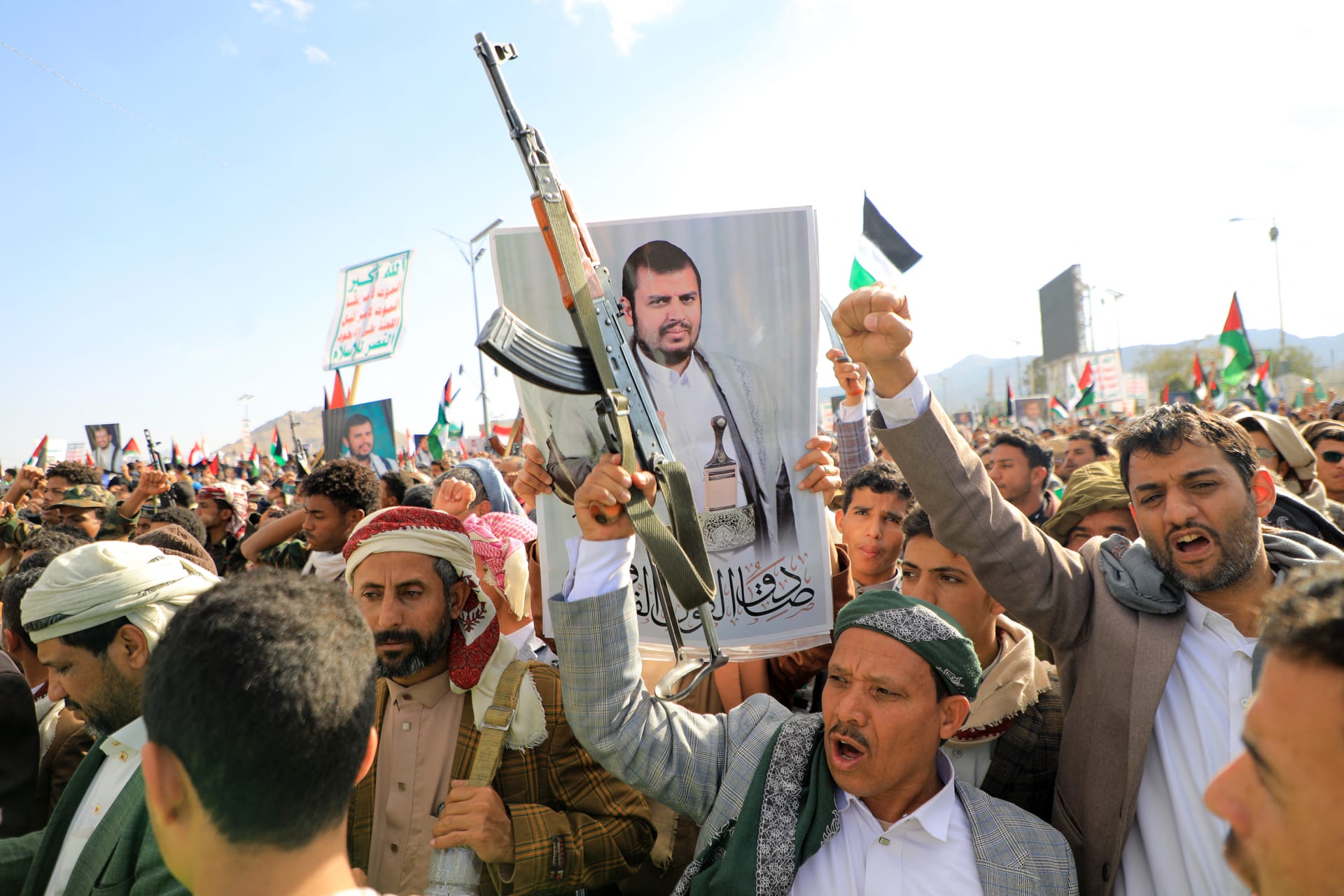
In an interview with Masirah TV on August 14, al-Jundi said that diverting from supporting the Resistance constitutes a departure from the party’s essence and identity, announcing a freeze on internal disputes and extending a hand to Houthi leader Abdul-Malik al-Houthi. He added that the fight against the Israeli Occupation requires unifying the national front.
Houthi Concerns
Regarding the timing of the Houthi escalation against their former ally, Yemeni writer and political analyst Yassin al-Tamimi said that after Ali Saleh’s death, the Houthis sought to establish a dominant authority in Sana’a while overseeing a fragile alliance with the General People’s Congress.
“At the time, the Houthis’ influence was supported by control over ports, airports, privileges, and international aid provided in exchange for a ceasefire, with the group capturing most of the benefits that were supposed to go to the legitimate authorities,” he told Al-Estiklal.
“Following the developments of Operation al-Aqsa Flood on October 7, 2023, and the Houthis’ decision to join the Gaza support front, the group began to suffer losses. They were designated a terrorist organization, their ports were attacked, and the privileges they had enjoyed were gradually stripped away.”
“The Houthis began to perceive Ahmed Ali Saleh—especially after Western sanctions against him were lifted—as a potential political threat, since there had been a tacit truce between the sides, with Saleh remaining silent after his father’s death,” according to al-Tamimi.
“In recent months, following the lifting of sanctions and the rising influence of Tariq, the son of Ali Abdullah Saleh’s brother, along Yemen’s western coast, the Houthis have begun tightening their grip on the General People’s Congress in Sana’a.”
The UN Security Council lifted sanctions against former Republican Guard commander Ahmed Ali Saleh in 2024, which had been imposed in 2015 for distributing weapons to Guard brigades and tribal leaders implicated in the killings of peaceful protesters during the February 2011 uprising.
Al-Tamimi said the Houthis now fear that if matters escalate into a military confrontation, the General People’s Congress in Sana’a could make a difference. This perception has driven the recent pressure, including encroachments on the party’s political position and the confiscation of its assets.
He added that all the advantages the party had enjoyed under the fragile alliance with the Houthis have been lost, a predictable outcome given the Houthis’ unwillingness to share political power.
Al-Tamimi stressed that the current situation reflects the Houthis’ real fears and the challenges they face in the next phase, including the potential for a fully equipped military confrontation, signaling a pivotal shift in their history.
He noted that the General People’s Congress has been stripped of most sources of power but still relies on popular and grassroots loyalties as well as its presence within Houthi military formations. The only party with significant capacity, he said, is Tariq Saleh.
Al-Tamimi concluded that in the event of a military shift, the General People’s Congress could quickly gain resources and execute sudden strikes that might change the balance on the ground.
Sources
- The General People’s Congress in Sana’a Accuses Houthis of Diverting Party Celebration Funds to the Missile Force [Arabic]
- Houthis Escalate Against the General People’s Congress in Sana’a with a Campaign to Seize Its Assets [Arabic]
- Three Messages: What Are the Houthis Aiming for Behind the Death Sentence Against Ahmed Abdullah Saleh? [Arabic]
- Explosion from Within Houthis Face Their Most Serious Challenge Since 2017 [Arabic]
- August 24 A Chance to Liberate the Party and Restore Its Leading Unifying Role [Arabic]
- Abduh al-Jundi Announces Suspension of Disputes and Calls for Yemeni Unity Against the Zionist Enemy [Arabic]
- Abduh al-Jundi Says Power Does Not Belong to Ali Saleh’s Sons and That the December Turmoil Was Enough [Arabic]
- Houthis Detain Secretary-General ,11 Senior Leaders of Yemen’s General People’s Congress