Gen Z’s Second Victory: What Comes Next After Madagascar’s President Flees and the Military Takes Control?
Adding to the uncertainty of this turbulent scene is the absence of clear leadership or a defined roadmap among the protesting youth.
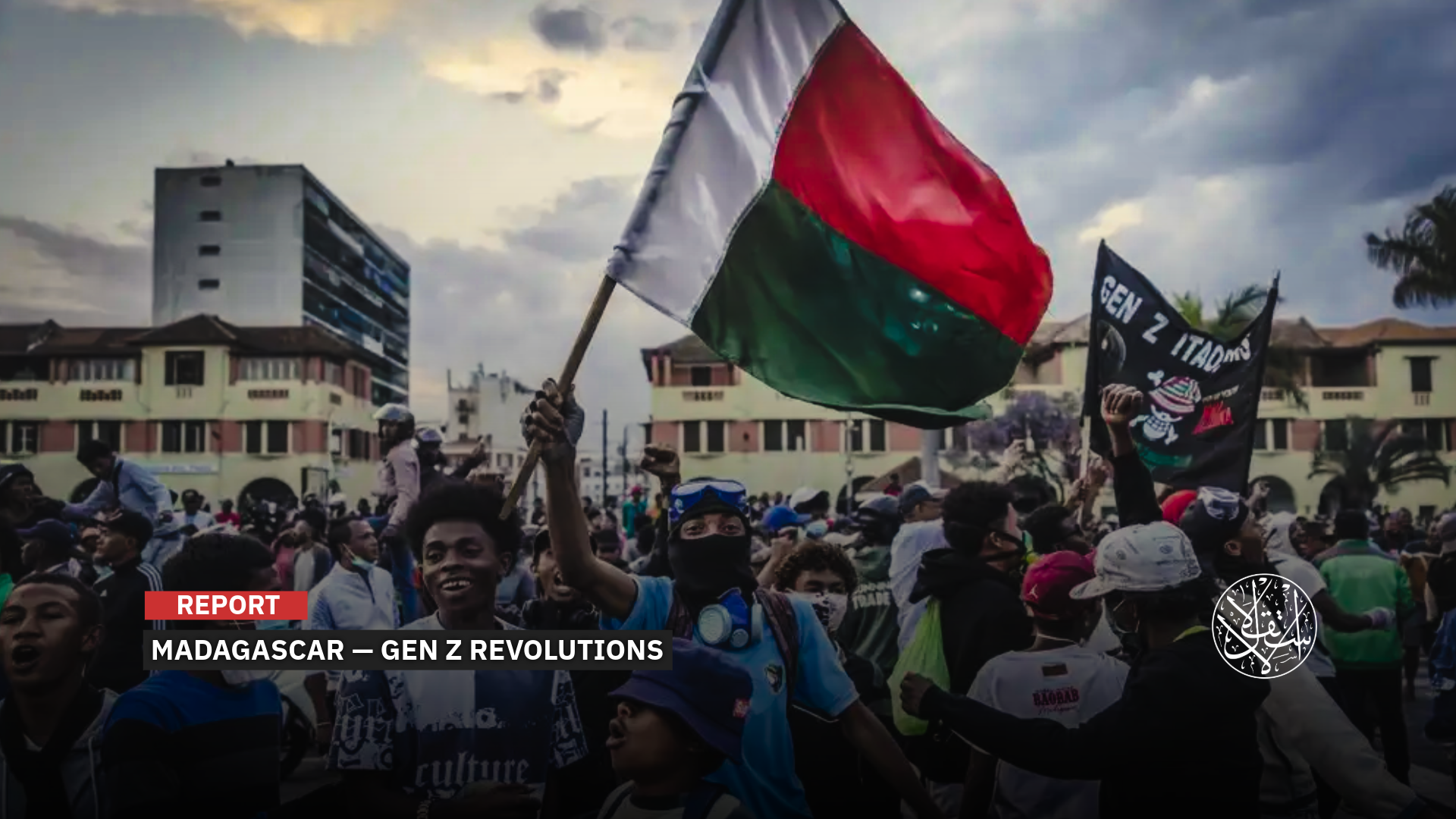
After successfully mobilizing the streets in Morocco, Kenya, Indonesia, and the Philippines, and toppling the regime in Nepal, Generation Z has claimed its second major victory by ousting the president of Madagascar in scenes reminiscent of the domino effect seen during the Arab Spring.
A tidal wave of anger, fueled by the Gen Z-led youth uprising, reached its climax on October 14, 2025, when the ruling system collapsed and the president fled the country.
However, the military quickly seized power, sparking debate over whether the move amounted to a coup or was an attempt to establish a new legitimacy, or perhaps, to hijack a Gen Z revolution in the same way the Arab Spring was ultimately derailed.
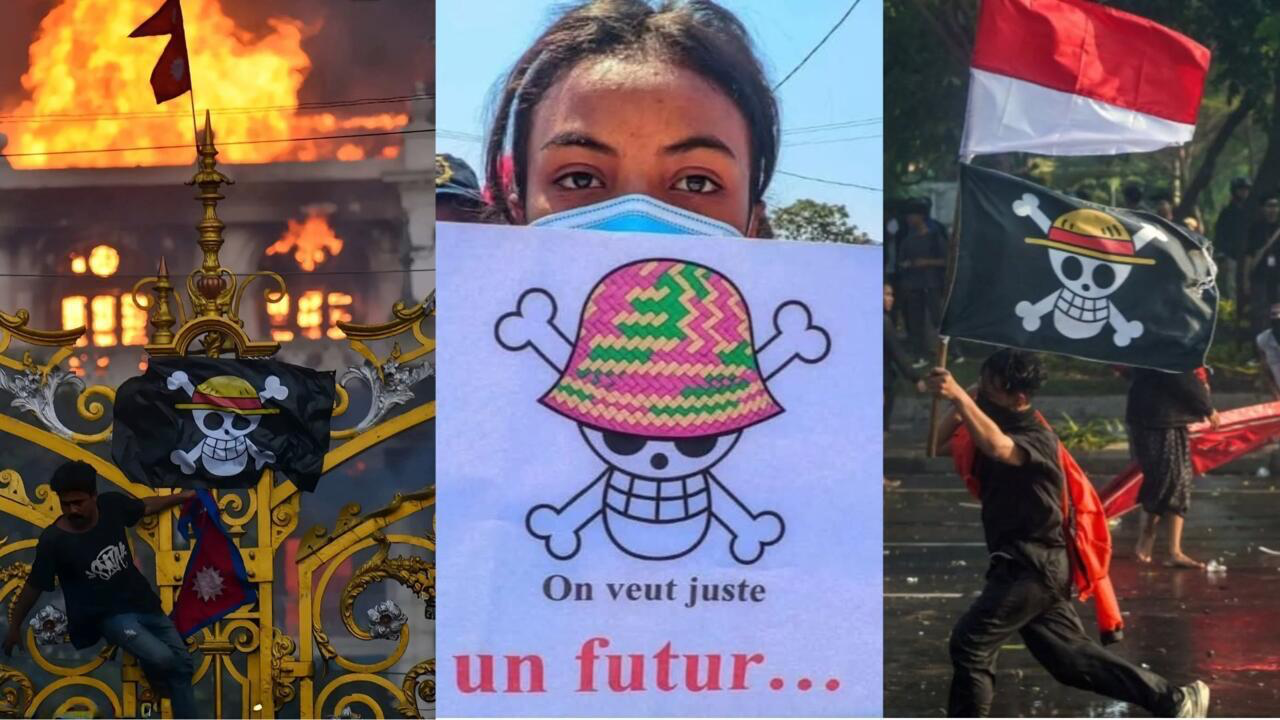
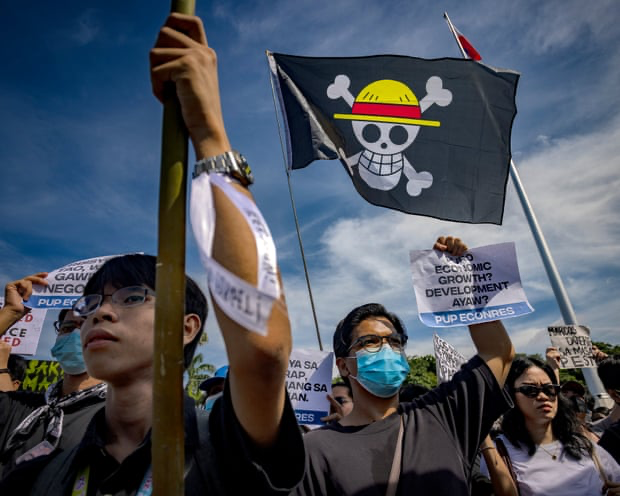
What sets this revolutionary generation apart, now victorious in both Nepal and Madagascar, is their shared symbolism, largely inspired by the pirate character Luffy from the popular Japanese anime One Piece, whose central theme is the quest for freedom.
While millennials famously donned V for Vendetta masks during the Arab Spring and the Occupy Wall Street movement, Gen Z protesters have rallied under a different banner, a skull-and-crossbones flag featuring a straw hat atop the skull.
This image, taken directly from the One Piece manga series, has become a symbol of their yearning for justice and change. The story follows a young pirate, Luffy, who defies corrupt elites and fights for a freer world.
The Second Fall
Roughly a month after the fall of the regime in Nepal, a country nestled between India and China, an angry Gen Z youth movement succeeded in toppling the government of Madagascar. On October 14, 2025, President Andry Rajoelina fled the country with the assistance of France, a long-time backer, along with the United Arab Emirates.
That morning, the façade of legitimacy in Madagascar collapsed when Brigadier General Michael Randrianirina, commander of the elite CAPSAT unit, announced in a radio broadcast, "We have seized power."
With that statement, the military declared what the ousted president later described as a "military coup," following the defection of elite forces and a vote by the previously dissolved parliament to remove him from office.
The dramatic shift has raised fears that the Gen Z movement could be sidelined, echoing the fate of the Arab Spring generation.
But the military’s takeover did not emerge in a vacuum. It followed two weeks of mass protests, led by a youth movement calling itself Gen Z Madagascar, sparked by collapsing public services.
Frequent power cuts and water shortages in the capital, Antananarivo, fueled frustration that quickly grew into broader demands.
The protests soon escalated, targeting corruption, social inequality, and the widespread breakdown of infrastructure and governance.
Protesters expressed deep anger over government corruption, shrinking access to higher education, rising living costs, and poverty, which affects around 75 percent of Madagascar’s population, according to the World Bank.
Although the protests were led by young people, others joined in, including civil society groups and labor unions, according to the Associated Press.
Madagascar is among the poorest countries in the world, with GDP per capita reaching just $545 in 2024, based on World Bank data.
The country ranked 140th out of 180 nations on Transparency International’s 2024 Corruption Perceptions Index, as reported by The Guardian on October 14, 2025.
Despite its natural wealth, including vanilla and gemstones, activists say these resources have been exploited by corrupt officials and businessmen.
The shift in the political landscape and Gen Z’s apparent victory was made possible, in part, by the defection of the CAPSAT military unit.
Once instrumental in helping Rajoelina rise to power in 2009, the elite force refused orders to use violence against protesters and openly rebelled.
This was followed by defections from the gendarmerie and police, reinforcing the sense that state security backing for Rajoelina was crumbling. Ultimately, the military stepped in and declared it was taking over.
Amid a surge of mass protests, 130 MPs voted to remove President Rajoelina, with only one voting against.
However, Rajoelina responded by dissolving parliament, plunging the country into a constitutional crisis that the military used to justify assuming power.
The army commander went on to dissolve key state institutions, including the Senate, the Constitutional Court, the electoral commission, and even the Supreme Court, claiming they had become tools of a broken regime.
Despite the military’s move to dismantle these institutions, Madagascar’s Supreme Court appeared to endorse the takeover, calling on the military chief to serve as interim president and organize elections within 60 days, a move widely seen as an attempt to legitimize the new status quo.
The ousted president denounced the events as an “attempt to seize power illegally,” insisting he remained in power.
Media reports suggested he was flown to Reunion Island or Dubai aboard a French military aircraft. Madagascar was formerly a French colony.
However, Colonel Michael Randrianirina, commander of the elite CAPSAT unit, denied that a coup had taken place, saying, “It's not true, we have no plan to touch a single hair on the president's [head]. Who are we to do that? Soldiers are not trained to kill a president, that's the job of mercenaries - not us. We're here to protect the people, and the country.”
Despite this, he announced the military’s full control over the armed forces and appointed a new army chief, Gen Demosthene Pikulas and said “The army has a responsibility to restore calm and peace throughout Madagascar.”
Military Rule Next?
As some members of the military and police joined the demonstrators, Gen Z youth largely welcomed the army’s takeover.
On October 14, the Gen Z movement in Madagascar celebrated the military’s declaration of power, posting on its Instagram account, “It’s a great day to be alive!!” followed by videos of people celebrating in the streets.
According to The Guardian, “I’m happy personally, because for now the army has been with us, the people, and it knows what we want and that’s what they’re doing right now,” said an 18-year-old activist who helps to run the Gen Z Madagascar social media accounts.
However, a fellow activist said he was “50:50” about the military’s intervention. “It was a must, because as you know, Madagascar was a very corrupt system, and I’m happy that this is finally the end of this corrupt system,” he said.
“But … I don’t really know what intentions the military group have, so I prefer to stay on my guard and see what they want to do and what they are going to do,” he added.
A deeper issue looms, as despite their energy and mass mobilization, many young Gen Z activists, especially those organizing via platforms like Discord, have admitted they lack a clear vision for what comes next, with no concrete plan for succession or an alternative system of governance.
This opens the door to critical questions. Who will fill the power vacuum? Will the army’s control, and its announcement that it intends to rule for two years before holding elections, lead to a familiar outcome, a military-led, repressive regime similar to those that emerged in the wake of the Arab Spring?
Or will the Gen Z generation, seen as more defiant and politically aware because of past failed uprisings, manage to shape a different future?
With legitimacy in tatters, the president ousted by parliament, the parliament dissolved by the president, and institutions suspended, will this chaos ultimately strengthen the military’s grip, or could it lead to a genuine democratic transition in response to the demands of Gen Z?
Gen Z protesters continued to demonstrate and celebrate the fall of the president, clinging to the dream shared by their childhood hero, Luffy, who, like them, seeks liberation.
They chanted slogans such as, “Justice for Madagascar […] We want to live, not just survive,” while waving digital-age symbols, including the skull-and-straw-hat flag from the anime One Piece, which has become an emblem of the new generation’s defiance of traditional authority.
The story of One Piece unfolds in a vast, fictional world of oceans, islands, and pirates. It follows the journey of a young man named Monkey D. Luffy, who dreams of becoming the Pirate King, a title once held by the legendary Gol D. Roger.
Before his execution, Roger revealed to the world that he had hidden a legendary treasure, known as the One Piece, at the end of a dangerous sea route called the Grand Line.
He declared that whoever finds it would become the next Pirate King. His final words ignited what became known as the “Great Pirate Era.”
Luffy, the story’s main character and the figure many Gen Z activists now see themselves in, is a simple, optimistic young man with boundless courage and supernatural powers. His goal is to find the One Piece and build a loyal crew of friends who sail with him in search of freedom.
Adding to the uncertainty in Madagascar’s already volatile political landscape is the absence of a clear leadership among the protesting youth, or any ready-made roadmap.
Their demands have focused on removing the president, holding corrupt officials accountable, improving public services, and drafting a new constitution.
This vacuum of leadership, combined with the suspension of oversight bodies and the dismantling of judicial and parliamentary institutions, has raised fears of a potential slide into military rule, marked by repression, corruption, and mismanagement.
Yet, what is unfolding in Madagascar cannot be viewed in isolation from a broader wave of youth unrest sweeping across the Global South.
The post-internet generation, often referred to as Gen Z, is no longer content with incremental reforms, it is now calling for a complete redefinition of power itself.
This generation does not fear coups, having grown up amid chaos, nor does it trust traditional politicians, shaped instead by an internet culture where information is decentralized and gatekeepers are challenged.
Is Madagascar now offering the world a raw, unfiltered model of a leaderless revolution, bound by a single, defiant message echoing across the continent, “If you fail to light our homes, we will light our own future”?
The protests first erupted on September 25, 2025, initially over water shortages and power outages. But they quickly escalated into a full-blown uprising, driven by wider grievances over corruption, poor governance, and a collapse in basic public services.
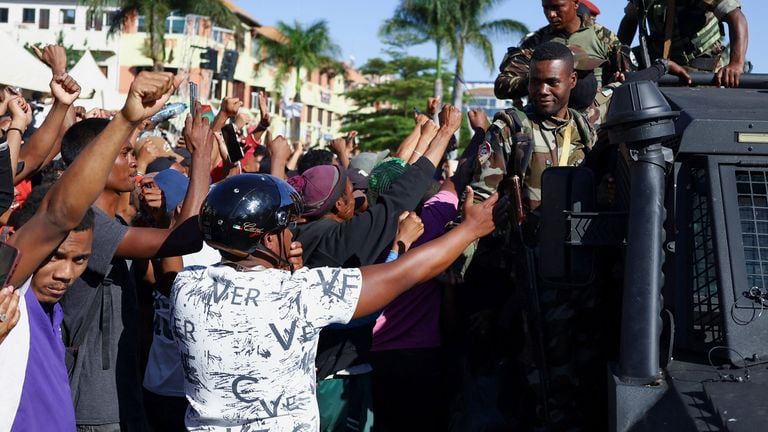
According to Politics Today, the African Union and the United Nations have called on the military to restore constitutional order as soon as possible, urging “inclusive dialogue to return Madagascar to democratic governance.”
France, Madagascar’s former colonial power, said it was closely monitoring the situation, while the U.S. State Department condemned the coup and called for the protection of civilians and democratic institutions.
The new military council pledged to appoint a civilian prime minister “within days” and to hold a national dialogue aimed at drafting a new constitution ahead of a referendum scheduled for 2027.
However, it offered few details about the transition process, leaving many uncertain about the country’s political future.
Analysts have warned that the coup could worsen instability unless the army commits to a clear and transparent timetable for restoring civilian rule, according to Politics Today, October 15, 2025.
Madagascar, a large island nation with a population of 31 million off Africa’s east coast, has a history of political crises and numerous coups since gaining independence from France in 1960.
President Andry Rajoelina, 51, first came to prominence as the leader of a transitional government following a 2009 coup that forced then-president Marc Ravalomanana to flee and lose power.
Rajoelina was elected president in 2018 and re-elected in 2023 in polls boycotted by opposition parties, who claimed the vote was rigged, before his flight and ousting in October 2025.