From Denial to Investigation: Why Did the Israeli Occupation Reopen the Cases of Hind Rajab and the Rafah Paramedics?
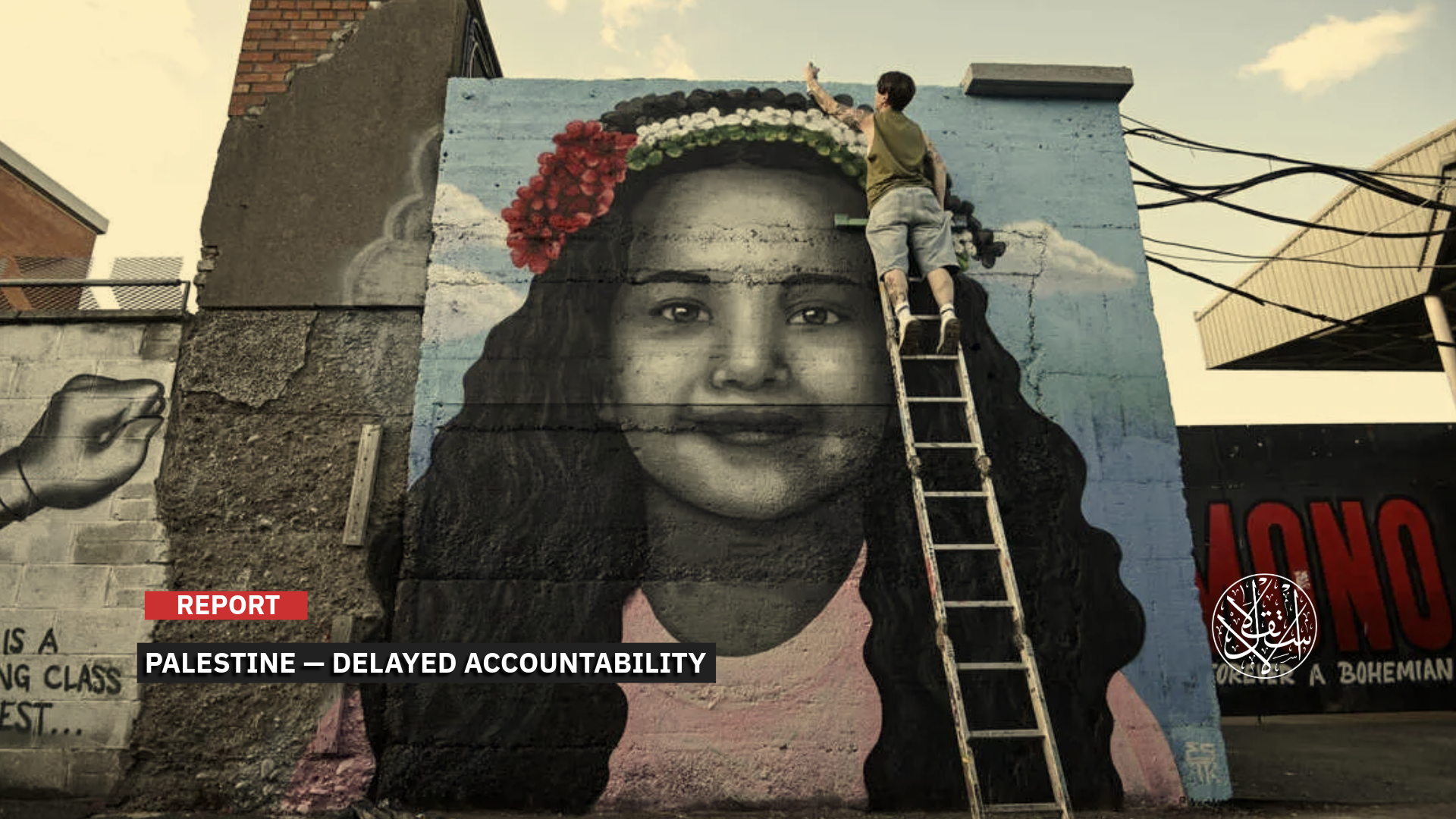
The decision to open the two investigations came at the end of a long process involving a backlog of accumulated cases.
The Israeli occupation army needed more than two and a half years to backtrack from its account of the killing of Palestinian child Hind Rajab, her family, and the two paramedics who went to rescue her, and nearly 17 months in the case of the killing of 15 ambulance and rescue personnel in the Gaza Strip.
In both cases, recordings, photographs, videos, and independent investigations emerged that contradicted the initial Israeli accounts. Eventually, on August 19, 2026, the Military Advocate General’s Office decided to refer both cases to the Military Police.
The decision comes amid “Israel’s” long record of investigations, most of which ended before reaching trial or were closed without prosecuting those responsible for killing Palestinians.
The two cases raise three fundamental questions: How did the initial accounts unravel? Why did the military prosecution act only after such a delay? And will the fate of these two cases differ from that of dozens of others whose perpetrators have remained beyond accountability?
How Did the Narratives Unravel?
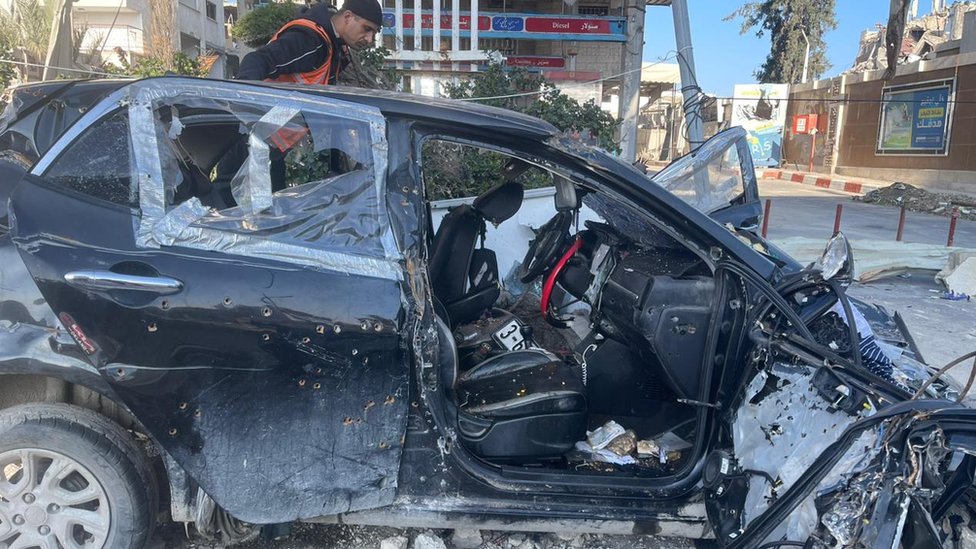
On January 29, 2024, six-year-old Hind Rajab and her 14-year-old cousin, Layan Hamadeh, were trapped inside the family car in Gaza City’s Tal al-Hawa neighborhood after its occupants came under fire.
The Palestinian Red Crescent Society recorded a call from Layan in which she said that a tank was near the car and that they were being shot at.
A burst of gunfire then rang out, and her voice went silent. Hind remained on the phone for hours, pleading for help, while paramedics Youssef Zino and Ahmed al-Madhoun headed toward her.
On February 10, Hind and the family members were found dead inside the car, while the two paramedics were found dead inside the burned-out ambulance, about 50 meters away.
Following what it called a “preliminary investigation,” the Israeli occupation army said its forces had been far from the car and outside firing range, linking this to the alleged lack of need to coordinate the ambulance’s entry.
On April 16, 2024, The Washington Post published an investigation based on call recordings, munitions experts, and satellite imagery from the U.S. company Planet Labs.
It showed four Israeli armored vehicles about 300 meters from the family car, with more than 12 vehicles within a quarter-mile radius.
The newspaper also reviewed messages and a route map associated with the so-called Coordination of Government Activities in the Territories (COGAT).
Elad Goren, head of COGAT’s Coordination and Liaison Administration, said that the ambulance’s entry had been coordinated.
On June 18, 2024, the investigative audio research organization Earshot published an analysis of the final seconds of Layan’s call, counting 64 shots.
It said the rate of fire was consistent with weapons used by the Israeli occupation and estimated the distance between the phone and the source of the gunfire at approximately 13 to 23 meters.
Three days later, Forensic Architecture, a London-based investigative research agency, conducted a spatial and acoustic reconstruction that linked the direction of the gunfire to the position of a nearby tank.
In July 2024, independent UN experts said that the killing of Hind, her family, and the paramedics could amount to a war crime.
On August 19, the army acknowledged findings that contradicted the substance of its initial account. The General Staff’s fact-finding mechanism concluded that Israeli Occupation Forces had fired on the family car and killed five of its occupants in the first round of shooting, while Hind and Layan survived that initial volley. It also acknowledged that the ambulance’s movement had been coordinated.
The statement remained vague about how Hind and Layan were killed after the first round of shooting, while the publicly stated basis for referring the case was limited to “alleged failures” related to coordinating the ambulance.
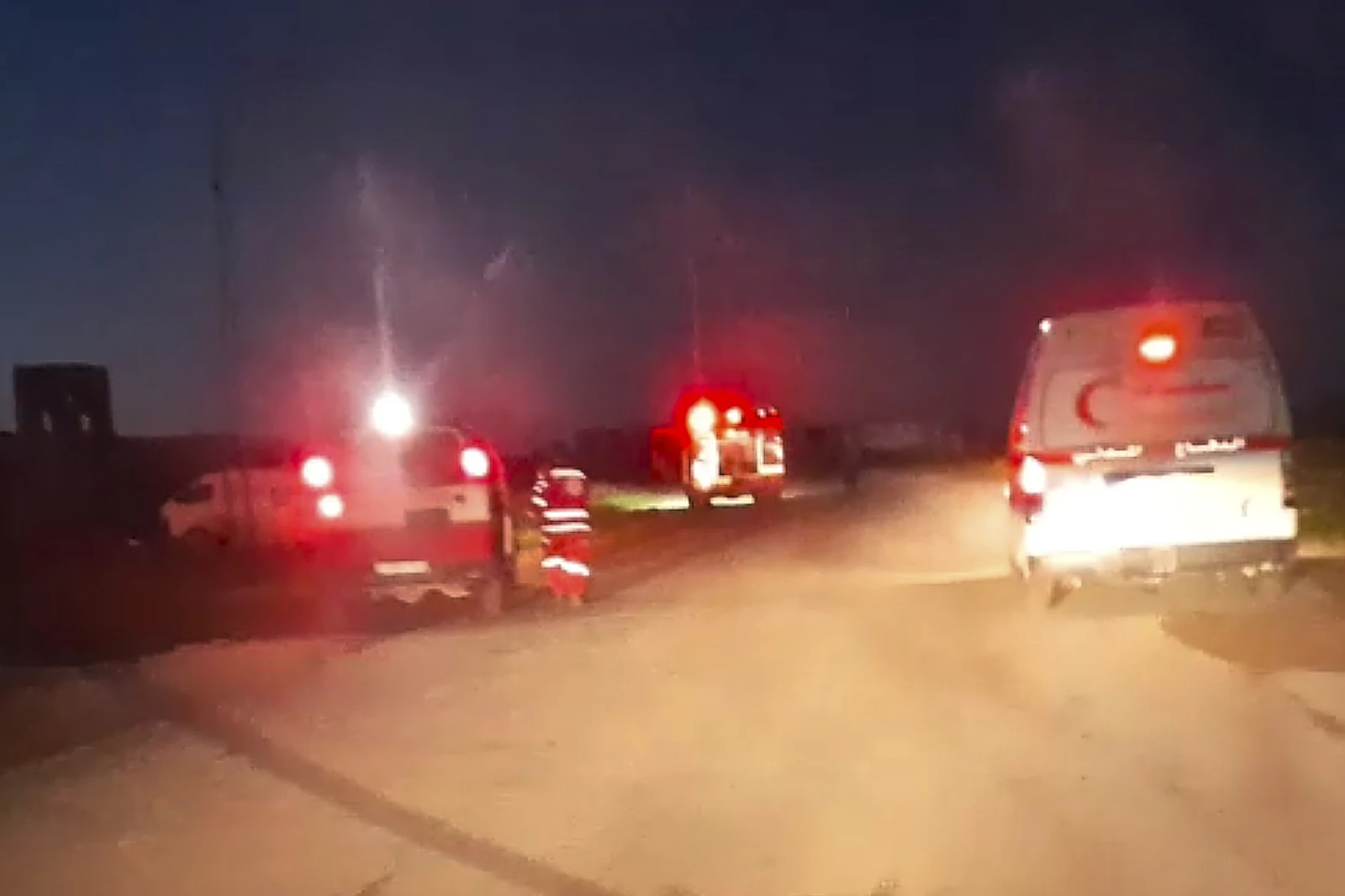
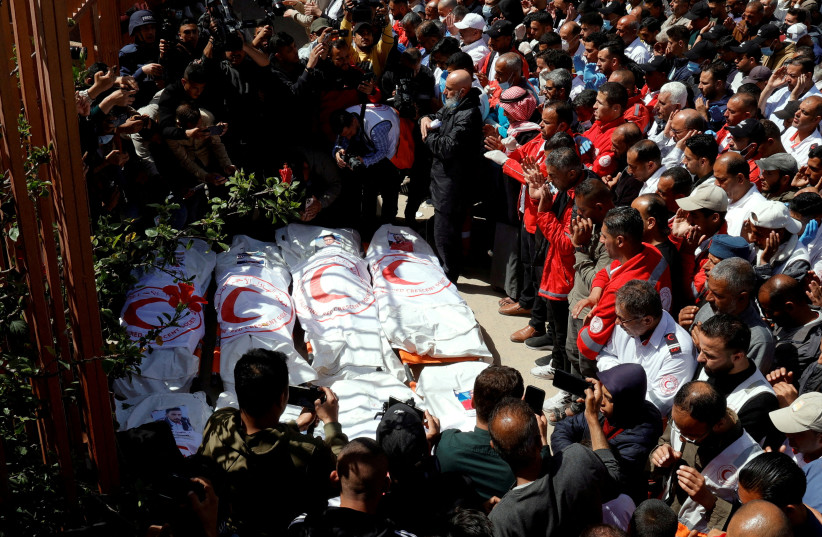
In Tel al-Sultan, west of Rafah, eight Palestinian Red Crescent personnel, six Civil Defense workers, and a UN staff member were killed on March 23, 2025, after Israeli soldiers opened fire on a series of ambulances and rescue vehicles.
Most of the bodies were gathered with the vehicles in a pit, and Israeli military vehicles crushed several of the cars. Rescue teams and the United Nations were unable to reach the site until about a week later.
On April 2, the army said the vehicles had moved “suspiciously” without coordination or emergency lights, and claimed that nine of the dead were members of Hamas or Palestinian Islamic Jihad.
A recording then emerged from the phone of paramedic Refaat Radwan, who filmed it shortly before his death. It showed the vehicles with clearly visible markings and their emergency lights operating, while the crews were wearing reflective clothing before heavy gunfire began.
The Associated Press verified the location where the recording was made, and surviving paramedic Munther Abed confirmed its authenticity.
The army subsequently retracted its claim concerning the emergency lights and reduced the number of those it said were affiliated with Hamas from nine to six.
On April 20, 2025, a military investigation acknowledged “professional failures” and “violations of orders,” and found that the deputy commander of the reconnaissance unit in the Golani Brigade had submitted an “incomplete and inaccurate” report.
The army ended the officer’s assignment but continued to characterize most of the shootings as an “operational misunderstanding.”
In February 2026, Earshot and Forensic Architecture published a reconstruction that counted at least 910 rounds fired and estimated that at least 789 of them were directed at the rescue personnel. It also concluded that the shooters advanced while firing, with some moving to extremely close range.
By August 19, the military prosecution itself had changed its characterization of the incident, announcing that the shooting raised a “reasonable suspicion of criminal conduct” and referring the case to the Military Police Criminal Investigations Division. It also acknowledged that soldiers had decided to crush the vehicles and cover the bodies with metal mesh.
Why Were the Cases Reopened Now?
The decision to open the two investigations did not come after a new development emerged. Rather, it came at the end of a long process involving a backlog of cases within the military prosecution.
Itai Ofir took office as Military Advocate General in November 2025, following the resignation of Yifat Tomer-Yerushalmi amid a crisis over the leaking of investigative materials in the Sde Teiman case.
Sde Teiman was the detention facility where Palestinians from Gaza were held, and where the prosecution charged five reserve soldiers with the aggravated abuse of a Palestinian detainee.
Ofir began reviewing cases he had inherited from his predecessor, Tomer-Yerushalmi. One of his most prominent subsequent decisions was to withdraw the indictment against the five soldiers.
On February 8, 2026, the Israeli newspaper The Jerusalem Post reported that dozens of cases concerning the conduct of the Israeli occupation army in Gaza during 2023 and 2024 had already been resolved within the military legal system.
However, the announcement of their findings was delayed because Israeli legal officials feared that they could be used against “Israel” before the International Criminal Court and the International Court of Justice.
On June 19, The Jerusalem Post quoted informed Israeli sources as saying that Ofir was preparing to issue the first major batch of decisions concerning Gaza within weeks. The case involving the Palestinian Red Crescent teams in Rafah was among them, but the announcement was postponed again.
On July 20, the newspaper reported that the pressure that had delayed publication came from outside the military prosecution, and possibly from outside the military itself, while the Justice Ministry supported publishing the decisions on schedule.
The Foreign Ministry’s response left open the possibility that it had intervened, while the Prime Minister’s Office denied responsibility, leaving the party that had pushed for the delay unknown.
When the decisions were finally issued on August 19, they covered five cases with different outcomes: the Hind Rajab and Rafah rescue-team cases were referred to the Military Police, while three other cases were closed without a new criminal investigation.
Military legal sources told the newspaper that same day that resolving these cases had taken longer than it should have, and that the time had come to issue as many decisions as possible, with further batches expected later.
Considerations surrounding international prosecutions also became part of the management of these cases. On June 1, 2026, Ofir identified the International Criminal Court and the International Court of Justice among the legal challenges facing “Israel”.
Weeks later, military legal sources told the same newspaper that taking action against Israeli soldiers would strengthen “Israel’s” position before the two courts and help preserve the flow of weapons from the United States and other allies.
The irony is that concerns about The Hague had previously contributed to delays in publishing the findings of some cases, out of fear that they could be used against “Israel”. Those same internal investigations have now become part of “Israel’s” legal and diplomatic defense.
Is There Genuine Accountability?
So far, the military prosecution has not announced the names or ranks of any suspects in either the case of child Hind Rajab or the killing of the rescue teams in Rafah, nor has it identified most of those responsible for the Israeli army’s crimes during more than two years in which “Israel” has carried out genocide in the Gaza Strip.
The record of the military fact-finding mechanism provides a clear picture of what has happened to previous cases. In a report published by Yesh Din on July 9, 2024, the organization reviewed at least 664 incidents that had been referred to the fact-finding mechanism during previous military operations and the “Great March of Return.”
The mechanism closed 542 cases, 81.6 percent, before opening a criminal investigation. Of the 573 cases for which outcomes were known, only one reached prosecution through this mechanism, a rate of approximately 0.17 percent. The organization concluded that decision-makers and policymakers at the senior levels remained beyond the reach of investigations.
The “Great March of Return” provides a direct example. It was a broad popular protest movement that began near the separation fence east of the Gaza Strip on March 30, 2018, and continued regularly until the end of 2019, demanding the right of return and an end to the blockade. The Israeli army used live ammunition to suppress the protests.
A total of 231 killings were referred to the fact-finding mechanism. Seventeen criminal investigations were opened, and only one case resulted in a conviction, concerning the killing of 14-year-old Palestinian boy Othman Rami Halas.
The case ended in a plea deal that dropped the charge related to causing his death. The soldier was convicted of abuse of authority and sentenced to 30 days of military service and demoted.
The remaining cases of killings that passed through the mechanism resulted in no criminal convictions of those responsible.
The record extends to previous wars in Gaza. In September 2014, the Israeli human rights organization B’Tselem announced that it was ending its cooperation with military investigations following its experience with the 2008 and 2012 offensives.
The organization said that more than 400 incidents had been examined following the 2008–2009 war, and that at least 52 Military Police investigations had been opened. Only three resulted in indictments.
Following the November 2012 offensive, the military prosecutor reviewed approximately 65 incidents, all of which ended without a criminal investigation being opened, leaving those responsible for dozens of killings outside the courts.
During the current offensive, the military prosecutor announced in August 2024 that 74 criminal investigations had been opened, most of them focusing on the deaths and mistreatment of detainees and the looting of property from the Gaza Strip.
By March 2025, data obtained by Yesh Din showed only three indictments related to Gaza among the cases it had reviewed, and at that time only one had resulted in a conviction.
This record is not limited to the Gaza Strip or to wartime. Cases in the occupied West Bank show that the absence of accountability has persisted even when the victims were U.S. citizens and Washington publicly pushed for investigations.
On May 11, 2022, Palestinian-American journalist Shireen Abu Akleh was shot in the head and killed while covering an Israeli military raid on the Jenin refugee camp. She was wearing a press vest alongside other journalists.
Following extensive journalistic and international investigations, the Israeli army acknowledged in September of that year that there was a “high possibility” that Shireen had been hit by fire from one of its soldiers.
The military prosecutor then decided not to open a criminal investigation, citing the absence of a suspicion that a crime had been committed. The case ended without any soldier being charged or held accountable.
Months before Shireen’s killing, another case involved a Palestinian man who held U.S. citizenship. In January 2022, Israeli soldiers stopped 78-year-old Omar Assad as he was returning to his home in the West Bank.
They pulled him from his car, blindfolded him, tied his hands, and gagged him, then left him lying on the ground before he was found dead.
The army described what happened as a “moral failure” and removed two officers from their positions and reprimanded a third. The U.S. State Department called for a thorough criminal investigation and full accountability.
In June 2023, the military prosecution closed the investigation without charging any soldier, after saying it had failed to establish a causal link between the soldiers’ actions and his death.
Similar cases involving Palestinian-Americans in the West Bank followed. In early 2024, two teenagers, Tawfiq Abdel Jabbar and Mohammad Khodr, were killed in separate shooting incidents.
Doubts about the ability of Israeli investigations to hold those responsible for such crimes accountable prompted U.S. authorities to send investigators to visit their families and independently gather information, a scene that illustrates just how limited the prospects are for bringing the perpetrators to trial.