From Al-Asadi to Bigger Leaders: Has the ‘Pruning’ of Iraq’s Shiite Political Class Begun?
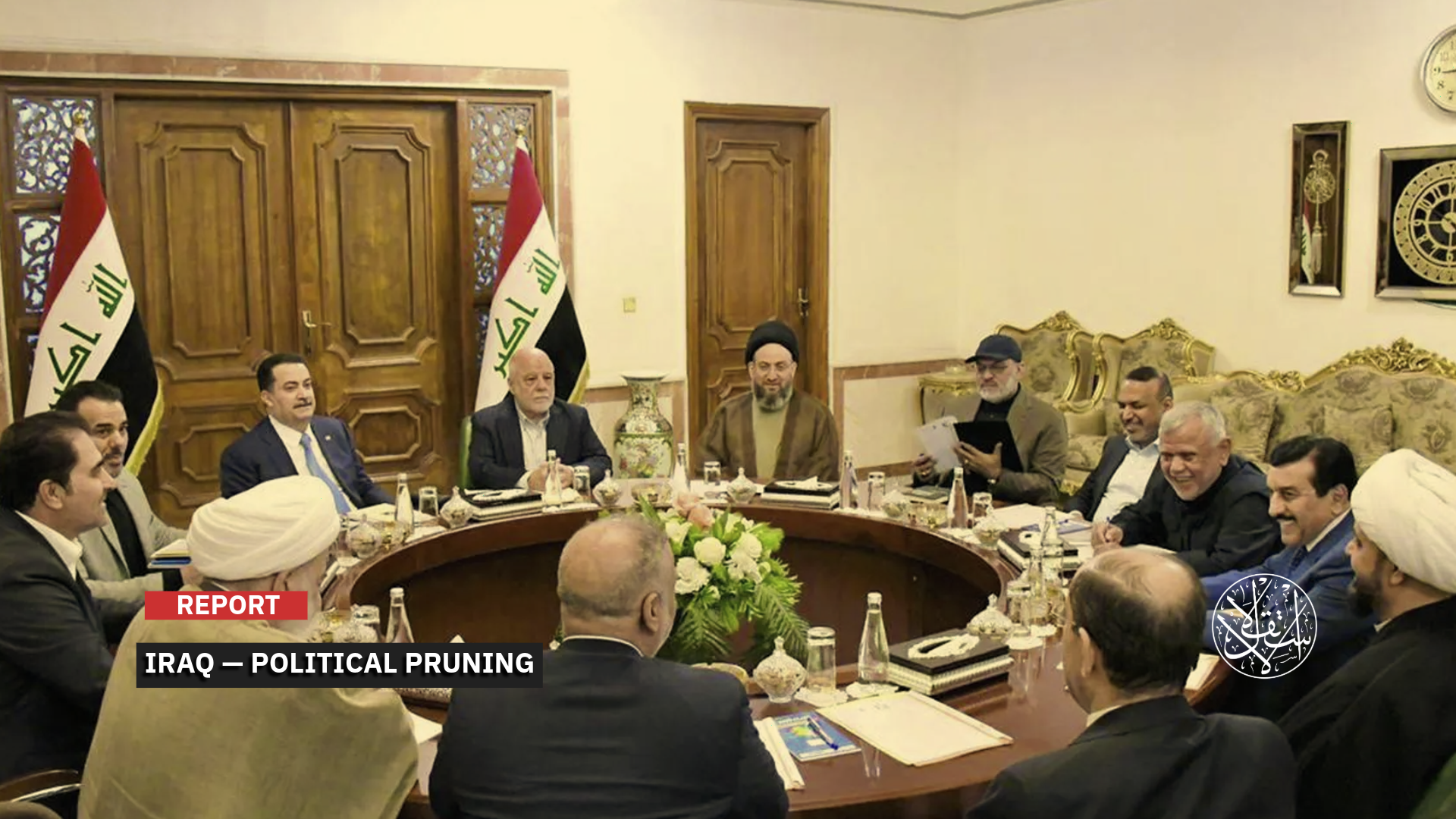
Al-Asadi has been one of the most prominent leaders of the Coordination Framework since its formation in 2021.
In a notable precedent since 2003, the Iraqi judiciary has issued an arrest warrant for a leader of the Shiite Coordination Framework over financial corruption allegations, raising questions about the limits of accountability within the Shiite political class, or whether the move is part of a broader reshuffling among the ruling Shiite forces.
On August 9, 2026, Iraqi authorities issued two arrest warrants for Ahmed al-Asadi, head of the Sumeriyoon Movement, former Minister of Labor and Social Affairs, and one of the leaders of the Coordination Framework. The warrants relate to a case involving illicit enrichment and unexplained wealth.
The official Iraqi News Agency (INA) reported that the court issued an arrest warrant for al-Asadi over allegations that he directly benefited from contracts and works in which he had a role in preparing while serving as Minister of Labor (2022–2026), and that he facilitated contracts in violation of the law in order to obtain a benefit for himself or others.
Green Light
The arrest warrant comes at a time of growing questions over whether the Coordination Framework has indeed begun distancing itself from some of its leaders, particularly those who have come under political and public criticism, amid talk of an internal review of the names and figures who have dominated the political scene in recent years.
Hossam al-Rubaie, spokesman for the “Services” Alliance, which al-Asadi was previously one of its leaders, said in a press statement on August 18 that al-Asadi was no longer affiliated with the alliance, and that he had contested the 2025 parliamentary elections as part of the “Reconstruction and Development” Coalition, led by former Prime Minister Mohammed Shia’ al-Sudani.
Al-Rubaie stressed that investigations into financial transfers in the al-Asadi case had not established any official conviction to date, emphasizing that “the accused is innocent until proven guilty.” He said al-Asadi is currently abroad on a medical trip and is expected to return to appear before the judiciary and present his defense.
He added that previous anti-corruption campaigns had lacked continuity and consistency in their application, saying that successive governments had fallen into the “trap of selectivity” instead of addressing the corruption system at all levels.
He stressed that accountability should not be limited to senior figures, but should also extend to middle- and lower-level officials, with the aim of dismantling the corruption system.
He also called for judicial investigations to remain confidential until the final results are announced through official channels.
Before the arrest warrant was issued, al-Asadi had affirmed his cooperation with the judiciary in cases involving suspected corruption.
In an audio recording released on July 21, he said he was on a medical trip outside Iraq when an action by one of his associates raised suspicions of corruption, adding that the competent authorities had taken the necessary measures.
Al-Asadi said that “the money that was found is legitimate and lawful, and there are documents” supporting it. He added that its value was lower than the figures that had been circulated, and denied in the recording that he was wanted by the judiciary at the time.
On July 21, Amer al-Fayez, a leader of the Coordination Framework, said that Prime Minister Ali al-Zaidi had informed Framework leaders of his intention to arrest former Labor Minister Ahmed al-Asadi upon his return from Australia over corruption suspicions. Al-Fayez said al-Asadi was currently reluctant to return.
Al-Fayez explained that the Coordination Framework had discussed al-Asadi’s case with al-Zaidi and given him the green light to pursue anyone accused of corruption, even if they were among the Framework’s leaders, provided that legal procedures were followed and the suspect’s reputation was not damaged before the investigation was completed.
He noted that the money seized from al-Asadi did not necessarily mean that he had committed a crime, explaining that the presence of large sums of money in someone’s home could have legitimate explanations, such as an inheritance or the sale of property. He called for waiting for the outcome of the investigation rather than issuing premature judgments.
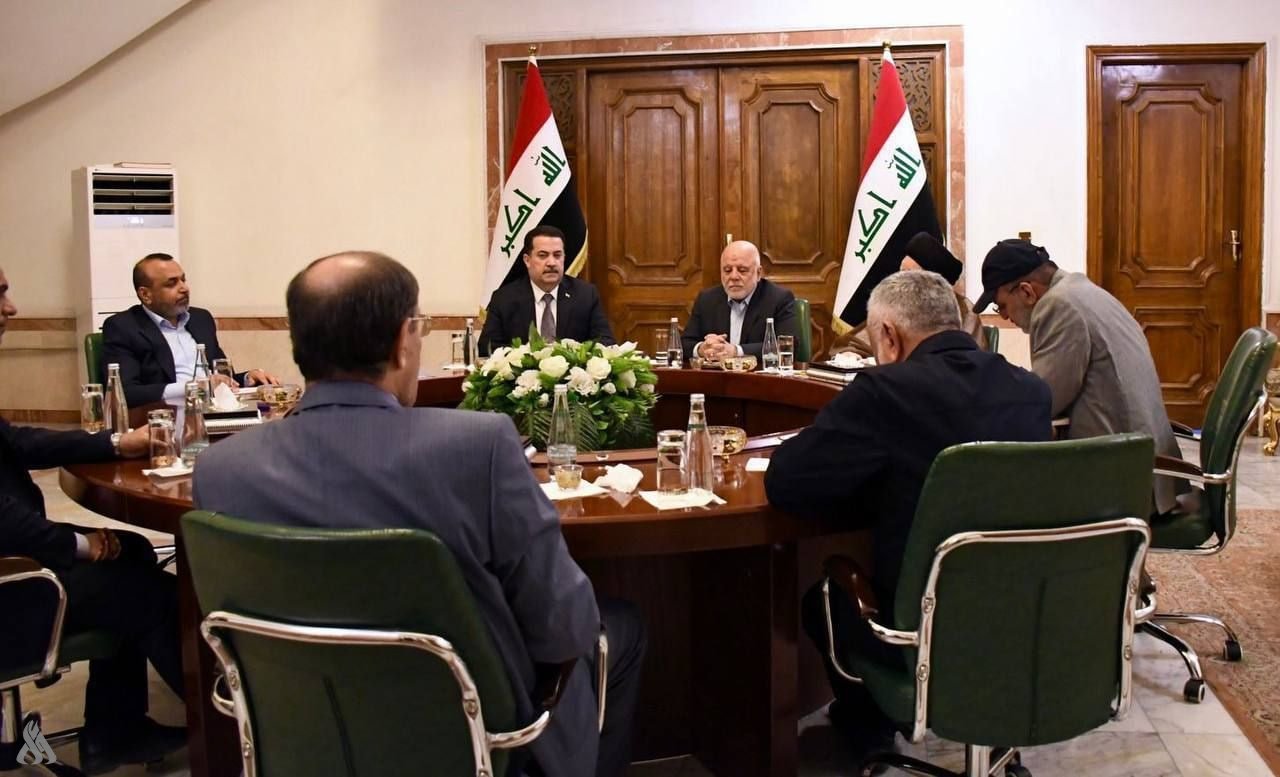
Political Pruning
Amid talk that accountability measures could extend to more senior political figures, political analyst Ghalib al-Daami said there had been talk of the possibility of arresting former Prime Minister Mohammed Shia’ al-Sudani, but he ruled out such a development.
In a television interview, al-Daami said there had been what he described as a “Shiite agreement” since Nouri al-Maliki became prime minister in 2006, stipulating that no Shiite prime minister should be arrested, regardless of any violations he may have committed, on the grounds that doing so would be viewed as an affront to the Shiite community.
“Show me a government since 2005 that has not been corrupt; all governments have witnessed corruption,” al-Daami said.
In the same context, al-Daami spoke about the Shiite political class, saying it comprises around 12 prominent figures. He predicted that the number would gradually be reduced to seven in a process he described as “pruning.”
“Just as we prune trees in the summer so that they can grow better, Ali al-Zaidi will prune this political class, with their consent,” he said. He indicated that the process had begun with figures close to al-Sudani and could extend to other individuals or groups.
He added that some political figures who have become a source of public resentment or a burden on their constituencies could receive their “due” accountability, stressing that this does not necessarily mean they have won or lost politically, but rather that it is part of addressing corruption cases within the political class.
Meanwhile, Bahaa al-Din al-Barzanji, a researcher specializing in Iraqi political affairs, told Al-Estiklal that Ahmed al-Asadi was “the weakest party within the Shiite Coordination Framework.”
He added that al-Asadi had begun expanding his financial resources significantly, with the aim of competing with major and powerful leaders within the Framework, and that consequently “everyone disowned him.”
Al-Barzanji agreed with the view that the Coordination Framework is seeking to reduce the number of its leaders while retaining the traditional figures who have maintained a presence since the beginning of the post-2003 political process.
Among these figures, he listed Nouri al-Maliki, Hadi al-Amiri, Ammar al-Hakim, Humam Hamoudi, Haider al-Abadi, Qais al-Khazali, and Mohammed Shia’ al-Sudani, while predicting that other names would gradually lose prominence.
Al-Barzanji argued that the Coordination Framework’s approval of al-Asadi’s removal was part of an attempt to “absorb the anger of the Shiite street” toward the Shiite political class, which has been accused of financial corruption, so that it could be said that “the corrupt will be subject to the law.”
At the same time, however, the researcher ruled out the case ultimately ending with al-Asadi being put on trial. He suggested that a settlement could instead be reached with him, potentially involving the repayment of funds and the issuance of a decision to release him, while removing him from the political scene.
He pointed to previous examples, including former Shiite lawmaker Haitham al-Jubouri and former Trade Minister Falah al-Sudani, who, he said, was sentenced to prison before being released under an amnesty law.
Al-Asadi’s Career Trajectory
Ahmed Jassim Saber al-Asadi was born in 1971 in Dhi Qar province in southern Iraq. He holds a bachelor’s degree and a master’s degree in political science, as well as a diploma in international business administration.
Al-Asadi has said that he was an opponent of Saddam Hussein’s regime before 2003. He holds both Australian and Iraqi citizenship and has said that he was involved in armed opposition activities inside Iraq.
In March 2025, during a television interview, al-Asadi spoke about his alleged involvement in a plan to assassinate former Iraqi President Saddam Hussein in 1982, saying the plot was ordered by Iran while Hussein was in Tikrit overseeing the construction of presidential palaces.
According to al-Asadi’s account, the plan was delayed because of security and logistical difficulties before being exposed following the arrest of a young man in Basra.
He added that the authorities subsequently arrested 16 people in connection with the case and said they were executed. However, he was put in an awkward position when the program’s host reminded him that he had been only 10 years old in 1982.
Al-Asadi’s biography, published on several local news websites, states that he worked as a lecturer at a number of Iraqi and international universities and also served as president of al-Fatah Sports Club.
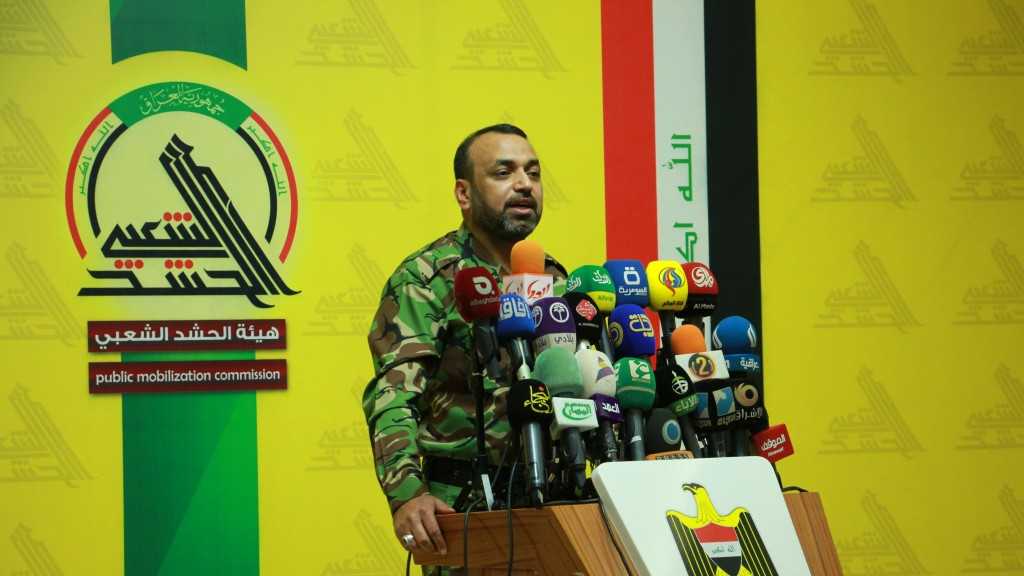
Al-Asadi began his professional and political career in several positions. He served as an adviser on national reconciliation in the Prime Minister’s Office from 2011 to 2014, before becoming the official spokesman for the Popular Mobilization Forces (PMF) from 2014 to 2018.
During that period, his name became prominent in the political and media scene associated with the PMF. He was also associated with the leadership of the Imam’s Brigades militia, which later became part of the official PMF formations.
Al-Asadi subsequently moved into parliamentary politics, serving as a member of the Iraqi Council of Representatives. He was a member of the Parliamentary Security and Defense Committee during the third parliamentary term, then became a lawmaker from the Iran-aligned Fatah Alliance during the fourth parliamentary term from 2018 to 2021, while also serving on the same committee.
He headed the parliamentary “National Sanad” bloc from 2018 to 2021 and served on the Iraqi Constitutional Amendment Committee in 2019 and 2020. He later became a member of the Parliamentary Legal Committee during the fifth parliamentary term.
On October 27, 2022, the Iraqi parliament approved al-Asadi as Minister of Labor and Social Affairs in Mohammed Shia’ al-Sudani’s government. During his tenure at the ministry, he oversaw files related to social protection, welfare benefits, employment, and social security.
In January 2026, he was also assigned to serve as acting Minister of Education, in addition to continuing as Minister of Labor and Social Affairs. This took place during the caretaker period following the parliamentary elections in November 2025.
His tenure in the executive branch ended amid the political and governmental changes that took place in Iraq in 2026 and the formation of Ali al-Zaidi’s government.
He then returned to political activity through the “Sumeriyoon” Movement, which won eight parliamentary seats as part of the “Reconstruction and Development” Coalition, before he was ultimately sidelined over corruption cases.