Burhan at the Presidential Palace in Khartoum: A Return of the State or Just Symbolic Power?
"The Republican Palace has become an indicator of shifting power dynamics and the state’s reclamation of its sovereign center."
In a scene combining the symbolism of the location with the significance of the timing, the Chairman of the Sovereignty Council and Commander of the Sudanese Army, Abdel Fattah al-Burhan, resumed his official duties from the Republican Palace in Khartoum on August 13, 2026.
He received the credentials of three new ambassadors, marking a return after more than three years during which the seat of government had shifted to Port Sudan.
This move was not merely a return to a post-war renovated headquarters; it was a political declaration that governing institutions had reclaimed their position at the heart of the capital—a city whose key facilities had been controlled by the Rapid Support Forces since April 2023.
Amidst ceremonies projecting state stability and active battlefronts in the west, a question arises: Has Khartoum truly regained its status as the seat of government, or has the symbolism of authority outpaced the actual return of the city and its residents?
Actual Return
The significance of the Republican Palace extends beyond its function as the seat of the presidency; its history is intertwined with Khartoum’s evolution into Sudan’s center of governance.
The foundation stone for the Governor-General's Palace was laid in 1825. It underwent successive rounds of reconstruction and expansion, culminating in the construction of the palace in its modern form—built upon the original stone foundations—during the Condominium era in the early 20th century.
On January 1, 1956, the palace witnessed a pivotal moment in Sudanese history when Prime Minister Ismail al-Azhari and Opposition Leader Muhammad Ahmad Mahjoub lowered the British flag and raised the Sudanese flag on its masthead.
Since that date, the former Governor-General's headquarters has stood as a symbol of independence and the seat of the presidency, serving under the various titles and regimes that have governed the country over the years.
The presidential complex comprises the historic old palace and the new presidential palace—inaugurated in 2015—alongside the Presidency buildings, the Republican Guard headquarters, a library, a mosque, and gardens.
It also houses a separate building for the Republican Palace Museum; originally a cathedral, the structure was converted into a museum and officially opened on December 31, 1999.
The museum documented the history of governance and the national movement through documents, photographs, medals, official vehicles, and personal artifacts belonging to Sudan’s presidents and rulers.
Witness to War
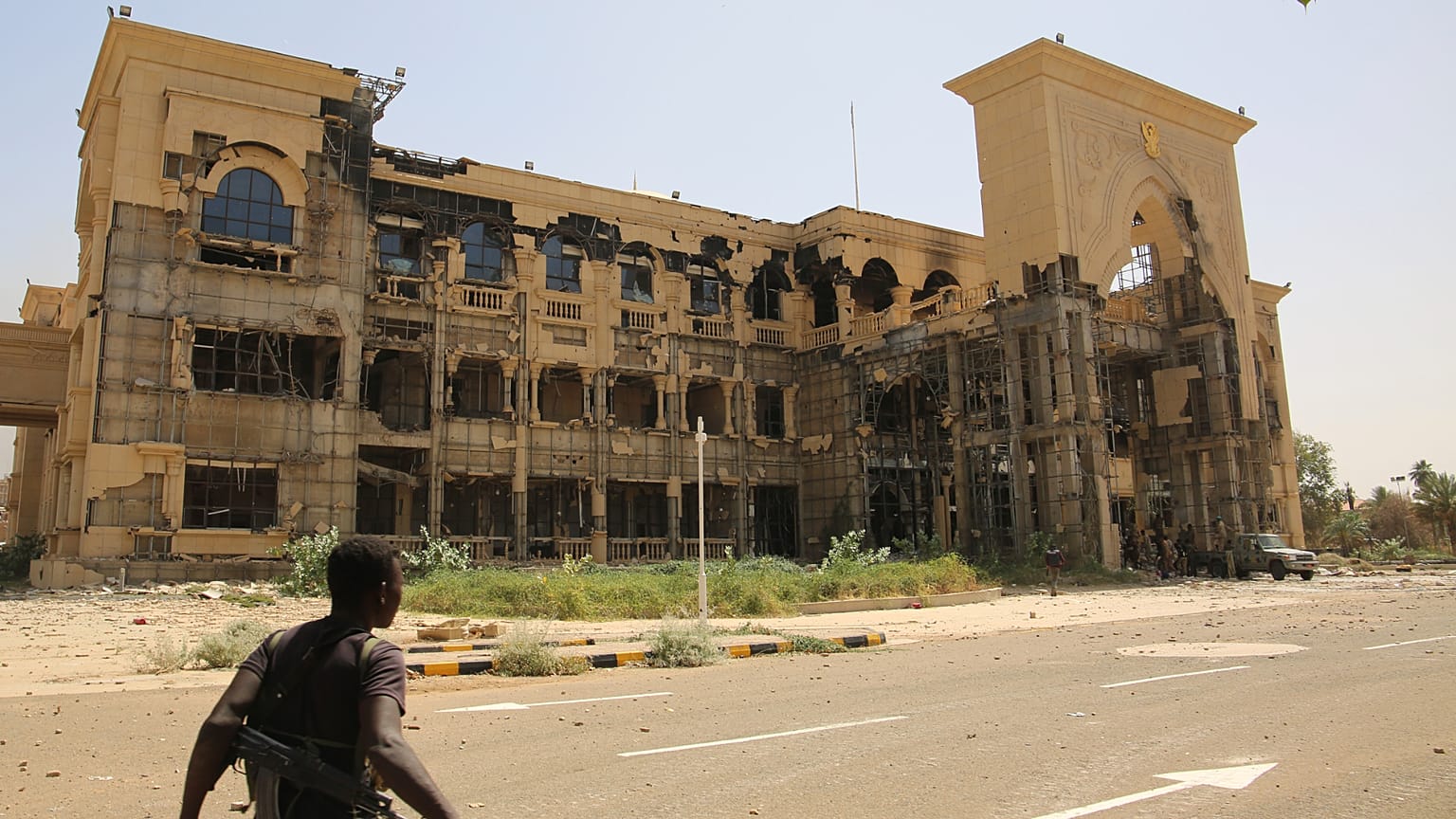
However, from the very first hours of the current war, the complex became one of the fiercest battlegrounds in Khartoum. Rebels seized control of it, while clashes spread to the Arab Market, University Street, and surrounding government headquarters.
Battles and fires caused extensive damage to the buildings and facilities; the museum and library were looted and vandalized, rare books and documents were reduced to ash, and wrecked historic vehicles lay amidst the rubble.
On March 21, 2025, the army announced the recapture of the palace—including both its old and new buildings—as part of its advance into central Khartoum. Yet, the destruction kept the complex out of official use until repair and rehabilitation work enabled the presidential building to host ceremonies and meetings once again.
This return does not signify the completion of the museum's restoration or the recovery of its artifacts; however, roughly 17 months after its military recapture, it transformed the palace from the site of one of the capital's most significant battles back into a functioning headquarters for the head of state.
Return to Khartoum
The fighting had forced the government and state institutions to relocate from Khartoum to Port Sudan. Port Sudan became the de facto seat of government, benefiting from its location outside the direct combat zone and its possession of the country's main seaport and an international airport that remained operational throughout the war.
The city hosted the Sovereignty Council, the Council of Ministers, various ministries, diplomatic missions, and international organizations, even as Khartoum remained the official capital under the constitution and the law.
After the army recaptured most of Khartoum State, the government began a phased return of its institutions. In April 2025, the General Secretariat of the Council of Ministers devised a plan to relocate the ministries, a process that coincided with damage assessments, the rehabilitation of headquarters, and the provision of essential services for staff.
In August of the same year, the Council of Ministers held a session in Khartoum—the first tangible sign that executive operations were shifting away from Port Sudan.
On January 11, 2026, Prime Minister Kamil Idris announced the government's official return to the capital, pledging to rehabilitate hospitals, schools, and universities, and to improve electricity, water, and sanitation services.
Ten days later, the Sovereignty Council and the Council of Ministers held their first joint meeting in Khartoum since the outbreak of the war, approving the 2026 emergency budget and several laws.
On January 25, the Minister of Culture, Information, and Tourism, Khaled Al-Aiser, stated that the ministries had relocated to the capital, with the exception of limited liaison offices for entities whose work is tied to the ports—most notably the Ministry of Finance.
Thus, Al-Burhan’s return to the Presidential Palace followed the relocation of the executive branch; it marked the completion of the sovereign leadership's return to its historic headquarters, rather than serving as a separate starting point for the return process.
The Presidency chose the acceptance of credentials from the ambassadors of Saudi Arabia, Somalia, and the Democratic Republic of the Congo to mark the resumption of Al-Burhan’s official activities from the palace.
According to Sudan Tribune, this was the first diplomatic ceremony of its kind held within the complex since the outbreak of the war; it involved Saudi Ambassador Zaid bin Mukhallad Al-Harbi, Somali Ambassador Ahmed Jama Omar, and the Ambassador of the Democratic Republic of the Congo, wabenga Kalibu The.
While the ceremony did not signify new international recognition—as all three nations had maintained relations with the government—the choice of venue sent a message abroad that the authorities remain capable of managing diplomatic relations and receiving envoys from within the capital.
Through this event, the government also sought to reinforce its institutional image in the face of the illegitimate parallel authority announced by a Rapid Support Forces-led coalition, which had established its headquarters in Nyala.

Field Gains
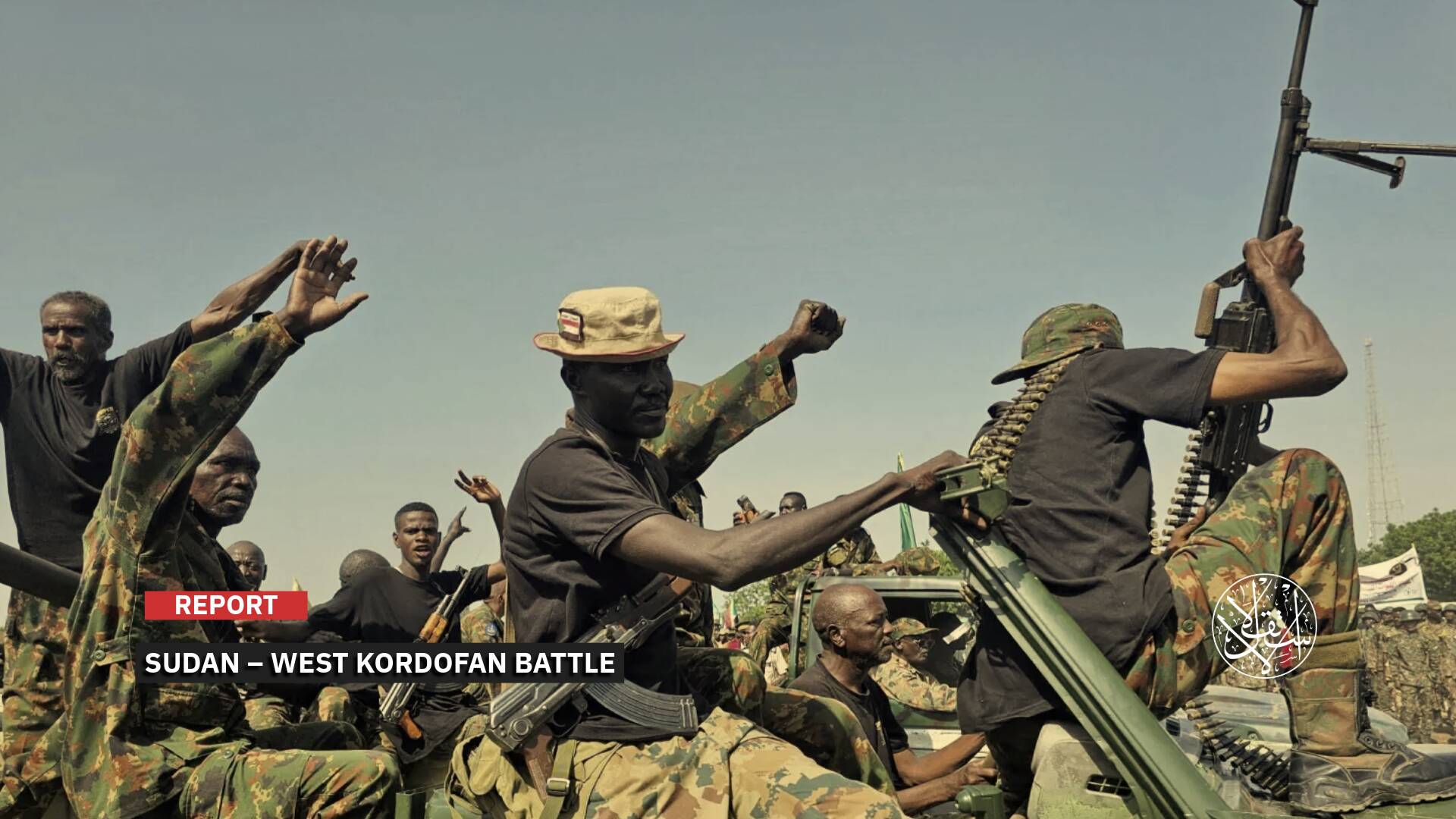
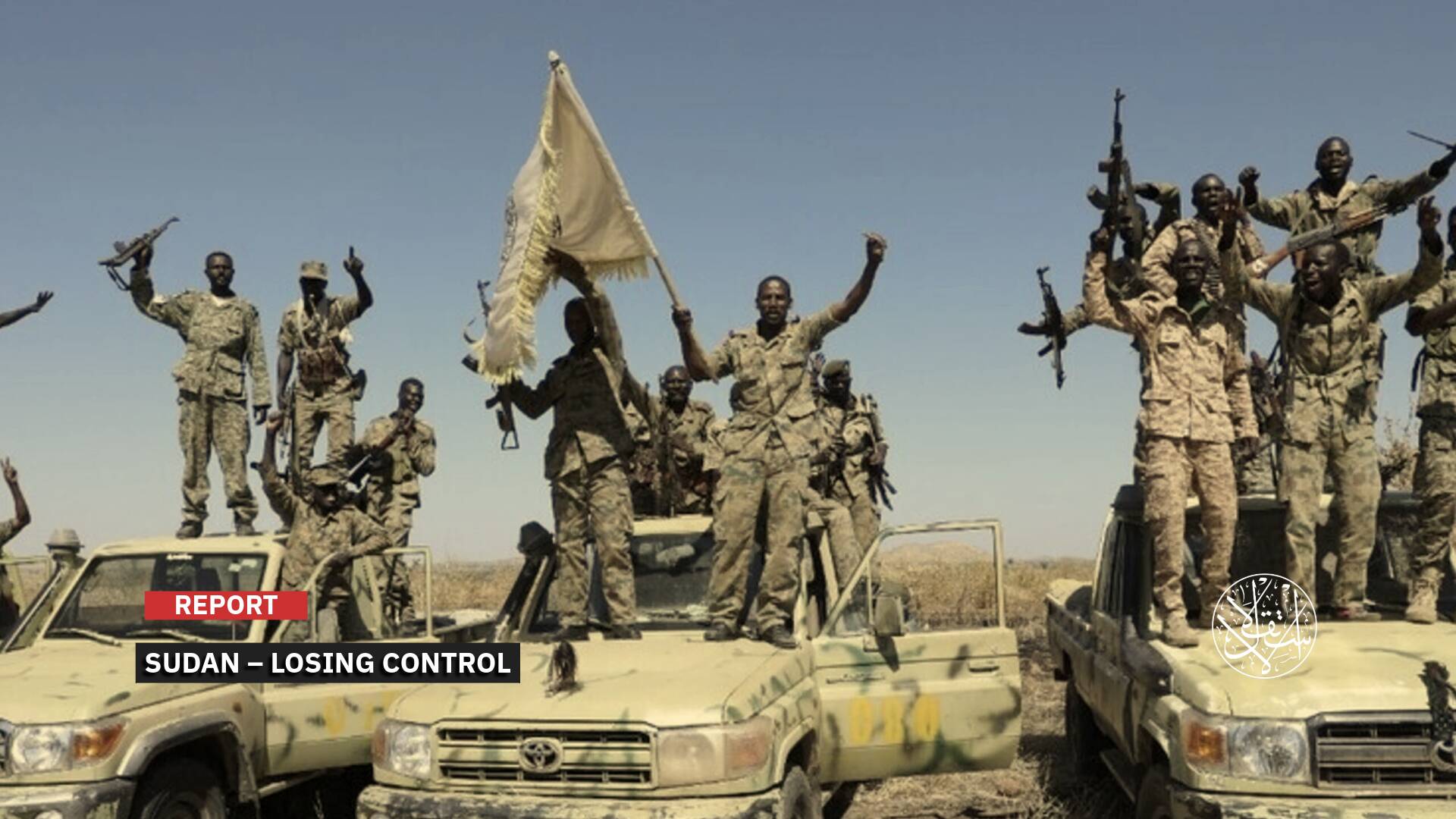
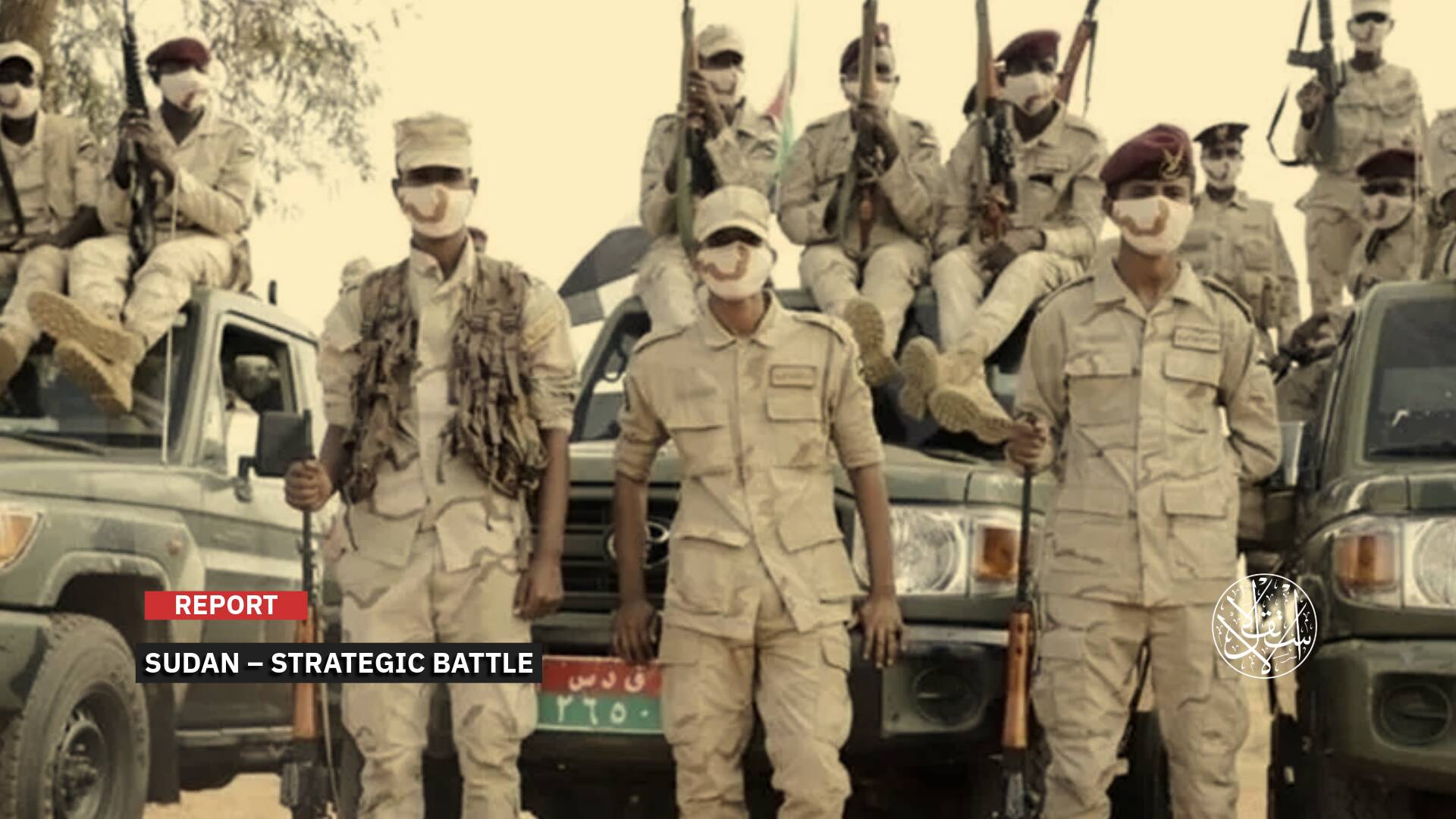
Al-Burhan’s appearance inside the palace came weeks after the army and its allied forces achieved field gains in North Kordofan, as the focus of the war gradually shifted from the capital to the western regions.
In late July 2026, these forces recaptured the city of Bara, as well as the areas of Jabrat al-Sheikh, Umm Sayyala, Umm Qirfa, and Al-Baraka, along with other positions on the Exports Road connecting Omdurman and El Obeid.
These maneuvers secured a direct land route between Khartoum and the capital of North Kordofan, reduced the threat facing El Obeid, and weakened a key supply route used by the Rapid Support Forces (RSF) coming from Darfur.
A report published by Mada Masr on August 1, 2026, described the operation as the largest ground offensive launched by the army since the recapture of Khartoum, noting that it dismantled a vital logistical corridor linking RSF positions in Kordofan to their extensions in the west.
On August 3, Al-Burhan chaired a meeting of the Security and Defense Council in Khartoum, dedicated to reviewing the progress of military operations and the security situation following these gains.
The following day, Sovereign Council member and Deputy Commander-in-Chief Yasir al-Atta outlined a strategy based on simultaneous advances across multiple fronts—mirroring the military operation that had previously eliminated the RSF militia's presence within the capital.
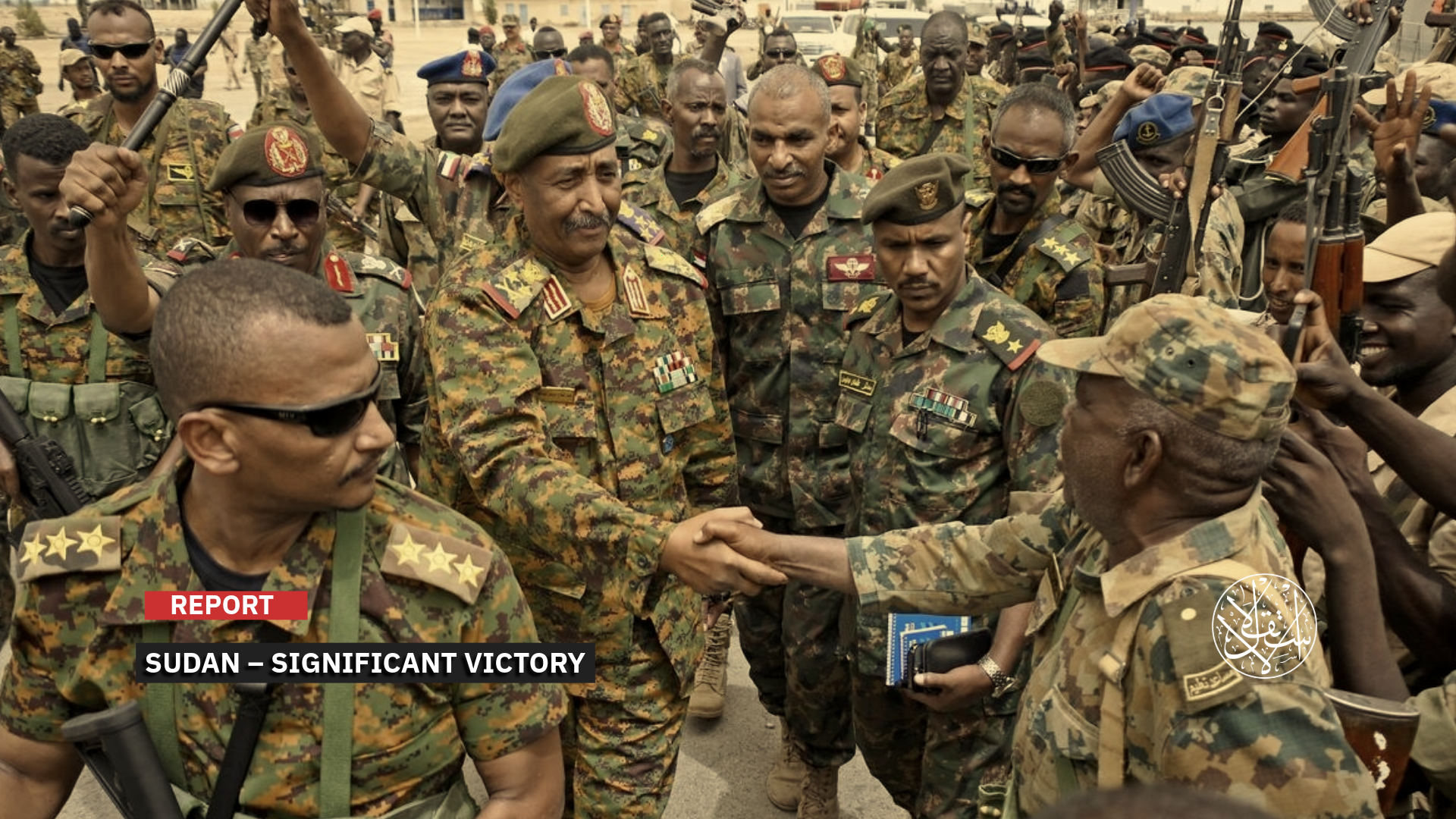
This context gave Al-Burhan’s return a significance that went beyond the mere reactivation of the presidential headquarters; the event coincided with the military leadership's attempt to shift from consolidating control over Khartoum to opening a path for westward advancement.
Mutaz al-Fahl, a leader within the Democratic Bloc, viewed Al-Burhan’s return as a qualitative shift that underscores the state's restoration of its sovereignty and prestige.
Writer and political analyst Magdy Abdel Aziz described the military recapture of the palace in March 2025 as a victory of significant symbolic and sovereign value, given the site's association with the presidency and the history of independence.
Offering a more cautious assessment following the palace's recapture, military expert Brigadier General Jamal Al-Shahid stated that controlling the site strengthens the army's political and negotiating position.
However, he noted that it does not signal the end of the war, as a decisive outcome remains contingent on the progression of battles in Kordofan and Darfur.

Political Significance
Sudanese political analyst Mohamed Nasr told Al-Estiklal that the return of Sovereignty Council Chairman Abdel Fattah al-Burhan to the Republican Palace carries great political and sovereign significance, though it does not mean Khartoum has moved past all the war's repercussions.
He explained that the simultaneous drone attacks targeting Omdurman, Khartoum North (Bahri), Atbara, Al-Damar, and El Obeid—just one day before al-Burhan’s return—revealed the continued ability of the Janjaweed (Rapid Support Forces militia) to threaten cities from long distances, despite the withdrawal of their ground forces from the capital.
He added that reactivating the palace after refurbishing parts of it marks an important step toward state institutions reclaiming their headquarters; however, the situation within the presidential complex alone does not reflect conditions across the rest of Khartoum.
Vast neighborhoods continue to suffer the effects of destruction inflicted upon homes, hospitals, schools, and electricity, water, and sewage networks. Furthermore, residents face the dangers of unexploded ordnance and remnants of combat scattered throughout residential areas, as well as around schools and roads.
He noted that the rising trend of people returning to their homes presents the government with a challenge that goes beyond mere political announcements.
Mr. Nasr viewed the reopening of markets and certain institutions, alongside street-cleaning and debris-removal campaigns, as preliminary signs of the capital’s recovery.
However, he noted that this recovery is proceeding at uneven paces across Khartoum, Omdurman, and Bahri due to disparities in the levels of destruction, available services, and security.
Furthermore, the state faces a significant financial challenge in reconstructing the capital and rehabilitating other affected areas, compounded by declining revenues and damage to productive sectors.
He emphasized the distinction between the return of state institutions and the city’s return to sustainable life.
While the government’s success in relocating its meetings, ministries, and diplomatic functions back to Khartoum represents a political gain, a full recovery requires ensuring security and basic services, making hospitals and schools operational, clearing war remnants, and providing housing and employment for returnees.
Mr. Nasr concluded that the Republican Palace has become a symbol of shifting power dynamics and the state’s reclamation of its sovereign center; yet, it alone does not signify an end to the war's impact.
He added that the true test lies not within the palace walls, but in Khartoum’s neighborhoods—when residents can return to safe homes and regain access to services and a normal life, free from the fear of new Janjaweed attacks or further rounds of fighting.
Sources
- Al-Burhan arrives at the Republican Palace in Khartoum for the first time since the outbreak of the war [Arabic]
- What are the implications of the Sudanese army's seizure of the Republican Palace? [Arabic]
- Heritage conservation experts in Sudan are striving to restore destroyed treasures [Arabic]
- Sudan: Rapid Support Forces announce "full control" of the Republican Palace [Arabic]
- Sudanese army and allies recapture key North Kordofan towns