Yemen’s Drone War: How UAVs Are Reshaping the Conflict
The Houthis began using drones as early as 2016.
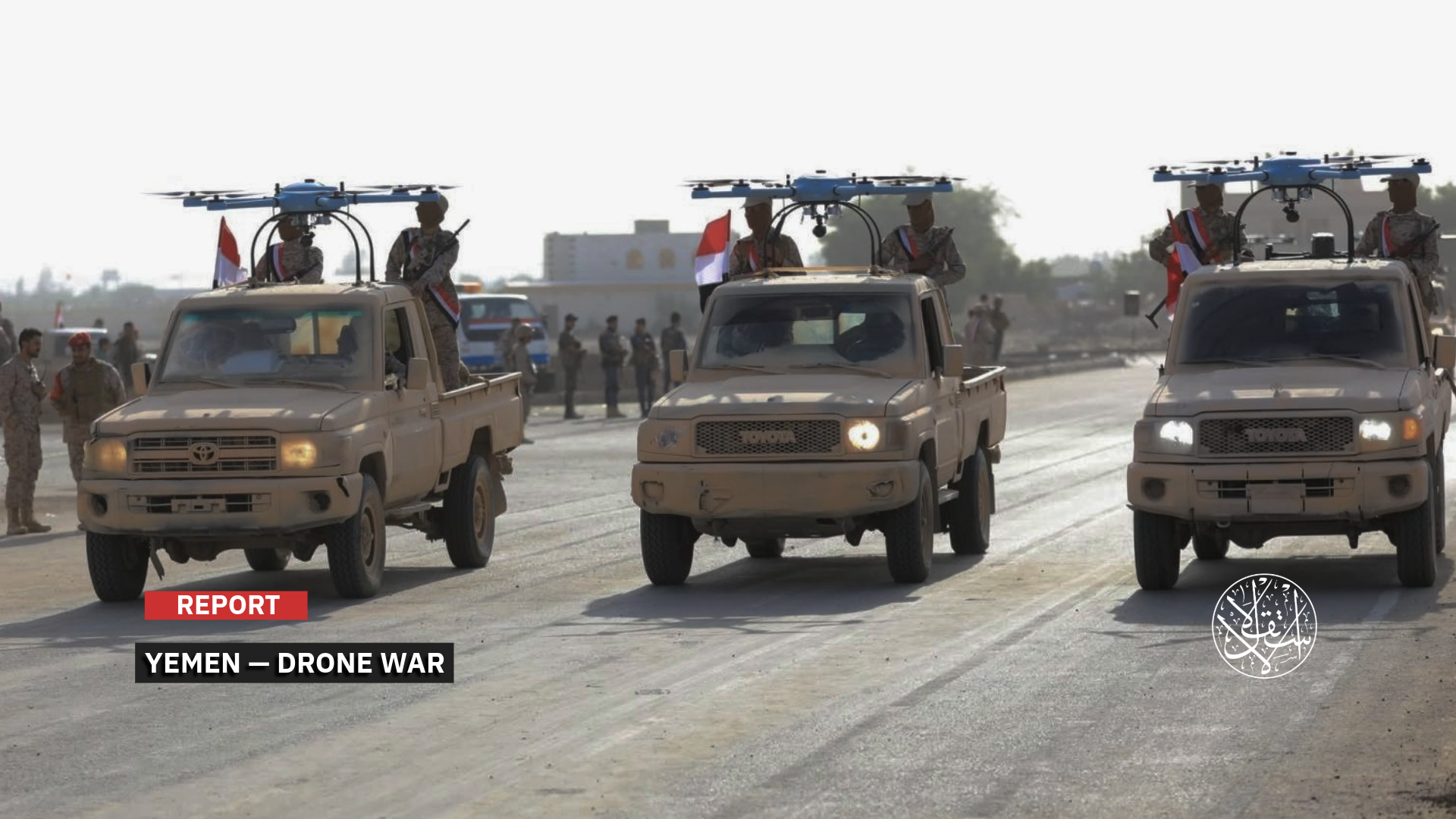
In recent months, drones operated by Yemen’s army have become an increasingly visible presence on the country’s battlefields. Authorities have begun allowing footage to be released showing unmanned aircraft striking Houthi positions, gatherings, and vehicles across several fronts.
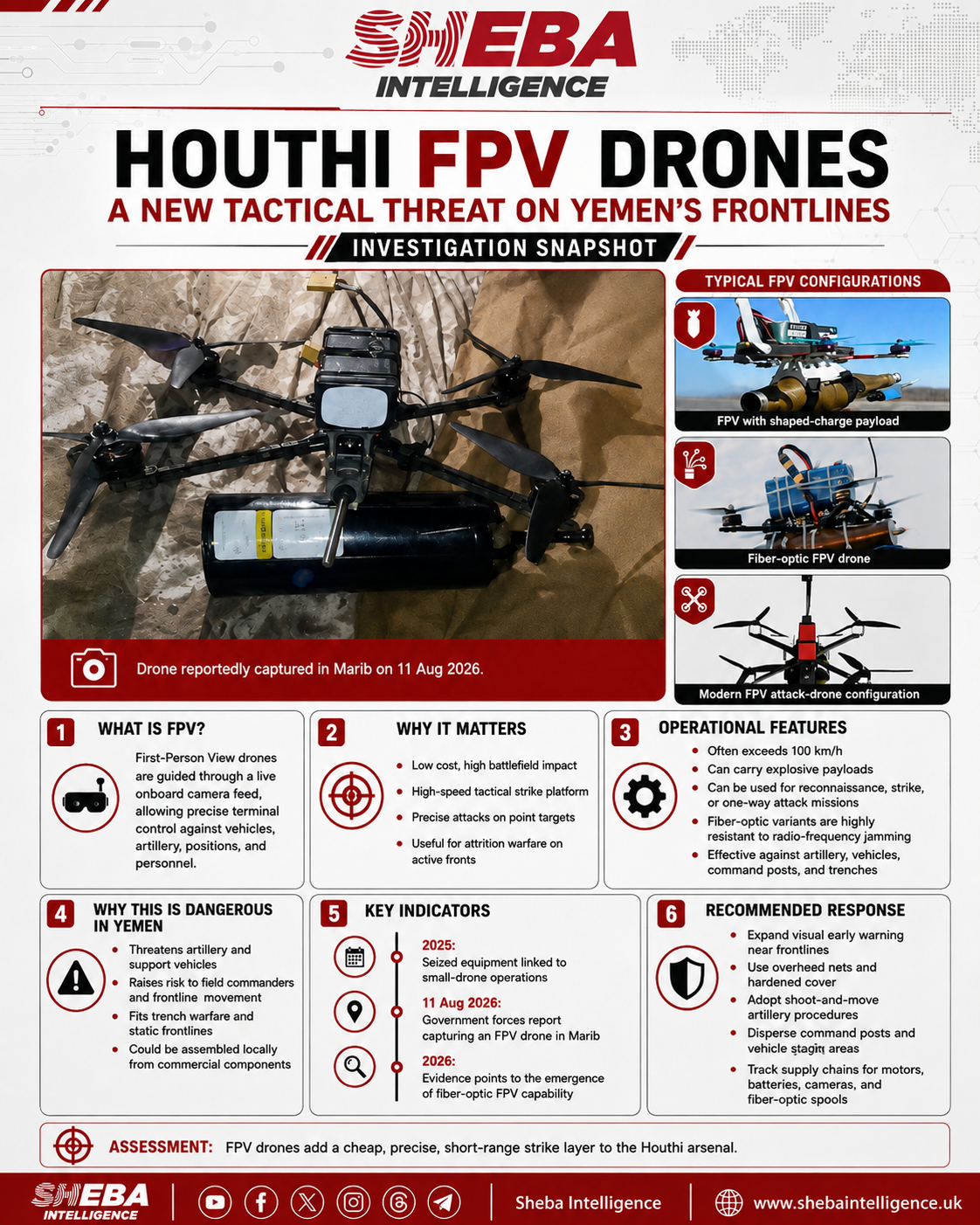
The footage shows a range of drone platforms, including hybrid vertical takeoff and landing (VTOL) aircraft and first-person-view (FPV) drones.
Military sources say the released footage offers only a limited glimpse of the army’s drone capabilities. They say efforts to build and expand the program began years ago and have included training personnel for more than three specialized brigades.
Drones are no longer a supporting tool in Yemen’s war. They are becoming a central force in the conflict, reshaping the balance of power, putting economic interests at risk, and turning the battle for the skies into a battle for morale and perception.
After years in which the Houthis held near-total control of Yemen’s skies and used drones to threaten neighboring countries, the Yemeni army is now entering the drone war itself. The shift could weaken the group’s aerial monopoly and open a new chapter in the conflict, with potentially far-reaching consequences for Yemen and the wider region.
A Gradual Evolution
Drone warfare in Yemen has evolved in stages, beginning with limited use for surveillance and reconnaissance before gradually becoming a long-range offensive weapon and, eventually, a strategic tool capable of influencing the course of the conflict.
The Houthis’ early use of drones dates back to 2016, when they relied on small aircraft for short-range surveillance and reconnaissance. In February 2017, they held their first drone exhibition, displaying three reconnaissance aircraft and one attack drone. That same year, they established a dedicated drone unit.
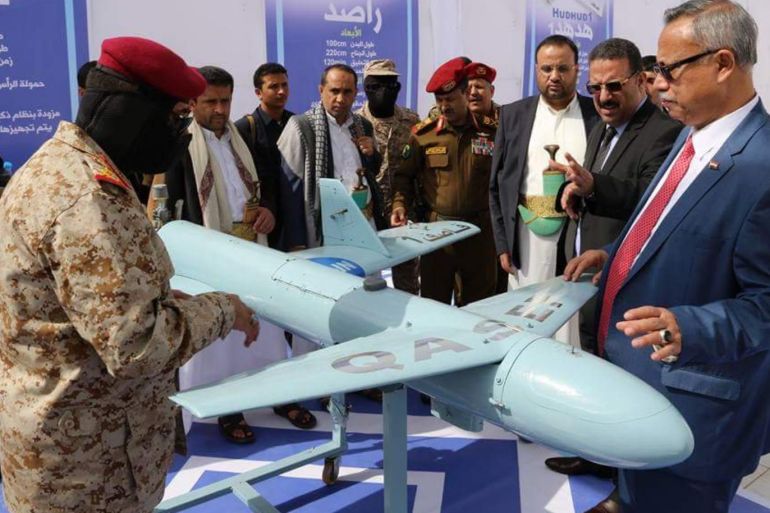
The biggest shift came in 2017 and 2018, with the emergence of systems such as the Qasef-1 and Samad. The Houthis moved from rudimentary, short-range surveillance drones to larger, longer-range aircraft with greater strike capabilities.
By 2018, drones were being used for more precise operations inside and beyond Yemen, with strikes targeting sites in Saudi Arabia and the UAE, including Abu Dhabi Airport in July and Dubai Airport in September. Their role had shifted from limited reconnaissance to an offensive capability able to reach targets far beyond the front lines.
In 2019, the Houthis’ drone program underwent a major expansion in both scale and capability. They declared it the “Year of Drone Aviation,” claiming they could produce one drone a day.
Drones became a core part of the Houthis’ military strategy, used to strike critical infrastructure as well as military and economic targets beyond the front lines, including in Saudi Arabia and the UAE. Their impact had thus extended from the battlefield into the strategic depth of their adversaries.
The evolution of drone warfare in Yemen can broadly be divided into two phases. The first was marked by the Houthis’ dominance of the technology. They initially used drones to offset their lack of conventional air power, then developed them into a means of striking deep inside Saudi Arabia and the UAE while imposing economic and political costs on their adversaries.
The second phase began to take shape in 2026, as government forces entered the drone arena in a more organized way. Their use expanded from reconnaissance to direct strikes and artillery fire correction, eventually extending to heavier platforms and longer-range offensive capabilities. The Houthis’ monopoly on this advantage has therefore begun to erode as the technology gradually spreads to another side of the conflict.
A Major Shift
Drone warfare represents a significant boost to the Yemeni army’s capabilities, giving it more advanced tools for surveillance, intelligence gathering, target identification, precision strikes, and support for ground forces. It can also help track Houthi movements, disrupt supply lines, and carry out targeted operations deep behind the front lines. Together, these capabilities give the military greater flexibility in conducting operations, improve battlefield planning and decision-making, and help protect troops while strengthening their combat effectiveness.
Maj Gen Abdul Aziz al-Muhaya, commander of the Air Force and Air Defense, said the drone program was developed entirely by Yemeni engineers and technicians. Over the past several years, they have designed the systems and conducted technical and field tests until the platforms were ready for deployment within the Air Force.
Brig. Gen. Sadiq al-Asri, deputy chief instructor at the Air Force and Air Defense College, said bringing the system into service expands the army’s operational capabilities, sends a deterrent message to the Houthis, and boosts the morale of its fighters.
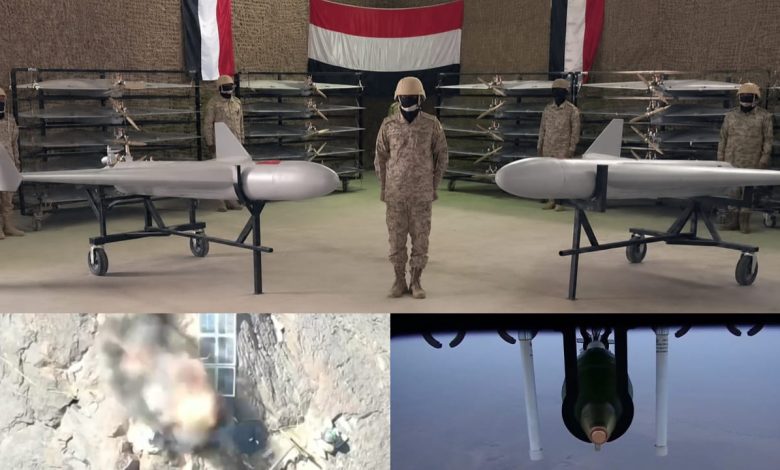
Yemeni military and strategic analyst Abdul Aziz al-Hadashy says the impact of drones remains largely tactical at this stage but could become strategic as their use grows more frequent and sustained, limiting the Houthis’ ability to regroup and redeploy their forces.
Sustained drone operations could also force the group to spread its forces across wider areas to avoid being targeted, weakening its offensive capabilities, particularly on open fronts such as Marib and Mokha.
Yemeni academic Ismail al-Suhaili says drones now provide broad surveillance along the front lines between the Yemeni army and popular resistance forces on one side and the Houthis on the other. This has helped government forces move from static defense to taking the initiative and launching precise preemptive strikes.
According to al-Suhaili, drones have also improved tactical reconnaissance, intelligence gathering, and strike coordination, as reflected in the scale of Houthi losses reported in funeral announcements and images released by the army.
He argues that possessing this capability gives the army a “major tactical and operational advantage” and could help narrow the gap with the Houthis in ballistic missiles and drones.
But al-Suhaili cautions that drones, while partly offsetting the army’s limited conventional air support, cannot by themselves shift the balance of power or decide the war. Their main value lies in improving surveillance, speeding up the targeting cycle, disrupting enemy movements, and providing tactical air support to ground forces. For now, their importance appears to lie more in improving operational effectiveness and limiting the Houthis’ freedom to maneuver than in securing outright air superiority.

A Multi-Layered Arsenal
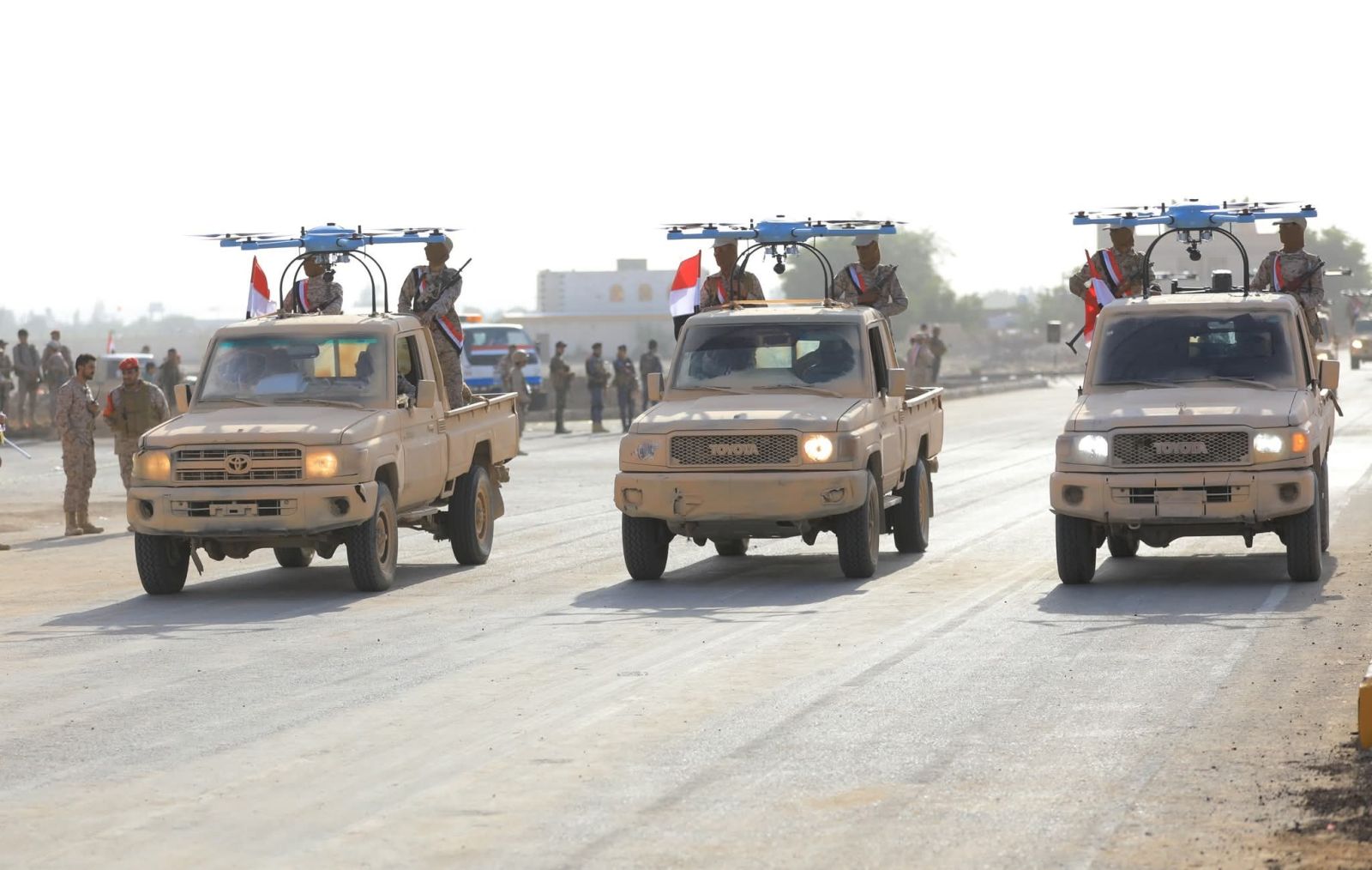
In 2026, government forces significantly expanded their drone capabilities, moving beyond limited tactical use toward a more diverse fleet designed for reconnaissance, target acquisition, artillery fire correction, and offensive strikes.
At the core of the system are small tactical drones used for surveillance, reconnaissance, target identification, and battle damage assessment. They have been deployed in operations across Marib, al-Dhalea, the western coast, Saada, and elsewhere. The Defense Ministry has confirmed that drones are no longer used solely for surveillance but also for operational missions and strikes against Houthi positions and movements.
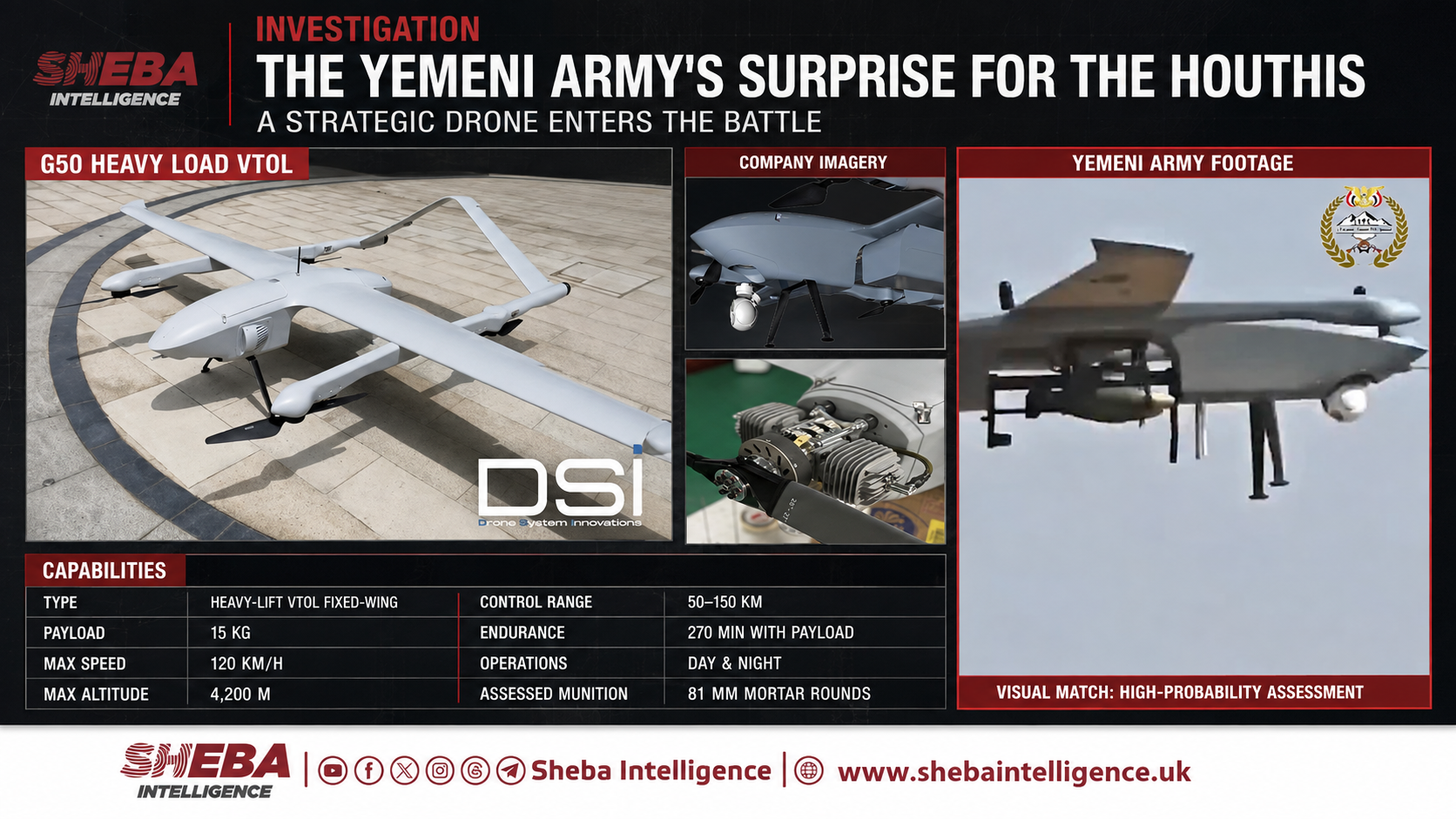
At a more advanced level, Sheba Intelligence identified the use of a Chinese-made DSTECHUAS 50G, a fixed-wing vertical takeoff and landing aircraft modified for military use.
Investigations estimate that the platform can carry about 15 kilograms, reach speeds of 120 kilometers per hour, and fly at an altitude of roughly 4,200 meters. Its control range is estimated at between 50 and 150 kilometers, with an endurance of several hours and the ability to carry munitions, including modified mortar rounds. The platform marks a shift from small tactical drones to heavier, multi-role systems.
The Defense Ministry has also announced the deployment of the Aiban and Naqam systems. Sources link them to the SKYWASP model, with estimates putting their range at about 1,500 kilometers and their warhead capacity at between 30 and 50 kilograms. They are designed for one-way attack missions.
The assistant defense minister, meanwhile, announced that two full drone brigades had entered active service with high weapons readiness and reconnaissance and strike capabilities. The move suggests the program is evolving from the operation of individual drones into dedicated military units built around drone warfare.
Breaking the Monopoly
The Yemeni army’s entry into drone warfare is one of the most significant recent developments on the battlefield after the Houthi militia spent years as the dominant force in this domain.
The shift has had an impact beyond the battlefield, extending into the media and psychological war. The army has released footage showing Houthi gatherings being targeted by FPV and VTOL drones, confronting the militia with a new reality in which drones are no longer its exclusive weapon.
The footage has also unsettled the Houthis’ media narrative, with some outlets questioning the authenticity of the videos or claiming they were archival recordings. This has come as Iranian media support, including assistance previously provided by Hezbollah, has declined.
At the same time, the emergence of these capabilities has strengthened the Yemeni army’s military and media presence, highlighting offensive and reconnaissance capabilities that had not previously been publicly disclosed.
Government drones could help curb the Houthi threat in the future, but their effectiveness will depend on how much the system develops and how consistently it is used. Experts cited by Al Jazeera say the drones have become an important tactical capability and that sustained, coordinated operations could improve the balance on the front lines and restrict Houthi movements, even though the government fleet still falls short of the militia’s long-range strike capabilities.
Reports by Sheba Intelligence also point to a shift in government use, from reconnaissance and limited strikes to artillery fire correction and the deployment of heavier, multi-role platforms.
A greater impact, however, will depend on expanding and diversifying the drone fleet and integrating it with intelligence, artillery, communications, command and control, and electronic warfare, alongside training, maintenance, and logistics. If those pieces come together, drones could evolve from a tactical tool into a sustained means of degrading Houthi capabilities, though not one capable on its own of deciding the war or changing control of territory.

Regional Stakes
Iranian support has been a major driver of the Houthis’ drone capabilities, ranging from supplying aircraft and components and providing training and technical expertise to helping with local assembly and development. One figure frequently cited in this context is Iranian officer Abdolreza Shahlaei, who is reported to be in Sanaa and involved in operating Houthi drones and overseeing their military operations.
According to Sheba Intelligence, the support serves broader objectives, including weakening or capturing Marib and gaining access to its oil resources, as well as intensifying operations along the western coast through Mokha toward the Bab al-Mandab Strait.
A study by the Center for Strategic and International Studies (CSIS) says Iranian-Houthi cooperation evolved from supplying disassembled drones, including systems linked to the Qasef and Ababil models, to training Houthi personnel in assembly and manufacturing and sending experts to Yemen. Houthi fighters were also sent to Iran for training. Support later focused on engines and components that are difficult to produce locally, along with funding, weapons, and technical expertise, with roles played by the Islamic Revolutionary Guard Corps (IRGC), its Quds Force, and Hezbollah.
In July 2026, Reuters reported, citing sources, that Iran had sent IRGC commanders, advisers, and equipment related to missiles and drones to Yemen. Reports in August also pointed to the transfer of equipment designed to detect enemy drones, identify their signals, and locate their operators.
This is consistent with a 2024 report by the UN Panel of Experts, which concluded that the Houthis lack the ability, without external assistance, to develop and manufacture some complex weapons systems, including reconnaissance and attack drones and their control systems.
For Saudi Arabia, meanwhile, the Yemeni army’s entry into drone warfare carries its own significance. It could strengthen the government’s position while easing part of the military burden on Riyadh. Although Saudi Arabia has no publicly declared policy of supplying the army with drones, its support for the Yemeni government and state institutions, along with its backing for the political process, point toward strengthening Yemen’s own capabilities against the Houthis. President Rashad al-Alimi has said that Saudi support is helping unify security and military decision-making and improve the performance of state institutions.
Saudi Arabia’s own experience with Houthi drones has reinforced this approach, exposing a major imbalance between the cost of attack and defense. CSIS notes that some Patriot missiles can cost more than $1 million, compared with hundreds of dollars for some drones. That disparity has driven efforts to develop more specialized counter-drone systems, including Coyote interceptors, lasers, and high-powered microwaves, while strengthening intelligence capabilities to identify launch and assembly sites.
Yemeni army capabilities such as FPV and VTOL drones could also serve as an internal balancing tool by forcing the Houthis to spread their forces and resources and limiting their ability to concentrate attacks against Saudi Arabia.
For Riyadh, the security of Yemen is also inseparable from the Red Sea. In a joint statement with Italy, Saudi Arabia condemned Houthi attacks and threats to maritime security in the Red Sea and Bab al-Mandab and called for protecting international trade. The approach reflects an effort to share the burden of countering the threat with international partners rather than turning it into a direct Saudi confrontation.
The Saudi and Iranian calculations around drones, therefore, converge on a broader regional contest. Iran seeks to strengthen the Houthis’ ability to impose military and security costs on its adversaries, while Riyadh is betting on support for the Yemeni government, stronger counter-drone defenses, and protection of its territory and interests, while keeping a political settlement on the table as a way to avoid a wider war.
The Conflict Is Entering a New Phase
The spread of drones has reshaped the landscape of Yemen’s war, moving the ability to strike from the front lines deep into enemy territory. Artillery positions, vehicles, commanders, ammunition depots, and communications posts can now be targeted, while the value of reconnaissance and intelligence has grown and the safety of military gatherings has declined.
The shift has also triggered a parallel race in electronic warfare and counter-drone defenses, from radar and jamming to short-range air defense systems.
With government forces making a major push into the drone arena in 2026, the Houthis’ asymmetric advantage has begun to narrow. The government could gain a stronger ability to conduct reconnaissance, strike targets behind the front lines, and raise the cost of Houthi movements, even if drones alone cannot change control of territory.
The Houthis, meanwhile, are likely to respond by expanding range and accuracy and developing loitering munitions, drone swarms, maritime systems, and electronic warfare capabilities, deepening a two-sided drone arms race.
The group’s growing ability to manufacture and assemble drones locally, according to UN reports, could make those capabilities even harder to dismantle.
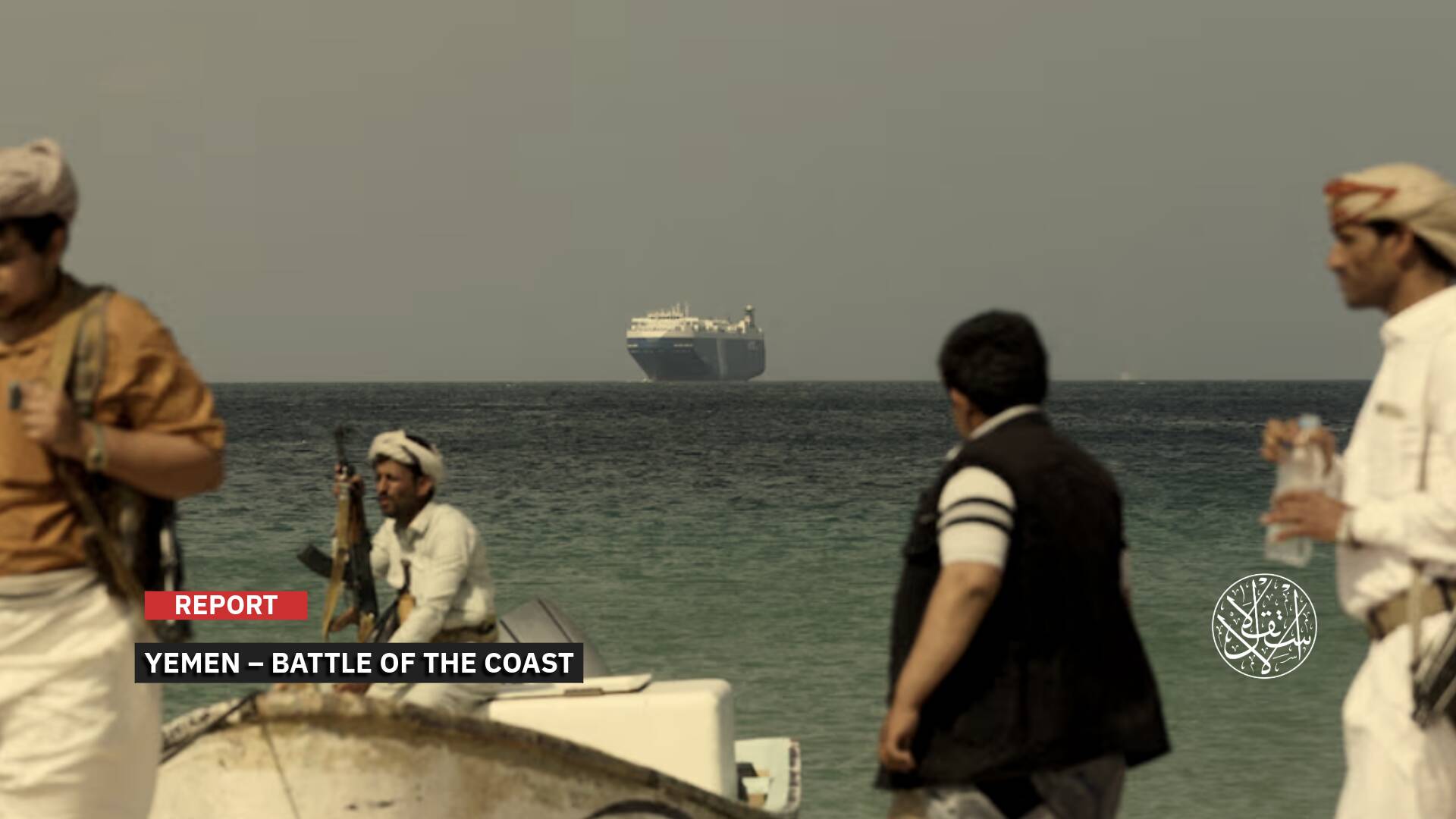
The Houthis’ use of drones beyond Yemen, from the July 2024 strikes in “Tel Aviv” and “Israel’s” subsequent attacks on Hodeidah to threats against shipping in the Red Sea and Bab al-Mandab, has also made drones an increasingly important tool in the internationalization of the conflict.
Politically, drones could become a means of raising the cost of war and increasing pressure on an adversary at the negotiating table. Their future importance, therefore, will depend not simply on the number of aircraft or the precision of their strikes, but on each side’s ability to integrate them into a broader intelligence, electronic, and military system and turn their battlefield impact into political and territorial gains.
Sources
- Yemen’s drone war: Rivals flex growing aerial muscle
- Yemen’s Drone War: Long-Range Strike Capabilities Have Yet to Enter Combat
- Armed Forces Aviation: A Strategic Weapon Enhancing Combat Readiness and Deterring the Houthi Terrorist Militia [Arabic]
- Yemeni Army Drones Turn the Tables in the Confrontation with the Houthis [Arabic]
- Drones Enter Yemen's War: How Are They Changing the Rules of Engagement with the Houthis? [Arabic]
- Exclusive | Shahlai Meets Houthi Military Leaders to Discuss Tehran Plan to Seize Marib’s Oil and Control Bab al-Mandab
- Yemeni Army Drones Break the Houthis' Monopoly on the Skies and the Narrative, Shifting the Morale Balance [Arabic]
- The Iranian and Houthi War against Saudi Arabia
- Six Houthi drone warfare strategies: How innovation is shifting the regional balance of power
- A Detailed Study of Houthi Drone Operations [Arabic]
- Yemeni Drones: A Fearsome Deterrent Weapon Against Adversaries [Arabic]
- President al-Alim meets with Ambassadors of countries sponsoring peace process in Yemen
- Foreign Ministry: Saudi Arabia Strongly Condemns Claims by the Alleged Military Spokesman for the Houthi Terrorist Group Accusing the Kingdom of Besieging the Yemeni People [Arabic]