From Tents to Digital Classrooms: How Are Gaza’s Children Facing a Fourth Year of Disrupted Schooling?
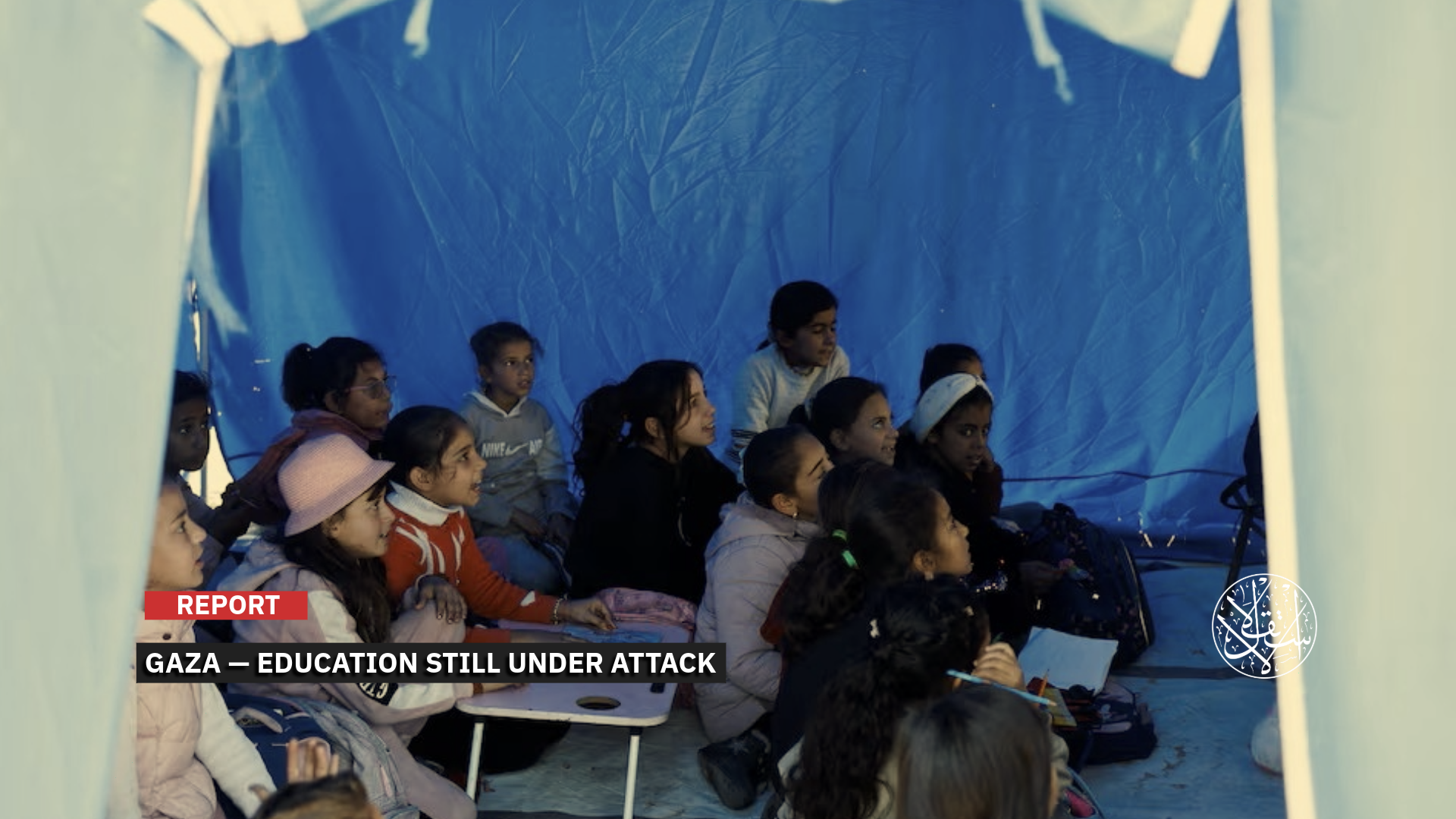
More than 637,000 children still lack consistent access to formal, in-person education.
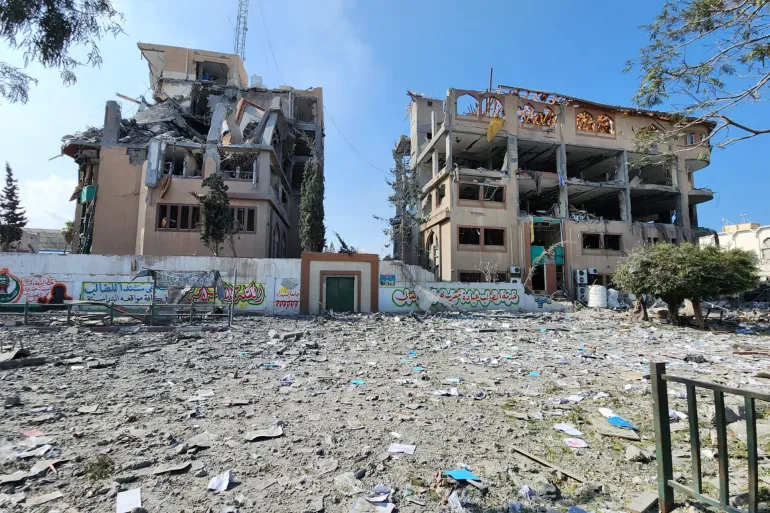
Gaza’s children are entering a fourth school year since the Israeli Occupation aggression began in October 2023, with education now pieced together from emergency alternatives: whatever schools remain operational, temporary learning spaces, and digital classes, after much of the territory’s education infrastructure was destroyed.
More than 637,000 children still lack sustained access to formal, in-person education, according to the Occupied Palestinian Territory Education Cluster, a coordination platform bringing together organizations and agencies working in the sector.
The crisis goes far beyond finding a seat in a classroom. An entire generation is moving into new ages and grades while gaps in reading, writing, and math continue to widen, leaving a child’s registered grade an increasingly poor measure of what they can actually do.
Where Will Gaza’s Students Learn?
The Palestinian Ministry of Education and Higher Education has set September 6, 2026, as the start of the new school year, while UNRWA began registering first-grade students on June 20, with learning continuing in temporary spaces and through digital platforms.
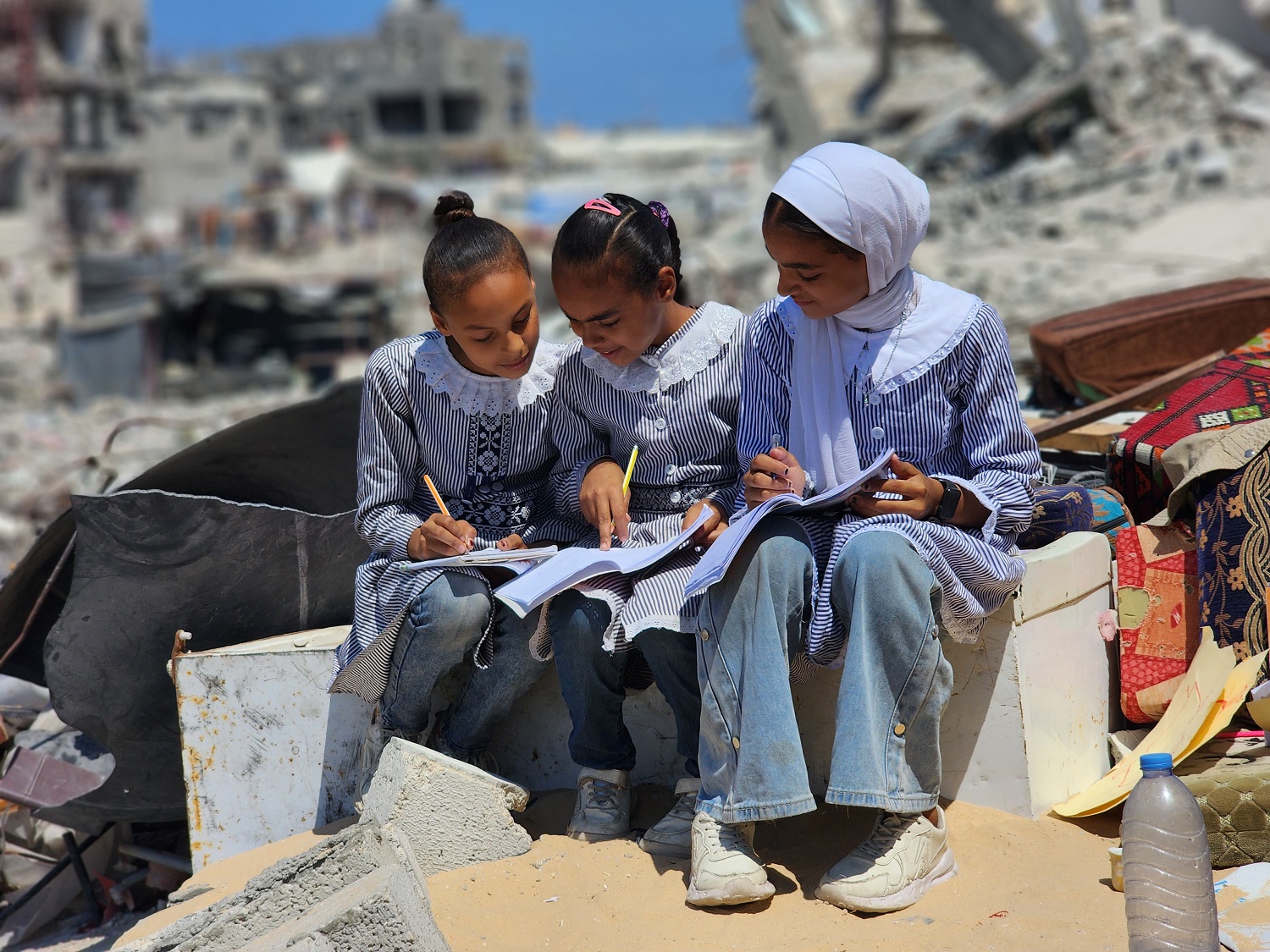
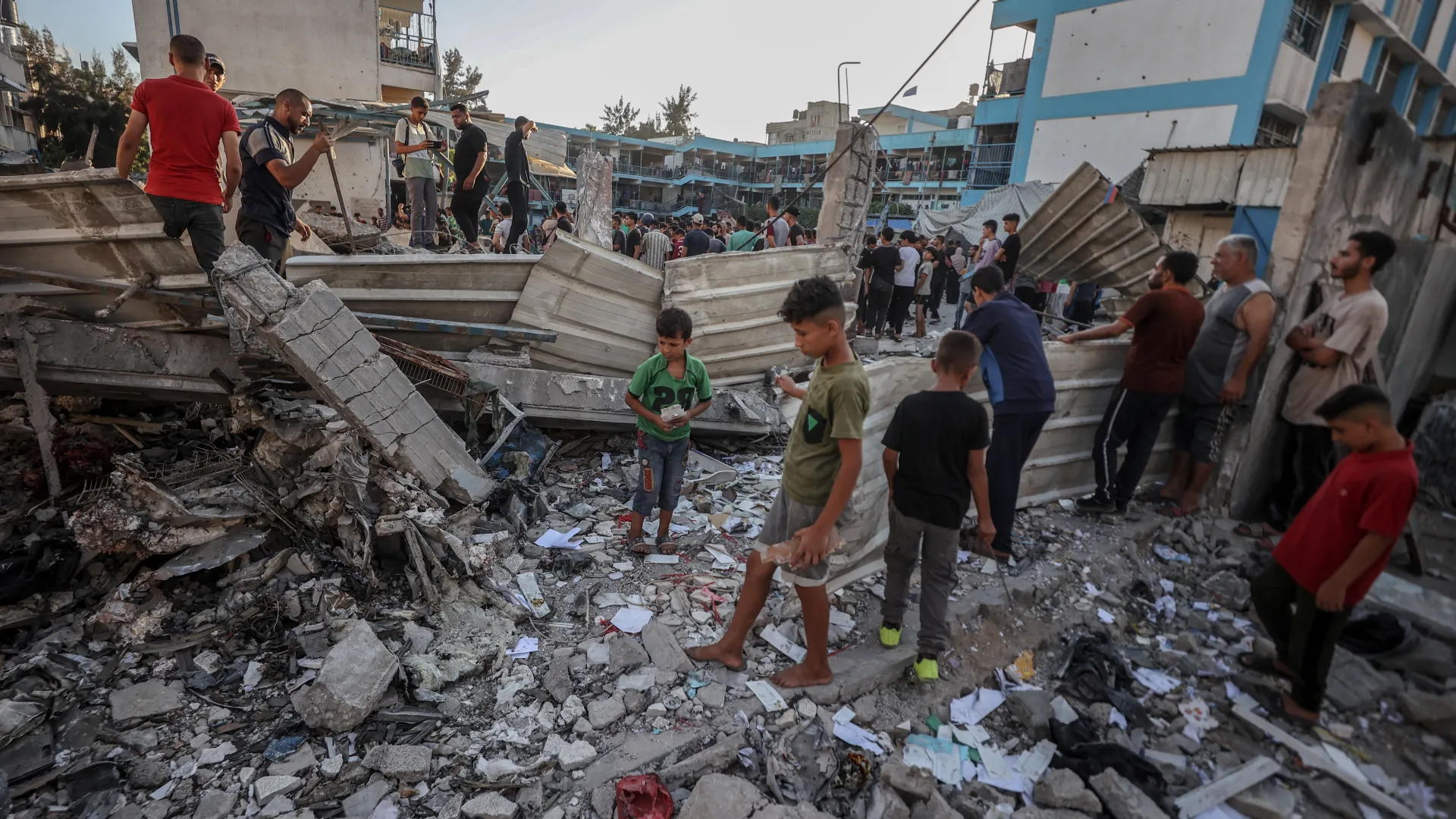
The new school year begins with a severe shortage of usable school buildings. In August 2026, the UN Office for the Coordination of Humanitarian Affairs (OCHA) said 526 of Gaza’s 564 school buildings, or about 93 percent, needed to be completely rebuilt or extensively rehabilitated.
Monir Abu Zaiter, director of education for eastern Gaza, estimated on August 16 that around 80 percent of the territory’s schools were out of service and that only about 21 percent of classrooms were suitable for use.
Temporary learning spaces have become the main route to in-person education. More than 300,000 children were attending 494 such spaces by mid-March 2026, reaching about 39 percent of children between the ages of 4 and 17.
The number of spaces rose to 613 by the end of June, allowing more than 432,000 children to access some form of structured learning during the first half of the year.
The schedule in these spaces bears little resemblance to a normal school day. Abu Zaiter said about 55 percent of the field learning sites used during the previous school year were tents.
The spaces also operate on a shift system, with two groups sharing each site during the week and each group receiving three days of in-person instruction.
Digital education continues alongside the temporary spaces. Abu Zaiter estimated that around 84,000 students were studying online, while about 127,000 remained outside both in-person and digital education amid persistent problems with electricity, internet access, and the availability of devices.
The loss of life in Gaza’s education sector has also strained the capacity to keep schools running. By early February 2026, the ministry had recorded the martyrdom of 18,639 students and 792 education workers, along with injuries to more than 28,000 students and 3,251 teachers. Abu Zaiter estimated that around 535 teachers had been martyred out of an education workforce of roughly 22,000.
For displaced father Ahmed Afana, 43, keeping his two children in school now means following two very different paths. One has secured a place in a learning tent where classes are held in shifts three days a week, while the other follows lessons on the family’s phone whenever electricity and internet access are available.
Afana told Al-Estiklal that keeping his children on a regular educational track depends more on access to a seat, teaching hours, and connectivity than on the traditional school timetable.
Inside the family’s tent in western Gaza City, Afana has noticed that one of his children still struggles with reading, writing, and basic skills they were expected to have mastered in earlier grades. The cramped tent, along with the daily demands of finding water and food, leaves the family little time to help make up for the lost ground.
A Generation Falling Behind
UNICEF describes the situation as a learning crisis affecting every school-age child in Gaza, as foundational skills have eroded and students struggle to return to the level expected for their age. Current education programs are therefore prioritizing the recovery of reading, writing, math, and science skills before expanding into the broader curriculum.
Nearly 700,000 children between the ages of 4 and 17 are estimated to have missed almost three full years of formal, in-person education. During that time, learning opportunities have ranged from brief attempts to reopen schools to temporary learning spaces and online classes, punctuated by long periods with no schooling at all.
During the ceasefire in early 2025, the Ministry of Education launched an accelerated school year. By early March, more than 150,000 students had returned to around 165 government schools, more than half of which were operating on three shifts.
The resumption of the Israeli genocide in Gaza on March 18 brought those efforts to a halt, forcing schools to close and families to flee again. By January 2026, enrollment in temporary learning spaces had reached around 42 percent of school-age children.
Researchers at the University of Cambridge and the Center for Lebanese Studies, working with UNRWA, sought to measure the broader burden of recovery in a study published in January 2026. Their model estimated that, if formal education resumed in September 2026, the accumulated learning loss could amount to the equivalent of 7.5 years of schooling.
The estimate includes one year associated with disruptions caused by the COVID-19 pandemic and three years linked to the Israeli aggression on the Strip and school closures, as well as the effects of trauma and hunger on children’s ability to recover and learn.
But determining where each child actually stands in reading, math, and other skills requires direct assessment to establish how much catch-up learning is needed.
The gap between a student’s official grade and what they have actually learned is widening. The ministry has continued to enroll students, run virtual and accelerated learning tracks, and administer high school exams, while children have continued to age and advance through grades during years when regular education has been severely disrupted.
UNICEF estimates that around 56,000 children reached school age during the crisis, meaning a large cohort entered the early grades without experiencing the school routines where reading, writing, and math skills are normally developed.
Noura Youssef, from Deir al Balah in central Gaza, said her son was 6 when the Israeli war began and is now the age of a third grader, yet his reading and writing remain below the level his older siblings had reached at the same age.
She is trying to make up some of the lost ground, but study time competes with the daily search for water and food, noise, and the pressures of life in displacement. Speaking to Al-Estiklal, she described how several of her children share a single phone and how difficult it is to keep it charged.
“My children forgot a lot of what they had learned after two years in which daily life became about displacement, water, food, and survival,” she said. “There is now a worrying gap that I believe will affect the rest of their school years.”
What Does the Future of Education Look Like?
Recovery plans for the coming years center on rapid catch-up education alongside the expansion of in-person schooling, through programs led by the Ministry of Education, UNICEF, UNRWA, and the Occupied Palestinian Territory Education Cluster to restore basic skills.
How quickly children can catch up will depend on funding, available classroom space, and teaching staff, as well as the ability to assess the learning levels of hundreds of thousands of children.
In January 2026, UNICEF launched its Back to Learning program, using temporary education centers and spaces alongside an accelerated program for grades two through nine focused on rebuilding basic reading, writing, math, and science skills according to each student’s actual level.
The program also includes school readiness programs for younger children and links education with psychosocial support, health, nutrition, and the inclusion of children with disabilities.
The approach focuses first on what students can actually do, then gradually rebuilds the skills they have missed until they reach the level expected for their grade. That has become especially important as the gap between a child’s age and academic level continues to widen.
UNICEF aimed to reach 336,000 children during 2026, with in-person education expected to expand to all school age children in 2027. By the end of April, around 255,000 children had benefited from its programs across 172 centers.
The Ministry of Education is pursuing a parallel approach through virtual schools, in-person learning spaces, and temporary buildings. In March 2026, it launched the first phase of the Education Support Program with the World Bank in 152 schools across the Palestinian education system to address learning loss.
The ministry has also announced the rollout of Open Educational Resources for grades one through four at the start of the school year, with plans to expand them to additional grades. The resources are intended to give teachers and students additional tools at a time when reliance on traditional textbooks and classrooms is increasingly difficult.
UNRWA continues to operate temporary learning spaces and remote education and register new cohorts, with its operational plan focused on providing teachers and learning spaces, expanding digital education, and working as part of the broader education response.
High school students face a particularly sensitive path because of their proximity to university. During 2025, UNICEF supported around 500 teachers in the West Bank to provide online education to about 39,000 high school students in Gaza, while around 49,000 of the nearly 71,000 registered students were able to sit their exams that year.
For the 2026 exams, the Occupied Palestinian Territory Education Cluster reported that about 98 percent of registered students participated, as the ministry prepared to introduce a new high school system for students entering 11th grade. These students are moving into the new system with learning gaps accumulated over previous years.
A study by the University of Cambridge and the Center for Lebanese Studies estimates the staffing needed under different catch-up scenarios. A three-year recovery plan would require about 2,056 additional teaching assistants, compared with 6,169 if the learning loss were compressed into a single year.
Under the model, salaries for those assistants alone would cost about $48.5 million, before accounting for training, buildings, and equipment. The figures highlight the direct link between the speed of recovery and the number of educators who can be placed in classrooms.
These scenarios assume stable schooling, the ability to recruit thousands of additional staff, and enough instructional time. In reality, recovery could take longer because of hunger, trauma, reduced attendance, and the continued use of some schools as shelters.
For Gaza’s students, making up what has been lost is therefore likely to stretch across several more school years. Many will have to learn new material while simultaneously rebuilding skills they were supposed to acquire in earlier grades, with classroom hours, teaching staff, and funding ultimately determining how long it takes this generation to approach the level it should have reached.
Sources
- REPORTED IMPACT SNAPSHOT | GAZA STRIP 12 August 2026 at 15:00
- Humanitarian Situation Report No. 48
- Palestinian Education Still Under Attack
- Restoring learning in war-impacted contexts: Modelling learning recovery, teacher replacement and teacher costs in Palestine
- BACK TO LEARNING, BACK TO LIFE: UNICEF PROVIDES LEARNING AND HEALING FOR GAZA’S CHILDREN
- Education Sector Holds Regular Coordination Meeting [Arabic]