What Did Haftar and His Three Sons Discuss During Their 11th Meeting With El-Sisi?
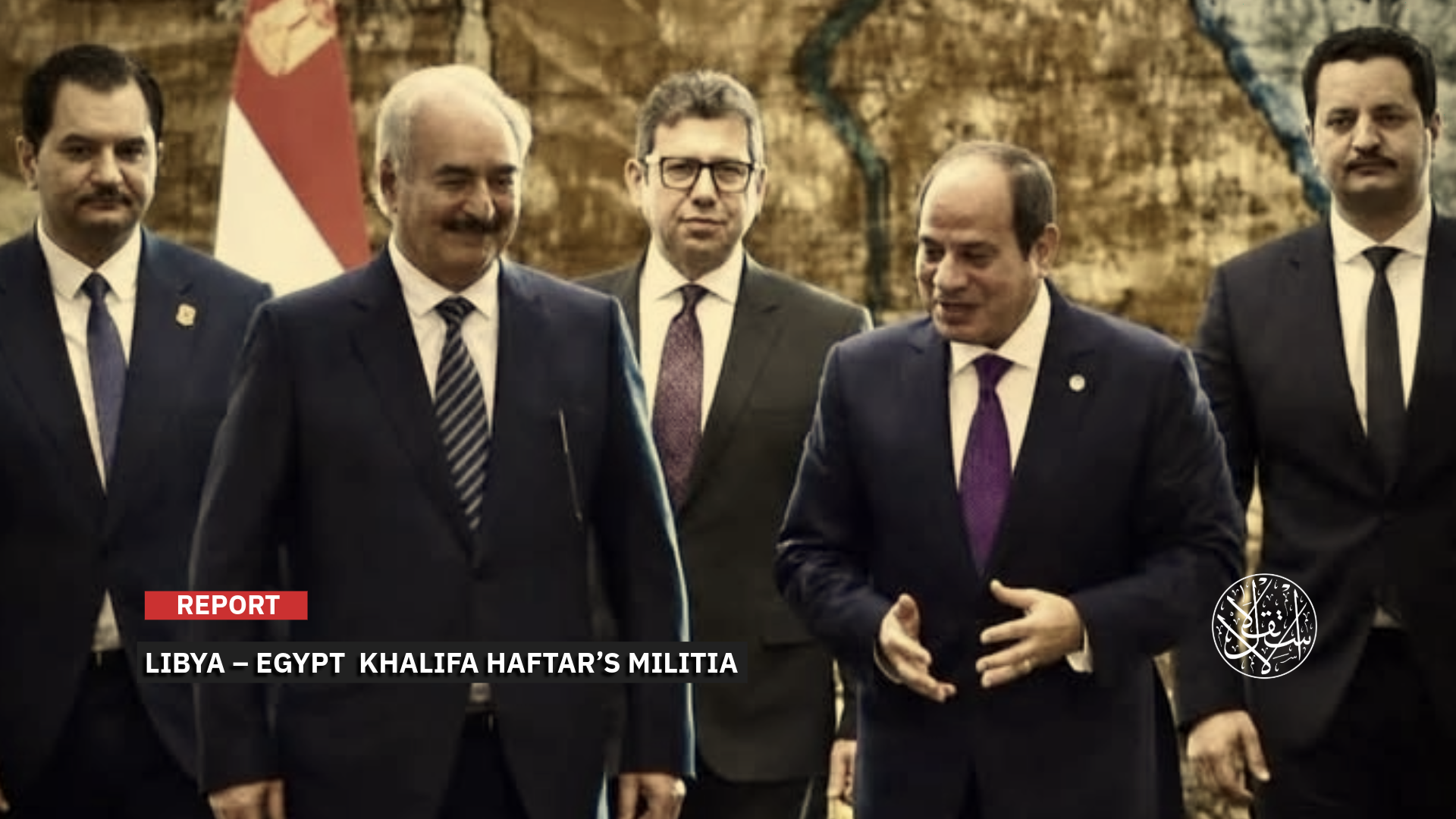
The visit comes amid growing political and security tensions in Libya.
The 11th publicly announced meeting between Egyptian head of the regime Abdel Fattah el-Sisi and eastern Libya's militia army commander, Khalifa Haftar, since 2017, held on August 19, 2026, was not merely a security or military meeting.
It came at a time when three major pressures were converging on the Libyan scene: Egyptian efforts to revive the political settlement between the east and west, Turkiye's accelerating outreach to Haftar's camp, and a U.S. attempt to reshape relations between the centers of power in eastern and western Libya, including efforts that brought together military officials from both sides.
The meeting was attended, for the first time, by his sons Belqasim Haftar and his brother Khaled, both of whom are part of the military leadership.
Belqasim oversees the Libya Development and Reconstruction Fund and a broad network of projects and investments involving Egyptian companies.
Also attending was Egyptian General Intelligence chief Hassan Rashad. This lineup was significant because it brought together, in a single meeting, the military, security, and economic dimensions of the influential Haftar family's role in eastern Libya, suggesting that economic issues were discussed alongside political ones.
Haftar's third and most important son, Saddam, was absent because he was in Russia. He soon returned to Cairo, however, where he also met with the Egyptian intelligence chief, who had attended Haftar's meeting with el-Sisi.
The scene was an unusual one, highlighting the Haftar family's grip on power in eastern Libya with Egyptian backing.
The visit comes amid growing political and security tensions in Libya, including protests against the government of Abdul Hamid Dbeibah in Tripoli over deteriorating public services and power outages, as well as security incidents targeting oil and electricity facilities.
The head of the military intelligence service affiliated with Haftar's militia forces was killed in a car-bomb explosion in the east of the country.
Meanwhile, a major oil facility near Tripoli in the west was hit by drones at least five times. No group has claimed responsibility for the attacks.
The visit also comes amid rapidly intensifying international efforts to push Libya's rival factions toward a political settlement, led by the United Nations and the United States.
These efforts promote the unification of state institutions and the holding of elections as pathways toward ending the division between eastern and western Libya.

What Is the Significance of the Meetings?
According to Egyptian and Libyan sources who spoke to Al-Estiklal, the meeting suggests that Cairo wanted to hear Haftar’s assessment of the rapidly changing relationship between the eastern camp and Ankara, as well as determine his position on U.S. proposals concerning the redistribution of power in Libya.
They explained that Sisi’s summoning of Haftar was not merely a meeting to reaffirm Egypt’s traditional support for eastern Libya.
Rather, it was an Egyptian attempt to assess the direction of the new Libyan landscape before a political settlement takes shape that could redistribute the centers of power between the east and west.
On July 30, 2026, el-Sisi received Prime Minister of the Government of National Unity Abdul Hamid Dbeibah in El Alamein, in the presence of National Security Adviser Ibrahim Dbeibah and Minister of State for Communication and Political Affairs Walid Ellafi.
The two sides agreed to intensify consultations and coordination and discussed developments concerning the Libyan issue, as well as cooperation in areas including energy and electricity interconnection.
The sequence of these contacts with Tripoli, despite Cairo’s disagreements with Dbeibah, points to a clear shift in Egyptian policy, from relying more heavily on the eastern camp toward maintaining open channels of communication with various Libyan forces.
Cairo understands that any future settlement will not be viable if either side of the divide attempts to impose it unilaterally, and that unifying Libya’s political, security, and military institutions requires an understanding between the centers of power in the east and west, according to an Egyptian diplomat.
Less than two weeks later, on August 11 and 12, Turkish Foreign Minister Hakan Fidan made a notable tour of Libya that included Tripoli and Benghazi.
He met with Dbeibah and officials in the west before traveling to Benghazi, where he met with Haftar and Aguila Saleh and discussed political and security issues with them.
The Egyptian meeting with Haftar can therefore be viewed as a political and security “stocktaking” of what has changed in Libya over the previous few weeks, rather than simply a routine meeting between two allies.
Cairo needs to know what Turkiye is doing in eastern Libya, despite the fact that Turkiye is currently an ally of Ankara, and it wants to hear about this directly from Haftar, according to Egyptian sources.
Fidan’s visit to Benghazi was not merely a protocol visit. It came after years of hostility between Ankara and Haftar’s camp and confirmed that Turkiye is now opening a direct channel with the very side it had previously regarded as a military adversary.
Fidan did not limit himself to meeting the allied Tripoli government. He also sat down with Haftar, his “enemy,” in Benghazi, an indication that Ankara wants to deal with eastern Libya as a party that cannot be bypassed in any future settlement or economic and security arrangements.
The Egyptian question to Haftar, therefore, centered on determining how far the relationship with Turkiye had progressed: How far had it gone? What exactly had Turkiye offered him? And had Turkish outreach evolved from political contacts into long-term military or economic understandings that could affect Egypt’s role in eastern Libya?
This does not necessarily mean that Cairo opposes Haftar’s opening to Ankara. Rather, it wants to know the limits and scope of that relationship and its impact on the regional balance of power.
At the same time, the United States is also pursuing efforts to reconcile eastern and western Libya in order to reach a deal or establish a new political formula.
U.S. interest in Libya also increased unexpectedly. On June 29, 2016, U.S. Secretary of State Marco Rubio received Saddam Haftar, the deputy commander of his father’s militia forces in eastern Libya and his political heir.
This came amid reports of intensive U.S. activity in Washington reflecting the Trump administration’s desire to resolve the Libyan issue by engineering a deal or direct political agreement between the actual centers of power on the ground in eastern and western Libya, perhaps with the aim of preventing Libya from falling under Russian influence.
Since June 2026, U.S. envoy Massad Boulos has emerged as a key figure pushing for a formula to unify Libyan institutions, in parallel with the UN-led process.
Reports have revealed a U.S. vision aimed at bringing together the centers of power in eastern and western Libya, including a proposal to give Saddam Haftar a leadership position within new executive arrangements while keeping Dbeibah in his post.
Boulos has also said that his plan complements the United Nations process and ultimately aims to pave the way toward elections.
Notably, Boulos held contacts with Dbeibah as well as Saddam and Belqasim Haftar. This means that Washington is no longer dealing solely with Haftar senior as the gateway to the east; it has begun treating his sons as part of a potential future political equation.
Through the meeting between el-Sisi and the head of Egyptian intelligence, involving Haftar and his three sons, Cairo sought to determine their position on these arrangements concerning the unification of power in Libya ahead of elections, the position of Haftar’s militia forces, whether they would accept sharing influence with Dbeibah, and what role his sons might play in the new arrangements.
The broader objective of these meetings is to explore what Libya’s future might look like as new players enter the equation, particularly Turkiye and the United States.
More importantly, Egypt is seeking to preserve its balance in the Libyan file between the east and west, strengthen its role as a leading regional player in addressing shared security challenges, including the border and the situation in Sudan, and support a political process that prevents foreign interference and ultimately leads to Libyan elections.

Why Did His Three Sons Attend?
Khaled Haftar’s presence was understandable from a military perspective, as he is the Chief of Staff of the eastern forces. His attendance therefore ensured that security and military issues featured prominently in the meeting.
Belqasim Haftar’s presence, however, added an entirely different dimension. He heads the Libya Development and Reconstruction Fund, which oversees a significant portion of reconstruction projects in eastern Libya.
Egypt’s engagement is therefore closely linked to economic interests. Libya’s stability is important to Cairo because of the opportunities it offers for reconstruction and investment, as well as the importance of Libyan oil as a potential source of supplies for Egypt.
Consequently, any major deterioration in security or a return to armed confrontation could threaten Egypt’s economic interests and regional security at the same time.
Saddam Haftar’s absence from el-Sisi’s meeting with his father and two brothers was unusual. However, he followed up with them through a private meeting with the head of Egyptian intelligence on August 22, 2026, effectively complementing the meetings involving his father and brothers.
This is particularly significant given the view that he is being prepared to succeed his father as commander of the eastern forces.
Saddam Haftar’s absence from el-Sisi’s meeting with his father and brothers raised questions, especially because he was in Russia for military arrangements and discussions concerning the U.S. and UN plan to resolve the crisis surrounding the integration of eastern and western Libya.
This is particularly noteworthy because he has recently emerged as one of the most important players in the Libyan political landscape.
His name has been linked to the U.S. plan to restructure the distribution of power, which is based on a power-sharing deal between the Dbeibah and Haftar camps.
Under the proposal, Saddam Haftar would assume a senior executive position, reportedly either President of Libya or Defense Minister overseeing the armed forces of both the west and east.
Abdul Hamid Dbeibah would remain prime minister within a unified governing structure, paving the way for an agreement that could be signed in Washington if Libyan consensus is reached, according to a report by the Financial Times published on June 17, 2026.
According to experts, the reason behind this active U.S. involvement is Washington’s focus on oil, with the underlying American logic being “the economy first,” according to an earlier report by Al-Estiklal.
Saddam Haftar also played a central role in securing the release of two fighters from the Russian Army’s Africa Corps (formerly associated with the Wagner Group), who had been held for more than two years by an alliance of the National Movement for the Liberation of Azawad and Jama'at Nusrat al-Islam wal-Muslimin, an al-Qaeda-linked group, since July 27, 2024, following fighting near Tinzaouaten in northern Mali.
Saddam also played a role in the release of American hostage and pilot Kevin Rideout, who had been held by a group linked to ISIS in Mali. This, according to Reuters, reflects his growing position as a key security intermediary in the Sahel region.
Notably, following his meeting with Major General Hassan Rashad, the head of Egyptian intelligence, Saddam said that they had “discussed sensitive Libyan and regional issues” and stressed the need to unify Libyan institutions, ultimately leading to simultaneous presidential and parliamentary elections.
Earlier, at the Kremlin, he said that he had met directly with Russian President Vladimir Putin, who praised the role of Haftar’s militia forces in maintaining Libya’s security and stability.
This led analysts to argue that these were not merely routine protocol meetings, but rather clear indications that Saddam Haftar is now very close to officially succeeding his father.
The presence of all three of Haftar’s sons in Cairo alongside their father therefore signals potential political and military arrangements designed to safeguard Cairo’s interests regardless of which of them rises politically in the future, emerges as the most influential figure in eastern Libya, and protects both Egypt’s interests and its borders.
It was notable that the Egyptian statement on the meeting focused on three key words: unity, stability, and elections. It also emphasized Egypt’s support for initiatives aimed at ensuring Libya’s security and stability, advancing elections, and unifying state institutions.
El-Sisi stressed that Egypt’s position remains firmly committed to preserving Libya’s unity and territorial integrity, and that the partition of the country is unacceptable because of its implications for Libyan sovereignty and Egyptian national security.
Major General Hassan Rashad, head of Egypt’s General Intelligence Service, also stressed to Saddam Haftar, the deputy commander of Haftar’s militia forces, the importance of capitalizing on the current political momentum surrounding the various initiatives as an opportunity to promote stability and strengthen Libyan unity.
Haftar, for his part, reaffirmed his support for initiatives aimed at achieving security and stability and preserving Libya’s unity, as well as his commitment to continued coordination with Egypt.
This indicates that the two sides demonstrated agreement, rather than disagreement, over the initiatives currently being proposed to unify eastern and western Libya.

Haftar and RSF Militia
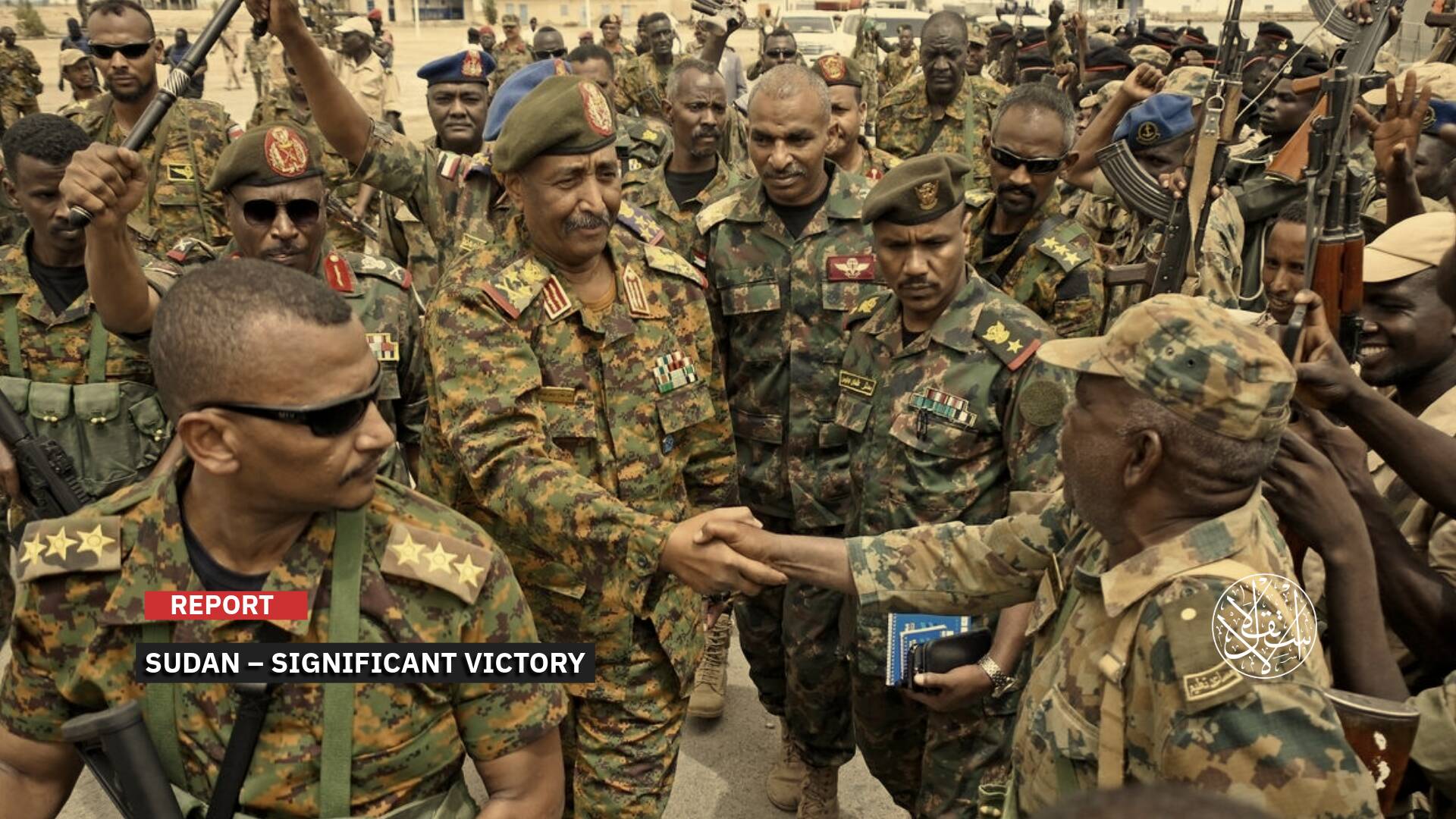
Not a day goes by without the Sudanese army, and perhaps Egypt as well, striking, using Egyptian aircraft and warplanes, forces and equipment coming from areas controlled by Haftar and destined for the Rapid Support Forces (RSF) militia, led by the breakaway commander Abdul Rahim Dagalo, known as “Hemedti.”
Egyptian diplomatic sources told Al-Estiklal that the Sudan file featured prominently in Egypt’s talks with the Haftar family, particularly during the meeting between the head of Egyptian intelligence and Saddam Haftar.
According to the sources, Egypt considers Haftar’s facilitation, through the UAE, of arms supplies to Hemedti’s militia forces to be detrimental to its national security, given that Cairo supports the Sudanese army and stability in Khartoum.
Haftar has repeatedly denied providing military facilities to Hemedti’s militia forces and has attempted to blame the situation on the chaos prevailing in the border areas.
However, Egypt provided him with specific information indicating that routes and bases in eastern and southern Libya were being used to facilitate the delivery of weapons to Hemedti from Chad and the UAE.
During el-Sisi’s meeting with Haftar on December 8, 2025, the Egyptian presidency explicitly stated that the meeting discussed “developments in Sudan.”
The two sides stressed the need to reach a peaceful settlement that would preserve Sudan’s stability, sovereignty, and territorial integrity, and affirmed that Sudan’s stability is linked to the national security of both Egypt and Libya.
Earlier, on January 22, 2026, newspapers, citing Egyptian sources, reported that Cairo had pressured Saddam Haftar to stop supporting the Rapid Support Forces (RSF) militia, and that Cairo was concerned about supply routes coming from Libya to Hemedti’s militia.
Egyptian sources said that the meeting between Sisi and Haftar on January 18, 2025, was primarily intended to reprimand him and convey Egypt’s anger over his support for Hemedti’s militia forces, which oppose the Egyptian military. Cairo also told him that he must prevent the supply of weapons to Hemedti or allow his militia forces to take refuge in Libya.
Haftar’s provision of weapons to Hemedti, who is hostile to Egypt, had previously angered Cairo and raised questions about whether this could affect Egypt’s relationship with Haftar.
Egypt regards the expansion of the RSF’s militia presence near the Egyptian-Libyan-Sudanese border as a direct threat to its security. It supports the unity of the Sudanese state and its institutions and maintains close ties with the Sudanese military leadership, providing it with weapons, according to Western reports.
However, during el-Sisi’s meeting with Haftar on August 19, 2026, Sudan was not mentioned in the official Egyptian statements, despite the issue having been raised in previous meetings, namely, Haftar’s alleged provision of weapons to Hemedti’s militia.
Egyptian sources interpret this omission as meaning that the issue was “discussed behind closed doors,” because the purpose of this visit was instead to coordinate positions on plans to unify Libya.
Sources
- Egypt Intensifies Engagement With Haftar’s Camp to Push for a Political Settlement in Libya [Arabic]
- El-Sisi Receives Haftar and Stresses the Need to “Preserve Libya’s Unity and Unify Its Institutions” [Arabic]
- Libya on the Threshold of a New Phase: Could Egypt Become the Balancing Power Between East and West? [Arabic]
- Libya’s Haftar Played a Key Role in the Release of U.S. Hostage Held by Islamic State, Sources Say