How Clashes Are Escalating in Tigray and the Conflict Is Entering a More Dangerous Phase
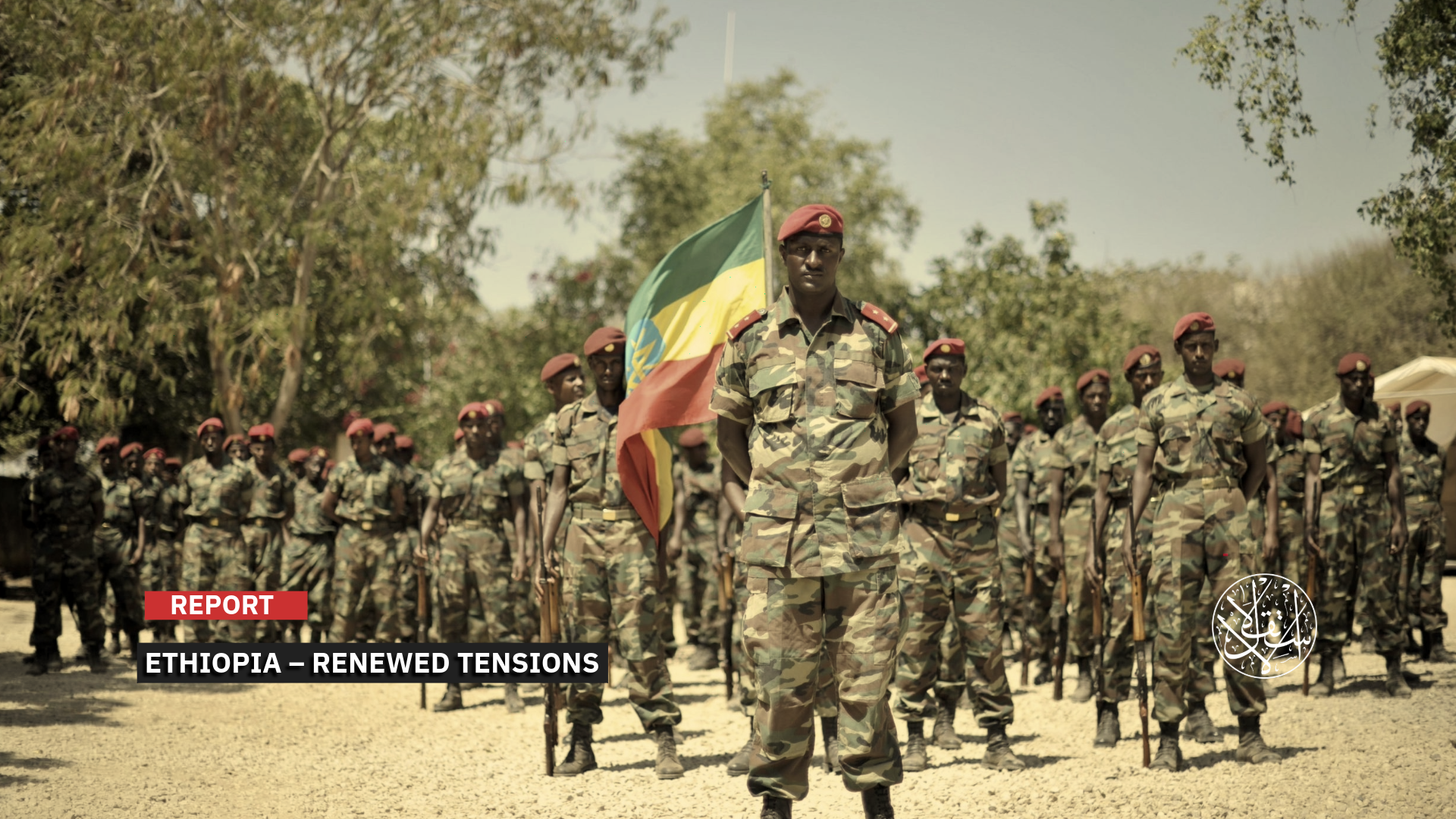
"The Tigray crisis has entered a more dangerous phase than a mere limited breach of the Pretoria Agreement."
After months of military escalation, troop buildups, and mutual accusations between the Ethiopian government and the TPLF, violent clashes erupted again in the Tigray region of northeastern Ethiopia, specifically in the Shirena area near the border with Sudan, in early August 2026.
The recent developments in Tigray were not a fleeting or sudden clash, but rather the culmination of a gradual collapse of the settlement that followed the devastating war in the region between 2020 and 2022, which claimed the lives of at least 600,000 Ethiopians.
The danger of the current clashes, despite talk of an incomplete national dialogue and a fragile ceasefire, lies in the possibility of them escalating from limited skirmishes into a new war similar to the 2020–2022 conflict, potentially leading to its expansion to encompass large areas of Ethiopia.
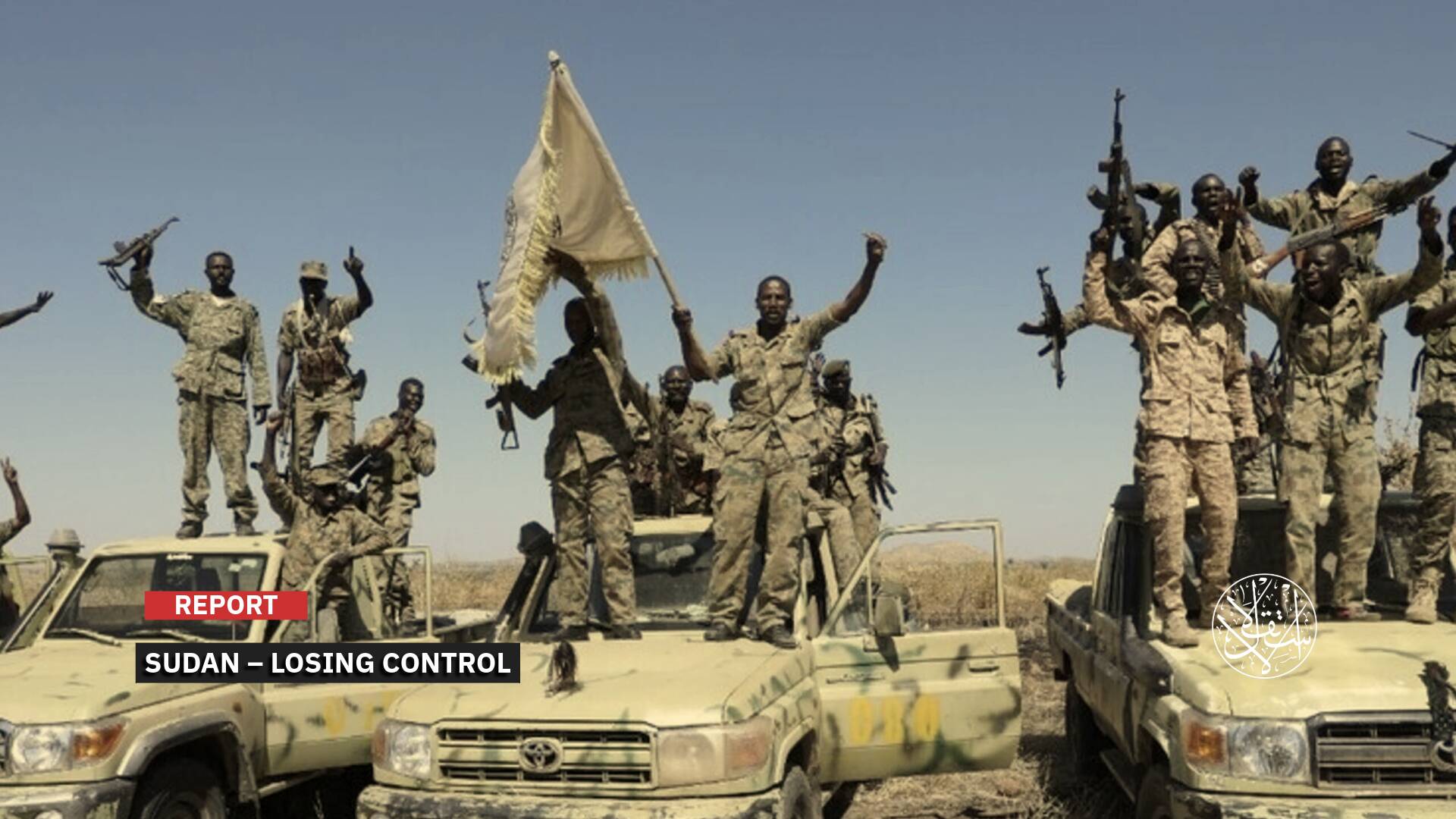
The risks are further compounded by Sudan's involvement as a party affected by the crisis, due to the proximity of the fighting to its borders and the occurrence of clashes already underway.
The overlap between the Ethiopian conflict and the ongoing war in Sudan increases the likelihood of new waves of displacement, the proliferation of weapons, and a widening circle of instability in the region.
The situation is further complicated by the convergence of four major conflicts: the conflict between Addis Ababa and Tigray, the dispute over western Tigray between the Tigrayan and Amhara ethnic groups, the internal divisions within the TPLF, and the escalating tensions between Ethiopia and Eritrea.
This complex entanglement makes the fighting in August 2026 far more dangerous than a mere limited security breach. It threatens to spill over into Sudan, Somalia, and Egypt, and could potentially transform the conflict into a wider African war, according to European conflict experts.

What is happening?
To understand the nature of this recurring conflict, it is crucial to examine the roots of the war in Tigray. It is a political and ethnic war concerning the distribution of power within the Ethiopian state, the region's relationship with the central government, the position of Tigrayan nationalism, and the disputed borders and territories.
It is also essential to understand the role played by the Tigrayan Orthodox Church, which severely damaged its relationship with the central government in Addis Ababa during the Tigray War.
While it is true that the TPLF is not a religious group, nor is it based on Islam or Christianity, it is a Tigrayan nationalist political and military organization founded in 1975. Its ideology has evolved from nationalism to Marxism, and currently combines nationalism and ethnicity.
However, the majority of Tigrayans are Christians, belonging to the Ethiopian Orthodox Tewahedo Church, which is an Oriental Orthodox church, not the Eastern Orthodox church of the Byzantine tradition. This makes the church's role influential.
There is a Muslim minority in Tigray, particularly in some eastern and border regions, which is also affected by the war, but has no significant influence on the conflict.
Due to the lack of resolution of contentious issues since the Pretoria Peace Agreement signed in November 2022, the war of words and military buildups continued, and a return to war seemed inevitable, a mere spark waiting for. This spark ignited in early August 2026.
The latest confrontation in Tigray began in the Shirena area, in western Tigray, near the border with Sudan, when clashes broke out between forces affiliated with the TPLF and Ethiopian federal forces. The Tigrayans accused government forces of initiating the aggression.
Both sides used heavy artillery and drones during the fighting, and the confrontation was described as the most serious violation of the 2022 peace agreement.
Although relative calm returned to the Ethiopian-Sudanese border region in the following days, a formal and stable ceasefire was not established. Forces remained mobilized, and clashes erupted several times.
Although the confrontation has not yet escalated into a full-blown new Tigrayan war, and the situation resembles a fragile armed calm, it has revealed that the Pretoria Agreement remains extremely precarious.
Its provisions have not been fully implemented, and the problem is no longer solely military but has become political, with the potential for a full-blown conflict, especially given the intervention of external parties.
The Tigrayan crisis, intertwined with the conflict between the federal government and the Fano militias in Amhara, the rivalry within the Tigrayan leadership, and the escalating tensions between Ethiopia and Eritrea, has heightened tensions, reshaped alliances, and threatens to expand the confrontation beyond Tigray.
Indeed, the leader of the Fano group, Zemene Kassie, announced that the group's factions have united under a central command and have entered into cooperation agreements with forces from the Tigray region, as well as with armed groups originating from other Ethiopian regions, such as the Somali region.
The Fano are an armed youth militia advocating for the rights of the Amhara people. They were a key ally of the Ethiopian Federal Army during the Tigray War (2020-2022), but rebelled and engaged in violent armed clashes against the federal government in mid-2023 after attempts to disarm them.
In an interview with the Swiss newspaper Le Temps on August 16, 2026, the leader of Fano stated that this alliance was being formed to achieve political and military objectives, namely the overthrow of the government of Ethiopian Prime Minister Abiy Ahmed.
According to the newspaper, if the cooperation between Fano and Tigray were to evolve into a full-fledged military alliance, Abiy Ahmed's government could face renewed and simultaneous pressure from both the Amhara and Tigray fronts, at a time when relations between Ethiopia and Eritrea are already experiencing escalating tensions.
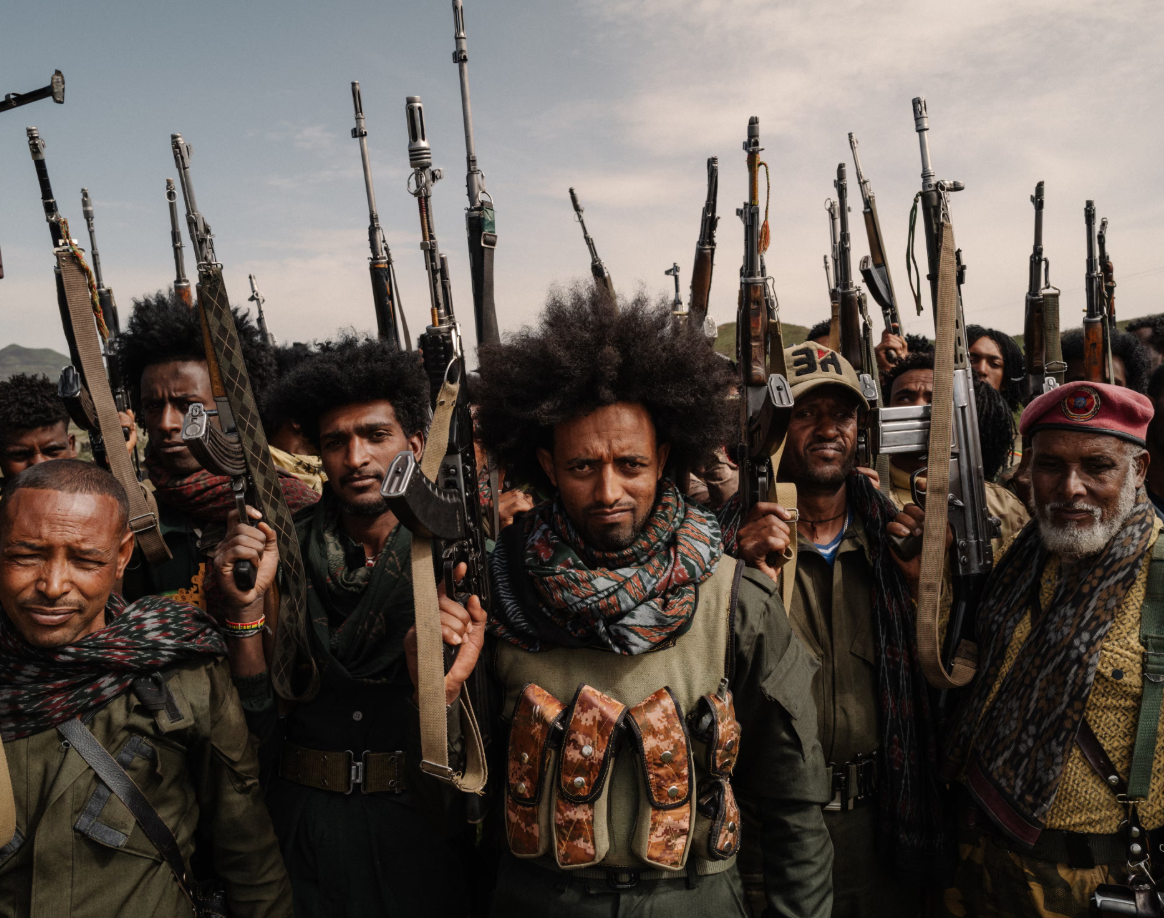
Second African War
The situation could worsen for Addis Ababa, as the leader of the Fano party revealed contacts with what he called Somali forces, without specifying who he meant. He likely refers to armed groups operating in the Somali region within Ethiopia.
If this alliance extends to the Somali region of Ethiopia, it could have direct repercussions on the Somali-Ethiopian border, as well as on the nature and deployment of Ethiopian forces operating in Somalia, potentially adding a new dimension to the already tense situation in the region.
Eritrea and the Fano militia, which previously supported the Ethiopian federal army against the TPLF during the 2020-2022 conflict, have now united in their hostility toward Prime Minister Abiy Ahmed, marking a shift in alliances, according to Radio France Internationale (RFI) on August 4, 2026.
Ethiopian authorities have accused the TPLF of allying with neighboring Eritrea and the Fano militia from the neighboring Amhara region, which took up arms against Addis Ababa in 2023.
Cameron Hudson, an analyst at the Center for Strategic and International Studies (CSIS) in Washington, D.C., believes that, compared to the previous war in Tigray, there are many new external factors that could fuel this conflict.
The Sudanese army has also accused Ethiopia of allowing the rebel Rapid Support Forces (RSF) to operate against Khartoum from Ethiopian territory.
Egypt has also been at odds with Ethiopia since the construction of a massive dam on the Nile River, which Cairo considers an existential threat.
The renewed alliance between Eritrea, Sudan, and Egypt against Ethiopia signifies a turning point in the geopolitical landscape of the Horn of Africa.
Therefore, Kjetil Tronvoll, an analyst of African conflicts at the University of Oslo, anticipates that if a new conflict erupts, it will likely draw in neighboring countries like Sudan and Eritrea.
He stated, "This will be Africa's second world war," referring to the Congo War of 1998-2003, which involved nine African nations.
Despite the announcement of the Ethiopian National Dialogue aimed at peacefully resolving the crisis with Tigray and other regions, a consensus emerged, but disagreements arose regarding representation.
Opposition forces, representatives from Tigray and Amhara, and armed groups were absent from the conference, prompting criticism of the dialogue's legitimacy and its representation of influential forces within the Ethiopian political landscape.
Renewed Tensions
The renewed clashes in the Tigray region were not simply a return to the previous conflict, but rather the culmination of unresolved issues stemming from the 1990 Pretoria Agreement.
The most prominent issues in 2022 included the status of the disputed areas in western Tigray, the delay in disarming Tigrayan forces, and disagreements over the administration of the region and transitional governance arrangements.
The Pretoria Agreement, brokered by the African Union on November 2, 2022, between the Ethiopian government and the TPLF, stipulated eight points: a permanent cessation of hostilities, the disarmament of Tigrayan forces, the restoration of federal government authority and institutions in Tigray, the restoration of services, and the return of internally displaced persons.
However, the final three clauses of the agreement, particularly those concerning resolving political issues through dialogue, holding Ethiopia accountable for violations committed during the war, and the failure to address all the issues that caused the war—most notably the fate of the disputed areas, especially western Tigray, the final political arrangements, and the reintegration of combatants—effectively rendered the agreement ineffective.
Tigrayan officials have repeatedly accused the federal government of imposing a prolonged economic blockade, restricting access to fuel and aid, withholding salaries, and carrying out drone strikes against their positions. In addition to deliberately obstructing the return of displaced persons to western Tigray.
This means that the Pretoria Agreement succeeded more in silencing the guns than in addressing the root causes of the conflict. The agreement remained fragile, and war resumed, especially since the ruling Ethiopian party resorted to a media campaign to discredit Tigray, as criticized by the Addis Standard newspaper on August 14, 2026.
Prior to the renewed fighting, the TPLF accused Abiy Ahmed's government in April 2026 of violating the agreement, withholding funding, and marginalizing the region. Addis Ababa, in turn, accused the TPLF of seeking to regain its influence by force.
The exclusion of the TPLF from the general elections held in Ethiopia in June 2026 deepened the sense of political marginalization felt by the region's inhabitants, particularly after a series of irregularities marred the vote that granted Prime Minister Abiy Ahmed's Prosperity Party a new five-year term.
This coincided with more serious shifts in the regional environment, especially tensions escalated between Ethiopia and Eritrea over influence in the north of the country and access to the Red Sea, with each accusing the other of supporting armed groups.
The dispute with Asmara centers on Ethiopia's efforts to secure access to the Red Sea, particularly its pursuit of sovereign rights over the port of Assab, located in the southern Eritrean Red Sea region.
Eritrea views any Ethiopian military presence on its coast as a direct threat to its security and categorically rejects it.
This is the same position held by Cairo, which considers any Ethiopian military presence on the Red Sea a direct threat to its national security and freedom of navigation through one of the world's most important maritime chokepoints, in addition to the Suez Canal.
The tension is further heightened by Israel's involvement, with press reports confirming that the occupation has begun sending weapons to Ethiopia as part of a growing strategic partnership between Tel Aviv and Addis Ababa. This partnership is driven by both countries' desire to consolidate their presence on the Red Sea and enhance their influence in this vital waterway.
"Israel" has already established a foothold on the Red Sea, through its recognition of the Somaliland region and the establishment of a presence on its coasts, a move supported by Washington to serve Tel Aviv's interests and their shared objectives.
Ethiopia has repeatedly warned that a war with Eritrea could lead to a permanent redrawing of borders, and that Eritrea might not remain as it is today.
Ethiopian reports quoted Abiy Ahmed as saying in an interview with the Oromo Broadcasting Network that Eritrea is not only Ethiopian land, but also belongs to the Oromo people, to whom the Prime Minister and several other Ethiopian government officials belong.
Therefore, international analysts believe that Tigray has become a focal point for internal Ethiopian conflict and broader regional competition, and that any major escalation could reignite the war that claimed hundreds of thousands of lives between 2020 and 2022.
The war has begun to transform into a three-way conflict between Ethiopia, Sudan, and Eritrea. Addis Ababa fears that renewed fighting could weaken Prime Minister Abiy Ahmed's government domestically, especially given the shifting alliances in the region.
In the background, the dispute between Prime Minister Abiy Ahmed and Eritrea is escalating, particularly regarding Ethiopia's access to the Red Sea.
Addis Ababa and Asmara are exchanging accusations of supporting armed groups, making Tigray part of a broader regional conflict in the Horn of Africa.
Therefore, the repercussions of renewed fighting extend beyond the potential collapse of the Pretoria Agreement and the return of the Tigray humanitarian crisis.
They could also include the opening of a new Ethiopian-Eritrean front, the spread of instability to Sudan, and a threat to the balance of power in the Horn of Africa and the Red Sea region.
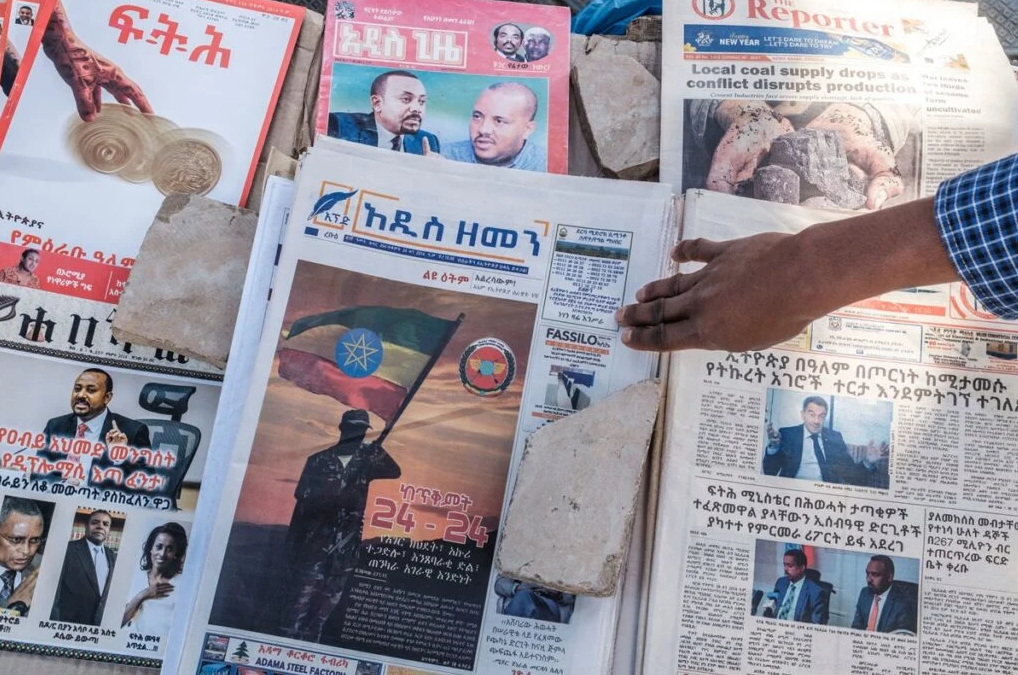
Future Scenarios
Because the Tigray crisis has entered a more dangerous phase than a mere limited violation of the Pretoria Agreement, and because the confrontation is escalating to involve external and international actors, particularly Sudan, Somalia, Eritrea, and possibly Egypt, African and international assessments and reports point to several possible scenarios.
The first scenario is that both sides resort to external intervention to contain the escalation and return to new negotiations on the terms of the Pretoria Agreement and the implementation of its outstanding provisions.
The African Union, the United States, and regional countries might intervene to pressure for the reactivation (or rewriting) of the Pretoria Agreement.
However, this would require addressing the issues left unresolved by the agreement, primarily the situation in western Tigray, power-sharing arrangements, and disarmament.
The second scenario is that the fragile, armed peace and low-intensity, but protracted, war within northern Ethiopia will continue. This is the most likely scenario given the escalating rhetoric and propaganda from both sides.
This would mean a period of sporadic clashes, limited operations, and proxy warfare, with continued military mobilization by the government, the TPLF, and the Fano People's Liberation Front (FPLF).
This scenario is perhaps the most dangerous because it would mean the gradual erosion of the Pretoria Agreement without its formal collapse, and perhaps a restructuring of the conflict through alliances and political institutions, not just traditional battles, as some Ethiopian political assessments suggest.
The third scenario: A return to full-scale war between Addis Ababa and Tigray. This is a high-risk scenario. If the current clashes escalate into a large-scale military campaign, or if mediation efforts fail, or if the federal government decides to end the TPLF's control of the region by force, the country could be plunged back into a full-blown war.
However, the circumstances are different from 2020. This time, the war would be directly linked to tensions with Eritrea and the conflict in Amhara, making the TPLF part of a multi-sided war in northern Ethiopia.
Therefore, experts warn that the new war could be even more complex due to the multiplicity of actors and shifting alliances.
The fourth scenario: The crisis escalates into an Ethiopian-Eritrean confrontation, potentially involving Sudan and Somalia. This is the most dangerous scenario regionally and raises the greatest concerns among international analysts.
This scenario means that the conflict is no longer confined to Abiy Ahmed and the TPLF. The dispute between Ethiopia and Eritrea over access to the Red Sea could escalate, with Addis Ababa accusing Asmara of supporting armed groups within Ethiopia.
The conflict could then shift from a proxy war to a direct confrontation, completely collapsing the post-Pretoria arrangements.
The fifth scenario is a regional war in the Horn of Africa, or what Ketil Tronvoll, an analyst of African conflicts at the University of Oslo, calls a Second African World War—the worst-case scenario of all.
If the Ethiopian-Eritrean confrontation is coupled with the continuation of the Sudanese war, the tri-border area of Ethiopia, Eritrea, and Sudan could become a theater of intertwined conflict, with an influx of weapons, fighters, and refugees.
This is precisely what analyses by the New Humanist organization, on March 23, 2026, warned against, predicting the potential for the Ethiopian and Sudanese wars to overlap, resulting in a widespread regional conflict that would be difficult to contain.
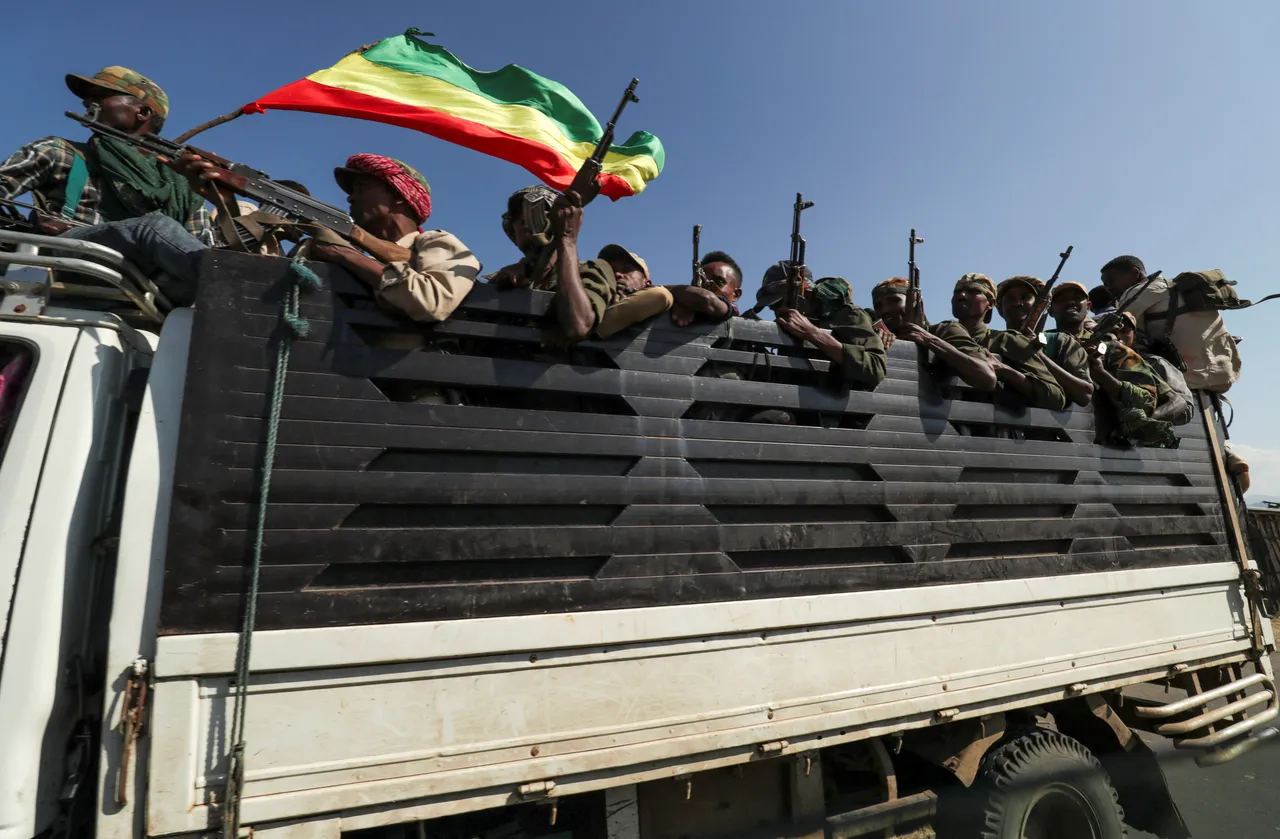
An analysis of the political and military crisis reshaping the Horn of Africa in Ethiopia amid the conflict with Tigray, published by the Ethiopian website Burkina on August 14, 2026, outlines three conflict scenarios:
The first scenario: A low-intensity war of attrition (highest probability), noting that hostilities remain concentrated along the Sheraro, Kobo, and Humera sectors, with both sides employing drone strikes, artillery exchanges, and proxy operations to weaken the opponent.
The second scenario: A large-scale regional conflagration (medium to high risk), should the TPLF forces, supported by Eritrean artillery and cross-border logistical supplies from Sudan, launch a joint offensive to breach the lines of the Ethiopian People's Democratic Forces (EPDF).
In response, federal forces have launched a full-scale military campaign towards Mekelle, and Egypt has intensified its arms supplies to forces hostile to Ethiopia, potentially transforming the conflict into a multi-front regional war that could disrupt shipping lanes in the Red Sea.
The third scenario: A Diplomatic Breakthrough (Low Probability). Under intense economic and international pressure, the warring parties might agree to an immediate ceasefire.
A framework for negotiations would be established to address the fundamental flaws in the Pretoria Agreement, set a clear timetable for demobilization, resolve the status of western Tigray through a constitutional referendum, and ensure the withdrawal of Eritrean forces under international supervision.
Sources
- Renewed fighting in Tigray raises risk of a wider regional war
- Regional mega-war? How renewed conflict in Ethiopia could pull in Sudan
- Fano’s Kingdom: Inside the insurrection in northern Ethiopia
- The Axe Falls: Ethiopia, the TPLF, Eritrea, and the Unraveling of the Pretoria Peace
- Media Warfare, National Consequences: How Ethiopia’s propaganda war threatens fragile peace