Dbeibeh–Radaa Rift: Is Western Libya Headed for Another Fragmentation?
“People in Tripoli live between two fears: the fear of renewed fighting and the fear of a fragile peace that drains them every day.”
As night falls and car lights begin to glow along the crowded streets of Tripoli, the Libyan capital takes on the look of a carefully organized chaos.
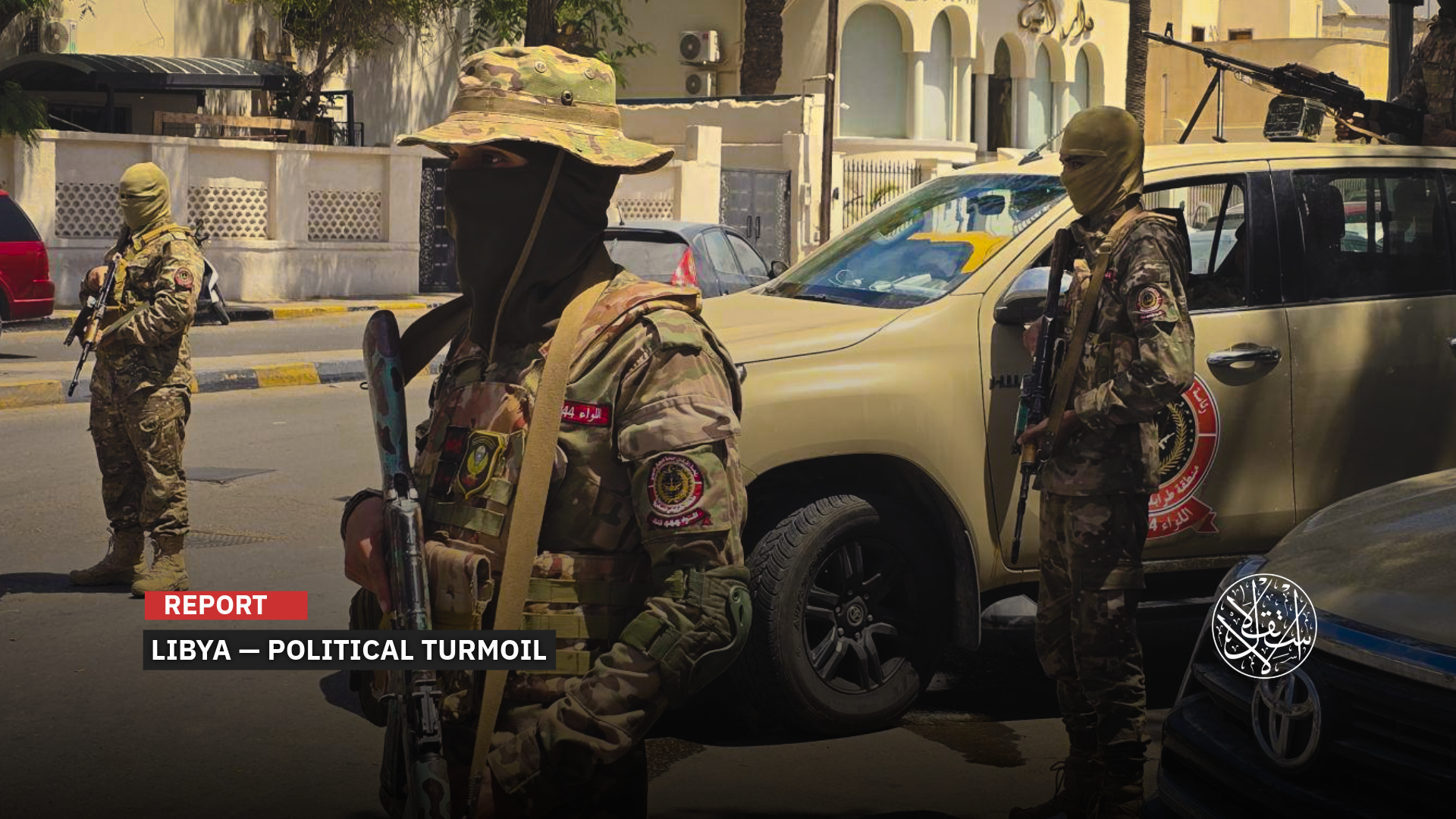
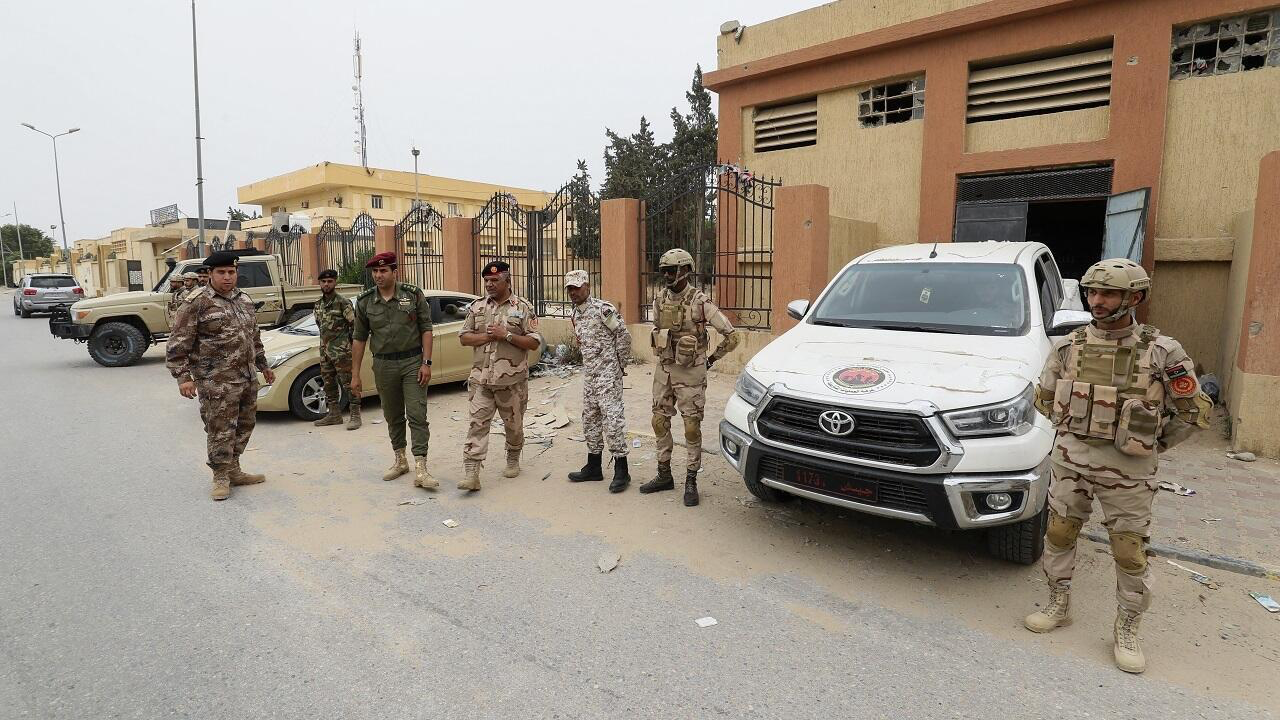
Cars push through heavy traffic, tired faces make their way home, and at the entrance of Souq al-Jum’aa, one of the city’s most densely populated neighborhoods, four young men in clean military uniforms stand with modern Kalashnikovs, directing traffic in the middle of the crowd.
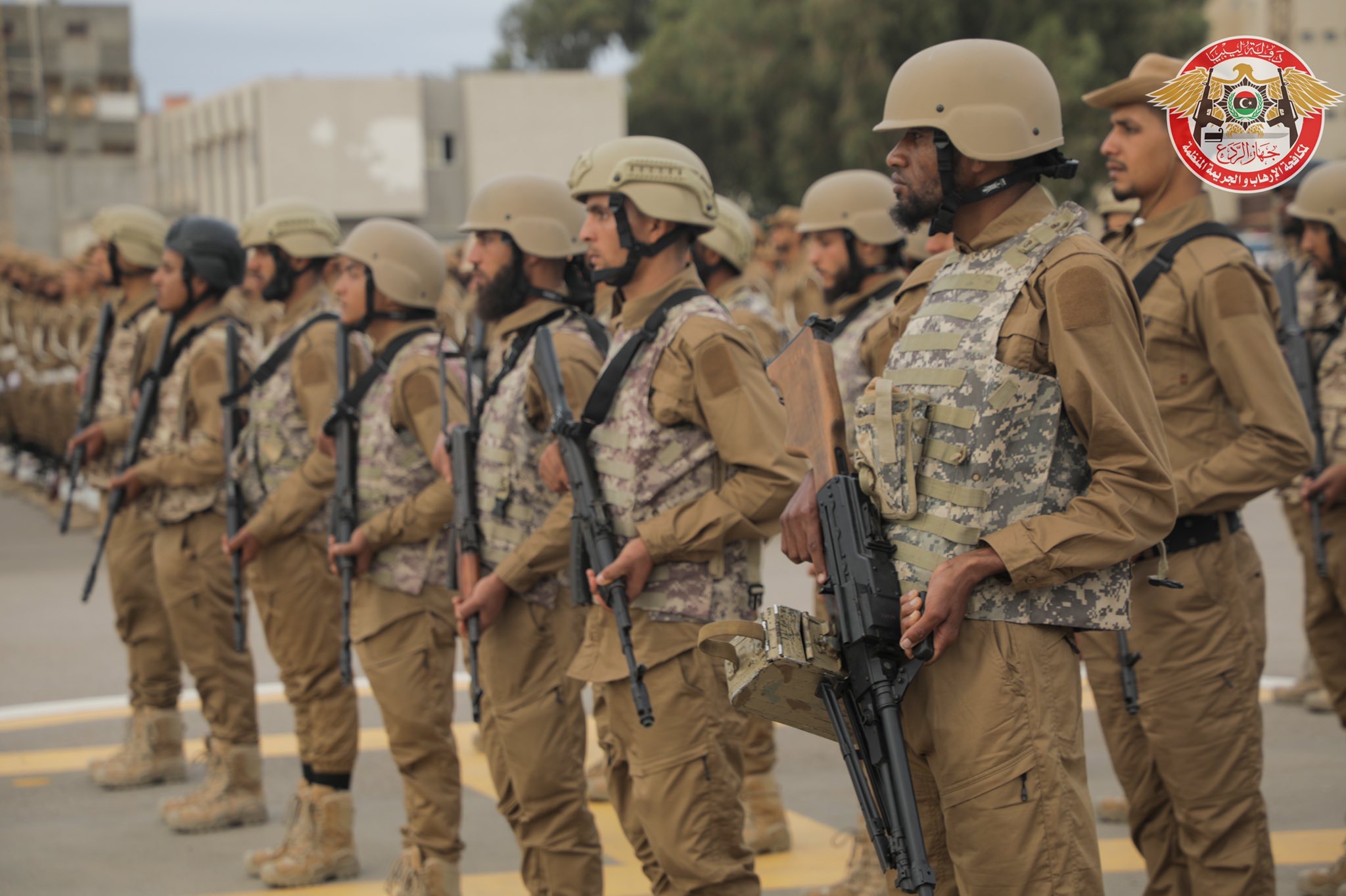
At first glance, they might appear to be police officers, but they are actually members of the Special Deterrence Apparatus for Countering Terrorism and Organized Crime, known locally as al-Radaa, one of the most powerful and influential armed groups in Tripoli.
The faction, which was formed during the civil war, is led by Abdul Rauf Kara, whose wartime influence and Salafist background earned him respect among Souq al-Jum’aa’s tribal and conservative leaders.
“Everybody in Souq al-Jum’aa wants them to stay, because they know al-Radaa works well and protects us from insecurity more than anyone could,” one of the council’s communications officers told MEE on October 17, 2025.
Al-Radaa is the only armed faction to invite foreign journalists to enter Tripoli, portraying itself as the sole legitimate force in the capital and unfolding a narrative that emphasizes discipline within its ranks.
Middle East Eye quoted one of the armed men as saying, “We are here to prevent accidents or fights and to protect citizens.”
Asked whether he fears an attack by forces loyal to the Government of National Unity (GNU), he answers soberly, “The situation is calm now; we are under the protection of Allah.”
This visual contrast between the official and the parallel, between the state and what lies outside it, sums up the reality of Tripoli today: a city governed by multiple centers of power, where lines of loyalty intersect between the government, militias, tribes, and even foreign capitals.
Scenes of Division
Since 2014, when Khalifa Haftar launched his coup against Libya’s official government, the country has not known real stability—neither political nor security-related.
Even after the UN-sponsored ceasefire agreement in October 2020, which ended the fighting between western forces recognized internationally and Haftar’s eastern-based militias, the division remained deeply entrenched.
Tripoli is run by the internationally recognized Government of National Unity, led by Abdul Hamid Dbeibeh, while the east is controlled by a parallel administration based in Benghazi, headed by Osama Hammad and backed by Haftar and his so-called Libyan National Army.
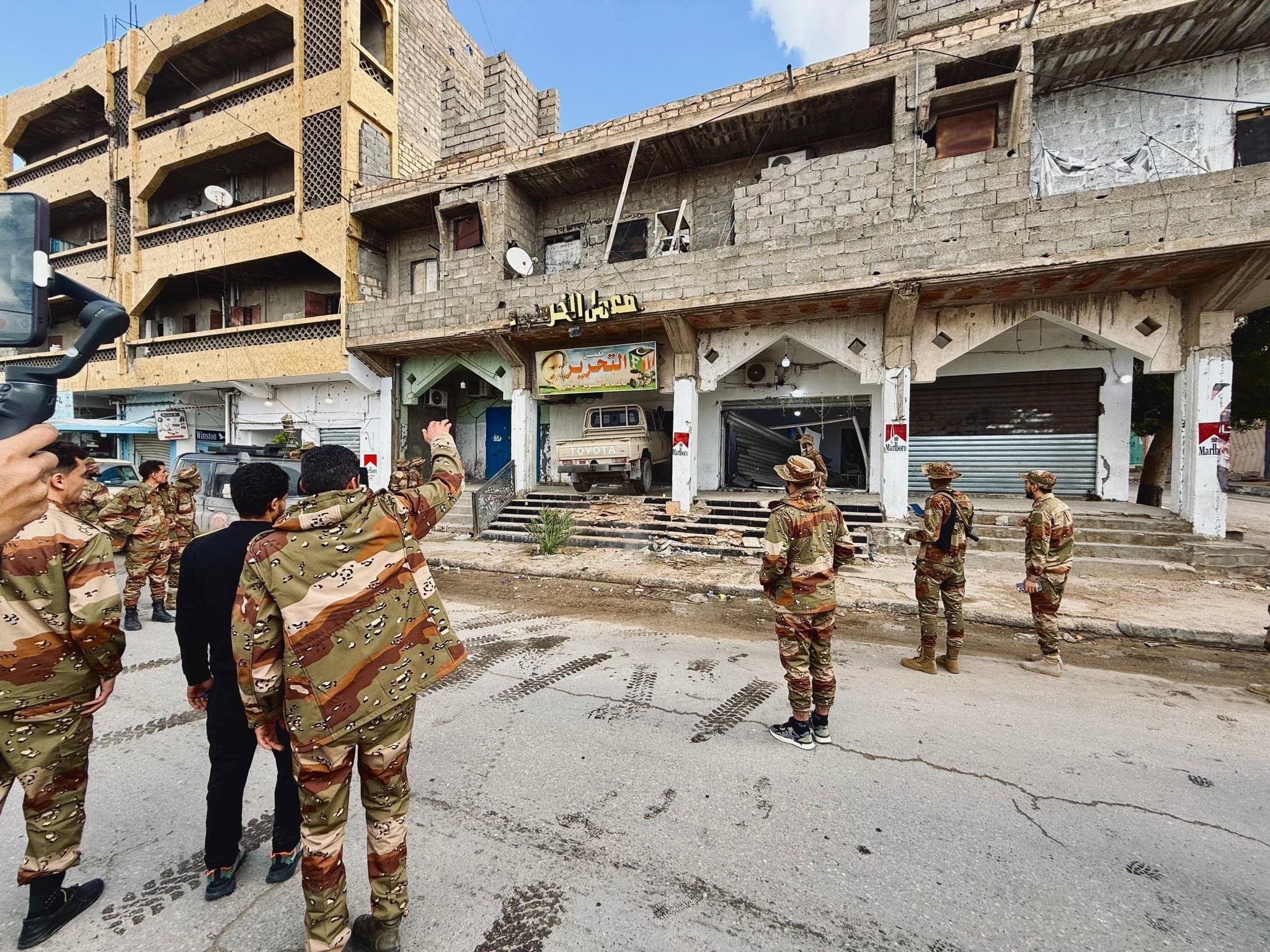
Caught between these two authorities, the country remains paralyzed in a state of chronic political stagnation, its power fragmented among armed militias that have imposed themselves as the true arbiters above the state.
In Tripoli, these groups compete less over ideology than over power and money. Militias that once fought under the banners of revolution now battle for control of lucrative institutions—oil companies, telecoms, ports, and airports that have become cash machines rivaling the national budget.
As Dbeibeh’s political power grew over the past three years, he tried to redraw the map of loyalties in the capital. He launched a campaign to dismantle rival militias, co-opting some under his ministries through appointments or symbolic integration into official security agencies.
But the Special Deterrence Apparatus (al-Radaa) remained a hard obstacle, refusing to fully submit or share the spoils of political power, turning confrontation into a matter of time.
A Fragile Truce
In May 2025, Dbeibeh ordered a surprise military operation against both al-Radaa and the Stability Support Apparatus, led by Abdel Ghani al-Kikli, known as “Gheniwa,” one of his most prominent rivals in the capital.
The clash centered on control of the Libyan Post, Telecommunications and Information Technology Holding Company (LPTIC), a state-owned enterprise that effectively serves as a hidden bank funding armed factions competing for its immense profits.
The fighting left at least eight people dead, including civilians—the deadliest since August 2023, when more than 50 were killed in similar confrontations.
The operation ended with Gheniwa killed and al-Radaa retreating to its main stronghold in Souq al-Jum’aa and Mitiga International Airport in eastern Tripoli, after losing several central positions to Dbeibeh-aligned brigades such as the 444th and 111th Brigades and the General Security Service. Yet, this shift in control did not bring stability; it only produced new balances of fear.
Tripoli now lives in a state of constant tension, with all sides fearing the return of all-out fighting at any moment.
In late August 2025, those fears nearly materialized when Dbeibeh issued an ultimatum to al-Radaa to evacuate Mitiga Airport, the capital’s only functioning international terminal and a strategically sensitive location near the group’s headquarters.
Pro-Dbeibeh forces deployed tanks and artillery on the city’s outskirts, and reinforcements arrived from Misrata, his traditional stronghold, in preparation for what seemed an inevitable confrontation.
But a swift Turkish intervention prevented the situation from spiraling into war. On September 13, 2025, Ankara brokered an agreement between the two sides allowing a symbolic al-Radaa withdrawal from the airport without touching its main base.
The deal, however, was little more than a temporary pause. Jalel Harchaoui, a researcher at the UK-based Royal United Services Institute, described it as a temporary freeze of a conflict that could reignite at any time.
On the ground, little changed. Misrata’s tanks remain in their positions, and al-Radaa continues its drills barely 200 meters from the runway.
Overhead, the buzz of Turkish drones fills the Tripoli sky. Ankara, which intervened militarily in 2020 to save the capital from Haftar’s UAE-backed aggression, maintains an ongoing military and intelligence presence to protect its interests. It has established ties with both Radaa and Dbeibah, while also opening channels in the east in recent months.
According to Harchaoui, Turkiye has no confidence in Dbeibeh and deals with him cautiously, but at the same time it will not allow a war in Tripoli under its watch.
“There is an Ottoman doctrine of not allowing war in Tripoli under their supervision,” Harchaoui told Middle East Eye.
Some analysts call this the new Turkish doctrine: maintaining influence by keeping the balance in check.
Dbeibeh’s losses
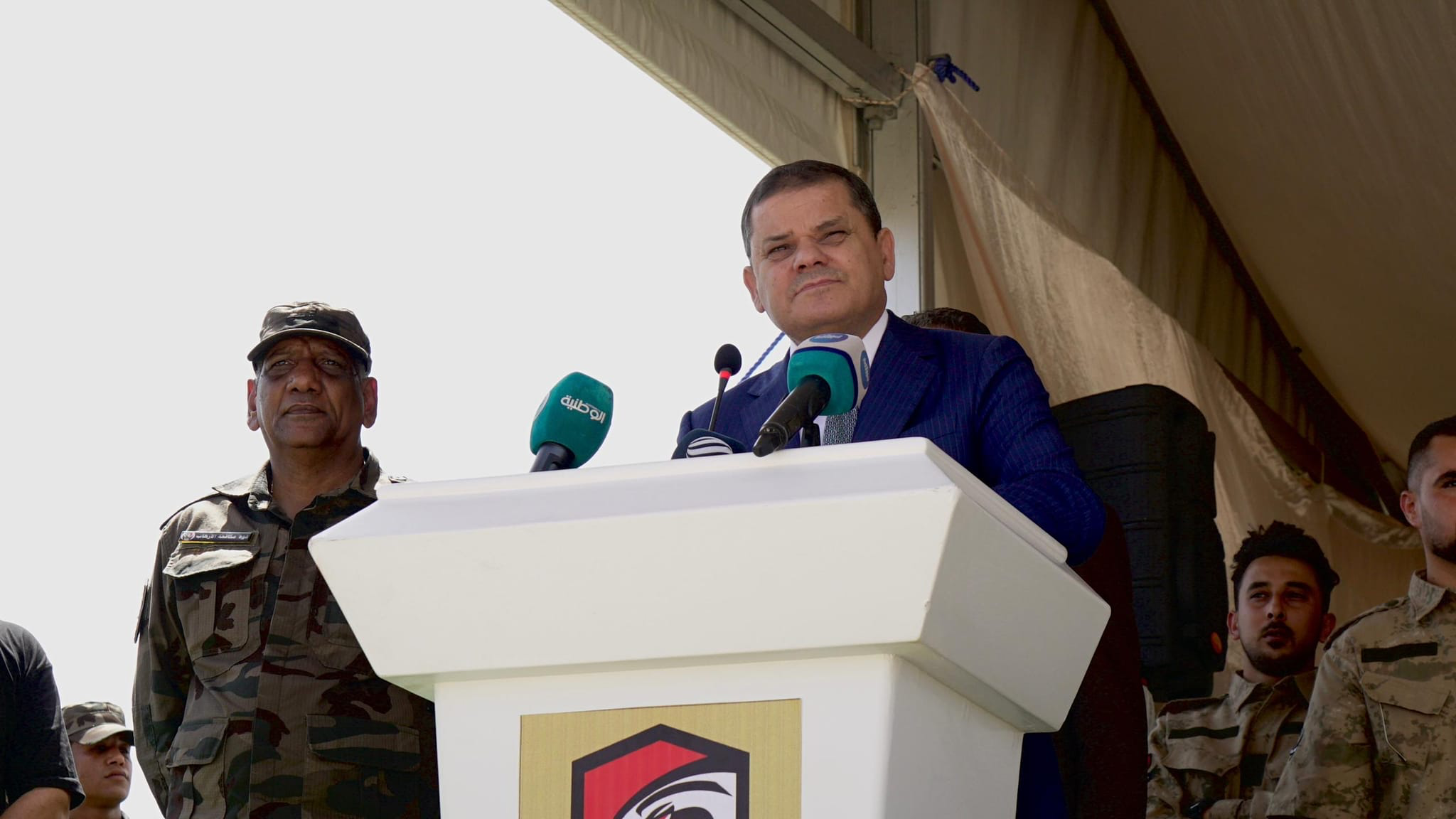
Dbeibeh has lost much of the popular support that once sustained him as the man of the transitional phase who promised elections that never came.
After the events of May 2025, unprecedented protests erupted in Tripoli and other western Libyan cities, demanding his resignation and accountability for what demonstrators called widespread corruption and power monopolization.
What stood out was that some of these demonstrations were indirectly backed by the al-Radaa Force itself, which provided protesters in working-class neighborhoods with mobile Starlink devices to maintain communication—turning the movement into a kind of silent uprising against the Government of National Unity.
Under pressure from the streets, seven ministers resigned from Dbeibeh’s cabinet, and the UN Security Council began reconsidering the legitimacy of his government.
On August 21, 2025, the Council issued a resolution calling for the formation of a new unified government within 18 months to oversee elections and reunify institutions.
The move was seen as a major blow to Dbeibeh’s international standing, which had long been his strongest card against domestic rivals.
The UN decision sparked celebrations in Souq al-Jum’aa, al-Radaa’s stronghold, where residents set off fireworks in front of the neighborhood’s social council, viewing it as “the end of an era and the restoration of balance.”
Yet the picture in Tripoli is not entirely bleak. While al-Radaa continues to face repeated accusations of serious human rights violations, including kidnapping, torture, and extrajudicial killings, its leaders are working to polish its image as a “disciplined” institution operating within the law.
Analysts note that al-Radaa was the first faction in Tripoli to adopt a clear administrative hierarchy, formal ranks, and regular field training, which earned it support among parts of the population, especially in conservative neighborhoods that see it as a “necessary evil” amid the chaos of unchecked arms.
The Legitimacy of the Gun
Human rights organizations see a very different picture. To them, al-Radaa is just another armed faction wielding power in the name of the law while committing abuses behind its shield.
Radaa has long been notorious for illegal activities. As early as 2021, Amnesty International reported that the group was implicated in kidnappings, enforced disappearances, torture, extrajudicial killings, and forced labor.
Yet, Dbeibeh’s loyalist forces are not free from similar accusations. The same report also leveled similar charges against Emad Trabulsi, Libya’s interior minister under Dbeibeh, as well as the Special Support Apparatus and Misrata militias loyal to the prime minister, turning the entire city into a tangled web of mutual grievances and accusations.
Commenting on the allegations against al-Radaa, analyst Harchaoui remarked, “In the land of the blind, the one-eyed man is king.” He suggested that if armed groups involved in financial crimes were ranked, al-Radaa would fall in the middle of the hierarchy, rather than at the top.
Wolfram Lacher, a German expert on Libya and North African conflicts at the German Institute for International and Security Affairs, said al-Radaa is not the cleanest faction, but it is not the most corrupt either. In a country where the state is absent, discipline and organization are often perceived as a form of legitimacy, even if they come from an armed group.
Indeed, al-Radaa receives official funding from Libya’s Presidential Council, and its fighters’ salaries are included in the national budget, giving it a fragile yet functional legal cover.
It also generates extra income by controlling Mitiga Airport and engaging in limited local commercial activities, though its revenues are smaller compared to other pro-government groups.
Without a State
On the other side, Prime Minister Abdul Hamid Dbeibeh keeps talking about unifying weapons under state authority, but in practice, he is merely replacing old factions with others that are more personally loyal to him.
“Dbeibeh is trying to mirror Haftar’s model in the east, ruling by force under the pretense of state authority rather than reforming it,” Libyan political science professor Omar al-Hassi from the University of Benghazi told Al-Estiklal.
“This approach has cost him a large part of his popular support, especially as reports of looting and abuses by his forces in the capital continue to grow, deepening the public sense that Tripoli remains hostage to militias, even if the flags have changed.”
“While the current fighting in the capital looks like an internal power struggle, its impact extends far beyond western Libya, as the Radaa Force has recently reopened communication channels with Haftar’s forces in the east,” the researcher added.
“Some may see this as mere technical coordination for information exchange, but I believe it’s a political move to create a counterbalance against Dbeibeh’s government.”
He also warned that “recent military movements by Haftar’s forces near Sirte, met by a buildup from the pro-Dbeibeh 444th Brigade, suggest that a broader war between east and west could erupt at any time.”
“People in Tripoli live between two fears: the fear of renewed fighting and the fear of a fragile peace that drains them every day. Power cuts, a stagnant economy, and delayed salaries have become part of daily life,” according to al-Hassi.
“Politicians in both east and west continue their wars of statements and conferences, while ordinary people feel they no longer have a real state,” he concluded.
Sources
- Libya: Tripoli in dangerous standoff as PM set on reining in last opponents in the west
- Libya: Ten years after uprising abusive militias evade justice and instead reap rewards
- The Libyan Capital Seeks a Path to Liberation from Militia Control [Arabic]
- Deterrence Apparatus Announces Regaining Control of Several Prisons and Sites in Tripoli [Arabic]
- Seven Ministers Resign from Dbeibeh Government as Armored Vehicles Block Roads to Its Headquarters [Arabic]