Beyond the Colonial Legacy: How the Hijab Is Helping Senegal Reclaim Its Identity
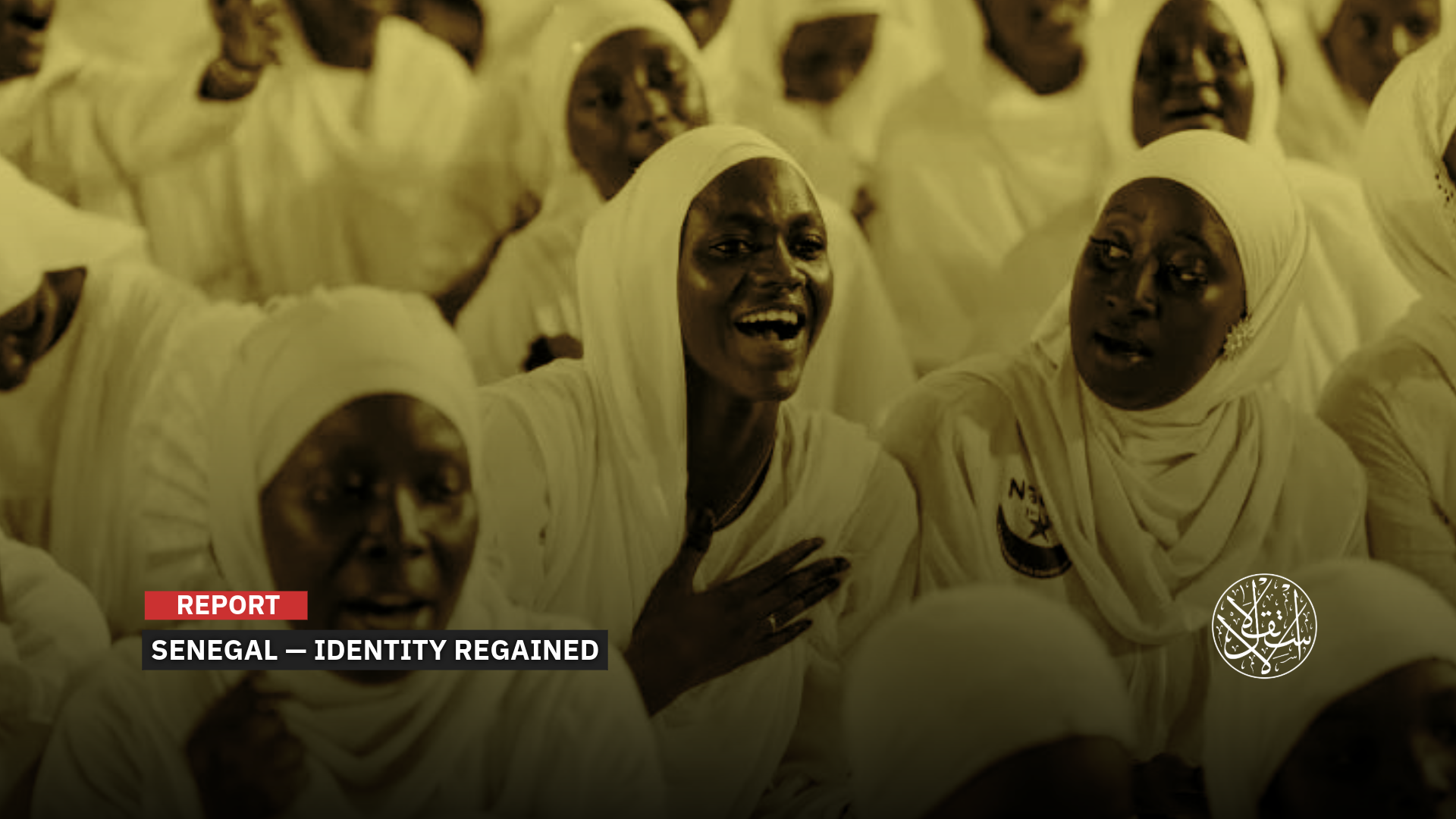
Senegal is gradually shedding its French colonial legacy.
Senegal’s new authorities are continuing their efforts to strengthen the visibility of Islamic cultural practices in the country, while breaking with the secular French colonial legacy, including policies related to the wearing of the hijab.
In this context, Senegal’s Minister of the Interior and Public Security, Mouhamadou Bamba Cisse, issued instructions to officials overseeing registration centers for the ECOWAS biometric national identity card, directing them to allow women wearing hijabs to register without being required to uncover their hair.
A Key Document
The decision followed incidents reported at several registration centers, according to a statement published on December 26, 2025, in which veiled women were asked to remove their head coverings during the photography process.
The minister clarified that registration can proceed as long as the face is sufficiently visible, without the need to show the ears, stressing that the measure is intended to respect the religious beliefs of female citizens and to facilitate their access to official documents.
The new step reflects, the statement said, the authorities’ commitment to ensuring that all women can obtain the biometric national identity card while taking into account their religious privacy, at a time when the nationwide rollout of the card continues across the country.
Senegal’s biometric national identity card is considered a highly important document, not only as proof of identity within the country, but also because it complies with the security standards of the Economic Community of West African States, known as ECOWAS.
The card offers its holder several advantages, including freedom of movement, by facilitating travel between member states of the regional organization.
It also provides a high level of security, as it incorporates biometric encryption technologies designed to prevent forgery and ensure the protection of personal data.
In addition, the card enables access to services, including banking, electoral, and social services, within the ECOWAS area.
Since President Bassirou Diomaye Faye assumed office on April 2, 2024, becoming the youngest elected President in the country’s history, and following the appointment of Ousmane Sonko as Prime Minister, Senegal has undergone continuous changes aimed at breaking with the French colonial legacy, including the removal of France’s military presence in the country.
Community Support
The move has been widely welcomed by human rights organizations, particularly within the Muslim community.
In this context, the site Be Africa reported on December 28, 2025, that the non-governmental organization Jamra, which promotes Islamic values, praised the government initiative, describing it as an important step toward respecting the dignity of veiled women.
According to the organization, these women have long experienced discomfort when required to remove their head coverings to apply for or obtain identity documents.
The same source reported that Jamra director Mame Mactar Gueye said, "The minister’s directive aligns with a principle our organization has long defended: it is entirely possible to verify a woman’s identity without requiring her to uncover her head, while allowing her to continue wearing the Islamic hijab daily."
The organization Jamra welcomed the initiative from the Senegalese government, emphasizing that the measure would restore dignity to veiled women, who often feel embarrassed when they are required to remove their head coverings to show their identity.

For Security Purposes
The local site Africa 24 reported on December 29, 2025, that human rights activist Alioune Badara Gueye confirmed that the previous administration had prohibited the hijab in identity card photographs, primarily for security reasons.
The activist said that showing the face removes any ambiguity or doubt about the person’s identity, and he noted that this measure ensures all Senegalese women can obtain the biometric national identity card while fully respecting their religious beliefs.
He added that the recent ministerial memo, which allows veiled women to register for biometric verification without requiring them to remove their head coverings, “has not sparked any controversy so far, despite previous debates.”
Tin noted that the measure is not unique to Senegal, as it is already applied in other countries in the region that share the ECOWAS biometric identity card system.
He pointed out that countries such as Burkina Faso and Nigeria, the most populous nation in West Africa, have adopted similar provisions.
In his reading of these developments, Senegalese writer and activist Fadel Barro said the new authorities face a serious challenge in reorganizing religious practices in a country where Muslims make up 97 percent of the population.
Barro told Al-Estiklal that “it should be noted that the law respecting Senegalese women’s right to wear the hijab when photographed for identity cards or passports follows a firm stance taken by Prime Minister Sonko.”
He explained that this position relates to the previous prohibition on Senegalese female students wearing the hijab in Christian-oriented schools, such as Jeanne d'Arc and others.
Barro added that Sonko, upon his appointment as Prime Minister, announced that any private school or institute that prevents Senegalese female students from wearing the hijab would face sanctions.
Accordingly, he sees the new administration as committed to preserving the religious identity of Senegalese men and women.
The writer also noted that “the curriculum is being revised to better reflect Senegalese reality, with careful consideration of our Islamic identity.”
Strategic Policy
This new direction, adopted by Diomaye and Sonko, highlights Senegal’s deepening structural focus on identity issues and the strategic use of religion in public affairs, according to strategic and social analyst Mamadou Boudiane.
In this context, Boudiane wrote in an analysis published on his website on September 13, 2025, that the new leaders are keen to present Senegal as a model of tolerant Islam, one that commands respect throughout the Muslim world.
He noted that since taking office, the President and Prime Minister have oriented Senegal toward the Islamic sphere, engaging particularly with the Maghreb, especially Morocco, and Gulf countries, notably Saudi Arabia, Qatar, and the United Arab Emirates, in contrast to their predecessor, Macky Sall, who focused on Western and Chinese partnerships.
Boudiane added that Senegal positions itself as a genuine religious and political laboratory, capable of translating internal uniqueness into an exportable model, balancing Sufi Islam with reform movements without sliding into conflict.
By contrast, the expansion of Christian influence in Senegal and its insistence on secularism as a defining feature of the political system has drawn widespread criticism.
A February 2025 editorial in the local magazine Yoor, authored by editor-in-chief Omar Tawil, highlighted this tension.
The magazine noted that since Senegal’s independence in 1960, the Christian minority, which makes up no more than five percent of the population, has dominated the formal public sphere.
It added that “even the support provided to private Christian schools far exceeds that offered to Quranic schools (darat) or French-Arabic schools.”
The editorial further pointed out that civil and criminal law in courts is secular, derived from French civil law, with no connection to Islamic civil or criminal law.
It also noted that the secular family code, secretly enacted by President Leopold Sedar Senghor in the National Assembly in 1972 under the one-party system, was opposed by Islamic religious leaders but remains in effect.
The magazine called on the new government, led by The African Patriots of Senegal for Work (the Pastef party), to propose a constitutional amendment removing the provision stating that “Senegal is a secular democratic state,” and to recognize it as an Islamic state whose rulings and legislation are derived from Islamic law, particularly given that Muslims make up 95 percent of the population.
Sources
- Senegal – Access to the Biometric National Identity Card: Veiled Women Can Register Without Uncovering Their Hair [French]
- When Senegal Repositions the Arab-Muslim World in Its Geopolitics: Senghor Laid the Groundwork, Diomaye Embodies It, Sonko Drives It Forward [French]
- The Origins and Harms of State Secularism in Senegal, a Muslim Country [French]