Algeria Sparks Tunisian Political Outrage by Handing Over Revolution Icon: What’s the Story?
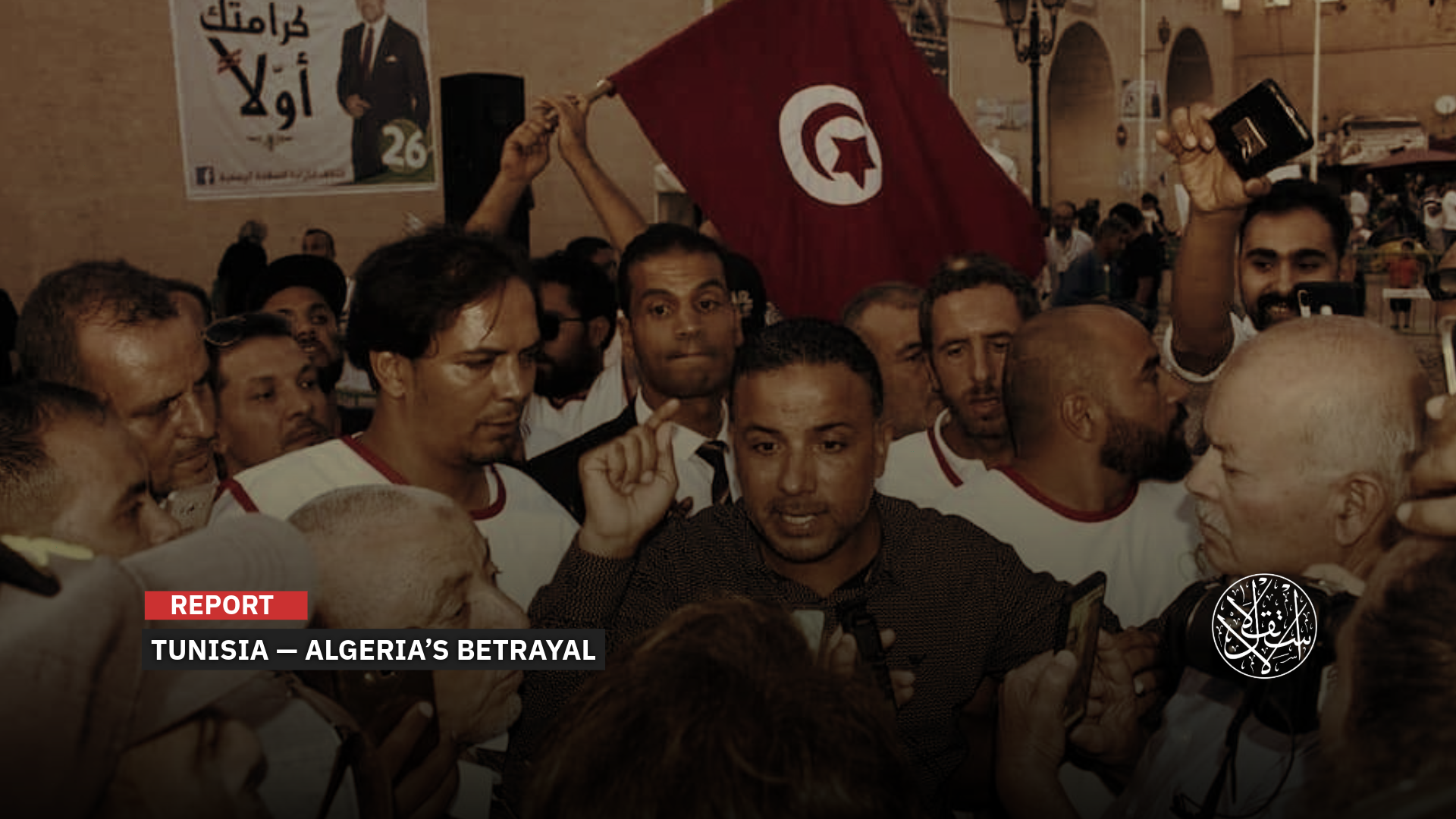
“Algeria embraced the utmost treachery by handing the young activist over to the coup leader Kais Saied.”
A wave of anger swept Tunisian politicians and human rights advocates after Algeria’s President Abdelmadjid Tebboune and his government handed over opposition MP and lawyer Seifeddine Makhlouf to the regime of President Kais Saied.
In a statement published on January 18, 2026, Makhlouf’s sister, Nadia Makhlouf, said the handover amounted to “a grave violation of international law, human rights principles, and asylum protections.”
She argued that Algeria’s decision to transfer Makhlouf to the Tunisian authorities forcibly constituted a blatant breach of the principle of non-refoulement, which prohibits returning political opponents to countries where they face persecution or politically motivated trials.
Anger in Tunisia
Tunisian outrage deepened as details of the transfer emerged. Nedia Makhlouf said her brother had been told he was being taken to Algiers to complete routine administrative procedures, only for the destination to be secretly changed and for him to be handed over at the Tunisian border. She described the move as an act that embodied betrayal and contempt for international law.
She stressed that what happened was not a routine procedural step but a dangerous precedent that strikes at the core of protections for refugees and political dissidents, calling it a stain more commonly associated with regimes of repression and authoritarianism that show little regard for their citizens’ most basic rights.
Angry reactions to the Algerian authorities’ decision were swift and wide-ranging, including from former Tunisian president Moncef Marzouki, who said Makhlouf’s handover came after he had been held in Algeria for nearly a year and a half.
In a Facebook post on January 18, Marzouki said Makhlouf was an elected lawmaker in the legitimate parliament dissolved by Kais Saied’s coup and that he had sought refuge in Algeria to escape retaliatory court rulings of the kind imposed on opponents of the power grab.
Marzouki described the extradition as “a stain of shame on the forehead of the Algerian authorities,” arguing that it violated not only international standards but also long-standing Arab and Muslim traditions that, he said, even the most ruthless rulers once observed, traditions that forbid handing over someone who has sought your protection, even an enemy.
The former president added that Makhlouf’s transfer constituted a blatant breach of international norms governing political asylum, noting that Makhlouf had been under protection and was awaiting transfer to Geneva after the United Nations High Commissioner for Refugees had taken charge of his case.
Riad Chaibi, a senior figure in Tunisia’s opposition National Salvation Front (NSF), said the move by the Algerian authorities was “unacceptable” and fundamentally at odds with the legacy of the Algerian people and a state that had long offered refuge to Tunisian dissidents.
According to the local outlet Kapitalis on January 18, Chaibi argued that Algeria, long admired for its history and principles, today showed a far smaller face, as its authorities’ actions betrayed the very values the Tunisian public had long celebrated.
The handover, according to Chaibi, showed disregard for humanitarian law and was carried out in a treacherous manner, particularly after Makhlouf’s asylum request to the UK had been accepted, and without respect for even the most basic legal procedures. A Tunisian opposition figure, he said, was transferred with no guarantees for his physical safety or fundamental rights.
Tunisian broadcaster Salah Lazrag of Alhiwar TV echoed the outcry, noting that, whether people agree with Makhlouf or not, he is a victim, like dozens of others now rotting in the prisons of the coup regime.
In a Facebook post on January 18, Lazrag said the Algerian authorities had suddenly handed Makhlouf over to Tunisia’s coup-backed regime, describing the move as collusion in wrongdoing and abuse.
“Strangely, I received information that an Algerian security officer contacted his family and told them that Saifeddine would soon be reunited with his children, which gave the impression he would be allowed to leave and join them, but their deceit is mountainous. God help us,” he added.

Official Reactions
Political and human rights groups spoke out against the Algerian authorities’ move, including the Geneva-based Association for the Prevention of Torture (APT).
The organization sharply condemned Algeria’s forced handover of Tunisian lawyer, politician, and former MP for 2019–2024, Seifeddine Makhlouf, to Tunisian authorities, highlighting that he faces politically motivated court rulings.
It added that, in January 2026, the Criminal Chamber of the Court of First Instance of Tunis sentenced Makhlouf in absentia to five years in prison, with immediate enforcement.
The association said a judicial source had confirmed that prosecutors ordered Makhlouf’s detention immediately upon his transfer, based on those rulings. It stressed that these facts unequivocally show that the handover took place in a highly charged political and judicial context, amid serious and real risks to his physical safety and his right to a fair trial.
The statement argued that the decision constituted a direct violation of Algeria’s obligations under the UN Convention Against Torture and the International Covenant on Civil and Political Rights, particularly United Nations principles on the protection of refugees and political opponents.
The association called on UN bodies and international human rights mechanisms to act urgently to follow the case and ensure that Makhlouf is not subjected to torture or cruel treatment. It also demanded his immediate release and an end to all politically motivated prosecutions against him and against all detainees of conscience in Tunisia.
It warned that this dangerous development would not pass without legal and human rights follow-up at the international level, pledging to continue monitoring the case and to pursue all available steps to defend the victim’s rights and the principles of justice and human dignity.
Tunisia’s Dignity Coalition slammed the handover of Makhlouf, the academic, lawyer, and activist they call a symbol of the revolution and head of the party’s political bureau, from Algerian authorities to Tunisia’s coup-backed regime, denouncing it as a blatant political crime.
In a statement, the party said the move amounted to “a grave step that reflects complicity with a system of repression and authoritarianism, and participation in enforcing politicized verdicts that lack even the most basic judicial guarantees.”
The party added that the handover directly contradicted Algerian claims of neutrality and of staying impartial between Tunisia’s rival political factions.
The party also noted that Makhlouf was a political asylum seeker whose case had been accepted by the UN High Commissioner for Refugees, with only procedural steps remaining to complete international protection. Handing him over under these circumstances, it said, amounted to a betrayal of humanitarian and legal principles.
The party added that the in-absentia sentence of five years in prison with immediate enforcement, issued on January 14, 2026, Tunisia’s Revolution Day, was “nothing more than a poisoned gift to the revolution and its fighter, Makhlouf.” It described the ruling as a vindictive message underscoring that the coup system is not merely hostile to individuals but to the revolution itself, its values, and its hard-won gains.
The party called on all living national forces and everyone committed to freedom and dignity in Tunisia and beyond to take urgent action to expose what it described as a political crime, to raise their voices and apply pressure for the immediate release of Makhlouf, and for the freedom of all political detainees and those unjustly imprisoned in the jails of the coup regime.
Political Take
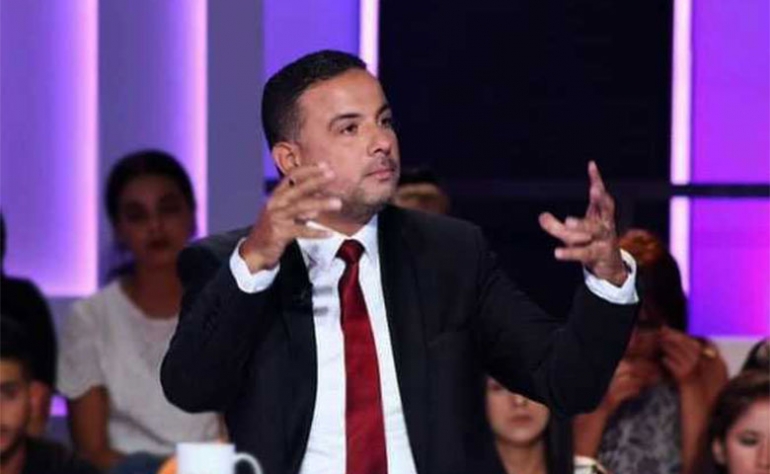
Tunisian journalist and political activist Nasreddine Suwailmi argued that the issue goes back to square one: Makhlouf is no ordinary man. He is a parliamentarian, a party leader, a lawyer, and a young revolutionary who has long stood against French cultural and economic neocolonialism in his country and the region, as well as against the Israeli Occupation.
“Makhlouf had sought refuge in Algeria to escape the injustice of Tunisia’s coup, convinced that even if Algeria’s authorities did not shelter him, the country’s revolutionary legacy would,” he told Al-Estiklal.
“That is why he was even more certain that the Algerian state, which refused to hand over the billionaire Nabil Karoui and allowed him safe passage to France, would all the more refuse to hand over the activist academic Makhlouf.”
“The Algerian authorities trampled on every noble principle, kicked aside the ethics of a timeless humanistic revolution, and embraced the utmost treachery by handing the young activist over to the coup leader Kais Saied, a man consumed by deep-seated hatred and psychological obsessions,” Suwailmi added, with evident regret.
“Yes, the Algerian authorities sold the honorable Seifeddine for a pittance, treating him as something of no value.”
He called for confronting the coup leader Saied and standing up to all the tools of his rule, whether individuals or institutions, in order to rescue Tunisia from what he described as its current political, social, and economic catastrophe.
Such a task, Suwailmi argued, can only succeed through broad public awareness, particularly among the country’s living forces in politics, human rights, media, and academia, one that rises above rigid and polarizing ideological alignments and reclaims the core principles of the 2011 revolution, above all freedom, justice, and democracy.
Sources
- Algeria Hands Over Former MP Seifeddine Makhlouf to Tunisia [Arabic]
- Riad Chaibi: Algeria’s Handover of Opposition Figure Seifeddine Makhlouf to Tunisia 'Unacceptable' [Arabic]
- Political Activists: Makhlouf Is a Political Detainee and His Handover Constitutes a Clear Violation of an International Principle [Arabic]