After 15 Years of Support, Why Did 'Hezbollah' Lose Its Lebanese and Arab Backers?
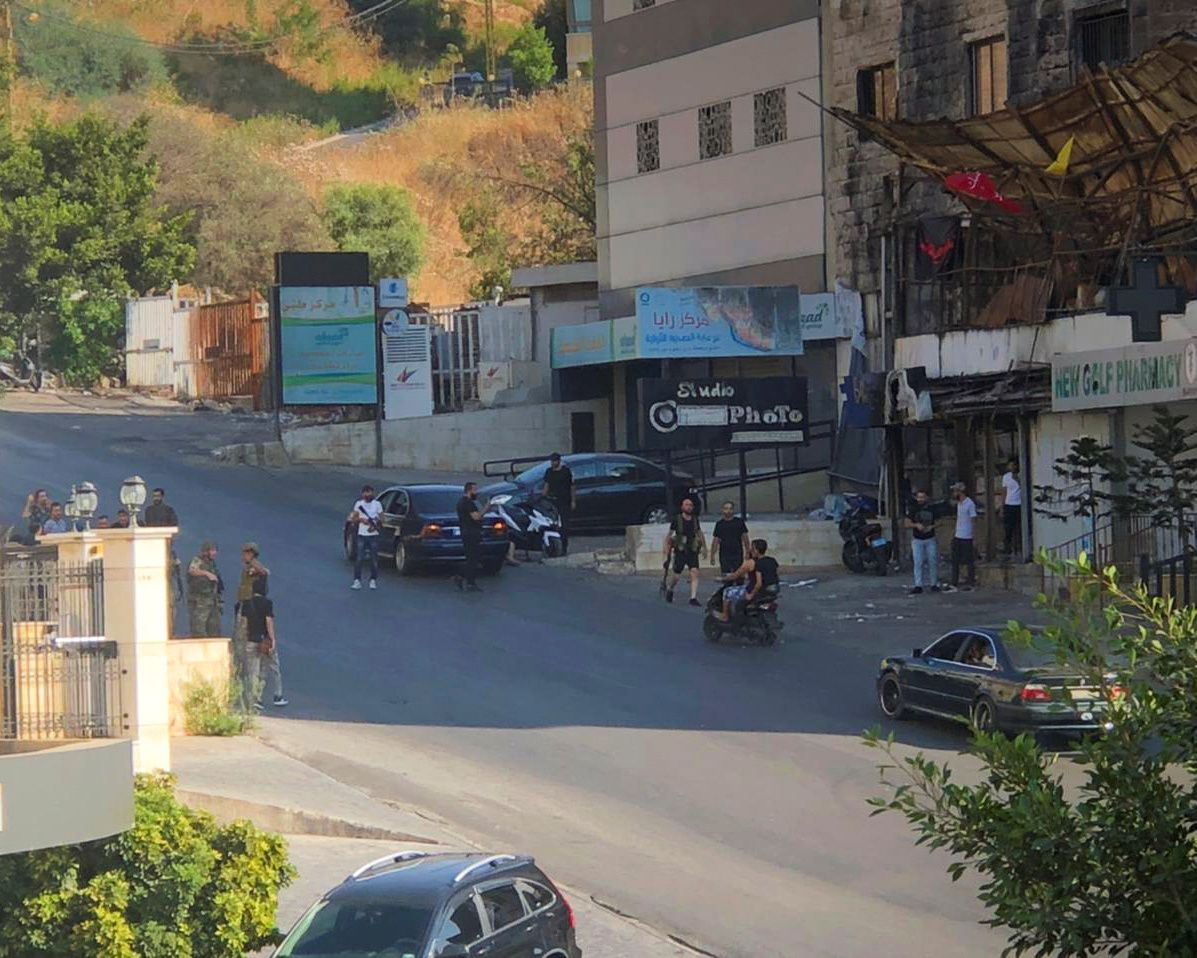
It was not common for the residents of the Druze border village of Shwayya in the Hasbaya region of southern Lebanon to prevent Lebanese Hezbollah fighters from passing through their region with rocket launchers to strike Israel. It was not also common for them to assault the party's members and to hand them over to the Lebanese army.
In an unprecedented move on August 6, 2021, "Hezbollah" elements were arrested, and their weapons confiscated by the Lebanese, in reference to the party's loss of the supporters that had long supported it since its war with Israel in 2006.
Five days before this incident, specifically in early August 2021, the "Arab Khaldeh al-Sunna" tribes killed a Hezbollah member, avenging a child he killed in 2020, while the matter developed into attacks in which 4 other members of the party were killed.
Before that, and on the occasion of the one-year anniversary of the Beirut port explosion, August 3, 2021, the "youth of Al-Saleeb neighborhood" demonstrated their strength in the Christian area of Ain Al-Rummaneh, the headquarters of the Lebanese Forces affiliated with Samir Geagea, in a challenge that some considered against "Hezbollah".
The three targeting of "Hezbollah" elements by Sunni, Christian, and Druze clans showed the great shift in the organization’s popularity, after it gained great popularity for 15 years.
Those clashes raised fears of a second civil war, which Lebanon might be pushed towards, in light of an economic collapse, and Hezbollah's control of a large part of political life and the economy.
Therefore, the Lebanese army intervened quickly to cool the burning atmosphere.
Nasrallah's Confession
Hezbollah's failure to deal with internal economic crises, and what is being raised about its role in obstructing the formation of the Lebanese government in alliance with Lebanese President Michel Aoun, have increased the state of popular anger against the party.
The incidents of targeting its fighters, sometimes in revenge and killing them, and at other times by arresting them and confiscating the rocket launcher, which the Lebanese army later returned to Hezbollah sound alarming.
These events prompted the Secretary-General of the Lebanese "Hezbollah" Hassan Nasrallah to give a speech in which he admitted the extent of his concern about what happened, but he focused on two things.
The first was his concern about the loss of popular support, saying: "I tell the enemy, do not bet on the resistance’s surrounding, it is supportive and loyal all the time."
The second is his fear of the Lebanese refusing to support him and confront his forces, as he put it: "I was very sad when I saw the photos of the incident of some Lebanese intercepting a truck of fighters who participated in the implementation of an operation against the occupation."
Nasrallah said: "What happened in Shwayya was not something simple, and it has serious connotations."
However, the Hezbollah leader tried to show that the incident was an isolated incident and refused to hold Shwayya residents responsible.
He pointed out that "some people of Shwayya rejected what happened, and we appreciate everyone who stood with the resistance."
But he demanded punishment, saying: "Whoever assaulted our brothers must be investigated by the agencies and tried before the judiciary."
He also pointed out that he was disturbed by the "Khaldeh incident" south of Beirut, in which 5 members of Hezbollah were killed.
He considered "what happened in Khaldeh a massacre, not an accident," describing those who committed it as "a gang of criminals and murderers," according to him.
Hezbollah's Involvement in Syria
As much as the incidents of confiscating the rocket launchers, arresting Hezbollah soldiers, and shooting its soldiers and killing 5 of them, they were indications of a change in the Lebanese reality towards the party, as much as they showed the extent of the party's losses from its hostility to the Arab Spring.
Hezbollah's involvement in suppressing the Syrian revolution and being involved in the civil war there, gradually lost the sympathy of many Lebanese and other Arab peoples.
In the aftermath of the 2006 war with Israel, "Hezbollah" rebuilt itself into one of the most powerful armed groups in Lebanon and the Middle East, and this was followed by the expansion of its local and regional influence.
Since then, the party (allied with the Lebanese president) has played a restrictive role in political life, which has led to the widening of the political division in Lebanon after it obstructed the formation of the government several times, according to observers.
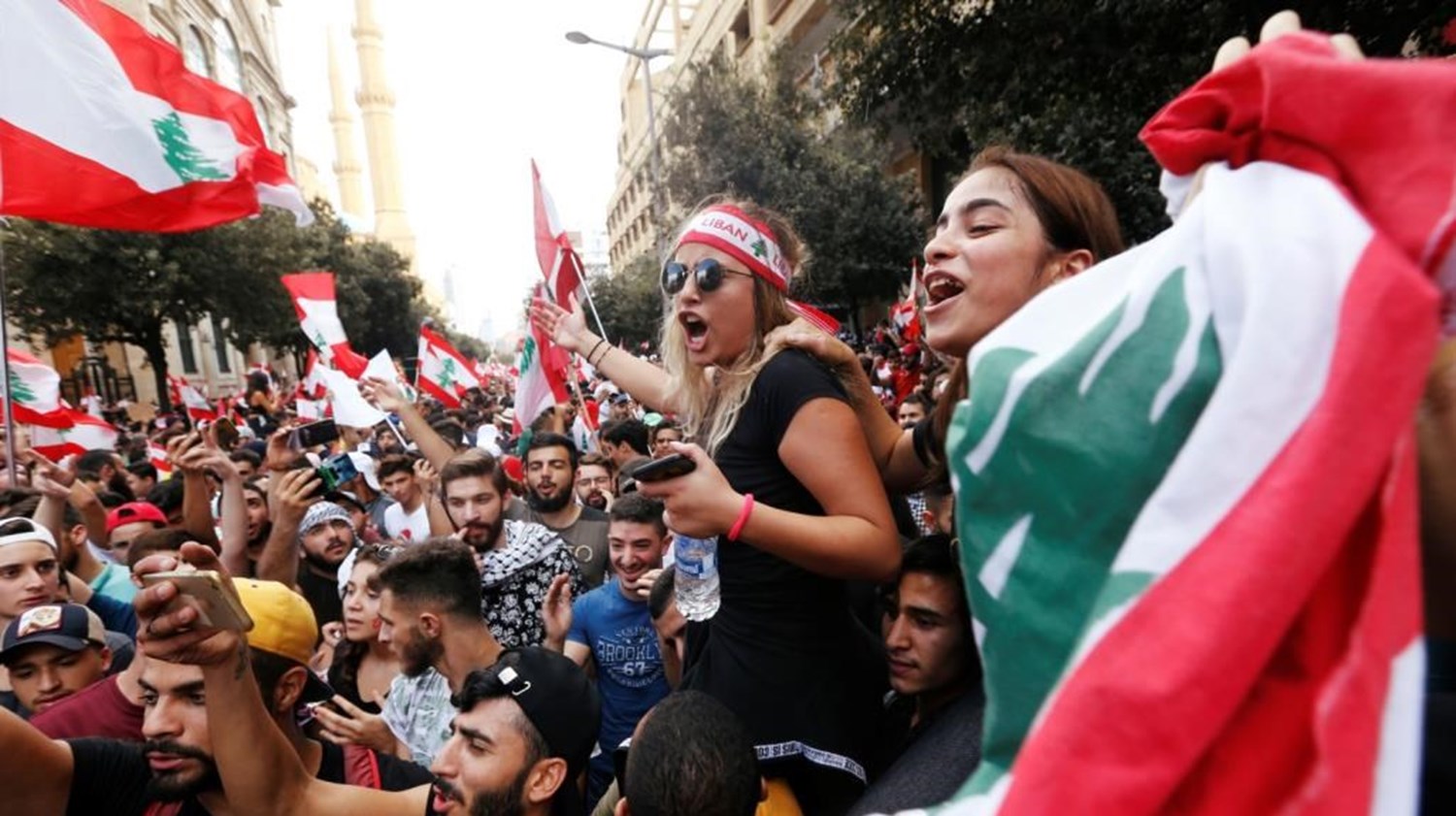
Therefore, the Lebanese Spring in 2019, some of it directed at bringing down political sectarianism, including Hezbollah, after the Lebanese realized, after years of sectarianism, that their enemy was tyranny, oppression and corruption.
The demonstrations in Lebanon appeared as a third version of the Arab Spring, more mature and conscious, after the first version that started in 2011 in Tunisia, Egypt, Libya, Yemen, and Syria, most of which were aborted, and the second version is suffering in Sudan and Algeria.
The slogan "All of them means all of them" (all of them means all of them), which the demonstrators called for with the aim of overthrowing the entire ruling political elite, has become a modified version of the slogan of the Arab Spring in its first and second versions, "The people want the fall of the regime."
The explosion of the port of Beirut, the accompanying talk of corruption, the collapse of the economy and the Lebanese currency, which further deepened the gap between the Lebanese and Hezbollah.
This situation was predicted early in a report by the Carnegie Endowment for the Middle East in a report published on June 19, 2021, stressing that Hezbollah's strength would be affected in the face of the Lebanese demands.
It said: "Hezbollah's solid strength has not been affected by the Arab Spring or Syria, but the tendency of public opinion to prioritize civil rights and democracy, two factors that could sharply weaken the party's grip on power."
Hence, Hezbollah has become afraid of war with Israel, not only because it lost its popular support after being involved in supporting Bashar al-Assad in Syria and participated in suppressing the Arab Spring there, but also because it did not guarantee that the Lebanese would stand behind them, as in the 2006 scenario.
It is true that Israel also fears war because it may be open on at least two fronts in Syria and Lebanon, or turn into a multilateral confrontation with Iran, the party and the Palestinian factions in the Lebanese camps, and perhaps Gaza.
However, Hezbollah fears losing its entire influence in light of the erosion of popular sympathy with it, which will lead it to a higher degree of internal conflict with the Lebanese themselves, who are suffering an economic, political, and social collapse.
Political Crisis
Since the May 6, 2018, elections, in which the Sunni "Future Movement" led by Saad Hariri lost a third of its parliamentary seats in exchange for significant gains for Hezbollah and its allies, including the Christian Free Movement led by President Michel Aoun, Lebanon has been living in a political impasse.
Hezbollah obtained the blocking third in parliament, leaving the sensitive ministries in the hands of the "March 14 Movement" that supports it, linking any disarmament to this blocking third and obstructing the government's work.
The party, along with its current, succeeded in winning 72 seats, compared to 53 for the rival current, and 3 seats for independents, while the number of parliament seats reached 128, according to the Taif Agreement in 1989, divided among representatives belonging to 11 religious sects.
The elections were tainted by sectarian, regional and international conflict in Lebanon, as Iran fought it with the card of Hezbollah and the "March 8 Alliance", and Saudi Arabia and the UAE with the "Future Movement" and the "March 14 Alliance" led by Hariri, and Christian forces.
On October 17, 2019, the popular movement blew up this paralysis that affected this government due to the blocking third of Hezbollah and the sectarian quota conflict. The Lebanese demanded an end to this corrupt system and the expulsion of everyone because they are serving “the interests of the outsiders."
Popular anger flared up more as Hezbollah sought to exploit the economic crisis and stockpile food and oil in preparation for the worst and the country's complete collapse, Reuters confirmed April 16, 2021.
The incidents of the clash with his soldiers, the killing of five of them, and the confiscation of the rocket launcher indicated that the street had reached a dangerous stage of congestion that might ignite the country and enter it into a second civil war, in light of the party's loss of the traditional popular support it enjoyed.