A Reckoning Draws Closer: Mapping the Silent Saudi-Emirati Battle for Influence in Hadramout
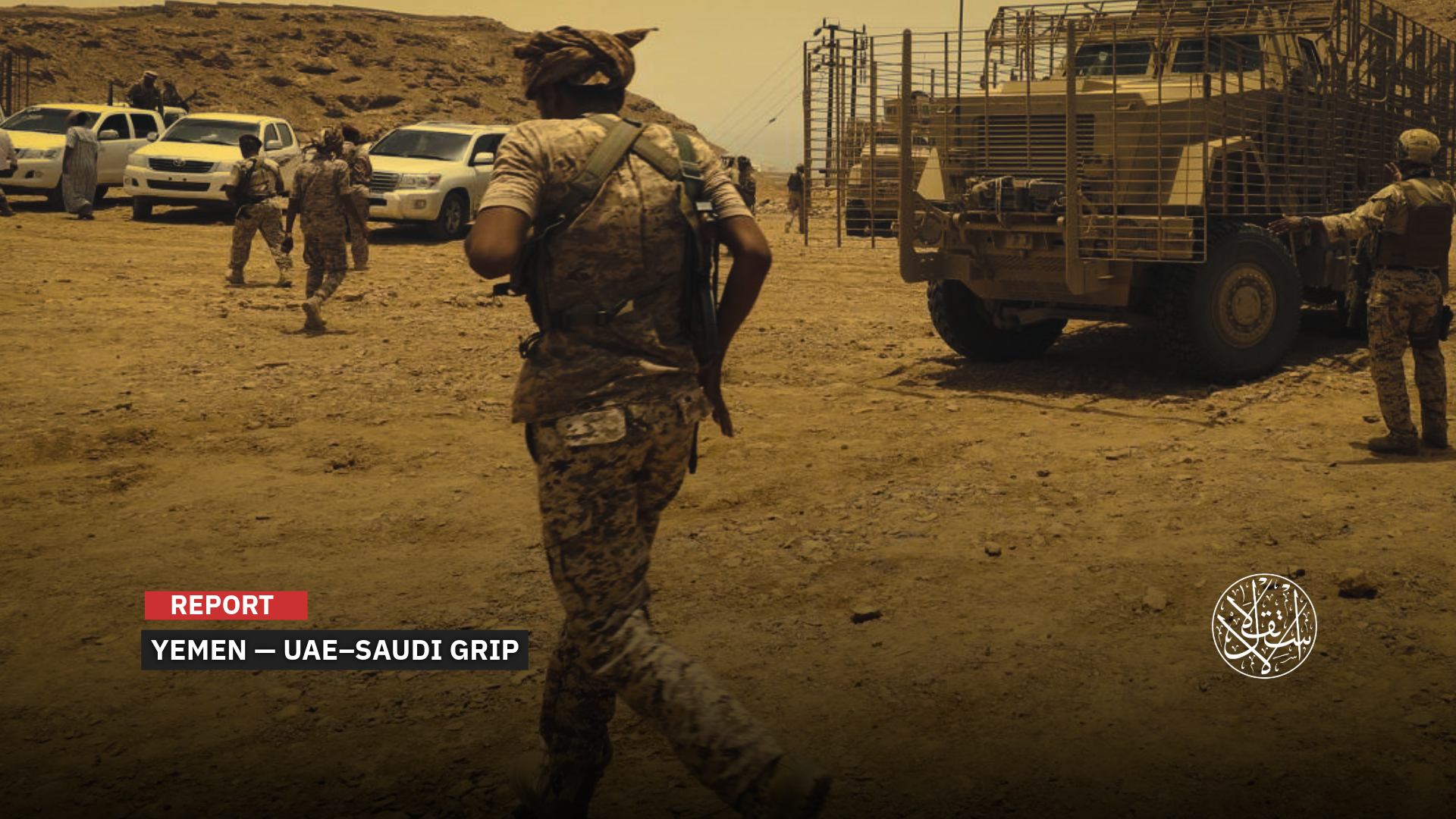
A senior Saudi delegation has arrived to curb the growing control of UAE-linked proxies in Hadramout.
Amid the takeover of Seiyun, the largest city in Yemen’s Hadramout Valley, by the UAE-backed Southern Transitional Council (STC) militia, Saudi Arabia has dispatched a high-level delegation led by Maj. Gen. Mohammed bin Ubayd al-Qahtani in an apparent bid to defuse tensions in the oil-rich province.
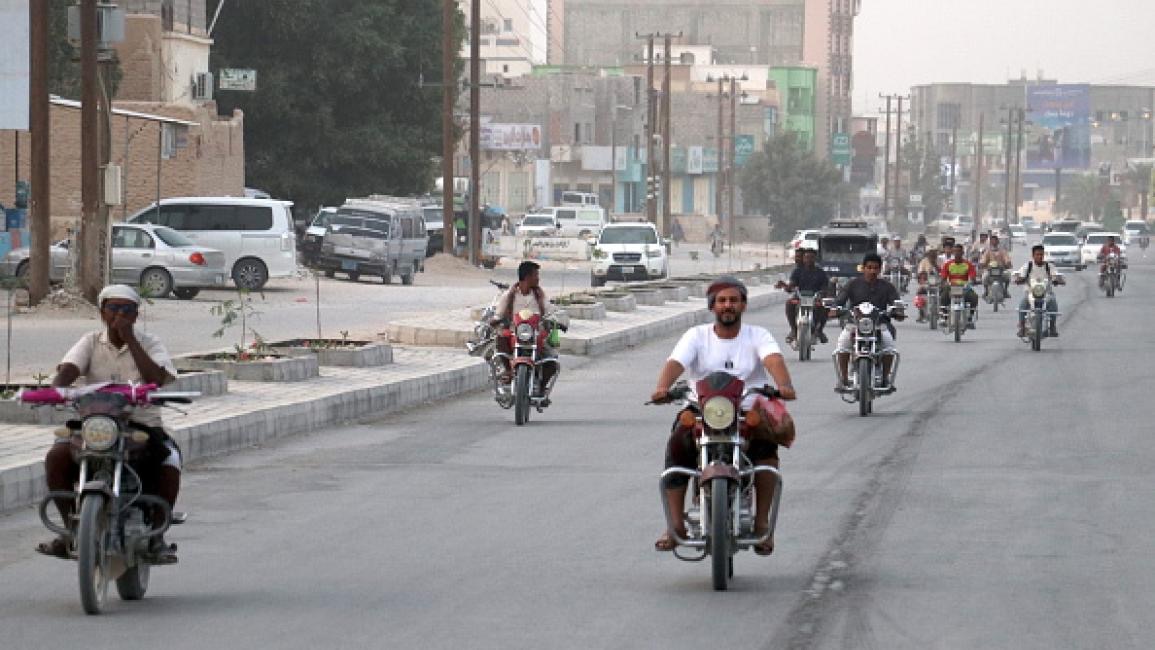
The takeover unfolded on December 3, 2025, following brief clashes between STC militias and forces of the First Military Region, which is under Yemen’s internationally recognized government. Fighting was concentrated around the Presidential Palace and Seiyun International Airport, leaving several people killed and wounded.
The escalation came just two days after Amar Binhabresh, head of the Hadramout Tribes Confederacy, warned that the province was facing an “armed tribal invasion” advancing from the neighboring governorates of Dhale and Lahj. He said the forces involved were affiliated with the Southern Transitional Council, underscoring growing local fears of a widening struggle for control in eastern Yemen.
A Saudi Push for Calm
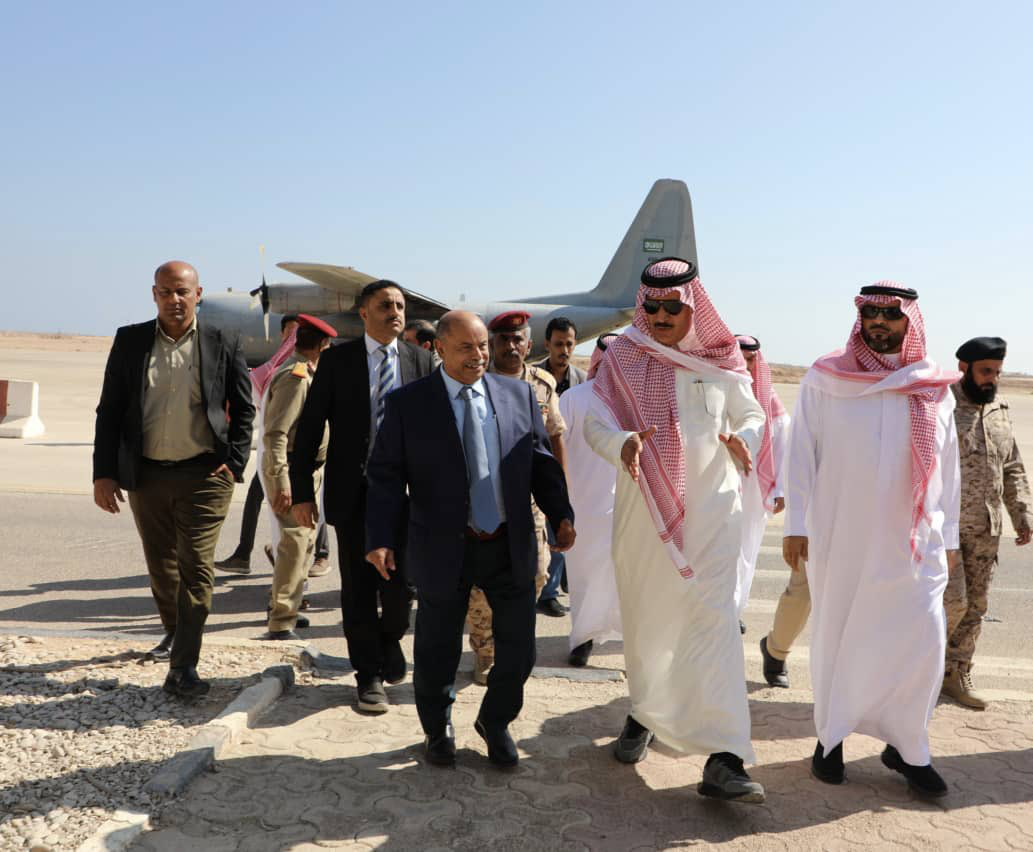
Against this backdrop, a Saudi delegation headed by Maj. Gen. Mohammed bin Ubayd al-Qahtani arrived in Hadramout, where it held an expanded meeting at the local government headquarters in the coastal city of Mukalla. The talks brought together Hadramout’s governor, Salem al-Khanbashi, leaders of the local authorities, and representatives of key Hadrami political and social groups.
According to a post by Yemen’s information minister, Moammar al-Eryani, on X on December 3, the meetings were intended to align positions and reinforce de-escalation efforts while also addressing security and administrative files. The aim, he said, was to safeguard stability in the province and set priorities for the next phase.
Later that evening, local authorities in Yemen’s Hadramout province and the Hadramout Tribes Confederacy announced they had reached an agreement to ease tensions and curb the recent security escalation, under the sponsorship of a Saudi committee that oversaw consultations between the two sides in the oil-rich region.
In an official statement, Hadramout’s media office said the deal was signed by the provincial governor, Salem al-Khanbashi, and Sheikh Amar Binhabresh, the province’s first deputy governor and head of the Hadramout Tribes Confederacy.
Under the agreement, all forms of military, security, media, and incitement-related escalation are to cease immediately. A truce between the two sides will remain in place while the mediation committee continues its work toward a comprehensive and final settlement.
The deal also calls for the withdrawal of alliance forces and the Hadramout Protection Forces loyal to Binhabresh to the outer perimeter of the state-run PetroMasila oil company. In return, company protection units are to return to their previous positions, allowing PetroMasila staff to resume production and exploration activities. The withdrawal was scheduled to begin at 8 a.m. the day after the agreement was signed.
The agreement also stipulates that forces backing the UAE-supported Hadrami Elite must pull back three kilometers from their current positions while banning any party from bringing in military reinforcements during the implementation period.
In a brief statement, the leadership of the Hadramout Tribes Confederacy said it was ready to begin implementing the agreement in line with the agreed mechanism.
Local and tribal sources said both sides had also agreed that the Saudi committee would remain in the province until all provisions of the deal were fully carried out, with Saudi Arabia acting as the primary guarantor of its implementation, according to Reuters.
An Open-Ended Protest
Despite the announcement of a de-escalation agreement in Hadramout, forces aligned with the UAE-backed STC militia moved on December 4 to seize sites linked to oil companies in the Masila area of the province. The move followed a broad military deployment across oil fields, surrounding facilities, and key supply routes, signaling a fresh escalation on the ground.
Two days later, on December 6, the STC raised the stakes by declaring an open-ended sit-in in Hadramout, a step it said was aimed at pressing its case for secession and the establishment of a “southern state.” Mohammed Abdulmalik al-Zubaidi, head of the STC branch in the Hadramout Valley and Desert, said in a recorded address that a large, round-the-clock protest would begin at dawn on Sunday in the city of Seiyun.
Al-Zubaidi said the sit-in was intended to “complete the aspirations of the people of the south in general, and Hadramout in particular,” toward declaring a southern Arab state. He added that the protest was designed to send a message to regional powers—foremost among them Saudi Arabia—as well as coalition countries, the international community, and the United Nations, urging them to “respect the will of the people of the south to freedom and independence.” He stressed that the sit-in would continue “around the clock until these demands are met.”
In a separate statement, the STC announced a parallel sit-in in Mukalla, the provincial capital, calling on supporters to mobilize in large numbers under the same slogans and demands.
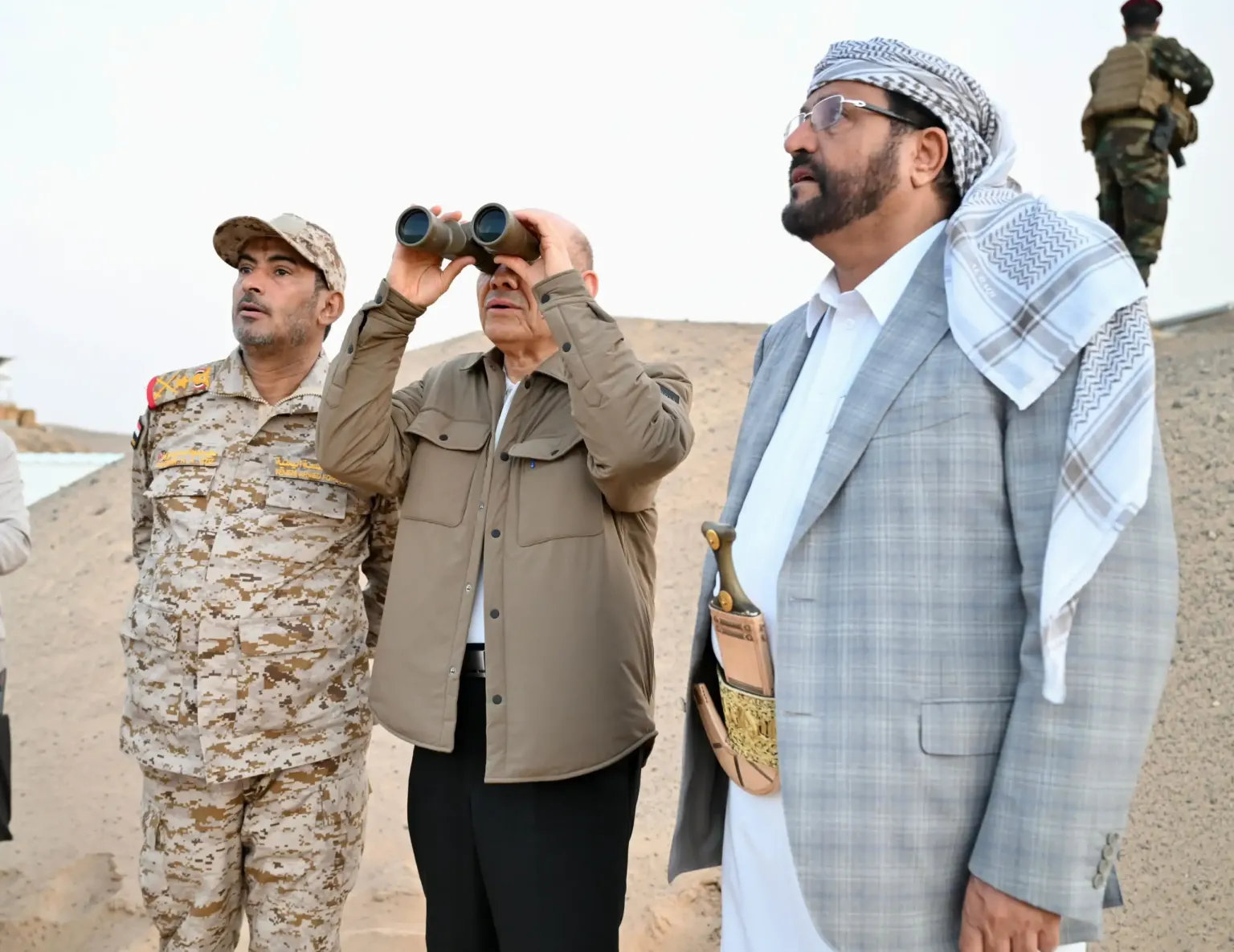
As events unfolded on the ground, Rashad al-Alimi, head of Yemen’s Presidential Leadership Council, left the interim capital Aden for Saudi Arabia to hold consultations with regional and international actors on the latest developments, particularly in Yemen’s eastern provinces.
In comments to the Saba News Agency on December 5, al-Alimi reaffirmed the council’s and the government’s commitment to a path of national partnership and collective responsibility to complete the tasks of the transitional phase under the agreed frameworks, foremost among them the transfer of power declaration and the Riyadh Agreement.
He insisted that safeguarding state institutions, protecting citizens’ interests, and preserving the unity of sovereign decision-making were the exclusive responsibility of the state. He rejected any unilateral measures that would encroach on the government’s authority and that could undermine security and stability, deepen humanitarian suffering, or derail prospects for economic recovery.
Al-Alimi said that the battle to restore state institutions, end what he described as the “coup” by Houthi militias, and implement economic reforms would remain at the top of national priorities. He warned that being drawn into side conflicts would only serve “the Iranian project and its destabilizing tools.”
The council chief also praised Saudi Arabia’s efforts in brokering the recent de-escalation agreement in Hadramout, stressing the need for full compliance with its terms and for building on those efforts to support stability in the province, which he described as a cornerstone of security in Yemen and the wider region.
UAE Project
Assessing Saudi Arabia’s ability to rein in the expansion of Emirati influence and its local proxies in Hadramout, the Yemeni writer and political analyst Abdulbaqi Shamsan argues that what is unfolding in Yemen is part of a broader, multi-layered regional contest. In his view, calculations in Riyadh, Abu Dhabi, and Muscat intersect with Iran’s influence, which he says is advancing through a project with a sectarian dimension.
Speaking to Al-Estiklal, Shamsan said the relationship between Saudi Arabia and the United Arab Emirates appears outwardly cooperative but masks a clear struggle for influence inside Yemen. Each state, he argued, is pursuing its own interests. The same logic applies to Oman, which he sees as positioning itself at an intersection of interests with Iran, to the detriment of other Gulf states.
“Saudi Arabia had previously sought to carve out understandings with Abu Dhabi over southern Yemen, with one major exception: Hadramout,” Shamsan said. “For Riyadh, the province was long viewed as non-negotiable, given its geopolitical, security, and economic ties to the kingdom.”
Recent shifts, however, suggest that the UAE is now seeking full control over the southern geography—or at least over Hadramout—in order to strengthen its bargaining position and secure the greatest possible gains. This, Shamsan said, has made the situation “exceptionally complex” at the current stage.
Safeguarding Saudi interests, he argued, requires a clear declaration that Riyadh holds primary decision-making authority over Yemen’s geography. He pointed to the 2014 request by Yemen’s former president, Abd-Rabbu Mansour Hadi, for military intervention, which was directed to Saudi Arabia alone, not the UAE. Under the UN charter, Shamsan said, Abu Dhabi’s entry into the Arab coalition came at Saudi Arabia’s invitation, meaning it lacks an independent legal basis for a permanent role in Yemen.
Shamsan also argued that the UAE’s approach in Yemen is driven by what he described as a form of “surplus ambition,” with Abu Dhabi seeking control of strategic locations, including ports, sea lanes, and key islands, as part of a broader effort to integrate Israeli Occupation’s security into its regional architecture. He said these moves reflect deep coordination aimed at reinforcing Israeli national security through an expansive Emirati project.
In his analysis, the UAE is trying to impose a new reality on the ground that would divide Yemen into two entities, north and south—a scenario he says serves the interests of Abu Dhabi, “Israel,” and the United States, regardless of international resolutions affirming Yemen’s unity.
Saudi Arabia, by contrast, is not aligned with the dual-division model advanced by the UAE, Shamsan said. Instead, Riyadh may favor a “three-region” formula, with Hadramout emerging as a region separate from both north and south. He suggested that this possibility is precisely what has prompted the UAE to accelerate its push to dominate the entire southern geography and sever it from the north.
A Strategic Province
Hadramout lies in eastern Yemen and has emerged as one of the country’s most important arenas of competition for influence. It is Yemen’s largest governorate by area, accounting for roughly 36% of the country’s total landmass, and is endowed with vast natural resources, foremost among them oil and gas. The province produces nearly 80% of Yemen’s oil and boasts a long coastline on the Arabian Sea stretching about 360 kilometers.
Hadramout is home to more than 1.8 million people and covers an area of around 193,032 square kilometers. It borders Saudi Arabia to the north, the Arabian Sea to the south, al-Mahra—which in turn borders Oman—to the east, Marib and al-Jawf to the northwest, and Shabwa to the west, a governorate that serves as Yemen’s main center of gas production.
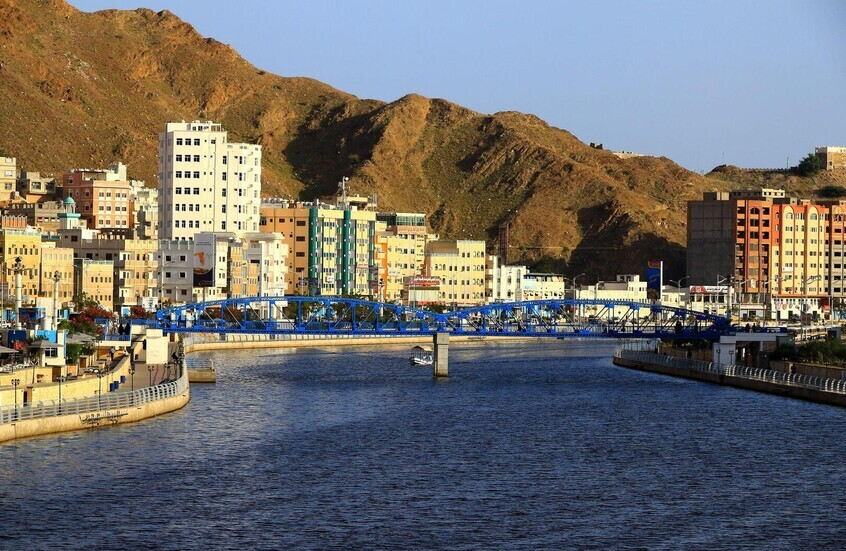
Administratively, Hadramout is divided into two main regions: the coastal strip, with Mukalla as its capital, and the inland valley, centered on the city of Seiyun. The province’s oil wealth is concentrated largely in the latter. The most prominent of these fields is the Masila Basin in Block 14, discovered in 1993.
The Masila sector is among Yemen’s largest oil fields, contributing more than 39% of total national output and ranking first among production blocks. In 2006, the Ministry of Oil estimated its production capacity at roughly 51.7 million barrels. Covering an area of about 1,257 square kilometers, the Masila fields, particularly Blocks 14, 10, 51, 32, and 53, form the backbone of crude oil production in the country.
The sector has been operated by the state-owned PetroMasila company since 2011, after it was transferred from the Canadian firm Nexen. PetroMasila has since pursued plans to develop existing wells, drill new exploratory ones, carry out maintenance work, and conduct geophysical surveys.
Hadramout is also served by two international airports—Riyan Airport in Mukalla and Seiyun International Airport in the valley—as well as several seaports, including the ports of Mukalla and al-Shihr and the al-Dhabba oil terminal.
The province hosts a strategic land crossing with Saudi Arabia at al-Wadiah, one of the most important commercial and humanitarian arteries between the two countries. It is also a major source of state revenue, making it a central focus of Riyadh’s interest in Hadramout.
Sources
- Separatists claim broad control of southern Yemen
- Hadhramaut: The new arena of Saudi-UAE rivalry in Yemen
- Presidential Leadership Council Chief Leaves Aden for Consultations on National Developments [Arabic]
- STC Forces Take Control of Seiyun and Hadramout Valley [Arabic]
- Yemen: Southern Transitional Council Declares Open-Ended Sit-In in Hadramout Demanding Secession [Arabic]
- Yemen: STC Seizes Key Oil Fields and Strategic Areas in Hadramout (News Report) [Arabic]
- Yemen’s Hadramout: Mapping Military Forces, Wealth, and the Struggle for Influence [Arabic]
- Under Saudi Sponsorship: Agreement Reached to De-escalate Military Tensions in Hadramout, Yemen [Arabic]
- Yemen’s Hadramout Clashes: A New Power Struggle Between Saudi Arabia and the UAE? [Arabic]