Four Factors Saving Europe: Will the Eurozone Avoid Economic Recession in 2023?

Economists said in a broad survey that the euro area might avoid economic recession in 2023, and the survey showed that there is a shift towards an optimistic economic overview.
Last month, economists surveyed predicted that the bloc would plunge into recession in 2023, but in this January’s poll, economists expected growth in the eurozone to be 0.1 percent during the current year.
According to the survey reported by the Financial Times on January 22, this is due to lower energy prices, abundant government subsidies, and the reopening of the Chinese economy earlier than expected, which are factors supporting economic growth in Europe and the world.
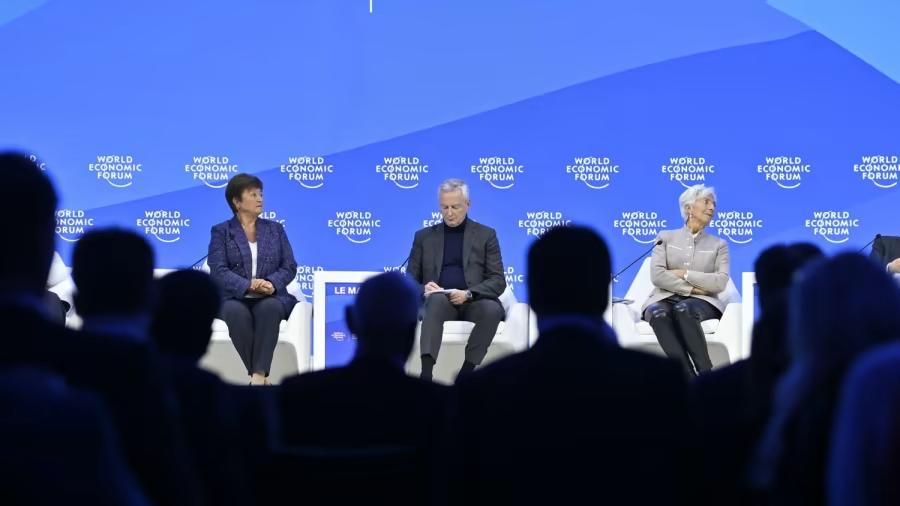
Officials and business leaders at the annual World Economic Forum this week in Davos also adopted a more optimistic view of the global economy, and the International Monetary Fund indicated that it will soon increase its forecasts for global growth.
Positive Factors
Four factors combine to save Europe from the economic recession this year: the warm winter, the decline in energy prices and thus inflation, the opening of the Chinese economy—the second largest trading partner of the bloc countries—and government support.
Economists feared that Europe would be among the most affected regions this year due to its exposure to the negative economic repercussions of the Russian war in Ukraine.
The director of the International Monetary Fund, Kristalina Georgieva, said a week ago that half of the European Union will be in recession during 2023.
The head of macroeconomic research at Dutch bank ING said the shift in economists’ expectations indicates that recession will not occur in the eurozone this year.
Susannah Streeter, an analyst at Hargreaves Lansdown, said that the dreaded energy crisis risk is receding, and inflation is falling more quickly than expected.
The perceptions have changed radically since October, said Andrew Kenningham, chief European economist at Capital Economics, adding that government support was more generous than expected, while the auto sector rebounded more strongly than expected.
There is now less than 30 percent chance of a recession, down from 90 percent last summer, said Anna Titareva, an economist at UBS. She added that supply chain disruptions are less, the labor market is strong, and savings are better, which explains the economic resilience of the euro area.
She stressed that Europe has succeeded in filling gas stocks in recent months, which has greatly reduced fears of gas rationing. The recent sharp drop in wholesale gas prices to levels last seen before the Russian invasion of Ukraine has also helped. These factors have reinforced the optimistic economic outlook.
Optimistic Forecast
JPMorgan raised its GDP forecast for the eurozone for 2023 to 0.5 percent this week, after forecasting natural gas prices to be around 76 euros per MWh, instead of its previous forecast of 155 euros.
The International Monetary Fund estimated that the inflation rate will be at 6.5% in 2023, a decrease of about 2.3%, but this is conditional on continuing efforts to lower the price of energy and food.
Any shock or change related to an escalation in the Russian war on Ukraine, or a breach of the Istanbul Agreement for the export of oil and food from Russia and Ukraine, will bring us back to a high inflationary wave, which means that the prospects for low inflation rates in the next two years 2023 and 2024 will be fragile, and linked to the political atmosphere significantly.
As for the most optimistic possibility, it is that an agreement will be reached to end the Russian war on Ukraine through political means, which would return oil prices to the level they were in June 2021 at about $65-70 per barrel, a price that enables many activities leading to economical price reduction in international markets.
Global Impact
In an interview with Al-Estiklal, the economist researcher at Sabahttin Zaim University Soumia Rahali said: “Despite the optimistic view, it is important to mention that the World Bank warned that developing countries will face additional risks, as the policies adopted by advanced economies to address inflation and economic slowdown may leave insufficient capital for poor countries.”
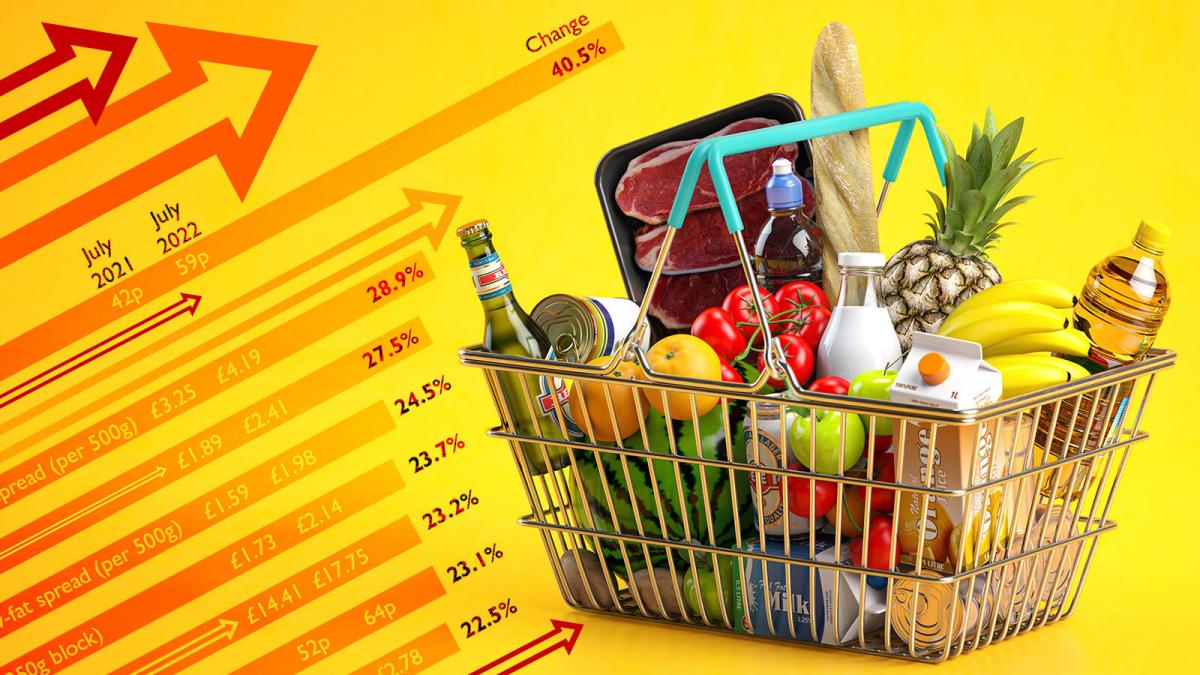
In light of the high global inflation rates, developing countries have endured an additional wave within the framework of what is known as imported inflation due to the dependence of developing and least-developed countries on importing many basic commodities from abroad.
Therefore, most Arab countries suffered from high inflation rates during 2022, but the decrease in oil prices in the international market has recently contributed to reducing inflation rates during 2023.
Especially since the drop in the price of oil is accompanied by a tangible breakthrough in the exit of food and oil commodities from Ukraine and Russia, according to the Istanbul Agreement, according to which Turkiye, Russia, and Ukraine, under the auspices of the United Nations, secured the exit of ships loaded with oil and food to all countries of the world. Russia even demanded that the agreement include other commodities.
Among the salient features of 2022 is the monetary policy pursued by the US of raising the interest rate to be around 4.5%, which led to an increase in the value of the dollar against all currencies of other countries, which brought about high inflation due to the devaluation of local currencies in many developing countries. This is what happened in many countries in the region, such as: Egypt, Tunisia, Syria, and Lebanon.
With the rising wave of inflation in all the different economies, citizens in developed countries, such as the US and the European Union, enjoyed social protection, which mitigated to some extent the negative repercussions of the crisis, such as putting a ceiling on rising energy prices, or imposing taxes on major energy companies, to reduce the burden on rest of the segments of society.
However, in developing countries, including the Arab countries, this cover of social protection was not available, and the citizens of those countries faced the wave of inflation within the framework of their individual capabilities, and the governments did not find anything but to cling to the burden of international crises.