Amid Political and Media Exploitation: How the Bondi Attack Sparked Widespread Controversy
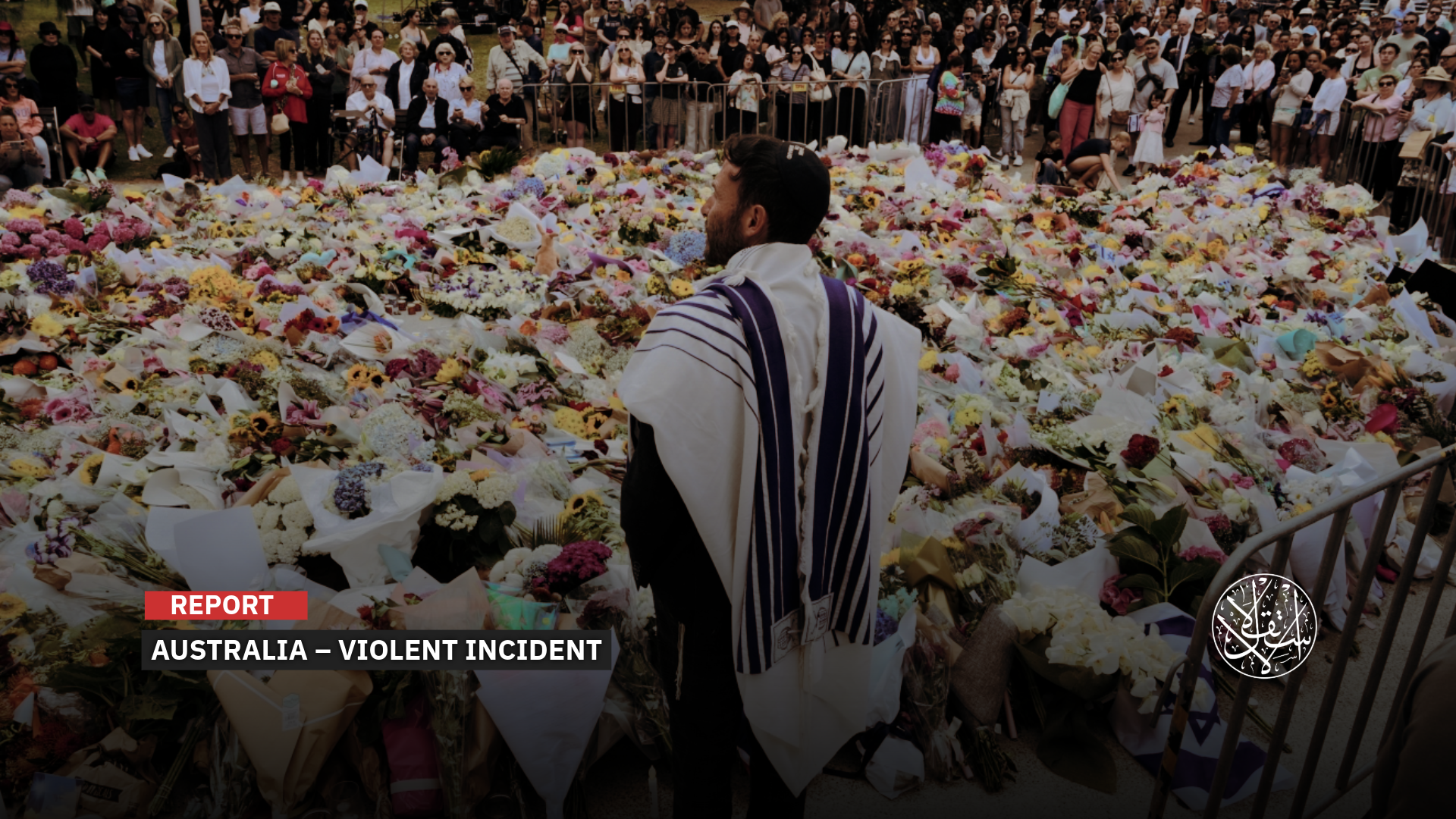
“Australia has seen a string of antisemitic incidents in the past 24 months.”
Australian police announced that a 50-year-old man and his 24-year-old son opened fire on Hanukkah celebrants at one of the country's most popular tourist sites, killing and injuring dozens.
Senior officials in Tel Aviv accused the Australian government of attempting to influence its stance on the genocidal war on the Gaza Strip.
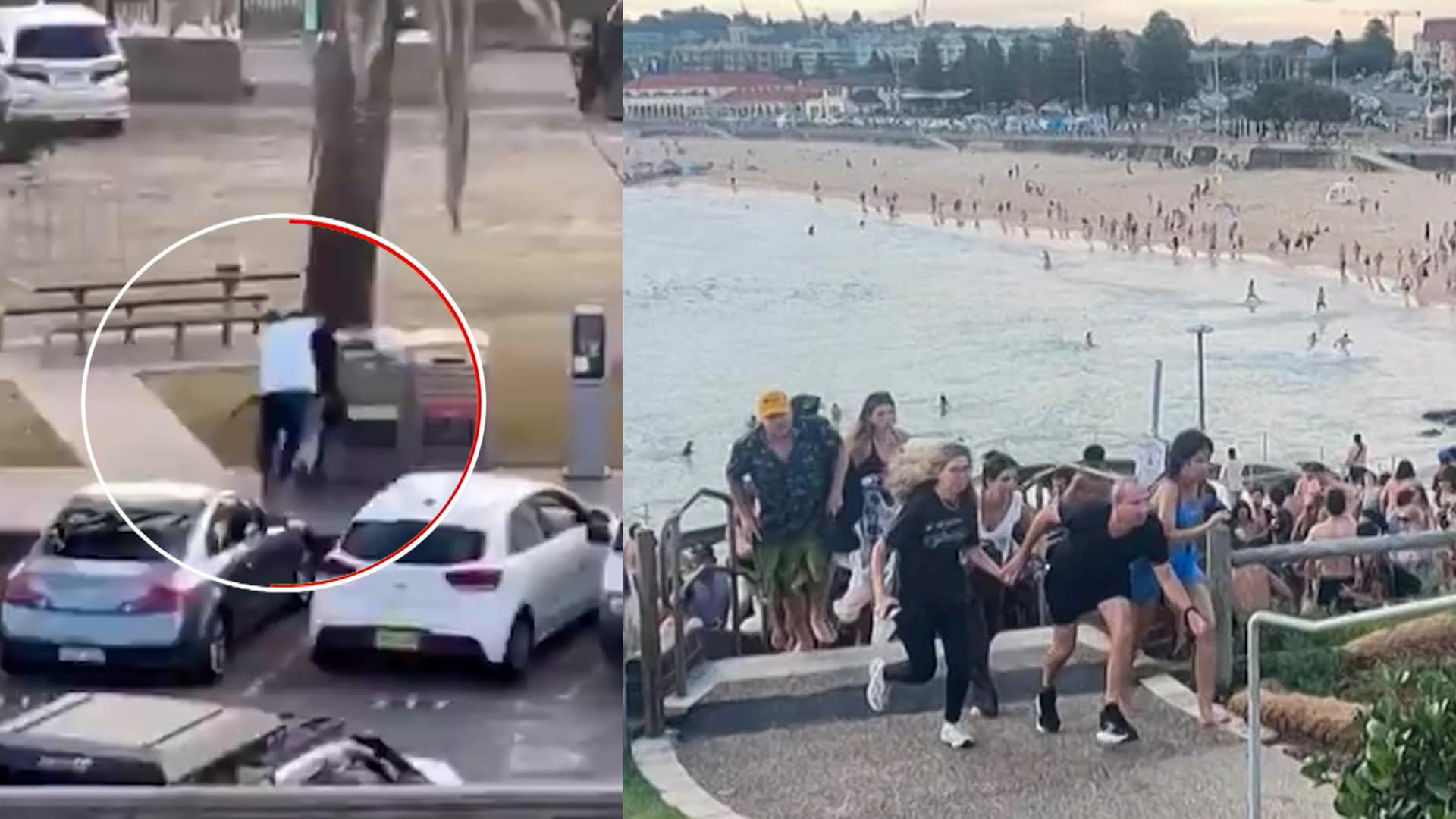
The incident received extensive coverage in Australian and international media, with particular attention given to the actions of 43-year-old Ahmed al-Ahmad, who tackled one of the gunmen and seized his weapon in a moment captured on cell phone cameras and widely circulated.
The timing and location of the attack amplified the shock felt by the Australian public and raised serious questions about public safety, hate speech, and the effectiveness of gun control laws.
This incident brought to mind the most tragic event in recent Australian history: the Port Arthur massacre of 1996, in which, according to official figures, 35 people were killed.
Violent Hate
Sixteen people were killed and more than 30 others injured in a shooting targeting a crowd celebrating the Jewish holiday of Hanukkah on Bondi Beach in Sydney, Australia.
Israeli officials were quick to exploit the incident politically, linking it to anti-Semitism.
Later, Australian police stated that the two suspected perpetrators were a father and son, and that they were not searching for a third suspect.
The Chabad-Lubavitch movement said that several of its emissaries were killed and injured in the attack, including Rabbi Eli Schlanger.
The Australian Broadcasting Corporation (ABC) reported that the attackers were Sajid Akram, who was killed in a shootout with police, and his son, Naveed Akram, who is currently in critical condition in hospital under police guard.
A senior official was quoted as saying that the Australian Security Intelligence Organisation (ASIO) had previously investigated Naveed's close ties to an ISIS member arrested in July 2019 and convicted of plotting a terrorist attack in Australia.
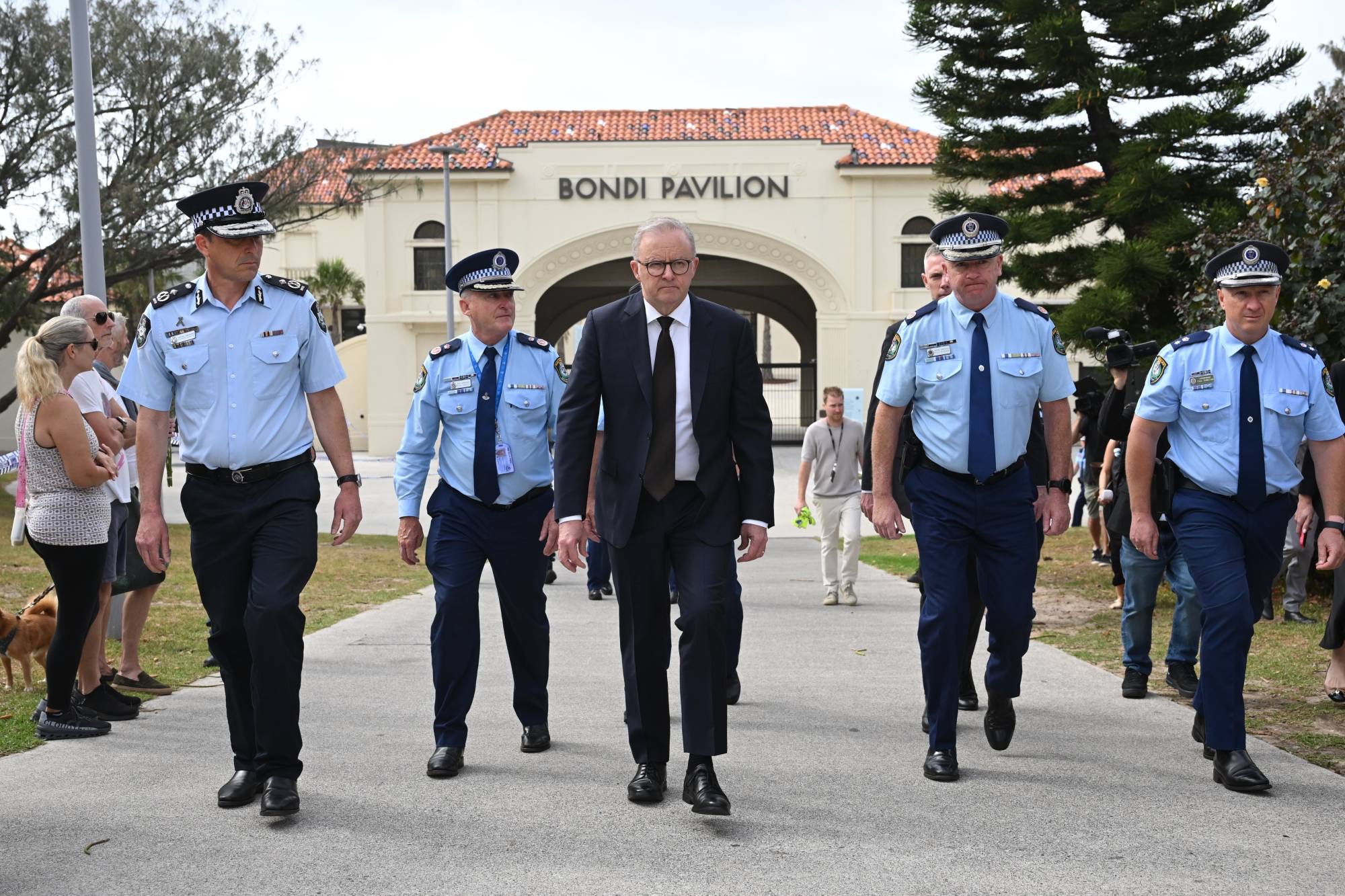
Australian Prime Minister Anthony Albanese condemned the attack as a heinous act, emphasizing that the government would dedicate all available resources to combating it.
At a press conference, Albanese read out a list of measures the government had taken, including criminalizing hate speech and incitement to violence, and banning the Nazi salute.
He pledged to expand funding for the physical security of Jewish communities and noted the need to strengthen Australia's gun laws, which already have some of the strictest gun control measures in the world.
However, alongside calls for stricter hate crime laws, Jillian Segal, the Australian federal government's special envoy to combat antisemitism, urged stricter screening of visa applicants to Australia to detect any antisemitic tendencies.
She called for a firm national response, recalling the country's experience following the 1996 Port Arthur massacre, a pivotal turning point in the history of gun legislation.
In a statement, she noted that the Port Arthur massacre prompted Australia to adopt one of the strictest gun control laws in the world, along with the establishment of a large community fund to support victims.
For years, Australians viewed these reforms as a successful model for reducing gun violence and a source of national pride that distinguished the country from the frequent mass shootings in the United States.
According to the ABC, the Bondi attack will shake that confidence and may force the country to reconsider its gun laws.
Meanwhile, Liberal Party leader Suzanne Lee said the country was in mourning over the violent hatred that had struck at the heart of Australian society.
Muslim communities in Australia also condemned the attack, expressing their solidarity with the victims and their families.
The National Council of Imams of Australia (NCIA) issued a statement strongly condemning the attack and expressing its deepest sympathies to those affected by this act of violence. The statement also called for strengthening the values of social cohesion.
It stressed the importance of all Australians, including Australian Muslims, demonstrating unity, compassion, and solidarity in the face of hatred and violence.
In turn, the Ahmadiyya Muslim Community of Australia expressed its sorrow over the attack, emphasizing that acts of violence intended to sow division and fear have no place in a diverse and cohesive society like Australia.
Western Concerns
International condemnations poured in following the attack on Bondi Beach in Sydney, Australia, which resulted in casualties and injuries.
World leaders, officials, and regional and international organizations expressed their shock and strong condemnation of the attack, affirming their solidarity with Australia and its people, and with the families of the victims, and rejecting violence and hatred.
In this context, US President Donald Trump expressed his condolences and praised the man who subdued one of the suspected gunmen.
European Commission President Ursula von der Leyen said she was shocked by the tragic attack on Bondi Beach.
She affirmed that Europe stands with Australia and Jewish communities everywhere against violence, antisemitism, and hatred.
Ukrainian President Volodymyr Zelensky, British Prime Minister Keir Starmer, and French President Emmanuel Macron expressed their solidarity with the victims' families.
Separately, the coverage of the attack by several Western media outlets sparked widespread controversy.
They reproduced a narrative that automatically linked the event to Muslims, antisemitism, the Gaza war, and the Palestinian uprising, even though official investigations have not established any connection between the perpetrators and any specific organizations or ideology.
Reuters claimed the attack was the most serious in a series of anti-Semitic attacks since Israel's war in Gaza, and placed the event in the context of rising hatred against Jews.
Another Reuters report linked the incident to protests in Australia against the Israeli war in Gaza, focusing on calls for the Australian government to tighten laws to protect Jews.
Despite the Australian Prime Minister's statement that there was no evidence linking the attackers to any specific organization, The Guardian described it as a terrorist attack, which some saw as an attempt to stigmatize Muslims, especially since the perpetrators (a father and son) were of Pakistani Muslim origin.
The newspaper focused on statements from Australian officials regarding the incident, but did not give the same prominence to statements from Islamic or Arab organizations condemning the attack.
PBS and The New York Times chose headlines with preconceived notions, such as ‘Mass Shooting at Jewish Festival Fuels Fears of Antisemitism’ and ‘Australian Jews Feel Abandoned After Antisemitic Attack.’
CNN and the BBC linked the attack to what they called antisemitic incitement following the war in Gaza, without mentioning the statements of condemnation issued by the Muslim community in Australia.
For his part, political analyst Ismail Musalmani explained to Al-Estiklal that “the Sydney incident was not an exception in a long history of tragedies that have been taken out of their human context and recycled for political purposes.”
“This pattern of politicization is not the first, nor will it be the last. It not only distorts the truth of events but also deepens social divisions, turns fear into electoral fuel, and reshapes election results in favor of the far right,” he said.
“Nevertheless, one act of humanity shattered the Israeli narrative. The impulsive act of a young Syrian Muslim to rescue innocent people not only prevented a potential massacre but also thwarted the Netanyahu government’s attempts to incite Australian and Western public opinion against Palestinians and their rights,” he added.
Israeli Exploitation
Recent and distant history shows that violent incidents, especially those targeting Jews outside of “Israel”, are often quickly exploited to construct a ready-made narrative that presents Israel as the perpetual victim of a global battle against antisemitism.
For its part, Tel Aviv held the Australian government in particular—and world governments in general—responsible for the incident, claiming that it was due to their allowing demonstrations against the war of annihilation in Gaza, as well as their support for the establishment of a Palestinian state.
It exploited the incident to attack Australian Prime Minister Anthony Albanese, just as Israeli Prime Minister Benjamin Netanyahu and a number of Israeli ministers and officials did.
Israeli President Isaac Herzog was quick to seize upon the incident, stating, "We have repeatedly warned the Australian government that the need to eradicate antisemitism has become imperative."
Netanyahu accused Canberra of fueling antisemitism in the period leading up to the attack, particularly with its recognition of a Palestinian state.
He said he had written to Albanese a few months prior, stating that their policies were fanning the flames of antisemitism and encouraging the hatred of Jews that was sweeping the streets of Australia.
For his part, Israeli Army Minister Israel Katz said that Israel would continue to stand with and support Jewish communities around the world, and to fight antisemitism and terrorism with all its might, everywhere and at all times.
Israeli Foreign Minister Gideon Sa'ar claimed that the incident was a result of the spread of antisemitism and incitement by the Globalize the Intifada movement.
Israeli Immigration and Absorption Minister Ofir Sofer said, “Our hearts are with the Jewish community in Australia in general, and in Sydney in particular,” noting that Canberra had not taken the recent anti-Semitic attacks in the country seriously.
Minister for Diaspora Affairs and Combating Anti-Semitism, Amichai Chikli, held the Australian government responsible for the Bondi incident, claiming it had failed to take any action against the serious anti-Semitic incidents that had occurred against Jews in the country over the past two years.
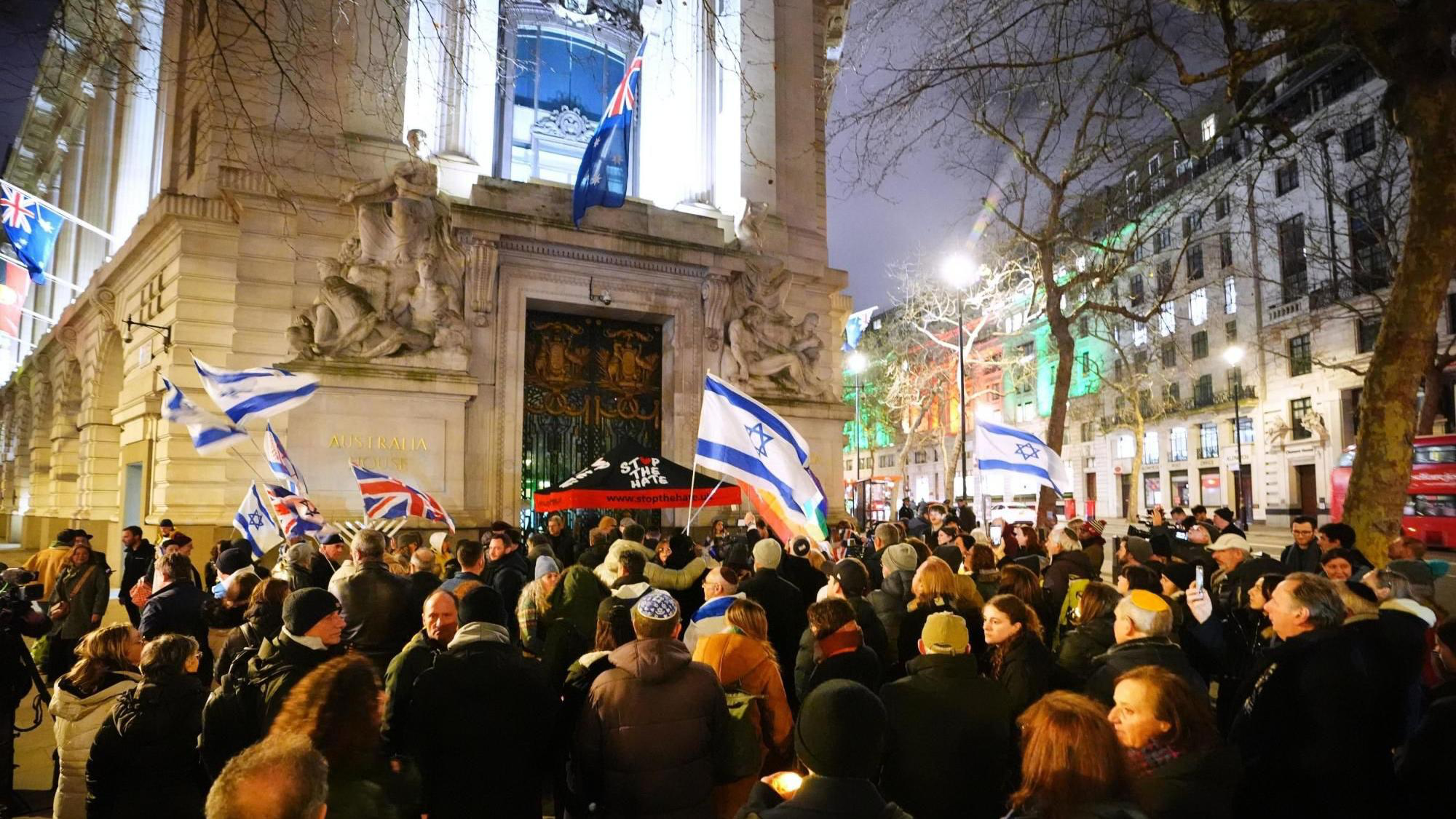
Hebrew media outlets have recently intensified their interviews with Australian Jews, including Israelis, regarding the events in Sydney and their repeated warnings to Australian authorities over the past two years about the possibility of being targeted.
Robert Gregory, president of the Australian Jewish Association, said the attack in Sydney was expected given the prevailing tensions and circumstances, noting that there had been prior warnings about the possibility of such incidents.
He explained that the rise of extremist rhetoric in recent times had contributed to creating a worrying climate, emphasizing the need to seriously address indicators of violence before they escalate into actual attacks.
It is worth noting that tensions between Australia and Israel have been escalating since last August, when Israel revoked the visas of Australian diplomats in the occupied Palestinian territories.
Australian Foreign Minister Penny Wong described this as an unjustified reaction to Australia's decision to recognize the State of Palestine.
According to the 2021 census, there are approximately 117,000 Jewish Australians, representing 0.46% of the country's 25 million inhabitants. Most of them live in Sydney and Melbourne.
Sources
- Bondi gunmen were inspired by Islamic State, had travelled to the Philippines, Australia police say
- Australia declares Bondi Beach shooting a terrorist attack amid spike in antisemitism
- Bondi attack: vigils held as more than A$1m raised for man who tackled shooter – as it happened
- The (Muslim) Hero of Bondi