Recognizing Domestic Work in Morocco: Why It’s Causing Tension Between Government and Society
These ideas help perpetuate the degradation and objectification of women.
A heated debate has erupted in Morocco following government remarks on what it called the valuing of domestic work, with multiple voices warning of the potential risks this approach poses to family cohesion in the country.
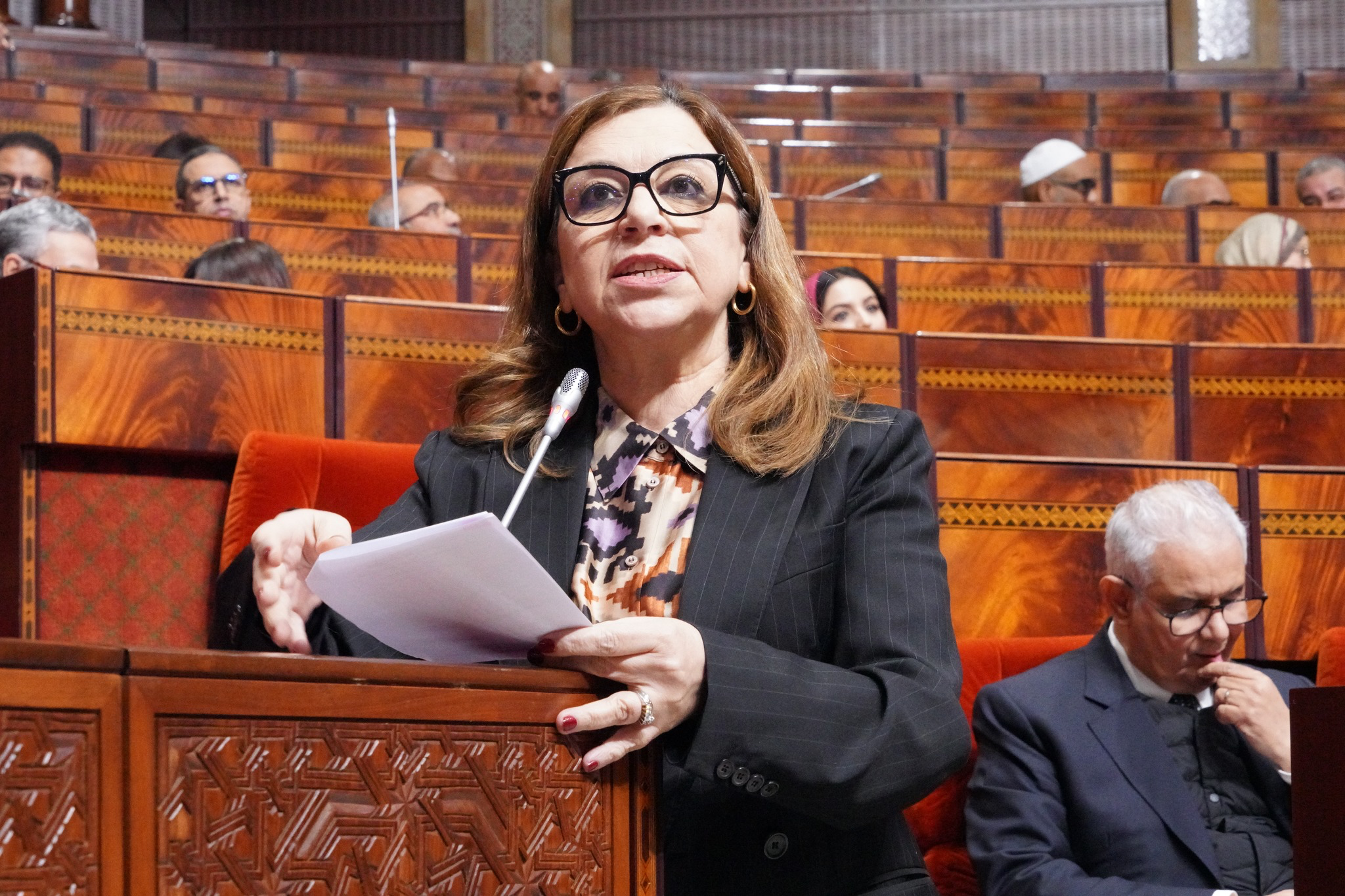
The comments came from the Minister of Solidarity, Social Integration, and the Family, Naima Ben Yahia, during a session of the Council of Advisers on December 9, 2025, where she emphasized “the importance of valuing domestic work and giving it the recognition it deserves.”
A Fundamental Step
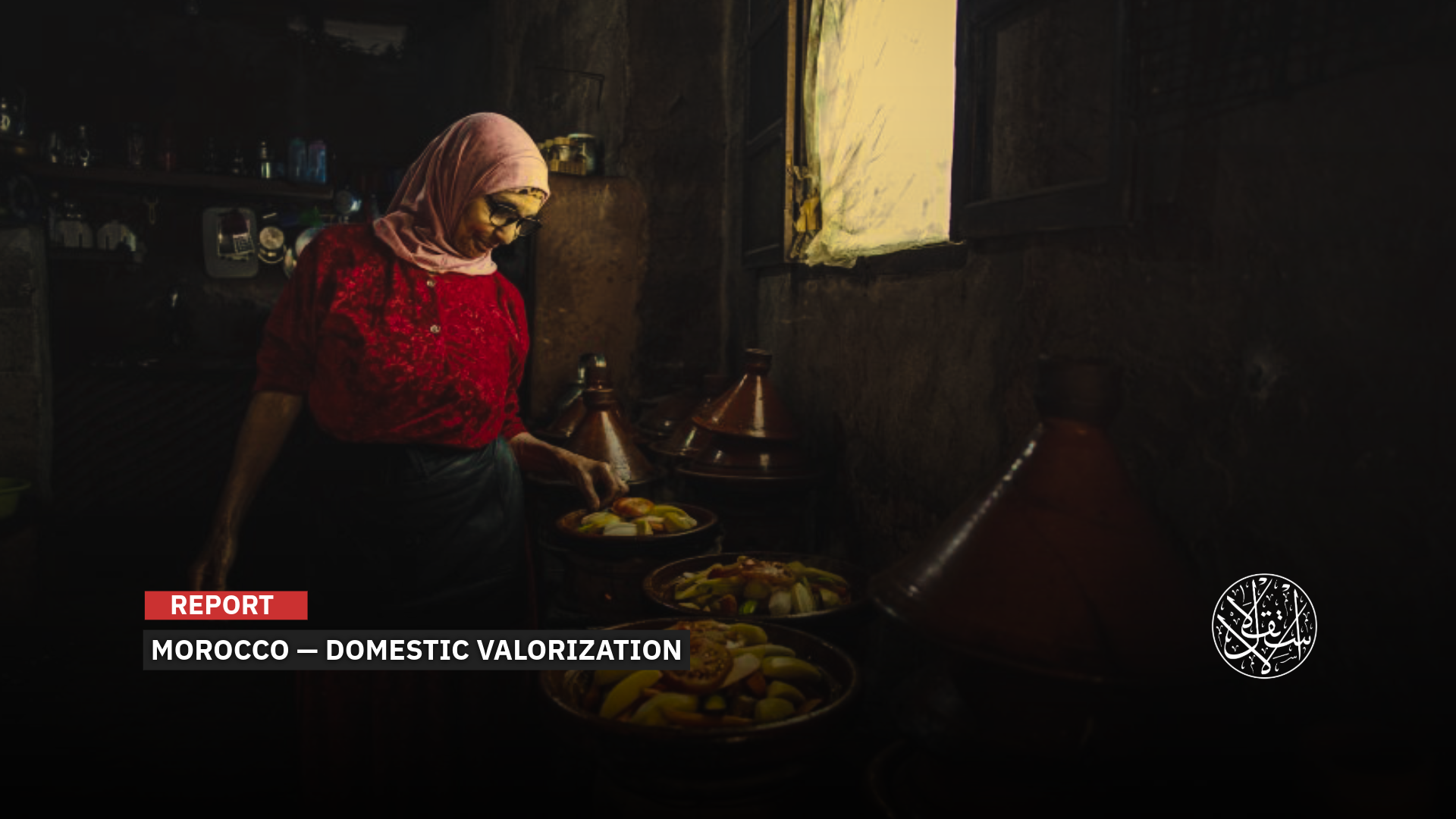
Ben Yahia announced that the government is considering practical measures inspired by leading international experiences in this field, noting that women in Morocco bear the heaviest burden of unpaid domestic work, from cleaning and caring for the family to cooking, tidying the home, and other tasks.
She said that, according to data from the High Commission for Planning, Moroccan women spend 18.5 percent of their time on these tasks, compared with just 3 percent for men, and that domestic work accounts for 90 percent of the daily time devoted to various activities.
The minister added that recognizing unpaid domestic work “represents a crucial step in restoring appreciation for housewives,” calling for “granting them social protection and including domestic work hours in national labor indicators.”
“This would include providing a pension for women without paid income, counting years of childcare towards retirement, and offering partial retirement for those who leave work to focus on their families,” Ben Yahia said.
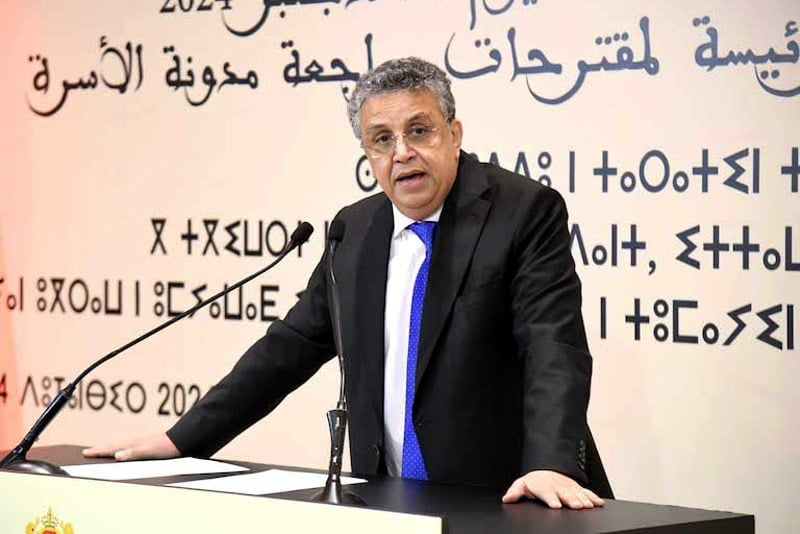
The minister’s remarks recalled an earlier statement by Justice Minister Abdellatif Ouahbi, who called for recognizing domestic work as part of a review of Morocco’s family code.
Ouahbi stressed that such recognition “is not only a legal necessity, but also a constitutional and moral obligation, forming part of Morocco’s international commitments, particularly the Convention on the Elimination of All Forms of Discrimination Against Women and related conventions on economic and social rights.”
During a joint seminar held by his ministry with the European Union on April 15, 2025, he emphasized that the Ministry of Justice “is aware that achieving real equality does not rely solely on legislation, but also on restoring recognition to the invisible work carried out by millions of women in their homes.”
A Subversive Call
In his reading of these calls, Islamic scholar and expert in maqasid al-sharia (the fundamentals of jurisprudence and the purposes of Sharia), Mohamed Awam, said that “valuing domestic work is a disservice to women, as it effectively gives them two roles: wage earner by day, wife by night. This is incompatible with marriage, which is built on virtue, whereas commerce is built on contention.”
Awam told Al-Estiklal that “if marriage turns from virtue into strife and conflict, it leads to ruin, discouraging people from marrying, which is another problem altogether.”
“Most of those calling for the recognition of domestic work do not actually perform it themselves, nor master it, instead relying on domestic workers, whom they employ without the rights outlined in the Labor Code.”
“So how can they demand recognition of domestic work from their husbands, while at the same time employing housekeepers without rights, or with diminished and unfair rights? Isn’t this double standards and a clear case of hypocrisy?”
Awam warned that “valuing domestic work introduces a new situation that would require a formal valuation contract at the start of marriage, attached directly to the marriage contract, to prevent exploitation or injustice, because contracts must be based on full transparency, without deceit or harm.”
“This means specifying the hours of domestic work, the wage, days off, insurance, and a protection fund. In effect, we would be dealing with two codes: the Family Code, which governs marriage, and the Labor Code, which governs workers and employers, which have never intersected except in this context,” he added.
Awam challenged proponents of this approach to go out into the streets of Morocco and explain their demands, insisting that they “would meet only ridicule and scorn for these foolish and harmful ideas that contribute to the degradation and objectification of women.”
“I have discussed this with many women, who rejected such valuation, saying, ‘We are wives, not servants. What we do is for marital harmony and for our children and families,’” he continued.
On another note, Awam emphasized that “a woman’s problem is not with her family, and her struggles are not about valuation. Rather, the real issues are poverty, high living costs, lack of education, healthcare, meager wages, exploitation in factories and farms, corruption, authoritarianism, and so on.”
“Moroccan women must understand the danger of what is being proposed: fragmentation, moral corruption, and cultural alienation. They should not follow those without families, who are unfit to be wives, and who have been corrupted by exploiting women’s suffering in global markets,” Awam added.
Parliamentary Support
One of the strongest parliamentary voices supporting the remarks of the Minister of the Family came from councilor Lahcen Ait Assah of the Authenticity and Modernity Party, who called for the establishment of a legal and institutional framework recognizing the domestic work performed by Moroccan women.
During a parliamentary session on December 9, Ait As’ha, who belongs to the party of the Justice Minister, said that “valuing domestic work can be considered an important lever to support the process of building a social state and to strengthen the principles of justice and equality.”
“This approach is not only part of rights-based demands, but represents a societal choice aimed at restoring balance to family roles and recognizing the economic value of this invisible work,” he added.
The parliamentary councilor highlighted that official reports show Moroccan women spend on average 4 hours and 46 minutes per day performing unpaid domestic work, with an estimated annual economic value of 513 billion dirhams, roughly $50 billion.
He noted that the absence of institutional recognition for this contribution helps entrench forms of silent structural violence and limits women’s empowerment within society.
As part of this approach, the House of Representatives organized a study day in partnership with the Ministry of the Family, the United Nations Population Fund, and with support from the Spanish Agency for International Development Cooperation, on November 26, 2025, on the topic, “Valuing Domestic Work for Women in Morocco: From Recognition to Empowerment.”
The president of the council, Rachid Talbi el Alami, said on the occasion that “valuing women’s domestic work is a societal issue at the heart of the parliamentary institution’s concern, reflecting its firm commitment to promoting women’s rights and reinforcing equality and parity between the sexes.”
El Alami noted that “progress towards achieving equality and gender parity necessarily requires recognizing and valuing women’s domestic work.”
“Translating this recognition into tangible reality requires the adoption of integrated and effective policies and programs that encourage appreciation of family responsibilities and caregiving burdens,” he added.
Social Reactions
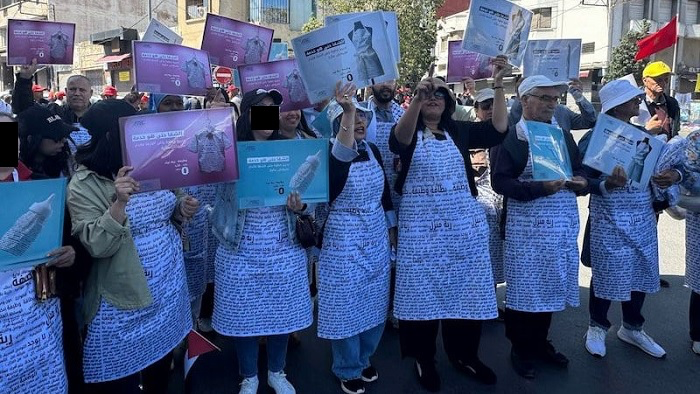
The Family Minister’s remarks did not pass unnoticed in social and political circles, with a number of observers and activists warning of their potentially negative and even catastrophic impact on Moroccan families.
In this context, political science and communication researcher Abdesamad Benabbad said that the minister’s proposal to allocate compensations from husbands’ pockets to housewives is a “crime against families, husbands, and children.”
Benabbad wrote on Facebook on December 9 that “this government has handed millions of the people’s money to lobbyists exploiting public funds across various sectors and specializations. It could have proposed a law providing state-funded compensations for housewives from the general budget, rather than from husbands’ pockets.”
He called on society to “protect itself from these gangs,” in his words.
Meanwhile, former member of the Justice, Legislation and Human Rights Committee of the House of Representatives, lawyer Najib el-Bakkali, said that what the Family Minister is proposing “is ruin itself.”
El-Bakkali explained in a Facebook post on December 10 that “50 percent of Moroccan households live on less than 5,000 dirhams a month, roughly $450, and yet the minister talks about husbands compensating their wives for domestic work.”
These developments recalled remarks made by former Prime Minister Abdelilah Benkirane in January 2025, who said that valuing women’s domestic work raises practical challenges and real concerns about turning the family space, traditionally based on compassion and cooperation, into one of calculations and disputes.
Benkirane stressed that his party, the Justice and Development Party, rejects all proposals and ideas put forward by some to count a wife’s domestic work as a contribution to wealth accumulated during the marriage.
He added that “the work a woman performs at home cannot be valued financially, and her true reward is ultimately with God.”
Trojan Horse
Political researcher Hassan Hammourou said that the issue of “valuing” women’s domestic work lies at the heart of the debate between defenders of Morocco’s religious, cultural, and societal values and a minority controlling some decision-making positions.
Hammourou told Al-Estiklal that “this controlling minority seeks to dismantle the cultural fabric of society, imposing genetic changes and amendments on relationships and institutions within it, foremost among them the family institution.”
He pointed out that “for some time now, statements, activities, and initiatives have aimed to gradually influence public opinion, which rejects the announced reforms to the Family Code, by raising controversial issues and promoting rejected proposals as if they were settled recommendations or legal interpretations.”
Hammourou argued that “this seemingly systematic plan is repeatedly aided by the disruptive Minister Abdellatif Ouahbi, who exploits every opportunity to interfere with the path laid out by the King for reforming the Family Code, which affirmed its commitment to Islamic law.”
“The Justice Minister repeatedly undermines this path in a provocative manner, as confirmed by multiple statements in parliament and elsewhere, where he manipulates words and seeks to mislead public opinion,” Hammourou said.
The researcher also warned that “the recommendations from the most recent study day in the House of Representatives on valuing domestic work can only be implemented through the Family Code, which must be taken into account.”
Hammourou also called for vigilance regarding the use of Friday sermons by influential actors to pass certain ideas, noting that “at least four sermons since July 2025 have been devoted to women’s issues, containing messages related to the ongoing debate over the Family Code.”
“The issue of the family will remain a focal point of conflict, addressed through political and legal mechanisms,” emphasizing that “gaining ground in this area depends on shifts in political power, which in turn affects the ability to shape public opinion.”
“Therefore, defenders of Morocco’s religious and societal values must enhance monitoring and maintain high vigilance, because the battle over the Family Code continues, and what cannot be imposed through public debate or behind closed doors might still be passed through a Trojan horse,” Hammourou concluded.