TikTok Wars: From Dancing and Lip-Syncing to Recruiting Influencers for Propaganda
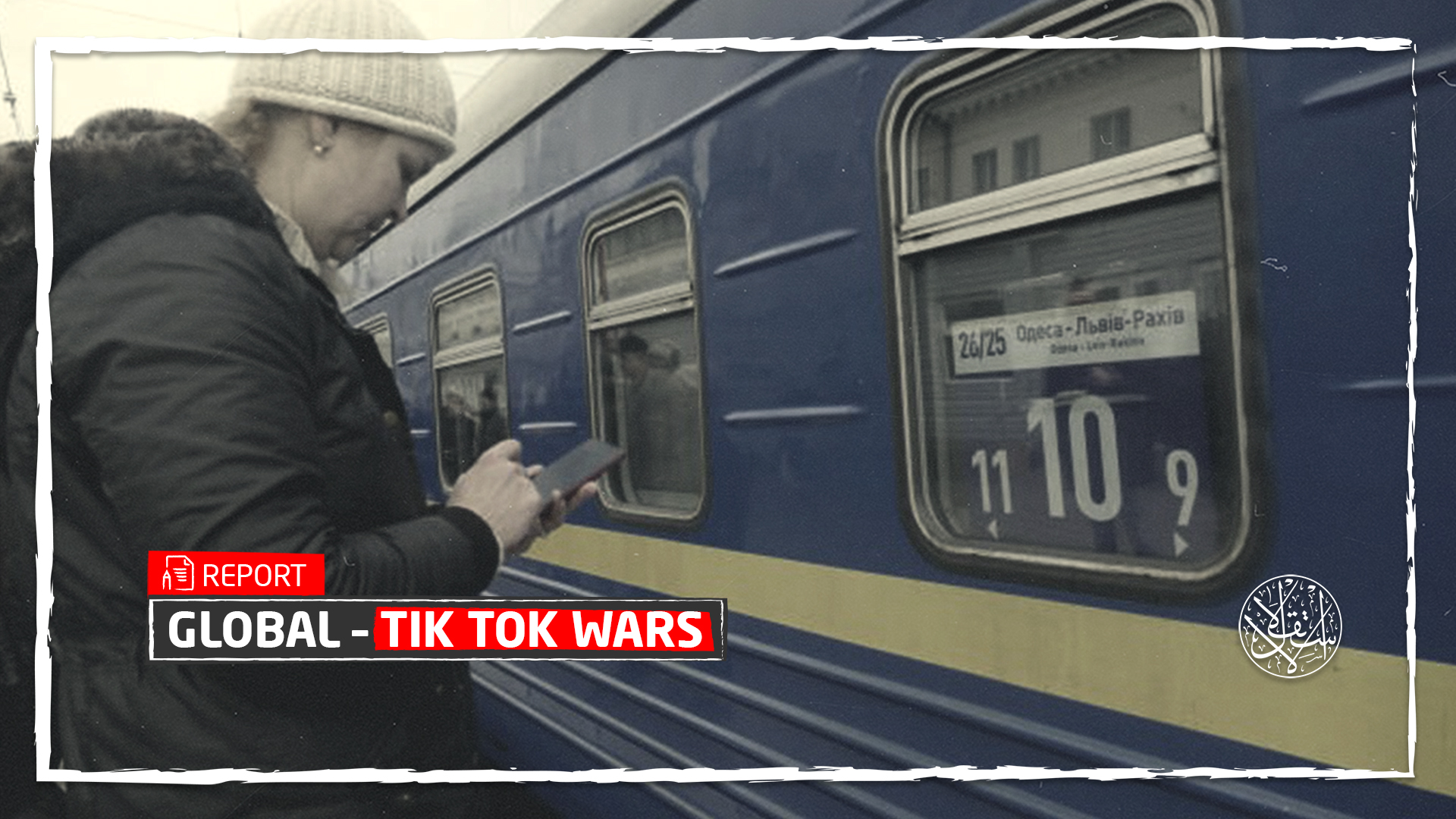
On March 3, The White House gathered 30 of the most popular TikTok influencers on a Zoom call to brief them on critical information concerning the Ukraine conflict.
Influencers were briefed on the US strategic aims in the region by National Security Council staffers and White House press secretary Jen Psaki, who also fielded questions regarding sending aid to Ukrainians, collaborating with NATO, and how the US would react if Russia used nuclear weapons.
JUST IN: The White House is briefing TikTok stars about the war in Ukraine -- On Thursday afternoon, 30 top TikTok stars gathered on a Zoom call to receive key information about the war unfolding in Ukraine, Washington Post reported Friday.
— Insider Paper (@TheInsiderPaper) March 11, 2022
Reliable Source?
Since the launch of the Russian war, millions of people have turned to TikTok for real-time updates on what's going on in the crisis.
TikTok videos provided some of the earliest glimpses of the Russian invasion, and the app has since become a major source of news for people all around the world.
Ukrainian civilians who were sheltering in bomb shelters or fleeing their houses used the site to transmit their stories, but harmful disinformation and Russian propaganda propagated as well.
And TikTok stars, many of whom have millions of followers, have been increasingly trying to explain the situation to their fans.
On February 24th, a TikTok clip was posted that depicts phone-camera images and video clips of missiles landing above Kyiv like fireworks.
"The capital of Ukraine at the moment," said a line of text.
The video is set to the indie-pop band MGMT's song "Little Dark Age," whose lyrics have become something of an audio meme on TikTok: "Just keep in mind that hiding won't make it go away."
TikTok is an excellent location to acquire field clips, but experts caution that the network is full of disinformation.
A video of the Beirut port explosion in August 2020, which occurred in the midst of Russian shelling of Ukraine, has already gone viral on the basis that it’s part of Russian’s bombing of Kiev.
Also gone viral was a video of vehicles hauling big cylindrical containers traversing an icy road with the deceptive title "Russian nuclear bomb."
@kahlilgreene The White House invited content creators to learn more about the crisis in Ukraine. #hiddenhistory #ukraine #blackcommunitytiktok ♬ original sound - Kahlil
Russian Propaganda
Amidst the war, an investigation carried out by VICE News uncovered a coordinated campaign to pay Russian TikTok influencers to post videos pushing pro-Kremlin narratives.
According to the report, VICE has uncovered what is described as a "coordinated campaign to pay Russian TikTok influencers" to create and post content that fits certain guidelines and narratives.
VICE reports that it discussed a Telegram channel that included prominent Russian TikTok influencers. This Telegram channel was run by an anonymous user who told VICE he was a journalist.
It also explained that his job was to tell influencers the date and time the video needed to be posted and how to get around TikTok's banning of new uploads from within Russia.
“Numerous campaigns have been coordinated in a secret Telegram channel that directs these influencers on what to say, where to capture videos, what hashtags to use, and when exactly to post the video.
These campaigns were launched at the beginning of the invasion and have involved a number of the highest-profile influencers on TikTok, some of whom have over a million followers,” the magazine said.
The anonymous administrator posted a campaign to gather TikTok users to push content that called for national unity and used an "audio track featuring Putin calling for all ethnic groups in Russia to unite at this time of conflict," according to VICE.
Additionally, the administrator would instruct influencers on what text to add to the videos, what audio tracks, and even what emojis are to be used.
This Telegram channel is just one of the many disinformation campaigns Putin is running and is part of his larger goal of controlling all information coming in and going out of Russia.
�� Beyond disturbing level of Kremlin propaganda! ⚠
See Russian influencers on TikTok speaking in favor of the invasion of #Ukraine.
Certain phrases and even sections of speech are identical, indicating the distribution of paid scripts/speaking points. pic.twitter.com/XWS3EYGwua— ۞ Reliable Ukraine News ���� �� ☪︎ (@TruthsUnchained) March 5, 2022
Number 1 Source?
The Russian war on Ukraine was not the first to be covered by social media, but it was certainly the first to be covered by tech talk.
In 2011, events and coverage of the so-called Arab Spring began on Facebook and Twitter, while scenes of the horrors of the Syrian war occupied news providers on social networks in 2018.
In 2021, the Taliban takeover of the Afghan capital was relayed via live tweets.
But what’s happening now on TikTok is transferring the social media propaganda to a whole new level.
“As an analyst of what’s happening in Ukraine at the moment, I’m getting 95 percent of my information from Twitter,” says Ed Arnold, research fellow in European security at the Royal United Services Institute for Defence and Security Studies (RUSI).
“Before that, 90 percent of your information would come from official sources, like intelligence sources,” he added.
But among the flurry of tweets, Arnold has noticed a strange trend: A significant chunk of the videos being shared are marked with the TikTok watermark. “It’s odd,” he says.
There is an article by Wired "TikTok Was Designed for War" It says, In 8 days between February 20 and February 28, views on TikTok videos tagged with #ukraine jumped from 6.4 billion to 17.1 billion—a rate of 1.3 billion views a day, or 928,000 views a minute.
— Egline Samoei (@EguarEglin) March 2, 2022
As an example of how TikTok videos are so powerful in the ongoing war, Marta Vasyuta, a 20-year-old Ukrainian living in London, has posted several of TikTok's most popular Ukraine videos.
When Russia invaded, Vasyuta was stuck outside of the nation and decided to use her TikTok profile, which had only a few hundred followers, to share battle footage through Telegram with the rest of the globe.
One of Vasyuta's TikTok videos, which depicted bombs raining down on Kyiv, has been seen 44 million times and shared almost 200,000 times outside of the app.