Why is BDS Calling for Puma Boycott?
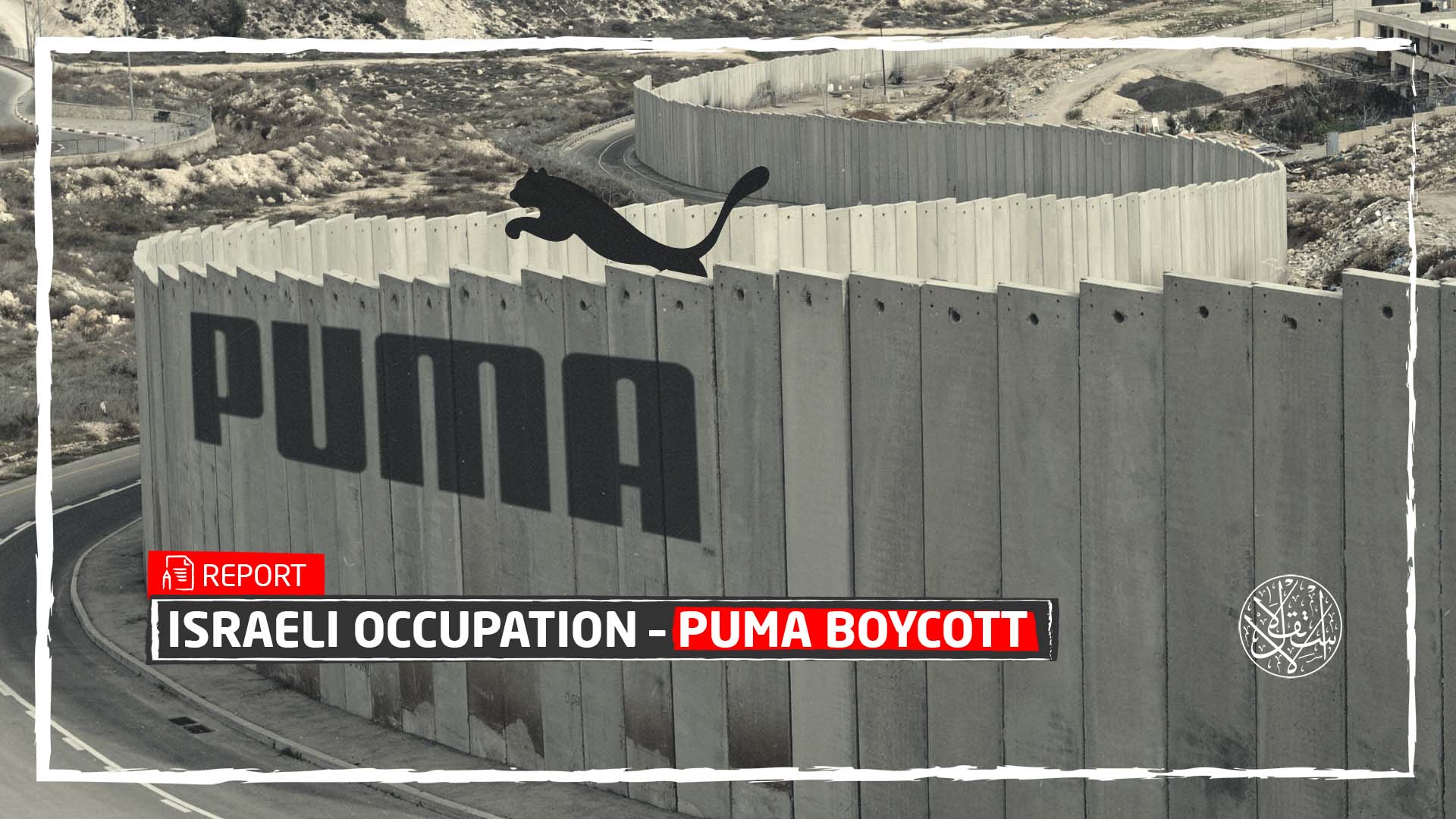
On the evening of Saturday, February 12, the Movement for the Boycott, Divestment and Sanctions against Israel (BDS) launched an online Twitter campaign against the German sports equipment and clothing company Puma for its support of the Israeli settlement.
On its social media accounts, the movement called for participation in the sixth Twitter campaign against the same company since 2018, launching a hashtag #BoycottPuma.
BDS said on its Facebook page that the aim of the campaign was to "pressure the company to end its collusion with the Israeli colonial and Israeli apartheid regime, which commits crimes that make the lives of our Palestinian people miserable."
Some photos from today's #BoycottPuma action at JD Sports in #Northampton pic.twitter.com/bsnJM2RwBD
— NPSC - Northants Palestine Solidarity Campaign (@NorthantsPSC) February 12, 2022
Puma Settlements
Currently, Puma is the only international sponsor of the Israel Football Association (IFA), and as BDS states: “Puma’s sponsorship brings international legitimacy to the IFA’s actions.”
The IFA, as documented by Human Rights Watch (HRW), includes football clubs based in illegal Israeli settlements on the internationally-recognized occupied Palestinian territories. Puma’s current and past exclusive licensees in the Israeli occupation have operations in illegal Israeli settlements.
Israeli settlements are illegal land grabs that form an integral part of Israel’s occupation infrastructure pushing indigenous Palestinian families off their land, robbing Palestinians of natural resources and denying Palestinians their right of movement.
According to HRW, “Of the clubs that belong to the Israel Football Association, an affiliate of FIFA, six are located in Israeli settlements in the West Bank, part of the territory of FIFA's Palestinian affiliate. For the last year and a half, world football's governing body's leadership has dodged the decision on their status, opting instead to urge FIFA's Israeli and Palestinian affiliates to agree a solution between them, while extending the mandate of a monitoring committee appointed to determine the clubs' fate.”
As well as being unlawful under international humanitarian law, Israeli settlements in the West Bank contribute to serious human rights abuses.
“The settlement clubs play their home games on land unlawfully seized from Palestinians, and West Bank Palestinians are not allowed to enter the settlements to play, coach or even watch the matches,” HRW explains.
The settlements are also a direct cause of harsh restrictions on Palestinians' freedom of movement, access to natural resources and ability to run businesses or build homes.
Gianni Infantino, president of FIFA, vowed to reform after the corruption scandals of his predecessor Sepp Blatter. Infantino says he doesn't want to mix politics with football.
“But nothing could be more deeply political, and more deeply flawed, than ignoring the clear position of the international community that settlements are illegal and that third parties should distinguish Israel and the territory it occupied in 1967, as the Security Council resolution calls for,” HRW reports.

Roots and Companies Support
The Puma boycott campaign dates back to 2018, but it’s a part of a wider context of boycotting every company that shows support for the aggression of Israelis against Palestinians.
For example, BDS has called for a boycott against tech giant HP. According to BDS, HP-branded corporations play key roles in the Israeli occupation’s oppression of Palestinians. They are complicit in Israel’s occupation, settler-colonialism and apartheid regime.
“They provide computer hardware to the Israeli army and maintain data centers through their servers for the Israeli police. They provide the Itanium servers to operate the Aviv System, the computerized database of Israel’s Population and Immigration Authority. This forms the backbone of Israel’s racial segregation and apartheid,” BDS stated.
BDS also boycotts Pillsbury, as its products are made on stolen Palestinian land in illegal Israeli settlements, as stated by the movement itself. It also advocates for boycotting SodaStream, explaining that it’s actively complicit in the Israeli occupation's policy of displacing the indigenous Bedouin-Palestinian “citizens of Israel” in the Naqab (Negev).
“SodaStream have a long history of mistreatment of and discrimination against Palestinian workers,” BDS writes.
Grassroots power in the form of boycotts has proven to be effective. Here are 4 consumer products you can boycott to help fight Israeli impunity. #BoycottHP, #BoycottPuma, #BoycottSodaStream and boycott Israeli products like avocados & dates in your local supermarkets. pic.twitter.com/vVr7M2Lb85
— BDS movement (@BDSmovement) May 13, 2021
Real Impact
Grassroots BDS campaigning is leading to major companies and investors changing their attitudes towards the Israeli occupation and its oppression of Palestinians.
According to the UN World Investment Report, BDS was a key factor behind a 46% drop in foreign direct investment into the Israeli occupation in 2014 compared to 2013. The World Bank partially attributed a 24% drop in Palestinian imports from the Israeli occupation to boycott. Reports by the Israeli government and the Rand Corporation have predicted that BDS could cost the Israeli economy billions of dollars.
BDS campaigning has had a serious impact on Israeli companies. Carmel Agrexco, the Israeli occupation’s largest agricultural export company, entered liquidation after a huge boycott campaign against the company pushed Israeli farmers to export their products through other companies.
SodaStream was forced to close its operations in an illegal Israeli settlement after BDS campaigning led to retailers taking its products off its shelves. SodaStream is still a boycott target over its role in ethnic cleansing of Palestinians in the Naqab.
“Major European companies Veolia, Orange and CRH have all exited the Israeli market after high profile campaigns over their complicity with Israeli violations,” BDS wrote on its website.
“Veolia sold its businesses in Israel and ended its role in infrastructure projects for illegal Israeli settlements after boycott campaigners persuaded local councils to drop Veolia from public contracts worth at least $20bn,” it added.