This Is How ‘Bananas’ Sparked Controversy Between Turks and Syrians Amid Warnings of Catastrophic Consequences
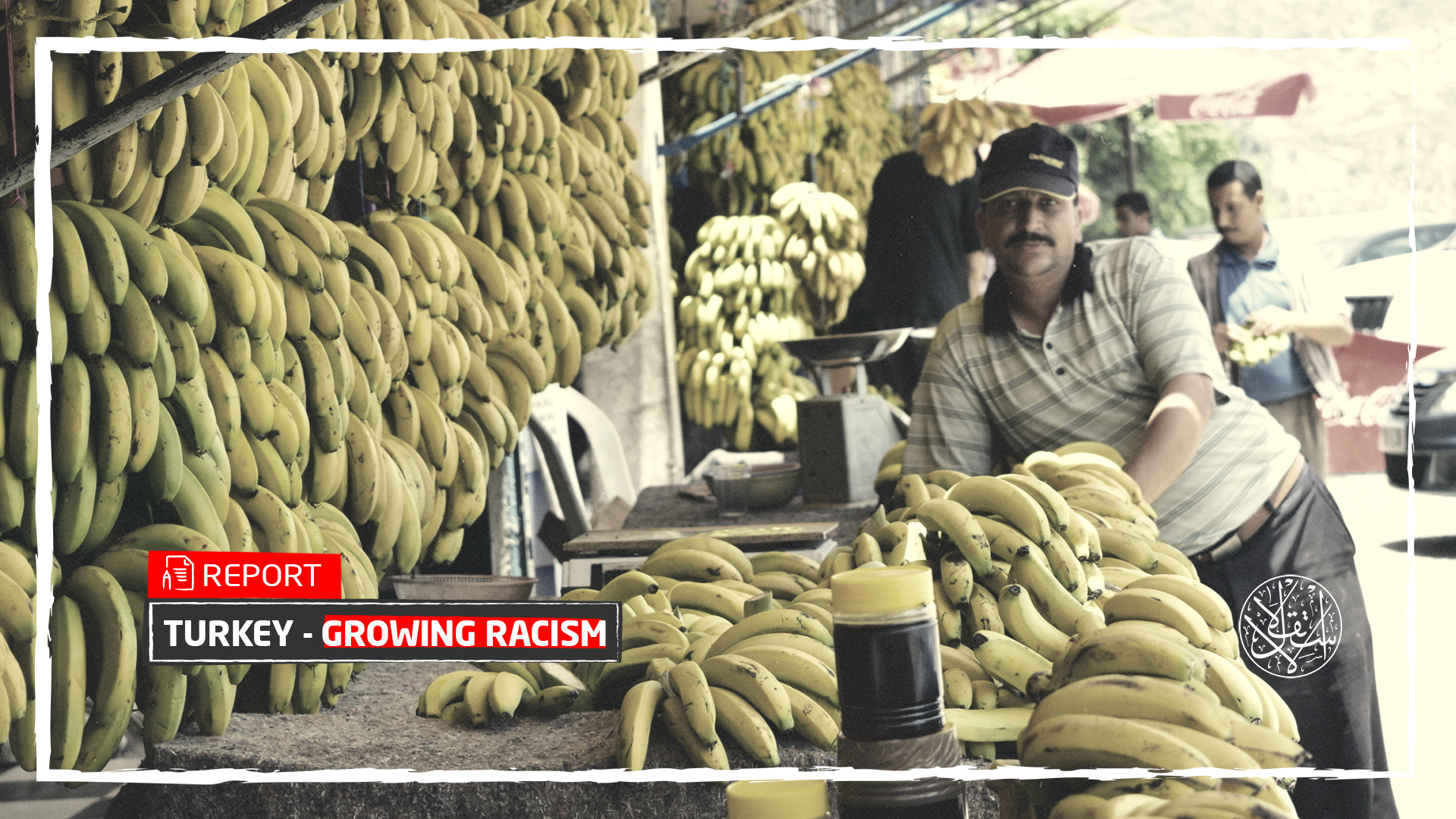
“Bananas” have been the focus of Syrian conversations in Turkey over the past few days, it also sparked a digital battle on social media among the tweeters of Turkish and Syrian refugees, after it became trending.
This came against the background of an interview with a Turkish citizen in which he said that Syrian refugees eat bananas while he is unable to buy them due to his difficult economic conditions, which he said he arrived at because of refugees living in Turkey, which sparked an uproar and widespread controversy on social media.
The posts and videos that spread after the incident sparked a large wave of anger in an atmosphere of great tension, and prompted many Syrians and Turks to warn of the dangers of reciprocal campaigns of incitement that could push towards a greater clash on the ground and lead to catastrophic consequences for both sides.
Among the trending hashtags in Turkey are #suriyeli and #ÜlkemdeSuriyeliİstemiyorum (I don't want Syrians in my country), because a few Syrians posted banana-eating videos on TikTok (ref. to a comment in the news).
Clearly justifies, "it's time to shoot and kill the Syrians." pic.twitter.com/CdQglQX9Yn— Lindsey Snell (@LindseySnell) October 25, 2021
Racist Speech
Syrian activists circulated a video recording of the Turkish channel (Dunya) conducting a dialogue with Turkish citizens about their opinion of the Syrian presence in their country; But what was remarkable was the shocking answers that indicated the growing racism of the Turks towards the Syrian refugees.
The video, which the activists expressed, considered to be racist, is done by directing the dialogue for the speaking audience to talk about the Syrian refugees and the problems they have caused to the Turkish people.
But what is remarkable about the interviews are the phrases repeated by the Turkish citizens. A Turkish man said: “I cannot eat bananas, and the Syrians buy them by kilograms from the markets.”
Then another Turkish woman said: “Syrian women often go to the hairdressers, but I never went.”
As well as other phrases said by the Turkish woman, such as: “Syrians get everything they want for free,” and that “Turkey provides support to Syrian families who give birth to many children, while they get nothing.”
The racist escalation of these citizens did not stop there. They also demanded a Syrian girl who wanted to participate in the dialogue to return to her country and participate in the war.
On her part, the Syrian girl responded and defended the accusations leveled against the Syrians, saying: “Were it not for the war in my country, I would not have come to Turkey, and we spend from our own money, and we do not take anything for free.”
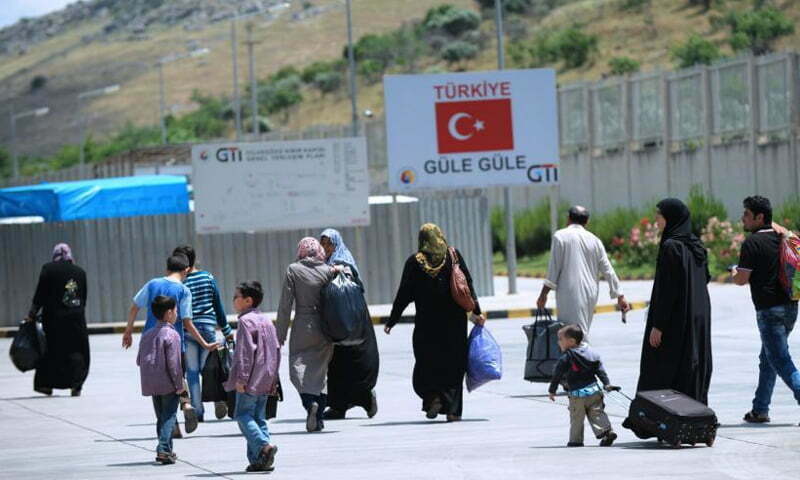
It is worth noting that this racist incident against Syrian refugees is not the first of its kind, it comes in parallel with the recording of a number of racist attacks against Syrian refugees in Turkey, in addition, some Turks attack the Syrians and consider their presence in Turkey wrong and they should be deported.
In turn, the researcher in Syrian and Turkish political affairs, Mohammed Elsukkeri, said in a statement to Al-Estiklal: “I think that the repercussions of the event could be in the long run, and not now, it may be reflected in the ballot boxes; So the closer we get to the elections—after 14 months—the higher the intensity of racism, because this is linked to the opposition’s investment and orientation of the Syrian issue.”
“The Turkish government must prosecute those who launch racist speeches against refugees through legal means, this will significantly reduce street fanning and reduce unbalanced reactions,” he added.
The Syrian researcher continued by saying: “Hosting Syrians who speak Turkish through government stations is a necessity, to clarify the features of the incident and to explain it objectively, away from sympathy, that is, facing issues, not postponing them.”
“Syrians residing in Turkey should exercise more restraint and deal with events more calmly, as well as trying to solve racist cases by resorting to the courts, this will definitely reduce the amount of racism somewhat,” Elsukkeri noted.

Syrian Reactions
This video was widely spread on social media platforms after the Syrian media translated it into Arabic as an example of racist practices and discourse targeting Syrian refugees in Turkey, which has escalated in recent months, it sometimes reached direct confrontations between Turkish citizens and Syrian refugees.
They also pointed out that all this is a result of the racist discourse pursued by the Turkish opposition against Syrian refugees in Turkey.
Syrian activist, Muhammad Kanjo, wrote a tweet on Twitter: “I have been living in Turkey for several years, and I have not seen any of the Turkish people starving; But rather living in luxury, to be honest, some Turks have gone out to the media and said that they are hungry and cannot eat bananas, which is a serious offense to the Turkish nation before it is an insult to the Syrian refugees. They must be held accountable and strict measures must be taken against them.”
On the other hand, other Syrians considered that “the errors, speech, and individual racist behavior do not reflect the entire Turkish people. Therefore, the Syrians should not react in such an exaggerated manner.”

In turn, Heba (a 28-year-old Syrian refugee living in Turkey) said in a statement to Al-Estiklal: “They attribute to us all the misfortunes of the country. Should we live on the street, and we eat garbage so that they can rejoice and the racism against us subsides?”
On his part, Abdullah (a 32-year-old Syrian refugee living in Turkey) told Al-Estiklal: “It is the custom of the Syrians to buy their necessities for a week and sometimes for a month. While the Turks buy their necessities every day; Therefore, when they see the Syrians carrying bags full, contrary to their customs, they think that we are wasteful and have a lot of money.”
From her point of view, the Syrian journalist, Souad Khabiya, said in her Facebook post: “Reactions to the issue of bananas should be translated into a hashtag in Turkish, and it does not include showing off our abilities by eating bananas or our mockery; Rather, it includes figures and facts about Syrians, their sources of income, and the reasons for their presence in Turkey.”
Khabiya called on the Syrians in Turkey to invest in the “banana trend” to deliver their message to the party that the response and clarification should reach, which is the Turkish people, which is clearly under the influence of false and incomplete information about the issue of the Syrians, according to her.

Turkish Discontent
On the other hand, the Turkish media witnessed a state of discontent and indignation over the farce that happened on social media, especially on the “Tik Tok” platform, according to what it described, satirical videos of Syrian men and women eating bananas were also considered as insulting to the Turkish people and their economic condition.
Turkish press reports said that “the Victory Party filed a criminal complaint against several Syrians who circulated videos containing, according to its allegations, an insult to the Turkish flag and to Turkish citizens.”
The party demanded the imprisonment of these people from one to three years in accordance with Article 300 of the Turkish Penal Code.
�� After a Turkish Citizen said: We can't even afford of buying and eating banana, Syrians living in Turkey launched a campaign of eating banana.#Breaking #BreakingNews Suriyeli https://t.co/bFbqBAyASd
— HolyPolitic (@holypolitic) October 25, 2021
Observers believe that the Turkish opposition is exploiting the refugee issue in the country to feed the street with racism more.
They pointed out that “the Turks who appeared in the video spoke clearly and quite frankly about the main reason for their hatred of the Syrians, which is the different standard of living and the degree of luxury that the Syrians enjoy, even at the level of their food.”
It is noteworthy that in light of the growing hostility and racism of the Turks against the Syrian refugees residing in their country, a survey published last August by the Turkish research company Metropol concluded that 70% of Turks are calling for the borders to be closed to refugees.
Under international migration law, refugees cannot be sent back to their country unless a crime is committed without justification, because refugees have taken refuge because of the turmoil, insecurity, and political pressures in their country.
It is noteworthy that, according to the statistics of the Turkish Immigration Department, about 4 million Syrians reside in Turkey, most of whom are subject to the “temporary protection” law.

It is reported that several weeks ago, Turkish youths attacked a neighborhood inhabited by Syrian refugees in the southwestern state of Izmir, following an incident that led to the killing of a Turkish youth at the hands of a Syrian youth, in the latest manifestations of the escalation of tension over the refugee file in Turkey, and that is a few weeks after a similar incident in the capital, Ankara.
Where all this comes in light of a great congestion for the file of Syrian refugees inside Turkey, with the escalation of racist discourse at unprecedented levels by opposition political figures aiming to exploit the refugee file in the upcoming elections.