With Russia’s Silent Expansion in Libya: What Are Washington’s Concerns?
“Libya has become a central operational hub for Russia in Africa.”
While many were preoccupied for a full year with the repercussions of the fall of Bashar al-Assad’s regime and the resulting security and political vacuums in the Levant, Moscow was quietly moving in another arena of no less importance and sensitivity: Libya.
Across a number of military bases in Cyrenaica and central Libya, the outlines of a new Russian positioning are gradually taking shape. This suggests that the Kremlin does not view Libya as merely a temporary refuge imposed upon it after the decline of its influence in Syria, but rather as a central platform for building long-term strategic influence in North Africa and the Eastern Mediterranean.
This remarkable shift, which Washington is closely monitoring through the U.S. Africa Command (AFRICOM) and the Central Intelligence Agency (CIA), is causing increasing concern within American political and security circles.
From a broad strategic perspective, Libya provides Russia with a geographical foothold close to the European continent and NATO’s southern borders, and opens up land, air, and sea gateways extending deep into the African coast.
Africa Corps
According to a report by the French website Intelligence Online on December 9, US security sources observed Russia transferring personnel and heavy military equipment from the Syrian theater of operations to bases within Libyan territory over several consecutive weeks.
These transfers included specialized aircraft maintenance teams, experts in surface-to-air missile systems, and combat engineers.
These formations cannot be described as mere troop deployments, but rather as elements involved in the operation and construction of integrated military systems.
Amid this Russian shift, the Africa Corps emerges as the alternative entity to the Wagner Group.
The report stated that the accelerated reinforcement of this corps in Libya coincided with the arrival of these units at sensitive geographical locations, such as Jufra, Brak al-Shati, and Qardabiya, which are known for their ability to connect eastern, southern, and central Libya, as well as their role in serving supply lines away from the heavily monitored coastal areas.
These units are working to expand and reinforce existing infrastructure, a term typically used to describe advanced fortification work, including the development of shelters, the preparation of airstrips, the expansion of ammunition depots, and the establishment of technical maintenance workshops.
According to the same account, American and Ukrainian sources reported the arrival of Russian T-72 tanks at several ports in eastern Libya, before their transfer to workshops dedicated to their refurbishment.
This detail is particularly significant, as it reflects two parallel tracks: the first being the use of ports as receiving points away from scrutiny and intense monitoring, and the other being the establishment of an internal maintenance and recycling capacity, enabling the operation of equipment for longer periods without the need for permanent and visible external supply lines.
In parallel, the report indicated that Russian engineers have begun excavating new fortified shelters to accommodate helicopters and support aircraft, a clear indication of Moscow's intention to establish a long-term presence, rather than merely a temporary tactical deployment.
The most significant indicator for the US leadership, according to observers and analysts, concerns the remarkable development in air defense systems.
Reports indicate the deployment of advanced systems, including the Pantsir-S2 and short- and medium-range air defense batteries, creating a kind of defensive dome around the bases of the Africa Corps. This capability is seen as unprecedented in its level of integration and coordination.
In this context, the existence of multiple layers of air defense is not merely a technical matter, but reflects a clear political and military decision: Moscow now treats these bases as strategic assets that it will defend against any threat.
Russia also seeks to secure greater freedom of air movement, whether for military transport, patrols, or providing support for potential future operations in the Sahel region of Africa.
Western Sensitivity
Intelligence Online added a highly significant indicator: the noticeable increase in Russian-language radio communications around the Khadim base in recent months.
The report quoted a US officer as saying that the pace and pattern of this activity clearly indicate the establishment of an integrated system with a clear command structure, efficient logistics chains, and operational units ready for deployment and execution.
This means that Moscow is not content with establishing itself in isolated locations but is working to establish an interconnected command, control, and supply network, enabling it to rapidly move its forces or support its partners in other arenas of operation on the African continent.
More precisely, from this perspective, Libya is no longer merely an arena of influence tied to the balances of its internal conflict, but is gradually transforming into a central operational hub within the Russian strategy in Africa, from which support, planning, and regional deployment operations are launched.
In the same context, the Italian Institute for International Political Studies (ISPI) published a report on December 10 arguing that these Russian moves are part of a broader effort to redraw the map of influence in the Mediterranean.
It indicated that the Assad regime’s fall prompted Moscow to reassess its previous model, which was based almost exclusively on the Syrian arena, and instead shift to a more sustainable strategy in the Mediterranean basin, with an increasing focus on North Africa.
What is striking about the Italian analysis is that it does not treat Libya as merely a geographical alternative to Syria, but rather views it as a new strategic approach aimed at mitigating risks.
This approach is based on a diversified and flexible military presence, less susceptible to sudden political upheavals—a dilemma that has long plagued Moscow in its previous regional positioning.
The Italian report listed three key strategic advantages that Libya offers Russia: first, maritime access to vital shipping lanes in the Mediterranean; second, geographical proximity to the European Union and NATO's southern border; and third, land corridors extending deep into sub-Saharan Africa.
These three factors collectively explain the growing sensitivity within American and European circles.
Through Libya, Russia is not only approaching Europe's southern flank but also gaining direct access to highly sensitive routes related to irregular migration, energy, and smuggling networks—issues that significantly impact political and social stability within EU member states.
Furthermore, access to land corridors extending towards the African coast gives Moscow greater capacity to support local allies or partners in chronic conflict zones, from Mali to Niger and the Central African Republic, thus reinforcing its role as an indispensable security and military player.
Pivot Point
However, this track did not emerge suddenly, but was preceded by signs that accumulated gradually over the past months.
On December 15, a few days after the fall of the Assad regime, Russian military convoys were observed on the international highway linking Lattakia and Damascus, moving in the opposite direction of usual.
This sight was interpreted at the time by observers and military experts as a redeployment or partial withdrawal towards the Syrian coast, and not merely a passing logistical movement.
On the same day, four Syrian officials reported the withdrawal of Russian forces from front lines in northern Syria, as well as positions in the coastal mountains, while maintaining their two main bases: Hmeimim Air Base and Tartus Naval Base.
Despite Moscow retaining its coastal foothold, these moves clearly reflected that Syria was no longer being treated as Russia’s sole strategic base in the Eastern Mediterranean, as had been the case in previous years.
On December 17, The Wall Street Journal, citing American and Libyan officials, reported that Russia had begun withdrawing advanced military equipment from its bases in Syria and transferring it to Libya.
It stated that flight data showed Russian cargo planes making several flights to Khadim Air Base in eastern Libya, an area within the military sphere of influence of Libyan National Army commander General Khalifa Haftar.
It noted that cargo planes transported advanced air defense equipment, including radars linked to S-400 and S-300 systems, from the Syrian coast to Russian bases in eastern Libya.
Sources revealed that Moscow is considering upgrading its facilities in Tobruk to accommodate Russian warships.
This development—if realized—could grant Russia a more sensitive and influential naval presence in the Mediterranean balance of power, and reinforce Western fears that Libya is becoming a Russian naval and air base.
Frequent Narrative
On December 16, the Italian website InsideOver reported on the air bridge established by Russia with Libya, noting that the southern shore of the Mediterranean is poised to become a new theater of geopolitical conflict between Moscow and NATO.
It directly linked the withdrawal of Russian forces from the Hmeimim airbase in Syria to the increased focus on Libyan bases.
It suggested that the choice of Cyrenaica as the primary target of this shift was not arbitrary, but rather based on strategic assessments, primarily that eastern Libya represents a suitable sphere of influence for Russia due to its close relationship with Khalifa Haftar.
Although such reports vary in accuracy and detail, the repetition of the same narrative across multiple sources during the same period reinforced the conviction among observers of this issue that Moscow had decided to expand its influence in Libya, at least partially, at the expense of its presence in Syria.
From Washington's perspective, these moves are not to be interpreted as isolated or temporary military operations, but rather as part of a broader picture related to the reshaping of the balance of power.
Both the US Africa Command (AFRICOM) and the CIA are monitoring what they describe as a Russian repositioning in North Africa, amid suspicions that Libya could become a Russian transition point from a policy of gray influence based on indirect and flexible power to one of more robust and resilient military bases.
These moves—if completed—will make containing Russian influence more costly and complex, whether politically, militarily, or even through traditional pressure tools such as sanctions.
Russia and Haftar
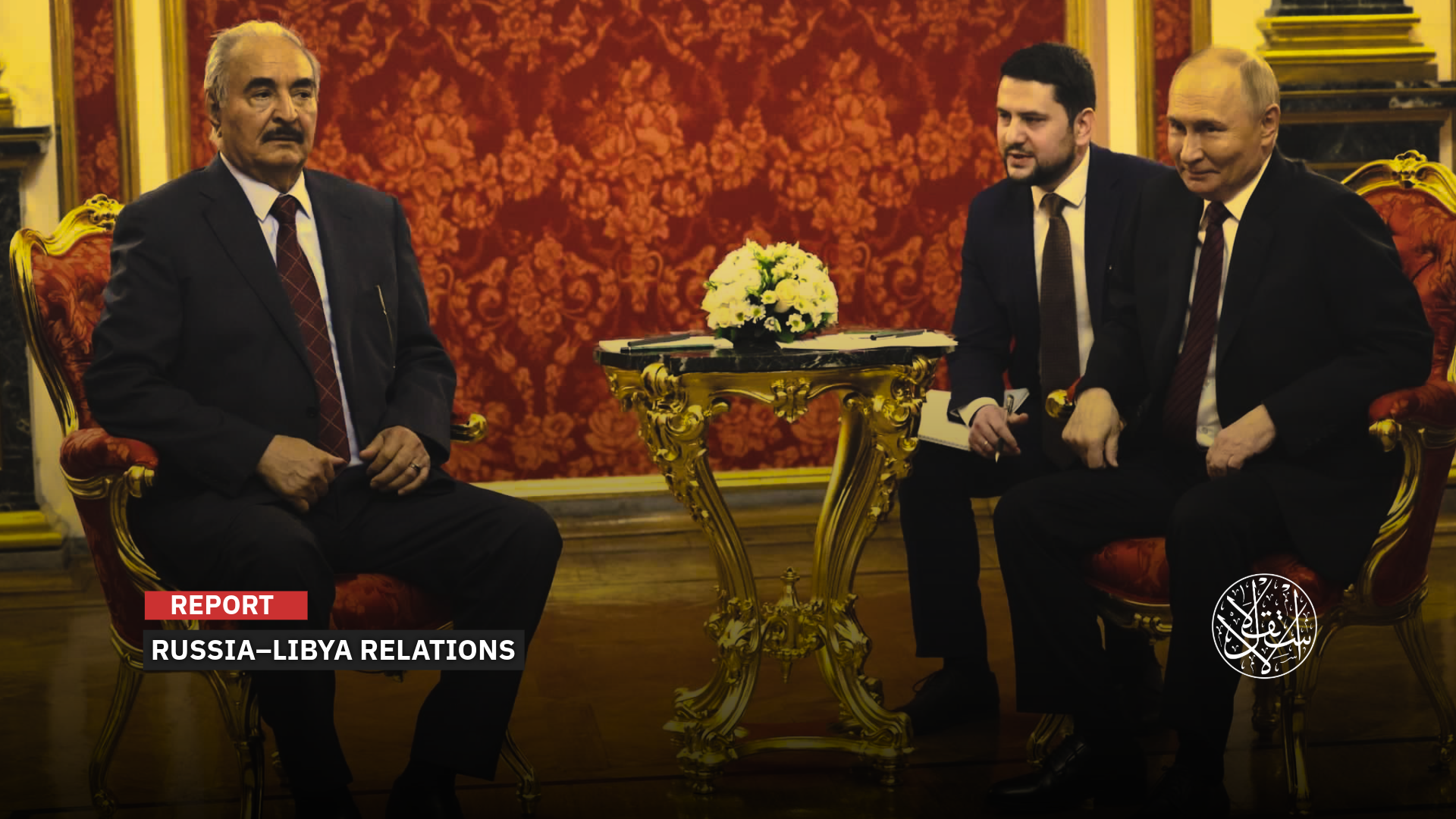
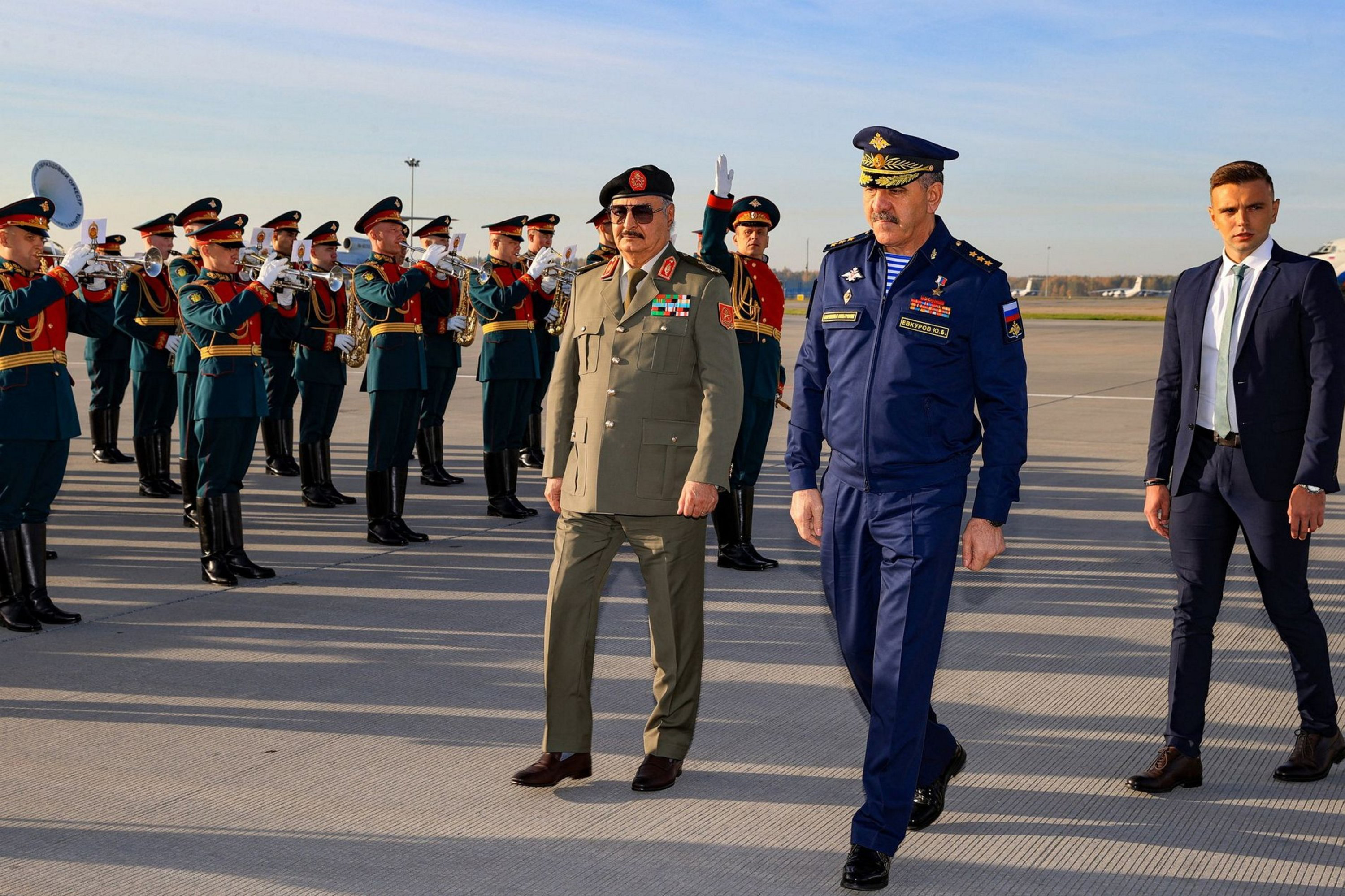
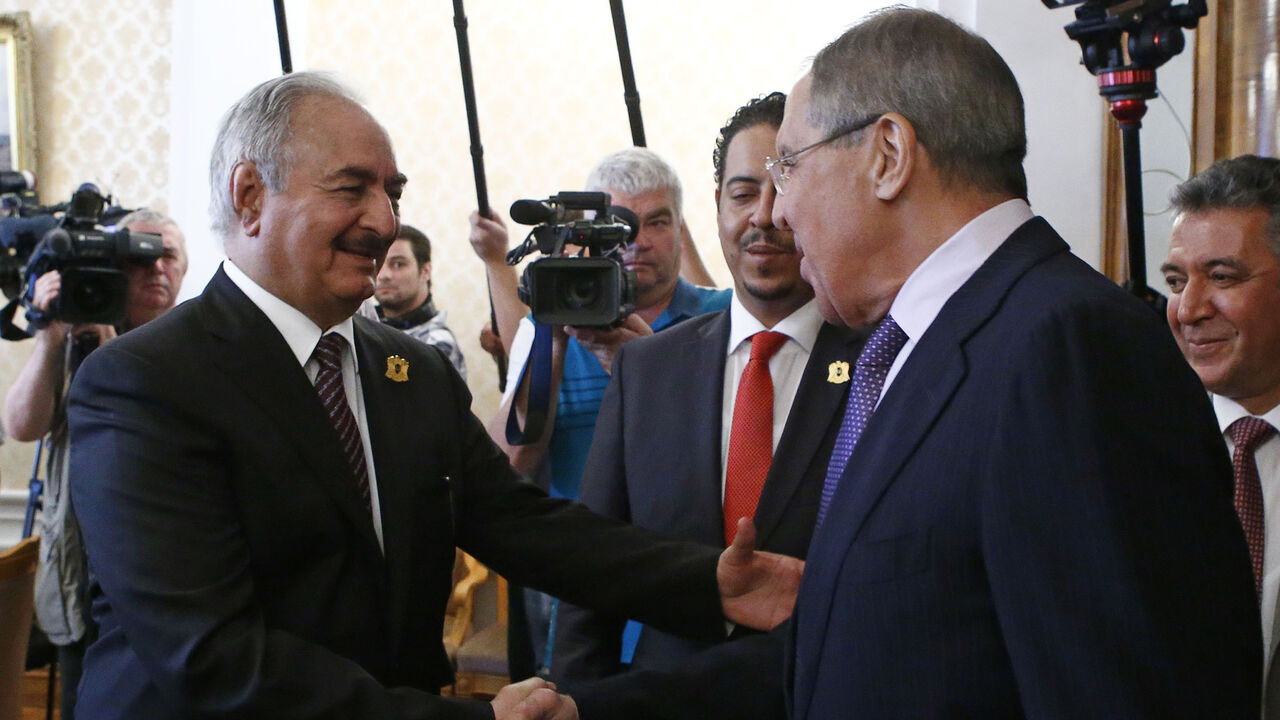
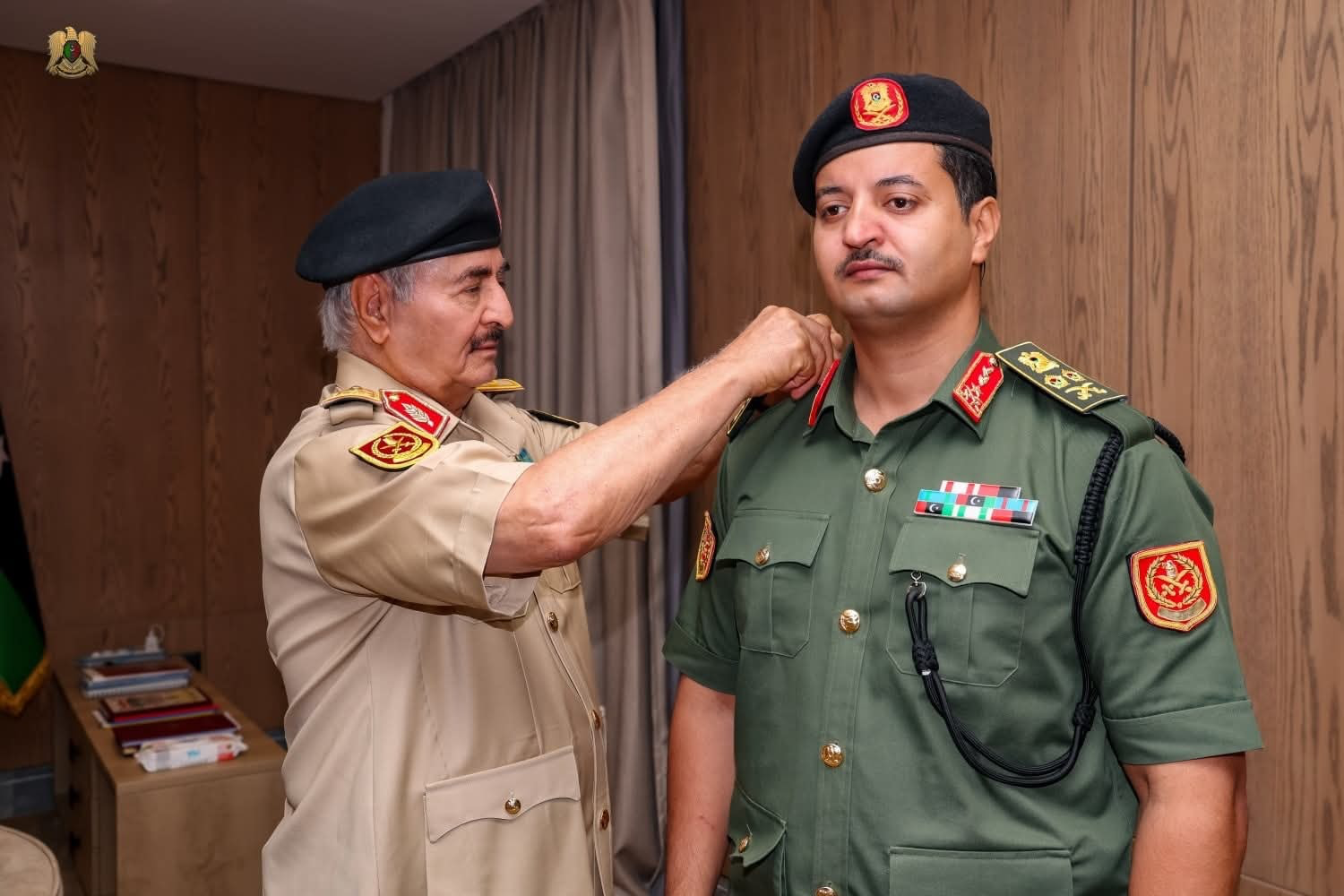
Therefore, Washington is closely monitoring the growing relationship between the Kremlin and Khalifa Haftar, which became evident with the appearance of advanced Russian weapons during Haftar's military parade in May.
This appearance was seen as an indication that Russia is moving beyond the framework of limited trade relations or technical contracts, towards providing more comprehensive security guarantees, in a qualitative shift that reflects the pursuit of building long-term strategic partnerships.
The U.S. has always viewed this development with extreme sensitivity. Russia's establishment as a security guarantor in eastern Libya means, from an American perspective, that Moscow could gain control of a portion of the southern Mediterranean gateways, acquire significant influence over energy and irregular migration routes, and exploit Libya's internal divisions to bolster its regional influence.
In an attempt to contain this trend, US policy sought to send direct messages to Haftar.
During a visit by then-CIA Director William Burns, Haftar was explicitly warned and urged to expel Russian forces from his areas of influence.
However, these warnings apparently did not translate into tangible change on the ground, as intelligence reports indicate that the number of Russian troops in Libya increased from approximately 800 in February to nearly 1,800 by May of the same year.
On February 17, coinciding with Haftar’s arrival in Belarus, Republican Congressman Joe Wilson issued a public warning to him, asserting that allowing Russian President Vladimir Putin to expand his influence in Libya—through the establishment of new naval bases—would be a grave mistake with far-reaching strategic consequences.
Such statements reveal that the Libyan issue is no longer confined to intelligence and military circles, but has become a prominent feature of domestic American political debate.
While this shift may lead to a difference in approach or tools, it does not necessarily signify a change in the core American concern regarding the expansion of Russian influence near Europe, and especially on its southern flank.
Profound Shift
In this context, Libyan politician Omar al-Hassi stated that Russia's accelerated moves in Libya reveal a profound strategic shift in Moscow's calculations.
“Russia no longer views Libya as a transient sphere of influence, but rather as a central platform to compensate for its declining presence in Syria and to build a long-term presence in the Mediterranean and Africa,” he added.
In a statement to Al-Estiklal, he affirmed that Libya offers Russia what Syria cannot at present, whether in terms of freedom of maneuver, geographical depth, or direct proximity to Europe, in addition to the possibility of linking the Mediterranean Sea to the African interior.
He pointed out that this reality makes the country an open arena for increasing international competition, explaining that establishing a fortified Russian military presence, supported by integrated air defense systems, would alter the balance of deterrence and surveillance in the central Mediterranean, and could also pose a direct threat to the United States and NATO.
He noted that Washington is aware of the seriousness of this trajectory, which explains its resort to legislative tools such as the Libya Stabilization Act.
However, he believed that these tools simultaneously reflect an acknowledgment of the difficulty of dismantling Russian influence networks in Libya, given the political division the country has been experiencing for years.
He concluded by saying that Libya is no longer merely an arena of internal conflict, but has become a strategic point where the interests of major powers intersect in an open race for influence.
Sources
- Washington keeping close watch on Moscow's redeployment to Libya
- Libya: New warnings about Russian influence amid talk of unconditional support from Belarus [Arabic]
- A US senator warns Haftar against allowing Russia further expansion in Libya [Arabic]
- Russia's presence in North Africa relies on long-term institutional influence [Arabic]