Will Lebanon’s Security Director Succeed in Releasing the Americans Detained in Syria?
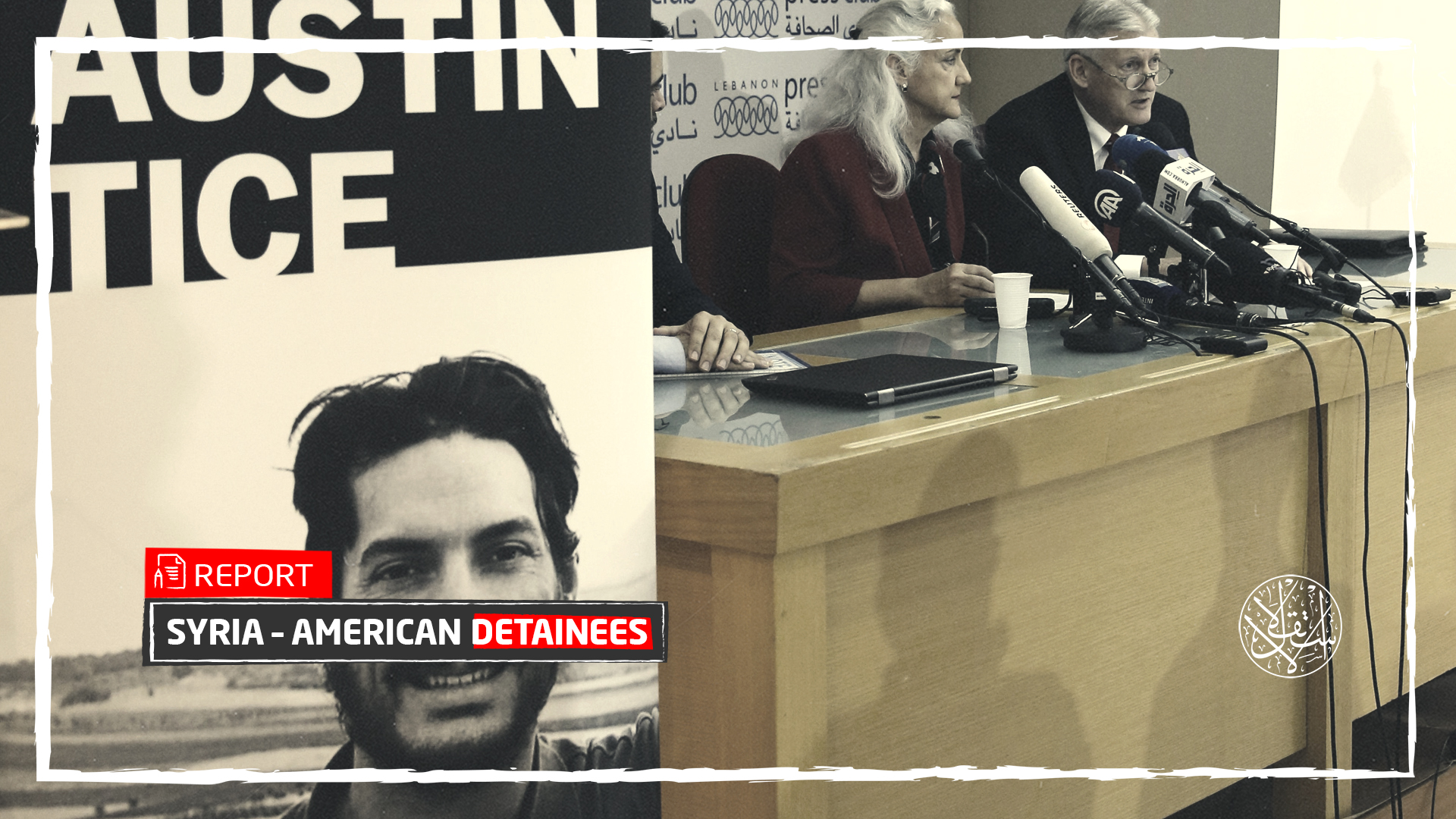
The file of the American hostages held in Syria has returned to the fore after Washington raised the issue of journalist Austin Tice, who has been held by a party affiliated with Bashar al-Assad's regime since 2012.
On May 21, 2022, the Director General of Lebanese Public Security, Major General Abbas Ibrahim, flew to the United States and confirmed that officials in Washington wanted him to resume his efforts to return Tice and other missing Americans in Syria.
Save Austin
During an interview with Public Security magazine, the brigade explained that his new mission is to work on resuming negotiations between the Syrian regime and Washington from where they ended at the end of the term of former US President Donald Trump 2020.
The director of Lebanese security stated that he would go to the Syrian capital, Damascus, to discuss the fate of the American journalist with officials of the Syrian regime.

The regime's demands for the release of Tice were high. It demanded the withdrawal of US forces from Syria, the resumption of diplomatic relations, and the lifting of some sanctions imposed on it by Washington, according to Major General Abbas.
The independent journalist and former US Marine, Austin Tice, disappeared after preparing press reports in the Syrian opposition areas at the time in Damascus countryside in 2012, after entering through Lebanon.
Austin was able to document the regime's crimes and its bombing of civilians, and when the journalist was about to leave Syria through Lebanon, he was arrested at one of the Assad forces' checkpoints outside the city of Daraya on August 14, 2012.
Subsequently, the Syrian regime fabricated, as confirmed by opposition media, a video clip showing allegations of Austin's kidnapping by "unidentified armed groups", in an attempt to deny the responsibility of its checkpoints for his arrest.
The videotape in which Austin appeared to be fake because it was produced in a primitive intelligence manner, to the point that one of the American intelligence agents said: Those who produced this tape spent a long time watching recordings coming from Afghanistan and imitated them poorly.
Austin Tice served in the US Navy before turning to journalism and came to Syria as a freelance journalist working for various Western channels and media outlets.
In the early years of Austin's disappearance under former President Barack Obama, his diplomatic team intensified communication, directly and indirectly, to reach a deal with the Syrian regime for his release, but it failed.
What indicated that Austin was alive until 2015, was the assertion by the US government envoy to the regime that he was able to see the journalist "as a first step on the road to his liberation," according to what a European diplomat was quoted by the French newspaper Le Figaro.
At that time, US Secretary of State John Kerry made soothing statements, in which he confirmed the existence of negotiations with the Syrian regime for the release of hostage Austin Tice.
But it was said at the time that Kerry's statements were intended to create "confidence" about the complex issue.

Sensitive Timing
The tension in the relationship between Moscow and Washington due to the ongoing Ukraine war since February 24, 2022, and the domestic pressure on the administration of US President Joe Biden, from Tice’s family, pushed Washington to return to an old tactic in the hostage negotiations.
Here, it was remarkable that Washington, in assigning Major General Abbas, relied on the same method of making concessions in exchange for the release of the hostages, which brings to mind the Lebanon war in the 1980s.
At that time, a number of Western hostages were liberated, after long and difficult negotiations with both the Syrian regime and Iran, who were running the war behind the scenes.
Major General Abbas also has experience in the hostages' file, as he succeeded in March 2014 to release 16 Syrian nuns who were kidnapped from the city of Maaloula in the Damascus countryside for a period of three months, in exchange for the regime’s release at the time of 150 female detainees from its prisons against the backdrop of the Syrian revolution.
The diplomatic atmosphere is not in the interest of the United States, especially with the strained relations with Russia, an ally of the Syrian regime, following the invasion of Ukraine.
Previously, Washington had pressured Assad through Moscow, as there had previously been a case of the release of the independent American journalist Kevin Patrick Dawes in April 2016 after he was arrested by the Syrian regime in 2012.
At that time, the Russian army transferred the journalist from Syria to Moscow, after Barack Obama personally asked his Russian counterpart, Vladimir Putin, to help release him, according to the Washington Post.
The Austin Tice file is still an issue of public opinion in the United States, due to the intense movement that his mother organizes every year, by holding press conferences to remind his story and the need to release her eldest son.
This forced Barack Obama to intervene in an attempt to release him, and the matter extended to his successor, Donald Trump, but they failed to do so, despite the diplomatic atmosphere at the time that allowed this.

Complex Task
The United States reopening of the complicated Austin Tice file at this time and handing it over to Lebanon, is due to several factors, according to Syrian journalist Ammar Ezz.
Ezz told Al-Estiklal: "Through the file of the hostages in Syria, led by the most famous Tice, the administration of Joe Biden is trying to gain a new achievement as the United States approaches the mid-term elections season, which will be held this fall and according to which the majority in Congress will be determined."
This comes at a time when Biden is believed to be one of the least popular American presidents in the country.
The journalist added, "Biden's meeting with Austin's parents, and his affirmation of working to secure their son's safe return to his home was the first indication of his intention to move the file again."
Ezz pointed out that the Biden administration wants to take advantage of the local pressure from the Tice family and the Americans' sympathy with them in his favor.
He continued, "Secondly, Washington gave General Abbas an opportunity to resolve the matter without American concessions, given his closeness to the regime and Hezbollah, his management of former hostage files such as the Maaloula nuns, and the release of Lebanese citizen Nizar Zakka after four years of detention in Iran."
Ezz went on to say, "I think that any progress in the Austin file will be reflected on Lebanon and not on the Syrian regime if something happens, meaning that the assignment of Major General Abbas from Washington does not carry any guarantees or concessions to Assad."
Ezz ruled out that "the regime will release Austin Tice without achieving any gain or bartering because Assad is claiming that he entered Syria illegally."
The Syrian journalist emphasized: "Assad invested in kidnapping him politically and made him a negotiating card with the Americans due to the sensitivity of the situation inside the United States and the presence of social pressure that demanded his release. Yet, the neglect and the failure to resolve his file all these years is due to the irrational demands of the regime, such as talking about the withdrawal of American forces from Raqqa."
He concluded by saying: "The task of Major General Abbas will not be easy and I do not expect any progress to occur, especially since the relationship is tense between Washington and Moscow because of Ukraine, and this is what complicates the Austin file more and keeps it in the current period without progress."