From Boycott to Dialogue: Egypt’s Shift Toward Dbeibeh’s Government in Libya
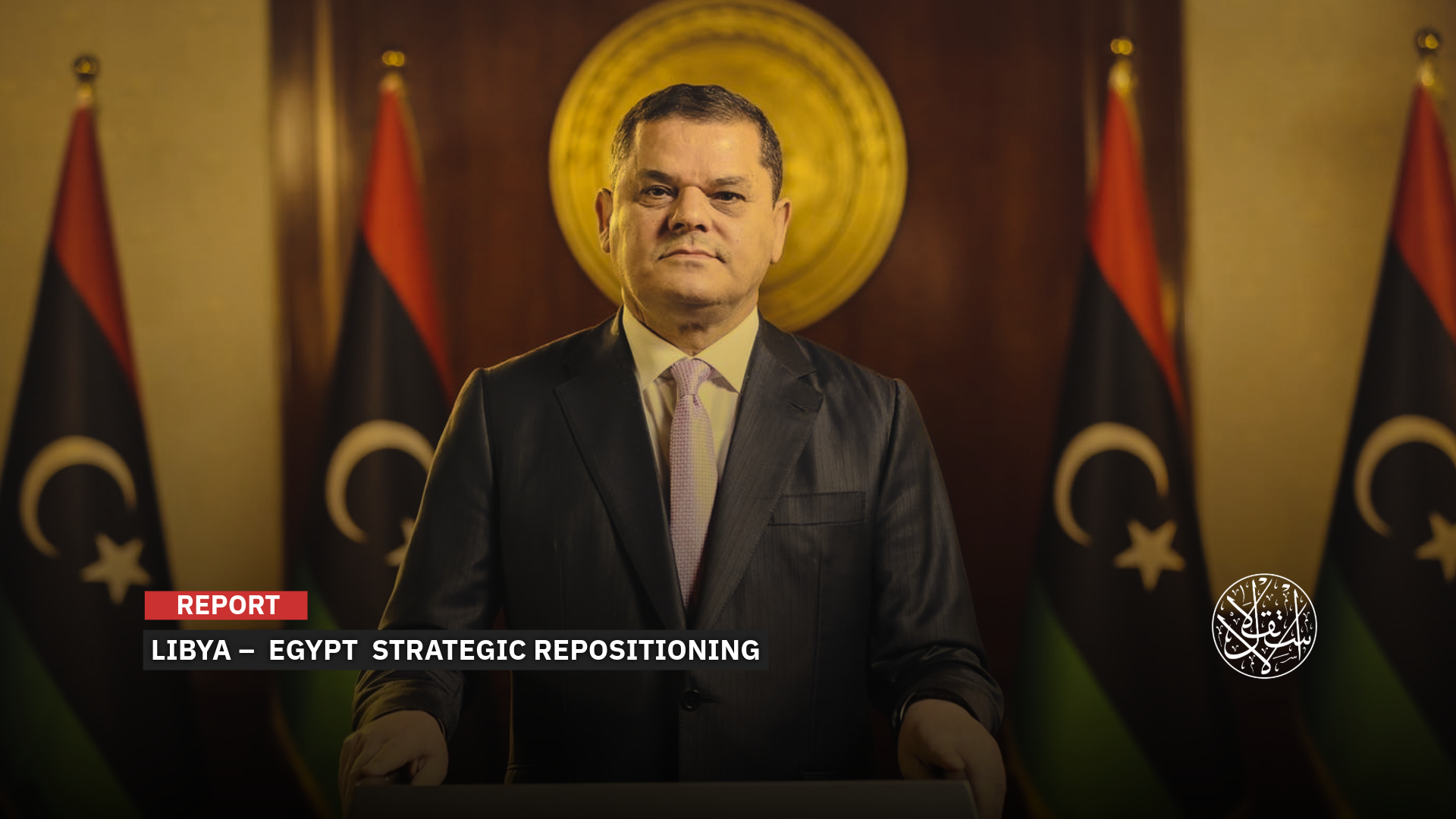
Focusing on only one side in Libya no longer advances Egypt’s strategic interests.
After years of cooling relations and entrenched alignments, the name of Libya’s capital, Tripoli, has returned to the forefront of Egyptian calculations, not merely as a contested sphere of influence, but as a potential site for recalibrating the balance of power in western Libya, and possibly the broader region.
This shift became evident with a visit by a senior delegation from Egypt’s General Intelligence Directorate to Tripoli on December 29, 2025, a move that carried multiple political and security signals.
Although the first visit by Egypt’s intelligence service to Tripoli dates back to early 2021, the latest trip took on particular significance amid rapidly evolving regional dynamics, which have prompted a repositioning among several regional actors.
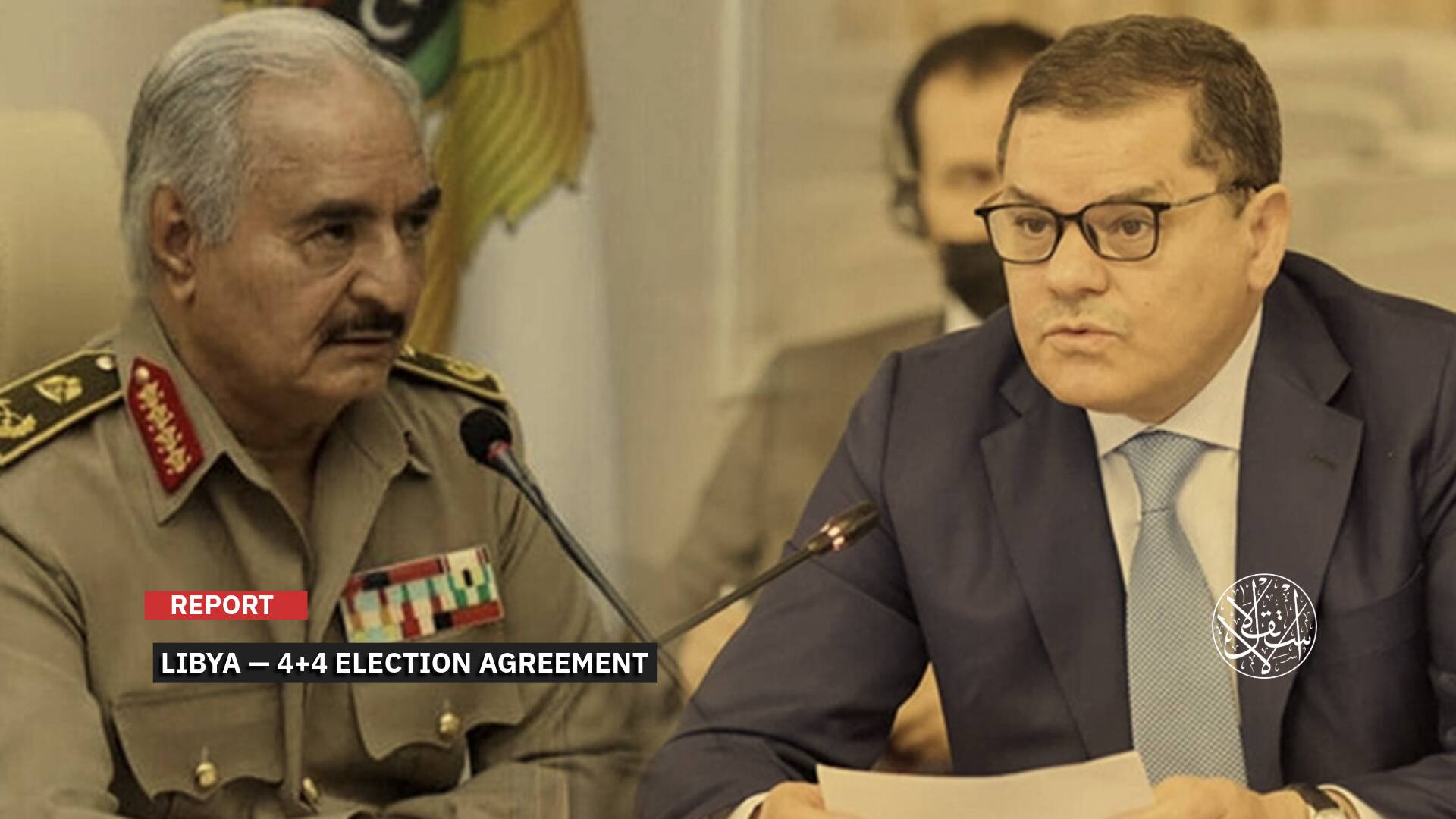
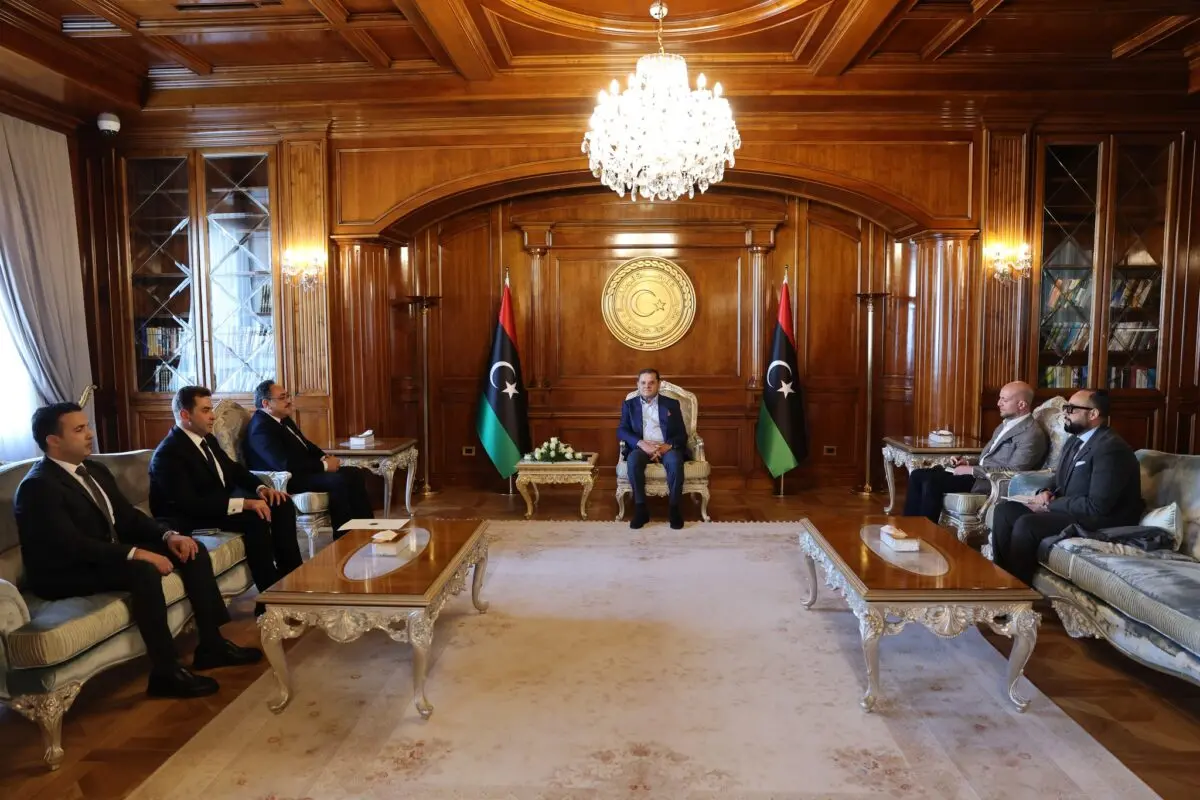
Libya’s Prime Minister of the Government of National Unity, Abdel Hamid Dbeibeh, received Major General Khaled Hussein, Deputy Head of Egypt’s General Intelligence Directorate, at the head of an official delegation.
Sources from both Libya and Egypt described the meeting as moving beyond formal protocol, opening direct discussions on security and political cooperation, and the future of coordination between the two countries.
The visit coincided with Dbeibeh receiving a written message from the head of Egypt’s General Intelligence Directorate, Hassan Mahmoud Rashad, underscoring that channels of communication between Cairo and Tripoli are no longer exceptional or ad hoc, but part of a new Egyptian approach toward Libya and its internationally recognized government.
A central question emerges: what prompted Egypt to open direct channels with Dbeibeh’s government in Tripoli after years of disagreement and its previous explicit support for Major militia General Khalifa Haftar’s camp in the east?
Observers say the answer lies not in a single factor, but in a convergence of domestic and regional developments that have reshaped Egypt’s calculations on the Libyan file.
According to a report by the local site Ean Libya, published on December 30, 2025, Cairo, which had long bet on a decisive outcome through Haftar as a means to stabilize Libya and secure its western borders, now recognizes that this option has largely exhausted its potential.
Continuing to engage with the Libyan scene from a single-sided perspective no longer serves Egypt’s strategic interests and could expose it to additional risks at a time of high regional volatility and fluidity.
Reliable Guarantor
He continued that for many years, Cairo viewed Khalifa Haftar as the most reliable guarantor of security in eastern Libya, and as a partner capable of confronting armed groups and preventing the spread of chaos toward Egypt’s borders.
However, as the local site Libya Observer noted, developments on the ground and in politics over recent years have exposed the limits of this bet.
The project of achieving comprehensive control over Libya through military force has faltered, and Haftar’s ability to impose new realities has declined amid internal divisions, increasing international pressure, and a noticeable shift in the balance of power.
Even more critically, Haftar’s regional behavior has become a growing concern for Cairo. His overt support for Sudan’s Rapid Support Forces militia, and his disregard for Egyptian warnings about the risks this poses to national security, have placed the relationship in a gray and sensitive zone.
For Egypt, it is no longer possible to separate the Libyan arena from the regional spillovers of the conflict, particularly in Sudan, where Cairo sees any backing of forces that threaten state stability as a direct risk to its national security and southern and western borders.
In this context, Haftar is no longer an exclusive option in Egypt’s calculations. He has become one among several choices, potentially requiring a recalibration or trimming of his influence, rather than granting him open political cover as in the past.
Alongside the faltering of the military option, another factor has gained importance: Egypt’s growing recognition of the weight of international legitimacy.
The Government of National Unity in Tripoli, led by Abdel Hamid Dbeibeh, continues to enjoy United Nations recognition and represents the official party in any internationally recognized negotiation process.
Ignoring this reality, or betting on bypassing it, has become politically and diplomatically costly.
Cairo, which in recent years has sought to present itself as a rational and responsible regional actor, cannot maintain a posture of confrontation with international legitimacy on the Libyan file, especially amid mounting European and UN pressure to revive the political process.
From this perspective, the outreach to Tripoli does not represent a radical reversal of previous positions, but rather a pragmatic repositioning that takes into account legal and international balances of power, and secures Egypt a direct seat at the table in any future settlement, rather than remaining a secondary supporter of parties that could be sidelined or curtailed.
Security Considerations
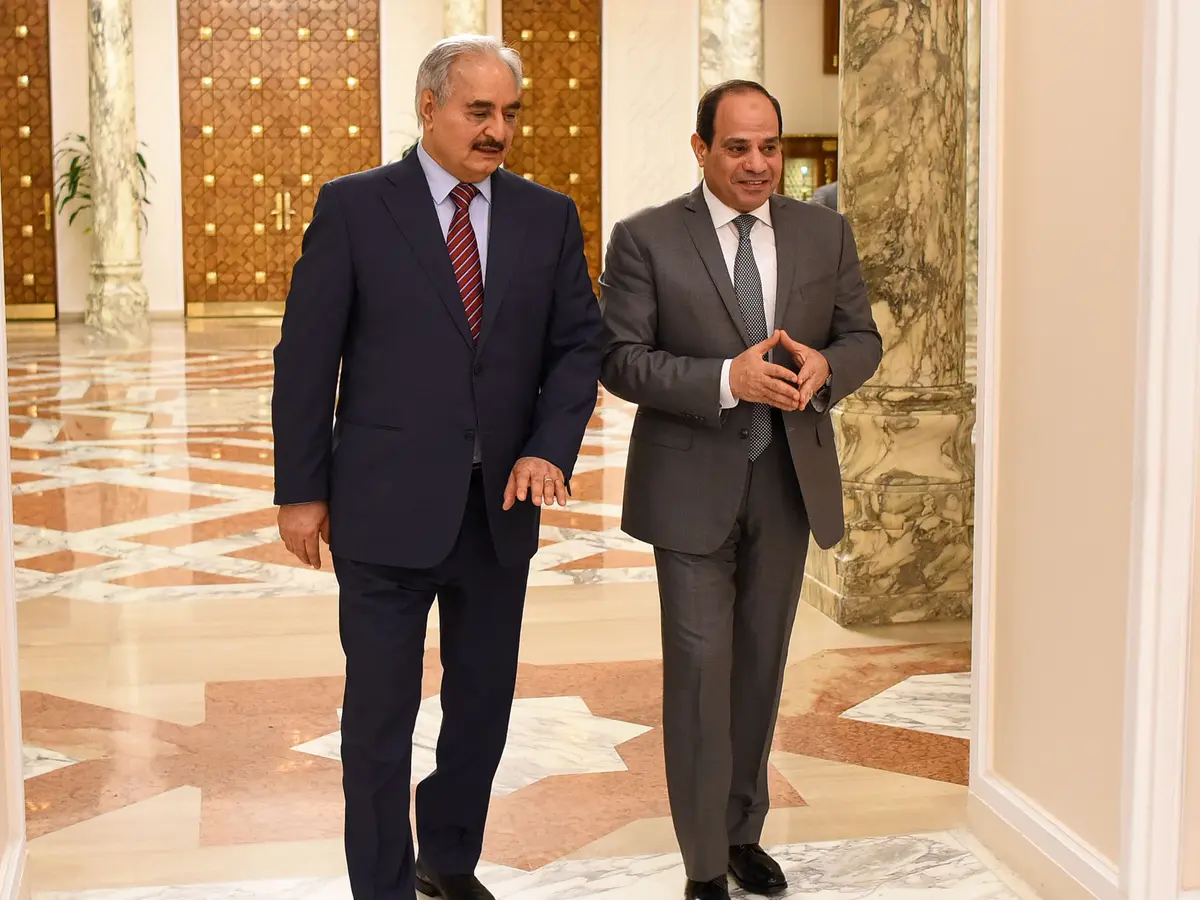
The security dimension remains the most sensitive factor in Egypt’s approach to Libya, as Egypt’s western borders, stretching for hundreds of kilometers, have long been a constant source of concern amid smuggling networks, armed infiltrations, and irregular migration flows.
With the changing map of control in western Libya, direct communication with the actual authorities in Tripoli has become a practical necessity, not a political luxury. Cairo understands that issues such as terrorism, migration, and energy cannot be managed or influenced from outside the Libyan capital.
Security coordination with Prime Minister Abdel Hamid Dbeibeh’s government allows Egypt to obtain more accurate information and greater leverage, whether in border management, confronting organized crime networks, or protecting its interests in energy projects in the Eastern Mediterranean.
Moreover, stability in western Libya directly affects Egypt’s economic security, given the interlinked interests surrounding Egyptian labor, reconstruction efforts, and potential investments, matters that cannot be effectively activated or managed without formal and direct channels with the internationally recognized government.
Libyan journalist Omar al-Hassi told Al-Estiklal that Egypt’s shift toward Tripoli cannot be understood in isolation from broader regional changes.
He explained that Gulf relations, which in recent months experienced unannounced tensions between Saudi Arabia and the UAE, contributed to redrawing lines of engagement across several regional arenas, from Yemen to Sudan and now Libya.
Al-Hassi added that Cairo is no longer inclined to follow regional policies it perceives as directly or indirectly threatening its interests, a stance clearly reflected in its evolving approach to the Libyan file.
He pointed out that the war in Sudan marked a decisive turning point in Egyptian thinking, with the realization that Sudan’s stability constitutes a national security issue for Cairo, and that Emirati support for the Rapid Support Forces militia crossed clear red lines in Egypt’s view.
This development prompted Cairo to reassess its regional alliances, including its stance toward Khalifa Haftar, whose political and military ties to the UAE and Mohamed Hamdan Dagalo (Hemedti) have increasingly unsettled Egyptian policymakers.
Al-Hassi concluded by emphasizing that Egypt seeks to consolidate its role in the Eastern Mediterranean as a balancing actor, rather than as a party aligned with closed regional blocs, which requires a more open and balanced policy toward various players in Libya, both east and west, in a way that serves its strategic interests and avoids the costs of sharp alignments.
A Fresh Role
In a statement, Egyptian political analyst Amer Hassan said the pressing question today is whether Egypt is genuinely shifting from supporting a single axis to assuming the role of a balancing actor in the Libyan arena, noting that available indicators point to a clear Cairo inclination toward this approach at present.
Hassan told Al-Estiklal that engaging with Abdel Hamid Dbeibeh’s government in Tripoli does not necessarily imply a rupture with Khalifa Haftar or abandonment of him, but rather reflects an Egyptian approach aimed at redefining the relationship and situating it within a broader, more flexible framework that allows Cairo to act as a mediator capable of communicating with all Libyan parties.
He added that this role gives Egypt a wider margin for political maneuvering and spares it from becoming entangled in exhausting conflicts, at a time when it needs to focus its resources and efforts on more urgent domestic and regional priorities.
The Egyptian political analyst noted that this shift also bolsters Egypt’s image as a state seeking to neutralize conflicts rather than inflame them, favoring support for sustainable political solutions over betting on delayed military victories, whose limited utility has been demonstrated by the Libyan experience.
Hassan stressed that Egypt’s outreach to Tripoli does not appear to be a temporary tactical step or circumstantial maneuver, but rather part of a broader strategic reassessment shaped by developments within Libya, the complexities of the regional landscape, and shifting international power balances.
He highlighted that Cairo, having realized that isolation is no longer a viable option and that relying on a single actor is insufficient, is now seeking to reposition itself in a way that preserves its strategic interests and secures an influential role in shaping Libya’s future.
He concluded that the recent visit of an Egyptian intelligence delegation to Tripoli was not merely a fleeting news event, but a clear signal of a new chapter in relations between the two capitals, defined by pragmatism, guided by national interests, and driven by the urgent need for regional stability.
Sources
- Dbeibeh Seeks to Strengthen Cooperation with Egyptian Intelligence [Arabic]
- Noticeable Rapprochement Between Dbeibeh, Saudi Arabia, and Egypt… Is Haftar Under Pressure? [Arabic]
- From East to West… How Egypt Shifted Its Compass in Libya [Arabic]
- Egypt-Turkey Rapprochement Opens a Window in Libya’s Locked Conflict [Arabic]