Will BRICS Save What Is Left of Egypt’s Failing Economy?
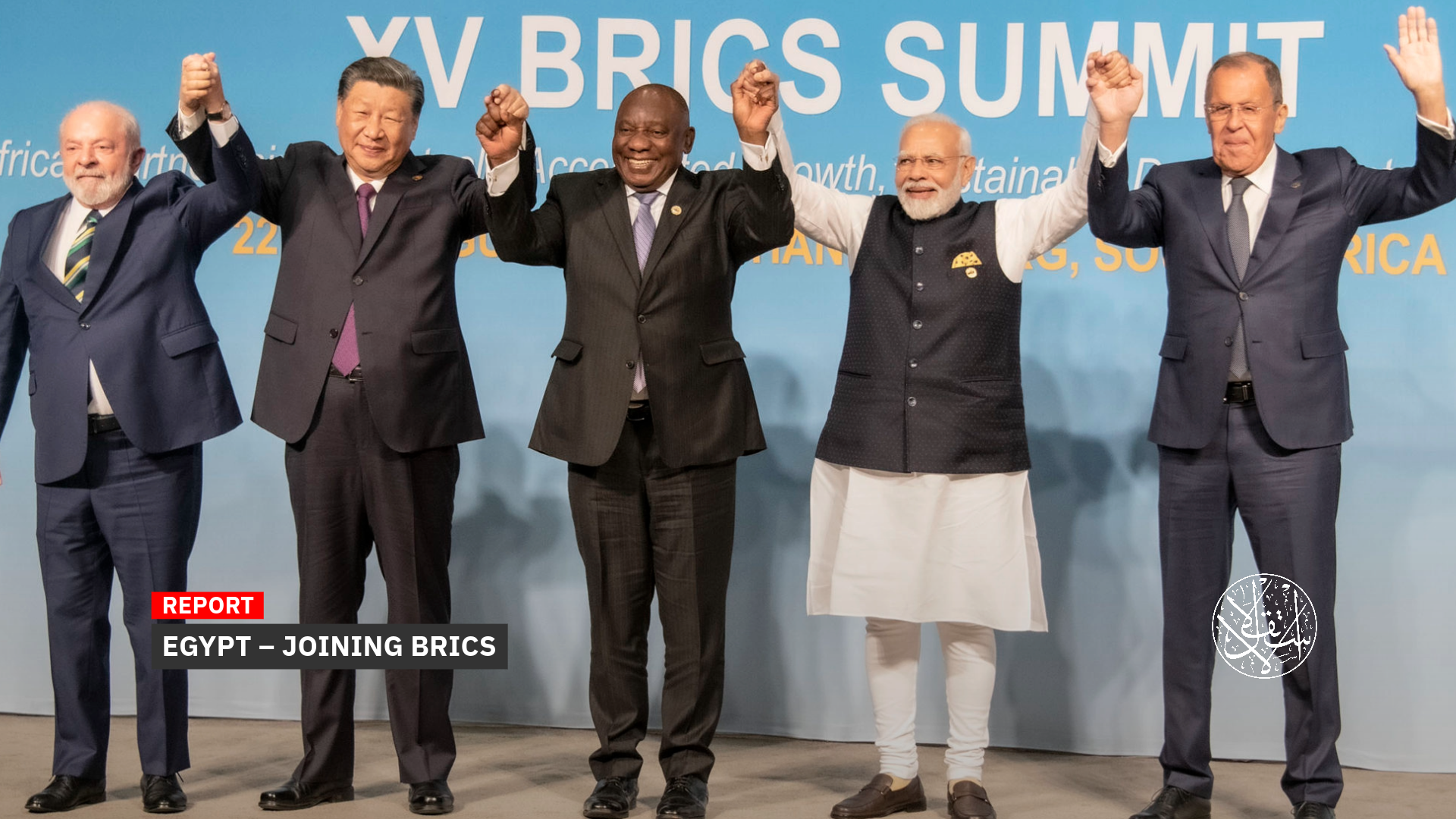
Egypt has been invited to join BRICS, a group of five major emerging economies that includes Brazil, Russia, India, China, and South Africa, as part of an expansion that will also include Saudi Arabia, the United Arab Emirates, and three other countries.
The announcement, made at the 13th BRICS summit held virtually, was hailed by Egyptian officials as a recognition of the country’s economic and geopolitical importance in the Middle East and North Africa region, and a boost for its efforts to attract foreign investment and secure financing for its development projects.
Official Rhetoric
Egyptian President Abdel Fattah el-Sisi said in a statement that Egypt was looking forward to working with the BRICS countries to “raise the voice of the countries of the South regarding various developmental issues and challenges that we face, in a way that supports the rights and interests of developing countries.”
He added that Egypt valued the confidence of the BRICS countries, with which it had close relations, and hoped to cooperate and coordinate with them in the coming period.
The Information and Decision Support Center, an arm of the Egyptian Council of Ministers, issued an analysis highlighting Egypt’s potential benefits from joining BRICS.
The center said that Egypt’s membership in BRICS was a confirmation of the strength of its economic and political ties with the bloc’s countries and its role as a regional hub for trade and investment.
It added that aligning with BRICS would help promote the reforms that Egypt had undertaken in recent years to improve its business environment and increase its chances of attracting more foreign investment.
The center also said that reducing bilateral transactions in U.S. dollars, a goal pursued by BRICS, would ease pressure on foreign currency in Egypt, which relied heavily on dollar inflows. This would help improve several local economic indicators, such as inflation and exchange rate stability.
Moreover, the center said that being part of the BRICS Development Bank would provide opportunities for Egypt to obtain facilitated financing for its development projects, especially in infrastructure and renewable energy sectors.
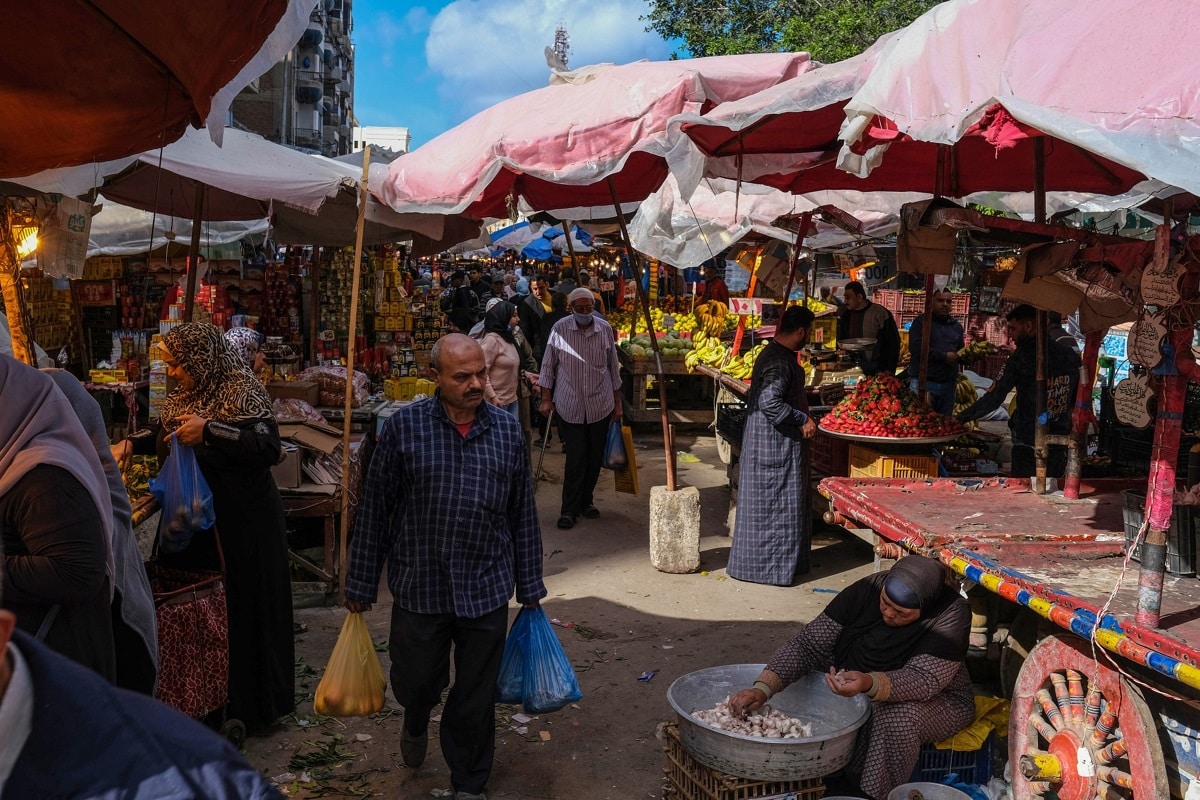
Egypt, which imports most of its basic commodities, has been facing a foreign currency crisis since the Ukrainian war erupted in 2022, disrupting its main sources of dollars, such as tourism, remittances, and Suez Canal revenues.
The Egyptian pound has lost about half of its value since March 2022, when the Ukrainian crisis exposed the vulnerabilities of the Egyptian economy.
The International Monetary Fund agreed in December 2022 to lend Egypt $3 billion under an extended fund facility to be disbursed over 46 months.
However, the first review of this program was delayed amid uncertainty about Egypt’s commitment to adopt a flexible exchange rate regime.
BRICS Bloc
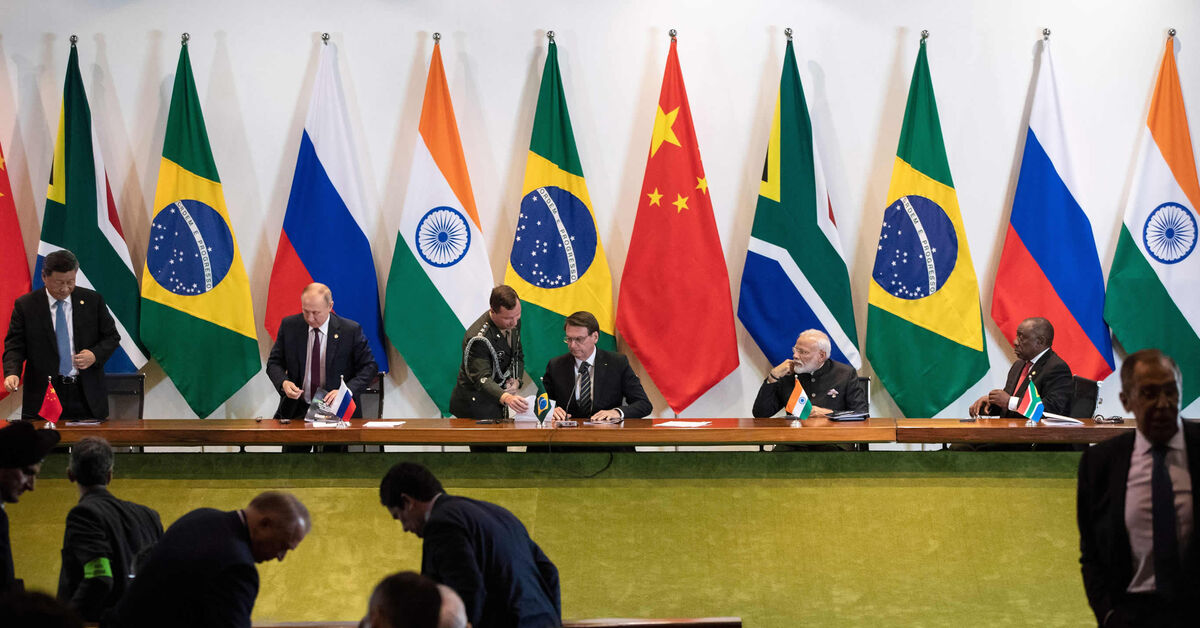
Egypt has become the sixth member of BRICS, a group of emerging economies that includes Brazil, Russia, India, China, and South Africa.
In June, Egypt applied to join BRICS, hoping to benefit from the group’s trade and financial initiatives that aim to reduce the reliance on the U.S. dollar and Western institutions.
Egypt is also facing a heavy debt burden to the World Bank and the IMF, which have imposed strict austerity measures on the country.
By joining BRICS, Egypt hopes to diversify its sources of financing and trade, as well as to use its membership as a bargaining chip with the West.
Egypt is already a member of the New Development Bank, a multilateral lender established by BRICS in 2014 to fund infrastructure and sustainable development projects in emerging markets.
The bank has provided $33 billion to its members so far, according to Prime Minister Mostafa Madbouly.
Finance Minister Mohamed Maait said that Egypt’s participation in BRICS and its use of national currencies among the member states would help reduce the pressure on the public budget, which spends a large portion of its revenues on importing wheat and fuel.
He also said that Egypt would benefit from the group’s plans to create a unified currency in the future, which would challenge the dominance of the dollar in the global economy.
The BRICS currency, which is still under development, is seen by the group’s leaders as a way to assert their economic sovereignty and independence from the U.S.-led financial system.
The currency would also enable the group to expand its influence and attract more developing countries to join its ranks.
However, some analysts have questioned the feasibility and viability of the BRICS currency, given the divergent economic interests and policies of the group’s members.
They also point out that the dollar remains the dominant reserve currency in the world, accounting for more than 60% of global foreign exchange reserves.
Sisi hopes to benefit from the cooperation and support of the BRICS countries, especially China and Russia, which have strong ties with Cairo.
High Priority
Anas Rashad, a researcher who specializes in the Egyptian scene, said that Cairo is very interested in joining the BRICS group and that it has priority among the 22 countries that have applied for membership.
In his interview with Al-Estiklal, Rashad added that there is a trend towards using different currencies and ending the dollar’s dominance, which had a negative impact on many countries, including Egypt.
“The U.S. dollar has many negative effects on Egypt’s economy, such as inflation and rising prices. Using a new currency such as the Chinese yuan would help Egypt achieve internal balance in many economic indicators,” Rashad said.
“Egypt has joined the International Commercial Bank, which is based in Beijing and includes 75 countries. This would facilitate trade with China, which is the most important source of raw materials for Egypt,” he added.
Rashad expressed his belief that joining the BRICS group would reflect positively on Egypt’s economy and its ability to cope with inflation.
Cairo intends to submit its request to join the BRICS group at the current summit in South Africa, and it relies on Russia’s support for this matter.
According to data from the Central Agency for Public Mobilization and Statistics, trade between Egypt and the BRICS countries increased by 10.5% in 2022, reaching $31.2 billion.
India was the top importer of Egyptian goods, followed by China, Russia, Brazil, and South Africa.
China topped the list of highest BRICS countries exporting to Egypt during 2022. The value of Egypt’s imports from it was $14.4 billion, followed by Russia at $4.1 billion, then India at $4.1 billion, Brazil at $3.6 billion, and finally South Africa at $133 million.
The value of investments by BRICS countries in Egypt amounted to $891.2 million during fiscal year 2021/2022 compared to $610.9 million during fiscal year 2020/2021 by an increase rate of 45.9%.