Why Have Iran’s Relations With Sudan Returned After Years of Estrangement?

Iran and Sudan have agreed to restore diplomatic ties after a seven-year rupture, Iran’s foreign minister, Hossein Amir-Abdollahian, said on Saturday, July 8.
He said he and his Sudanese counterpart, Ali al-Sadiq, had decided to reopen embassies and exchange consular services in each other’s countries.
The announcement came after a meeting between the two ministers in Baku on Thursday, July 6, where they discussed resolving some of the issues that had strained their relations and enhancing their political and economic cooperation, according to Iran’s official news agency IRNA.
The Sudanese Foreign Ministry said in a statement that the two sides had agreed to resume relations “as soon as possible, in a way that benefits both countries” and to “return to their previous state, which enables the two countries to benefit from opportunities for joint cooperation in various fields.”
Reasons of Cutting Ties
By 2016, Sudan’s alliance with Iran had brought the African nation more trouble than benefits, as it alienated its Gulf neighbors, invited Israeli airstrikes, and worsened its economic woes.
The Sudanese government, which severed ties with several Gulf countries to cozy up to Tehran, has received little in return from the Iranian economy, which is itself under siege by international sanctions.
Sudan, meanwhile, is facing a severe currency crisis, a plummeting exchange rate, and soaring inflation.
In 2016, in an apparent bid to appease its critics and ease the pressure, Sudan announced that it had expelled the Iranian cultural attaché and shut down the Iranian Cultural Center, accusing it of exceeding its mandate.
The Sudanese Foreign Ministry said it had given the attaché and the center’s staff 72 hours to leave the country.
The move came after a heated debate within the government, which is divided between those who favor closer ties with Iran and those who want to mend relations with countries like Egypt, the United Arab Emirates, and Saudi Arabia.
The latter camp argued that Sudan has more to gain from the Gulf states, which have far larger investments and trade links with Khartoum than Iran does.
Despite some agreements on banking, agriculture, oil, and maritime cooperation, the trade volume between Sudan and Iran is negligible compared to the level of political and military cooperation.
But the pro-Iranian faction, which includes some senior officials and military officers, sees Tehran as a strategic partner that can help Sudan counter its regional rivals and enemies.
That partnership has come at a steep price. In 2012, the Israeli occupation bombed Sudan’s largest military factory, claiming that it contained Iranian weapons destined for Gaza.
The Israeli occupation has also carried out several other strikes in eastern Sudan, targeting alleged arms shipments from Iran.
Sudan’s rapprochement with Iran has also strained its ties with Saudi Arabia, which views Tehran as a threat and fears its Shiite influence in Sudan.
Riyadh has taken punitive measures against Khartoum, such as suspending all banking transactions, restricting imports, and trying to isolate it economically.
Saudi Role
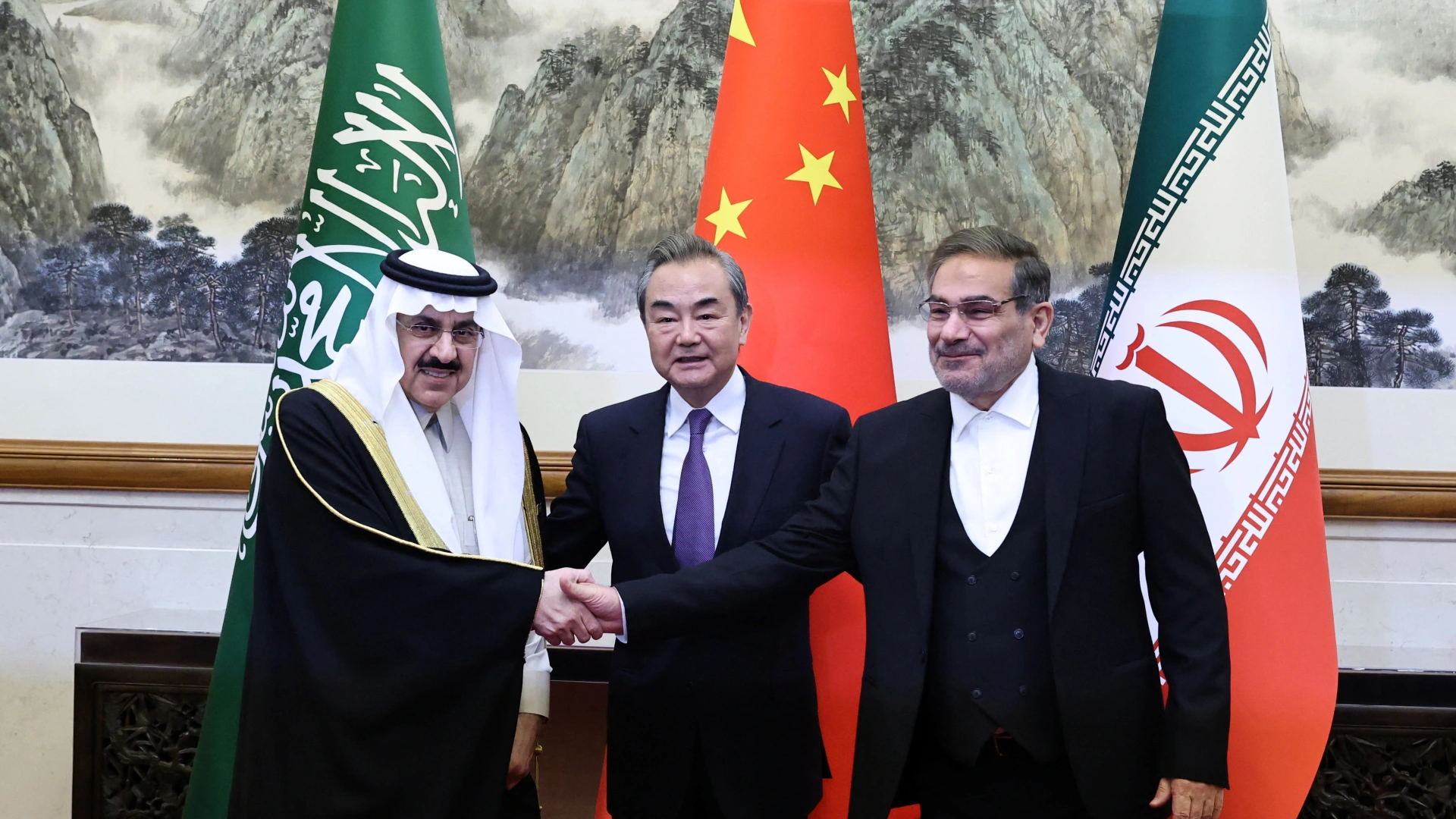
Nowadays, seven years after 2016, the rapprochement move is seen as a result of the recent rapprochement between Iran and Saudi Arabia, which have been engaged in talks to ease tensions in the region.
Iran has been seeking to expand its influence and presence in areas of strategic and economic importance, especially in Africa, where Sudan is a key player with a large population and a pivotal location.
But Sudan is also facing internal challenges and instability since the military coup that ousted its civilian-led transitional government last April.
The country has been rocked by protests and international pressure to restore democracy and respect human rights.
Analysts say that Iran’s renewed ties with Sudan may complicate the efforts to stabilize the country and balance its foreign relations.
Sudan and Iran announced that they would resume diplomatic relations that had been severed since 2016 when Sudan joined a Saudi-led coalition against Iran in the region.
The move, which was confirmed by Iran’s foreign minister, Hossein Amir-Abdollahian, at a press conference in Tehran, signaled a shift in Sudan’s foreign policy and raised concerns about Iran’s intentions in the troubled African nation.
The restoration of ties came amid a political and security crisis in Sudan, where a military coup in October ousted the civilian-led transitional government that had been in power since the ouster of longtime dictator Omar al-Bashir in 2019.
The coup sparked widespread protests and international condemnation and plunged the country into uncertainty and instability.
Some analysts said that Iran was seeking to exploit Sudan’s vulnerability and chaos to expand its influence and interests in the region, while others suggested that Sudan was looking for allies and support in its internal conflict.
“The timing raises suspicion and doubt,” said Farid Zein, a Sudanese political analyst, in media statements. He added: “Why does Tehran want to resume diplomatic relations with a country suffering from instability?”
Zein said that Sudan did not have a legitimate or permanent government at the moment and that the interim military authorities might be trying to find backers at home and abroad, “especially in light of the limited external parties that may have a desire to provide direct support to any of the parties to the conflict.”
Yasser Sadiq, a Syrian analyst specialized in Iranian affairs, said that Iran had a clear desire to intervene in Sudan’s affairs to achieve political and economic gains.
In his interview with Al-Estiklal, he noted that this was not the first time that Tehran had tried to meddle in Sudan, where Khartoum had previously accused Iran of spreading sectarianism through religious centers, and that it was one of the reasons for cutting off relations in the past.
He also pointed out that there were strong ties between the Iranian Revolutionary Guard and some Sudanese military officials, which could increase the fears of the current Sudanese authorities of Iranian interference again.
Sadiq added that Khartoum might have decided to hold talks with Tehran to resume diplomatic relations between them in order to have relations through official channels without any covert activities.
Worsening Ties
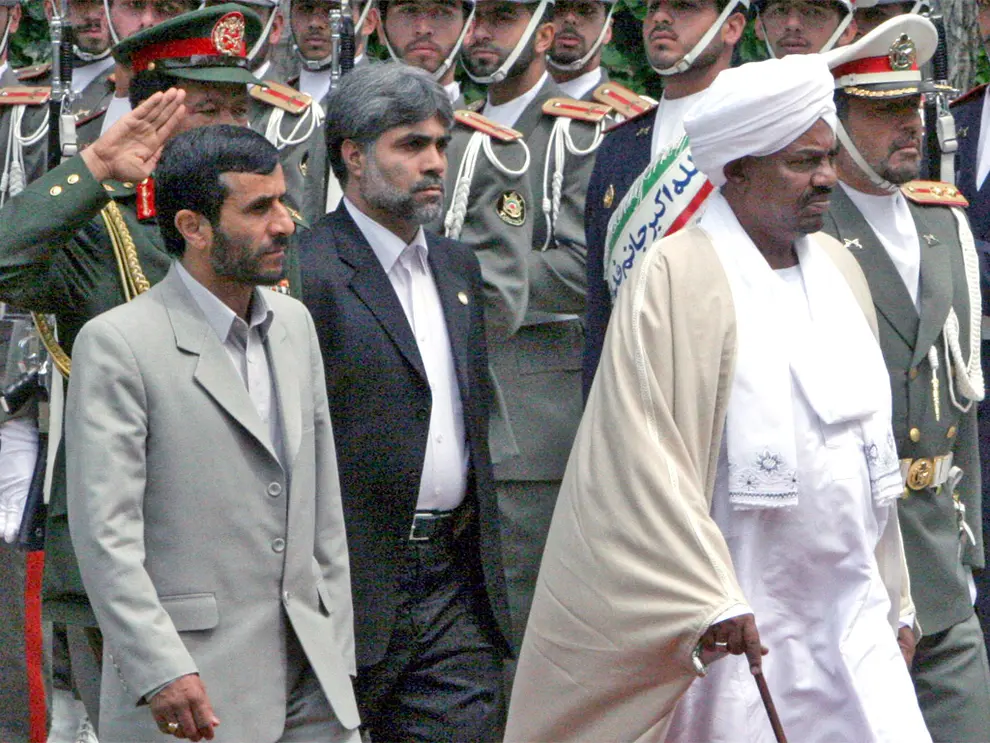
Iran has been busy with its meddling in Arab and Gulf affairs, especially with its rival Saudi Arabia, under the presidency of Hassan Rouhani from 2013 to 2021.
Two major events marked that period: the signing of the nuclear deal with world powers in 2015 and the U.S. withdrawal from it in 2018, followed by a renewed effort to revive it.
But since August 3, 2021, a new president, Ibrahim Raisi, has taken office and has started to chart a new course for Iran’s foreign policy.
Iran’s relations with the world and its neighbors have been strained and volatile during Rouhani’s tenure, forcing it to rethink its approach and look for new allies and opportunities.
One of the regions that Iran has turned its attention to is Africa, where it hopes to find a receptive audience for its political, economic, and military outreach.
Iran also wants to fill the gap left by the diminished Arab role in Africa due to the turmoil of the Arab Spring and to counter the influence of the West, especially the U.S.
Iran’s strategy in Africa is not just about gaining international recognition or support for its nuclear program.
It is also about securing access to land, resources, waterways, economic capabilities, and sensitive military sites through soft power.
Iran has different interests and advantages in each African country it engages with.
For example, Eritrea controls the strategic Bab al-Mandab Strait, Sudan connects the east and west of the continent with a vital crossroads that can help spread Shiism through trade and culture, Nigeria and Senegal have some Islamic movements sympathetic to the Shiite sect, and South Africa has high economic growth rates that can benefit Iran.
Iran’s return to Africa comes after years of cooling relations and a failure to export its revolution to other countries.
Instead, Iran is now pursuing a “Shiite geopolitics” that aims to contain the Sunni-dominated Islamic world and its extensions, reaching the vital sphere in Africa through a hybrid mechanism based on mutual interest and intensity of economic cooperation.