What Is the Relationship of the US-Russian Differences to the Increase in Syrian Oil Production?
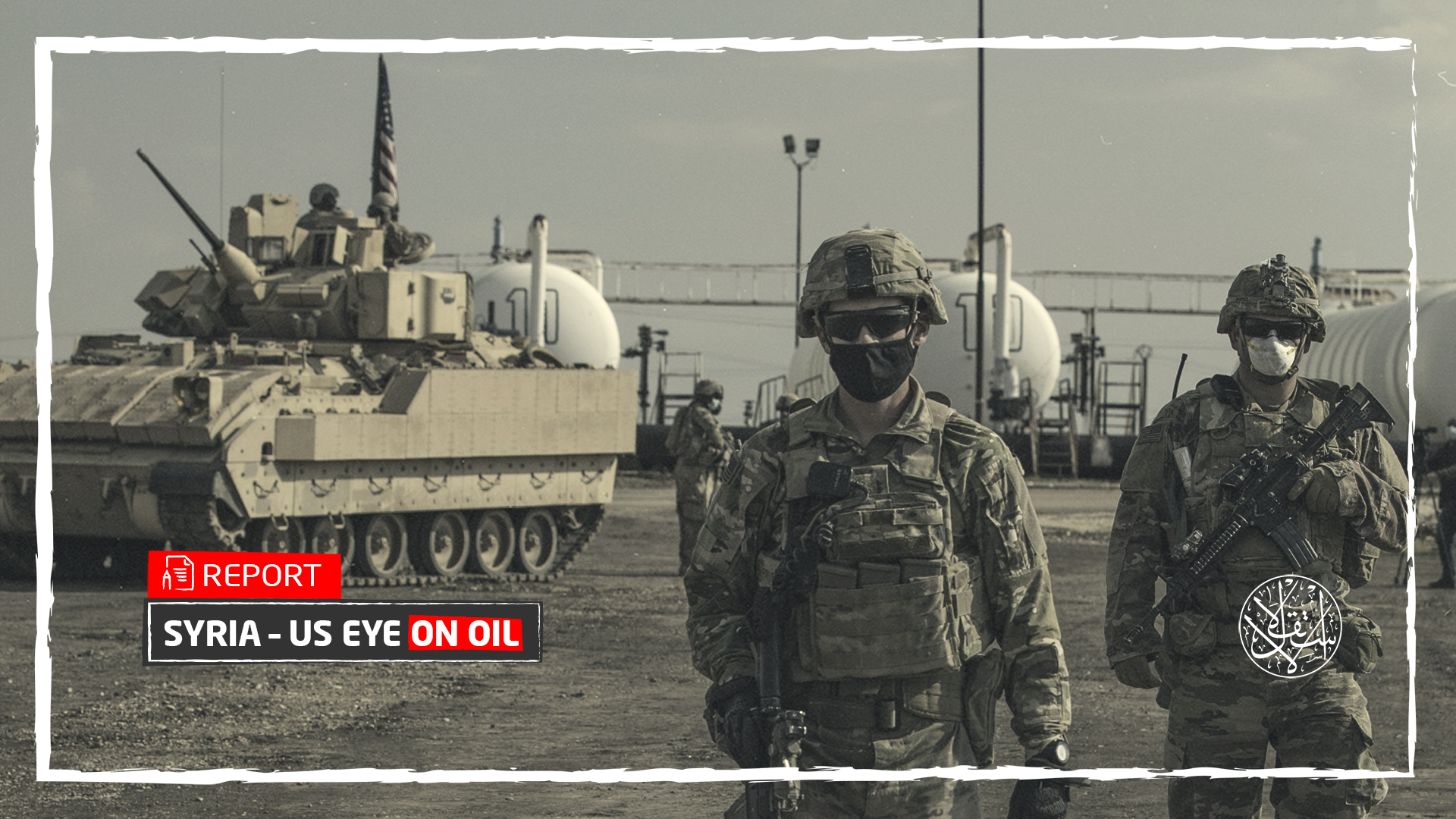
At a time when the international community is seeking to guarantee energy supplies in light of the continuing Russian invasion of Ukraine since February 24, 2022, talking about Syrian oil and its role in creating a new reality has prompted the main actors in Syria to reconsider their calculations.
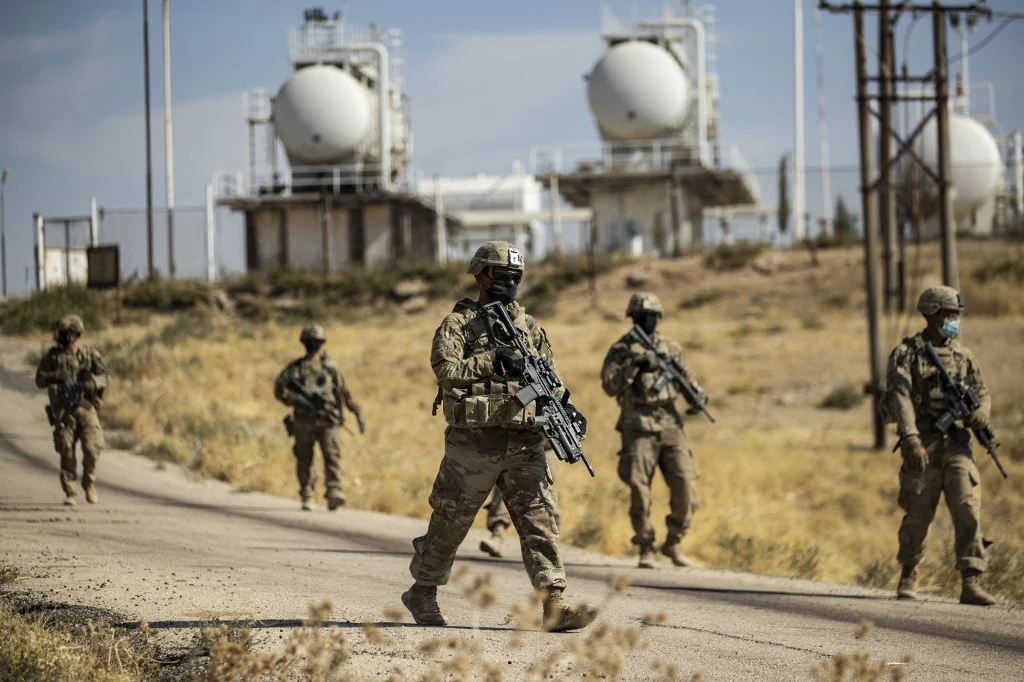
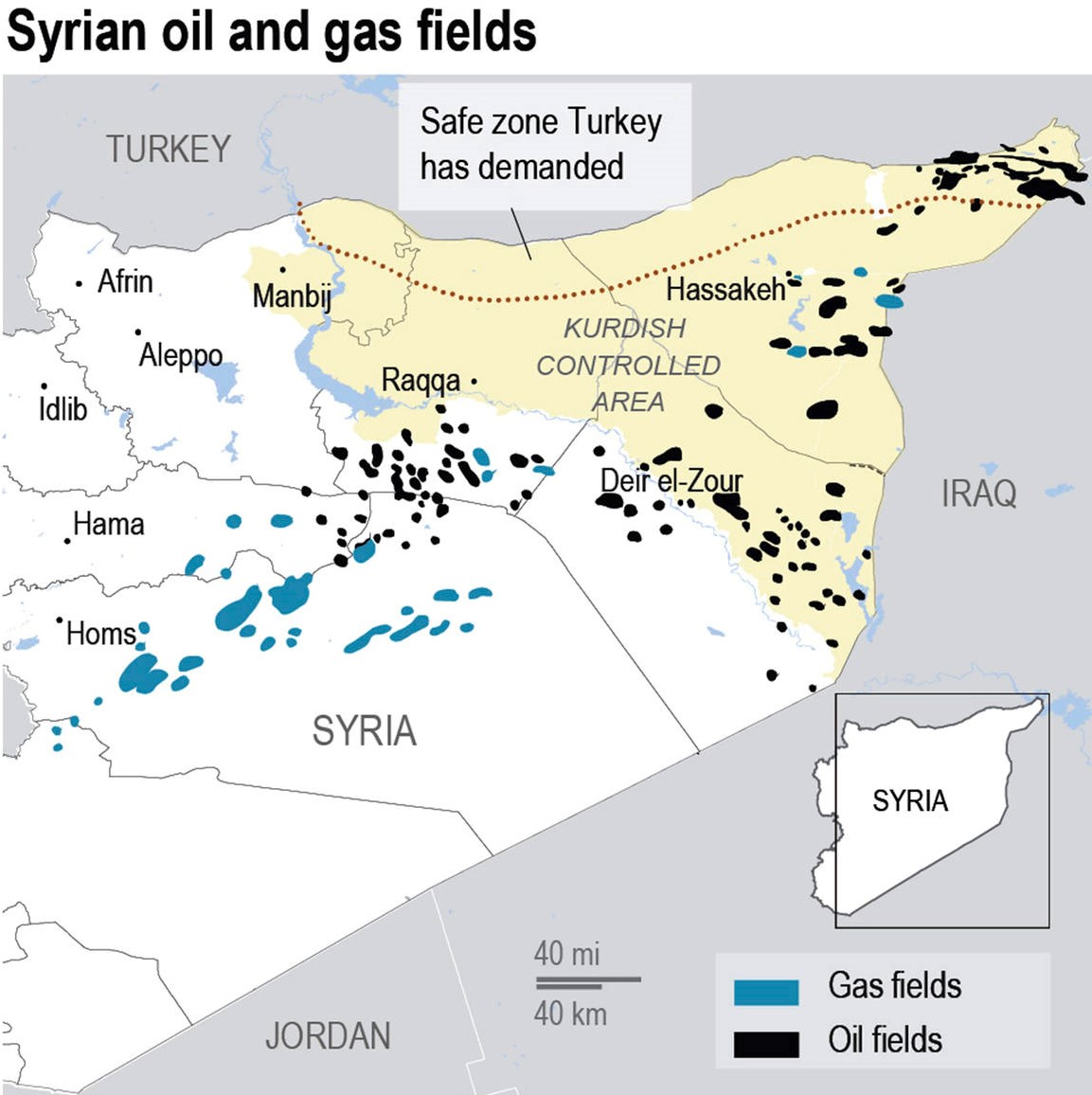
The largest bloc of Syrian oil is concentrated in the areas of northeastern Syria under the control of the US-backed Syrian Democratic Forces (SDF), with 90 percent of oil fields and 45 percent of gas.
Before the war, Syria was a self-sufficient country in the field of energy; according to the statistics of the Assad regime in 2021, the Syrian oil wells were producing an estimated 385,000 barrels per day.
About 245,000 barrels of it were consumed locally, while the rest was exported abroad, generating hard currency earnings.
As for the gas sector, Syria’s production before 2011 amounted to about 30 million cubic meters per day, which is more than enough of an amount to suffice for the country’s needs, and most of the gas is extracted from the Hasakah and Palmyra fields, before declining in recent years.
Oil Card
According to the London-based Asharq Al-Awsat newspaper, there are a set of ideas to transform Syrian oil as a point of consensus among international actors and make it an entry point for breaking the political deadlock, by reaching understandings that lead to an increase in oil production to about 500,000 barrels per day within the next three years.
In a report published on March 20, 2022, the newspaper stated that the increase in oil production would save about $20 billion annually, and then support “early recovery projects,” according to UN Security Council Resolution 2585 on Humanitarian Aid, which was jointly introduced by the United States and Russia in 2021.
The proposals on Syrian oil include: The return of foreign oil companies, preferred oil traders, and guarantor financiers, in exchange for exemption from US sanctions represented by the Caesar Syria Civilian Protection Act, and full transparency and accountability for the exploration, development, production, marketing and sale of oil and gas through existing international channels.
The US Congress approved the Caesar Act and began implementing it on June 17, 2020, and allocated its provisions to punish supporters and dealers with the Syrian regime.
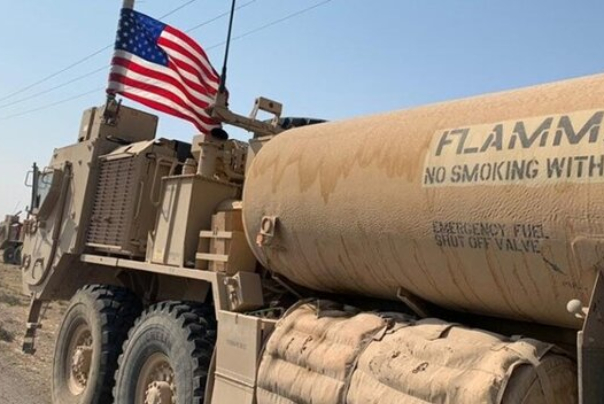
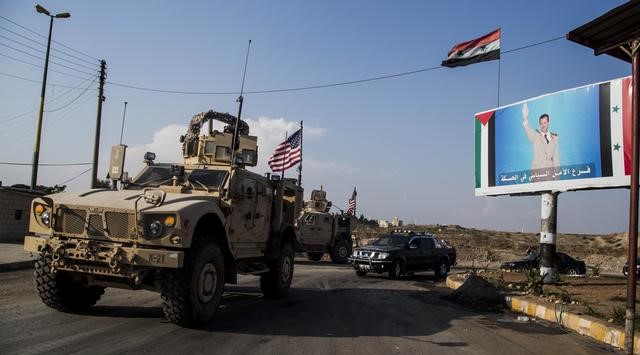
Currently, all the fields seized by the SDF have US special forces to protect them, as part of former US President Donald Trump's strategy on the nature of his country's presence in Syria.
In this context, the Minister of Finance and Economy of the Syrian Interim Government, Dr. Abdel Hakim al-Masry said: “Trump had given a license to the Delta Crescent Energy Company to carry out maintenance operations for oil wells in the SDF areas, after which the oil is regularly exported abroad, but when Joe Biden took office, he revoked the license and took out the company.”
The minister added to Al-Estiklal, that “currently there is talk of preparing the United States to issue a decision excluding areas outside the control of the Syrian regime from the consequences of Caesar's Act.”
“When an official decision is issued in this matter from Washington, oil exploration and extraction companies can enter the SDF areas, which means an increase in production to cover the liberated areas as well, especially since oil production before the conflict was 387,000 barrels per day, as announced by the regime at the time,” Dr. al-Masry explained.
The losses of the oil sector in Syria since 2011 are estimated at $91.5 billion, in addition to the cost of shipments that come from Iran from time to time, according to the statistics of the Ministry of Oil in the Assad regime’s government for the year 2021.
Following Western sanctions imposed on Russia after its invasion of Ukraine, the International Energy Agency on March 16, 2022, expressed its fears of a shock to global oil supplies, because Moscow is the world's largest exporter, with eight million barrels per day of crude oil and refined products.
It is noteworthy that many oil companies, brokers and banks have moved away from Russia, noting that three million barrels per day of Russian oil may not be available as of April 2022, a quantity that could rise in the event of the intensification of sanctions.
Oil In Numbers
In this context, the Syrian economic analyst Younis al-Karim explained to Al-Estiklal that “the SDF's oil production currently ranges between 80-120,000 barrels per day, and this is according to the policy of favoritism granted by the latter to small contractors to extract oil by primitive methods, as well as according to the situation of local refineries called primitive burners.”
“Currently oil production in the SDF areas can reach 700-800 thousand barrels per day if the wells in their areas of control are restored by international companies or other countries with American approval,” Mr. al-Karim noted.
“The Rmelan fields in the countryside of Hasakah, which are controlled by the SDF, produce about 60,000 barrels per day, and the SDF sells this production as follows: 40 tankers to Iraq, and the same to the Kurdistan region of Iraq,” he pointed out.
While the Katerji Group, which supplies the Syrian regime with oil, receives 25 tankers, 150 tankers for local traders who own primitive burners that turn it into gasoline and diesel for local consumption, and 100 tankers for Autonomous Administration refineries.
“There is talk about raising production to 500,000 barrels per day in the SDF areas, with US approval, within three years, and this is an acceptable and plausible number, given that the real daily production that was not declared by the Assad regime before 2011 was between 600-750 thousand barrels per day,” Mr. al-Karim explained.
The Syrian Network for Human Rights estimates that the SDF sells a barrel of crude oil to the Syrian regime at approximately $30, i.e. a daily revenue of $420,000, and a monthly return of $12,600,000.
About how the United States and other parties can benefit from raising oil production in the SDF areas, Mr. al-Karim stressed that “Washington can secure financial resources for the SDF, in light of the presence of American currents calling for maintaining the support provided to them as an ally in Syria, and this does not rule out making recent explorations of oil blocks in northeastern Syria to increase production.”
“Katerji Group, which is sanctioned by the United States, is among the beneficiaries, although this constitutes a violation of the sanctions, but Washington is currently turning a blind eye to the SDF's sale of oil to this company, which is affiliated with Assad,” Mr. al-Karim indicated.
New Agreements
Economic analyst Younis al-Karim stressed that “the SDF has signed agreements with the French, German and American government on investing some oil facilities, with the aim of preventing the Turks from bombing these areas, and preventing the Russians from expanding further.”
He believed that “the increase in oil production may push the Turks to sit at the same table with the SDF, which means restructuring the Syrian opposition, especially since Ankara’s interests are for the SDF’s oil to pass through its lands or the areas it controls in Syria, which means easing the financial burden on Turkiye as a result of managing the regions of northern Syria.”
“In addition to the increase in oil production, Washington will push to issue laws regulating work in northeastern Syria and the Syrian opposition areas through exceptions from Caesar's Act, which will push the Syrian political file to move, put pressure on Assad, and freeze the Russian role,” Mr. al-Karim said.
The Syrian researcher added by saying: “The Syrian regime's loss of the oil card increases its public budget deficit, which pushes it to search for solutions, foremost of which is the arrival of oil from Iraq and Iran, and this means a conflict with Russia.”
Here, the important question arises, how will the American scenario overcome the obstacle of needing dozens of wells for rehabilitation in northeastern Syria? Mr. al-Karim answers that by saying: “There were previous contracts for oil extraction in eastern Syria between international oil companies and the Syrian regime before 2011.”
However, after the Syrian revolution, these companies considered that the Syrian regime had violated the terms, and the contract become null and void for failing to protect the fields, causing them losses of millions of dollars, which means that new contracts can be activated with these companies or other companies that SDF signed initial contracts with.
Mr. al-Karim concluded by saying: “Reaching the signing of the nuclear agreement with Iran will restore hopes of activating the Friendship Pipeline Agreement to transport and export Iranian gas through Iraq, then Syria, and from there to Turkiye and then Europe. This time, it will not go to the port of Latakia within Assad's areas, but it may start from the SDF areas to Turkiye, and this is in the interest of all parties now.”
Political Investment
Many observers agree that Washington's retention of the oil card in its favor stems from its impact on the political negotiation process with Russia over an acceptable political outcome in Syria.
That is why all Moscow’s attempts during the previous years to change the map of control in northeastern Syria failed, in favor of the Syrian regime.
This is what the researcher at the Omran Center for Strategic Studies, Muhammad al-Abdullah, refers to when he says to Al-Estiklal, that “America's adherence to the Syrian oil card in the SDF-controlled areas is a political investment that gives it control over preventing access to any political solution that does not agree with its agendas in the future of Syria.”
Mr. al-Abdullah stressed that “Washington seeks to maintain the status quo so that the current oil revenues are used to support its ally, the SDF, and to finance the cost of its forces’ presence in these areas, in addition to denying Russia and Iran access to oil fields and exploiting them economically, and keeping the Assad regime in a state of economic siege linked to international sanctions that prevent oil derivatives from reaching it.”
On the other hand, however, “some data circulating about America’s intention to lift international sanctions on the areas of northeastern Syria, with the aim of starting an early recovery process, which may open the door for the return of some international oil companies and guarantors, and it allows for production, sale and marketing through legitimate international channels,” according to the researcher.
Mr. al-Abdullah concluded by saying: “In addition to a proposal for the possibility of financing this process from the achieved oil revenues and not relying on international financing only, the success of this step also depends largely on the required regional and international consensus.”