Tunisia’s Saied Regime Is Deepening the Health Care Crisis: What’s Behind It?
“Saied lies to Tunisians to the point of making his lies sound like the truth.”
Tunisia’s social and political landscape is being gripped by mounting anger over a string of measures by coup leader Kais Saied’s regime, including policies affecting the medical and pharmaceutical sectors and public health.
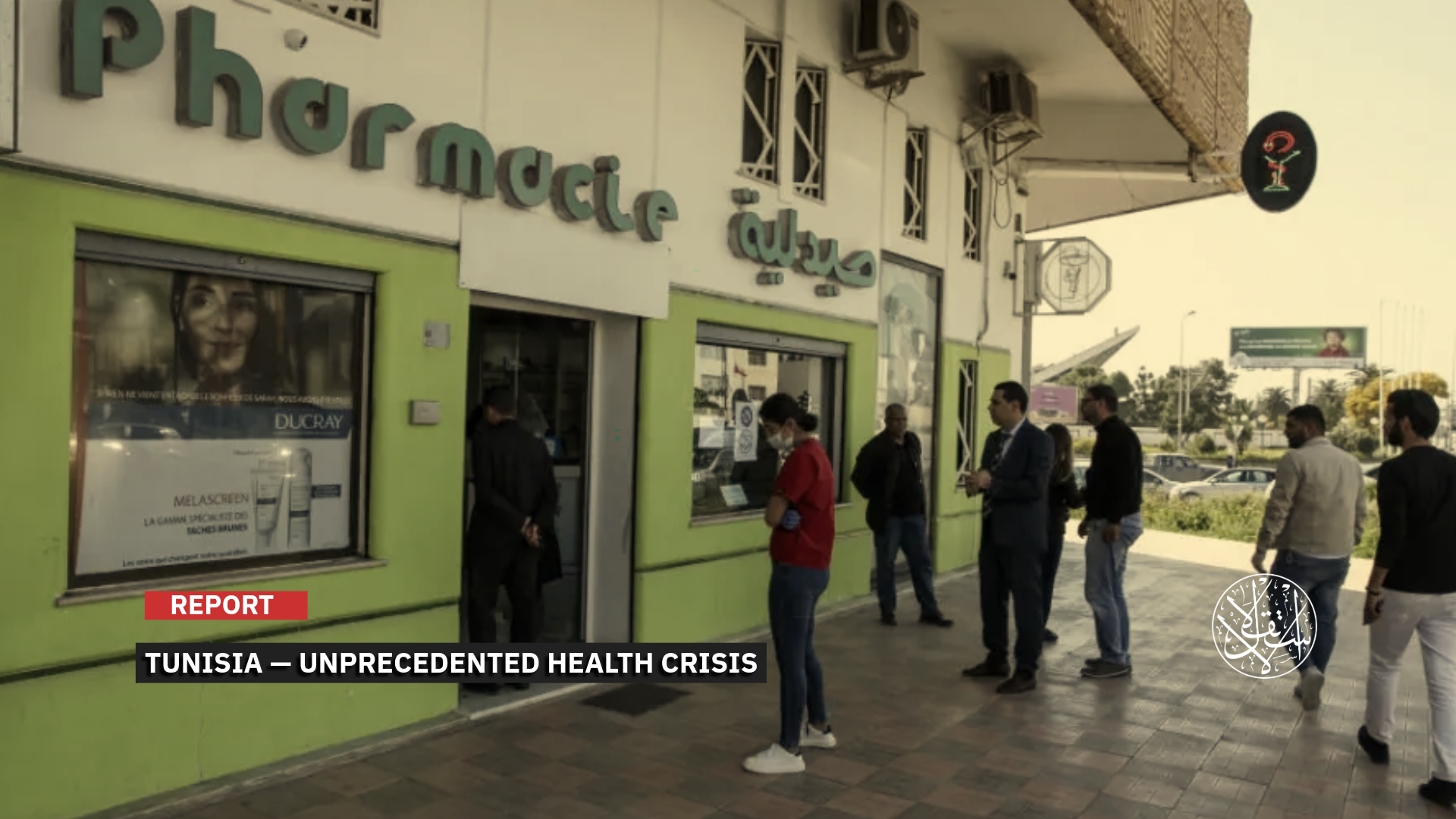
The latest move is a sharp increase in the prices of hundreds of medicines. The Central Pharmacy of Tunisia, which operates under the Ministry of Health, said the increases affected 300 medicines, while observers put the figure at more than 500. The new prices began taking effect in early August 2026.
Legitimate Questions
Several watchdog and governance organizations have questioned the reasoning behind the decision and its real purpose, including Alert, an organization focused on transparency.
In a statement posted on Facebook on August 2, the group asked, “How did the state abandon its patients overnight?” It condemned price increases of up to fivefold for some essential medicines relied on daily by thousands of patients across Tunisia.
Alert said Tunisia’s drug pricing system had been built since the 1980s around a model of full administrative control, with the state, through the Central Pharmacy, holding a monopoly over the import and distribution of medicines at uniform prices nationwide.
For decades, the organization said, the model provided a rare degree of price equity, but it was built on the assumption that the dinar would remain stable and import costs would not rise sharply. Neither assumption held.
The result, Alert said, is clear: the Central Pharmacy’s cost of purchasing medicines rose from 30 million dinars in 2021 to 300 million dinars in 2024, an increase of more than 900 percent in just three years, while unpaid debts owed by hospitals and social security funds accumulated to more than 1.26 billion dinars.
The organization nevertheless acknowledged that “ending subsidies for these medicines was a necessary step to save the Central Pharmacy from collapse.” But it said the concern was not only the nature of the medicines affected, many of them vital drugs with no alternatives for patients with heart disease, thyroid disorders, and other chronic conditions, but also the way the decision was made.
The organization said the price increases were made from a position of weakness, under unprecedented pressure on the state’s finances, particularly its foreign currency reserves, which have become so scarce that Tunisia can no longer afford to shoulder the cost of importing medicines at frozen prices.
It called for “full transparency” over the decision and urged the authorities to develop a clear plan for comprehensive reform of the drug pricing system, including regular price reviews, meaningful reform of the Central Pharmacy’s financing, and tying any future reforms to a wage policy that protects Tunisians’ purchasing power.

Parliamentary Reactions
Several current and former lawmakers have weighed in on the latest price increases, including lawmaker Taher Ben Mansour, who said in a Facebook post on August 2 that the higher prices were linked to efforts to rescue the Central Pharmacy from its financial crisis.
Ben Mansour said the Central Pharmacy’s prolonged crisis had damaged its relationship with private pharmacies, leaving them with mounting unpaid bills amid a broader structural crisis affecting Tunisia’s social security funds.
“Does the government really believe that repeated increases in medicine prices can pull it out of this crisis? Must citizens always pay, through their health and their lives, for misguided choices and policies? And how long will these structural and financial crises continue to plague so many public institutions and state-owned enterprises?” he asked.
Lawmakers also voiced opposition to the increases. In a Facebook post on August 3, parliamentarian Mohamed Ali said, “Do not make patients pay the price for the failure to reform the drug system.”
Ali said the new increases, affecting a large number of medicines, came at a particularly difficult economic and social moment, as mounting pressure on household purchasing power has made any rise in health care costs a legitimate source of concern.
“The patient cannot be the variable governments turn to whenever a crisis deepens. Medicine is not a commodity that people can simply postpone buying or do without; it is a necessity for thousands, particularly those with chronic illnesses, who cannot afford to choose between treatment and other basic needs,” he stressed.
Ali called for “a comprehensive national plan to reform the drug system, address the roots of the crisis, and ensure its sustainability,” as well as protection for patients, especially those with chronic illnesses and low-income households, from financial burdens that could prevent them from continuing treatment.
He also called for “a review of the Central Pharmacy’s financing system and settlement of its outstanding debts to ensure a regular supply of medicines, along with reform of the health insurance system and stronger capacity to cover medical costs.”
The lawmaker pledged to “question the government about the basis for the decision, whether it assessed its social impact, and what measures it plans to take to protect people with chronic illnesses and low income households,” while calling for a national debate on reforming the drug system that brings together all stakeholders and puts the public interest first.
In a statement on August 8, parliamentarian Bouthaina al-Ghanmi said raising medicine prices was not a solution to Tunisia’s drug system crisis, warning that the increases would further erode citizens’ purchasing power.
Al-Ghanmi called for a review and restructuring of public policy in the pharmaceutical sector, along with stronger support for Tunisia’s Central Pharmacy and greater efforts to promote local drug manufacturing.
She said addressing the medicine crisis requires comprehensive reform and tackling the underlying causes of the system’s failures to ensure a reliable supply of medicines and shield citizens from additional financial burdens.
Former lawmaker Majdi Boudhina also condemned the sharp price increases, saying the cost of some medicines had risen fivefold.
“The welfare state used to distribute poverty fairly; now it has added illness to the mix. Today, poverty and illness are shared equally among the poor and middle classes, while the wealthy have health insurance and pay nothing when they get sick,” he added sarcastically.

Rights Groups Raise Alarm
On the rights front, the Haq Movement (the Right Movement) joined the growing criticism of the price increases, saying it was deeply concerned by the continued rise in medicine prices at a time when Tunisians’ purchasing power is declining, leaving thousands of patients facing a harsh choice: give up their treatment or give up basic necessities.
In a statement on August 8, the movement called for health care and access to medicine to be treated as a national and humanitarian issue that cannot be held hostage to the system’s budget constraints. Citizens’ dignity, it said, should not be measured by speeches, promises, and slogans, but by the state’s ability to provide treatment and medicine as easily and affordably as possible.
It also stressed that medicine is not merely a commodity governed by market forces but a fundamental human right and a cornerstone of health and social security. Any policy that leaves people unable to afford their medicine or makes access to it dependent on their financial means, it said, requires urgent reconsideration.
“The authorities are now required to fully uphold their responsibility to protect the right to health care as a human and constitutional right linked to the right to life,” the movement said, particularly as the regime continues to promote the idea of a “social state” that, so far, has failed to become a tangible reality.
The movement called for greater support for Tunisia’s domestic pharmaceutical industry to strengthen drug security, reduce dependence on foreign supplies, and limit the impact of global market fluctuations. It also urged a national dialogue bringing together all stakeholders in the pharmaceutical sector to reform the drug system.
The Tunisian General Labor Union’s (UGTT) Social Protection and Informal Sector Department also called for an immediate review of the “unprecedented” price increases affecting a wide range of essential medicines, urging the regime to reverse the decisions to protect citizens’ purchasing power.
According to Almanber Ettounsi, on August 5, the UGTT said the increases represented “a direct violation of the constitutional right to health care and a new assault on citizens’ purchasing power, particularly that of vulnerable groups, workers, and low-income households.”
The UGTT called for the rapid integration of informal sector workers into a comprehensive and equitable social and health insurance system, while ensuring the National Health Insurance Fund receives the resources it needs and strengthening the Central Pharmacy to safeguard the country’s drug supply. It also called for greater support for Tunisia’s public and private pharmaceutical industries and expanded local production of generic medicines to lower costs and reduce dependence on foreign supplies.
The UGTT also urged the authorities to open serious and meaningful dialogue with national organizations and other stakeholders in the sector to pursue sustainable and equitable reforms without undermining the right to health, while moving toward a nationwide system of comprehensive social protection.
Political Reactions
Political parties have also joined the criticism. Hichem Ajbouni, secretary general of the Democratic Party, posted a sarcastic message on August 2 saying, “Congratulations on the price increases for a long and growing list of medicines.”
“Significant increases, with no explanation whatsoever from the Central Pharmacy about why they were imposed or what prompted them.”
The Popular Republican Union (UPR) also joined the criticism, with its political bureau warning of an unprecedented deterioration in Tunisia’s health sector and a mounting crisis that it said was threatening one of citizens’ most important constitutional rights: access to health care and treatment.
According to Ultra Tunisia on August 12, the UPR said the latest increases in medicine prices had compounded the hardship facing citizens, particularly low-income households, retirees, and people with chronic illnesses who are increasingly unable to afford treatment as purchasing power continues to decline.
The party said the crisis went beyond rising medicine prices, pointing to the continued deterioration of public health services, with public hospitals suffering from crumbling infrastructure, shortages of equipment, broken medical devices, long waiting times, overcrowding, and severe staff shortages.
As a result, thousands of Tunisians have been forced either to turn to the more expensive private sector or to give up treatment because they cannot afford it, the party said.
It also warned of an accelerating loss of Tunisia’s medical professionals. Citing figures in circulation, the party said nearly 1,600 of the roughly 1,900 doctors who graduated last year chose to emigrate, while an average of about 1,200 doctors a year left the country between 2021 and 2025. If confirmed, it said, the figures point to a deep structural crisis that cannot be ignored.
The UPR also criticized the chronically weak public investment in health care, including the failure to build new hospitals, delays in maintaining and upgrading existing facilities, and insufficient investment in modern medical equipment and treatment technologies. All of this, it said, directly affects the quality of health services and citizens’ ability to receive care with dignity.
The party also pointed to the financial crisis facing Tunisia’s social security funds and the resulting difficulties in meeting their obligations. Delays by the National Health Insurance Fund in paying pharmacies, doctors, and health care institutions, it said, are deepening the sector’s problems, threatening the continuity of services and making it harder for insured patients to receive treatment and medicines on time.
Official Justification
As the controversy over the price increases intensified, local radio station Mosaique FM quoted an informed source at the Central Pharmacy as saying that the increases affected only a small number of medicines whose prices had not been adjusted for years, rejecting reports of excessive price hikes.
The source said the review covered a limited number of imported medicines and that the increases amounted to only a few dinars. The adjustments, the source said, reflected higher purchase and import costs and were intended to ensure continued availability and prevent disruptions to the domestic supply.
But Tunisian political and rights activist Ziad Elhechmi said the increases could only be described as “absurd,” rather than as reasonable adjustments linked to inflation or rising international prices, such as 10 or 20 percent.
Speaking to Al-Estiklal, he said increases ranging from 180 percent to 500 percent were “completely unreasonable.”
He also criticized local media, particularly state outlets, for sidelining the medicine price increases and shortages, despite the issue being a matter of life and death, while no official had come forward to explain to the public what was happening.
Elhechmi said the Central Pharmacy’s main problem was its inability to collect money owed by social security funds and other institutions, leaving the state with more than 1.2 billion Tunisian dinars in outstanding debts, a staggering figure that raises questions about where the money went and who benefited from it.
The political and rights activist argued that subsidies on medicines and many basic food and consumer goods had historically been necessary, from the era of Habib Bourguiba through Zine el-Abidine Ben Ali and the governments that followed the revolution, because of low state salaries. Subsidies, he said, helped maintain a balance between the cost of goods and services and household incomes.
Today, he added, subsidies on oil, bread, coffee, sugar, and other essentials have been removed without providing an alternative, leaving Tunisians facing a double crisis: many basic goods are unavailable, and when they can be found, they are often sold at extremely high prices.
On medicine prices specifically, Elhechmi claimed that figures aligned with coup leader Kais Saied had openly acknowledged that the increases were part of measures imposed by the International Monetary Fund, measures previous governments had resisted but that Saied’s government was now accepting because, he said, the country was effectively bankrupt.
“The biggest disaster is that some of these loans were taken at interest rates as high as 13 percent,” he said, noting that during the government of Hichem Mechichi, lawmakers had protested in parliament when a loan was taken at an interest rate of 1.5 percent. He said this showed how severely Tunisia’s credit standing had deteriorated in the eyes of international financial institutions.
“Saied lies to Tunisians to the point of making his lies sound like the truth. He talks about relying on ourselves, then takes out loans, only to take another loan to repay the previous ones. This is a complete farce in the management of the state and public affairs.”