Trump-XI Deal: A New Phase in Relations or Just a Temporary Maneuver to Buy Time?
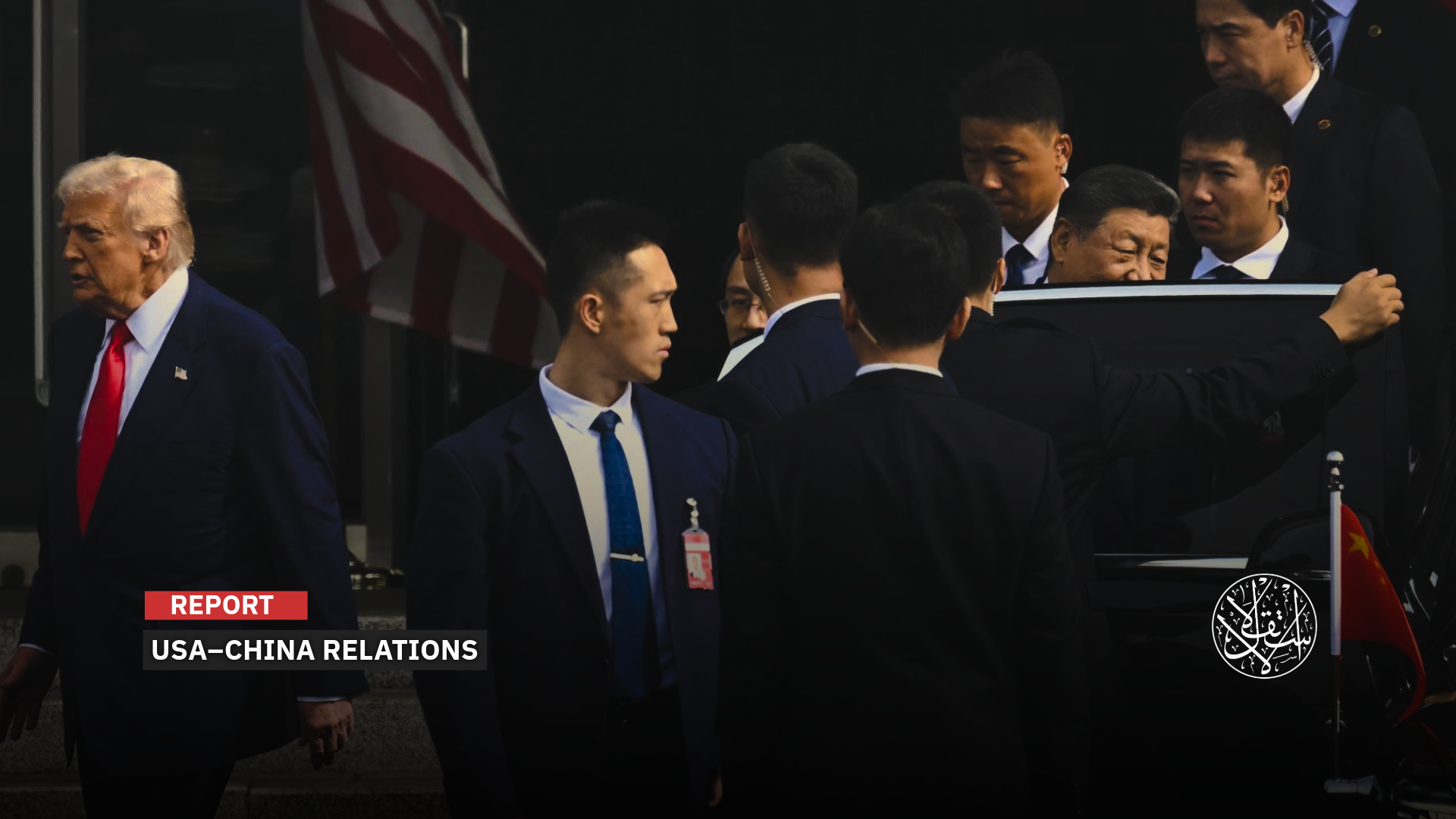
“Relations between Beijing and Washington have been strained in recent months.”
US President Donald Trump and Chinese President Xi Jinping recently reached a trade truce of at least one year between the world's two largest economies.
Trump's trade objectives overshadowed security issues, indicating that he and his Chinese counterpart had agreed to work together to end the war in Ukraine, while the two leaders did not discuss Taiwan's security, Russian oil, or the TikTok issue.
However, Trump unleashed fears of a return to the military arms race after announcing that the U.S. would immediately resume nuclear testing after more than three decades of abating.
Nevertheless, analysts questioned how long this thaw in US-China relations would last, given the two countries' strong desire to achieve economic and geopolitical gains at each other's expense.
Trade Confrontation
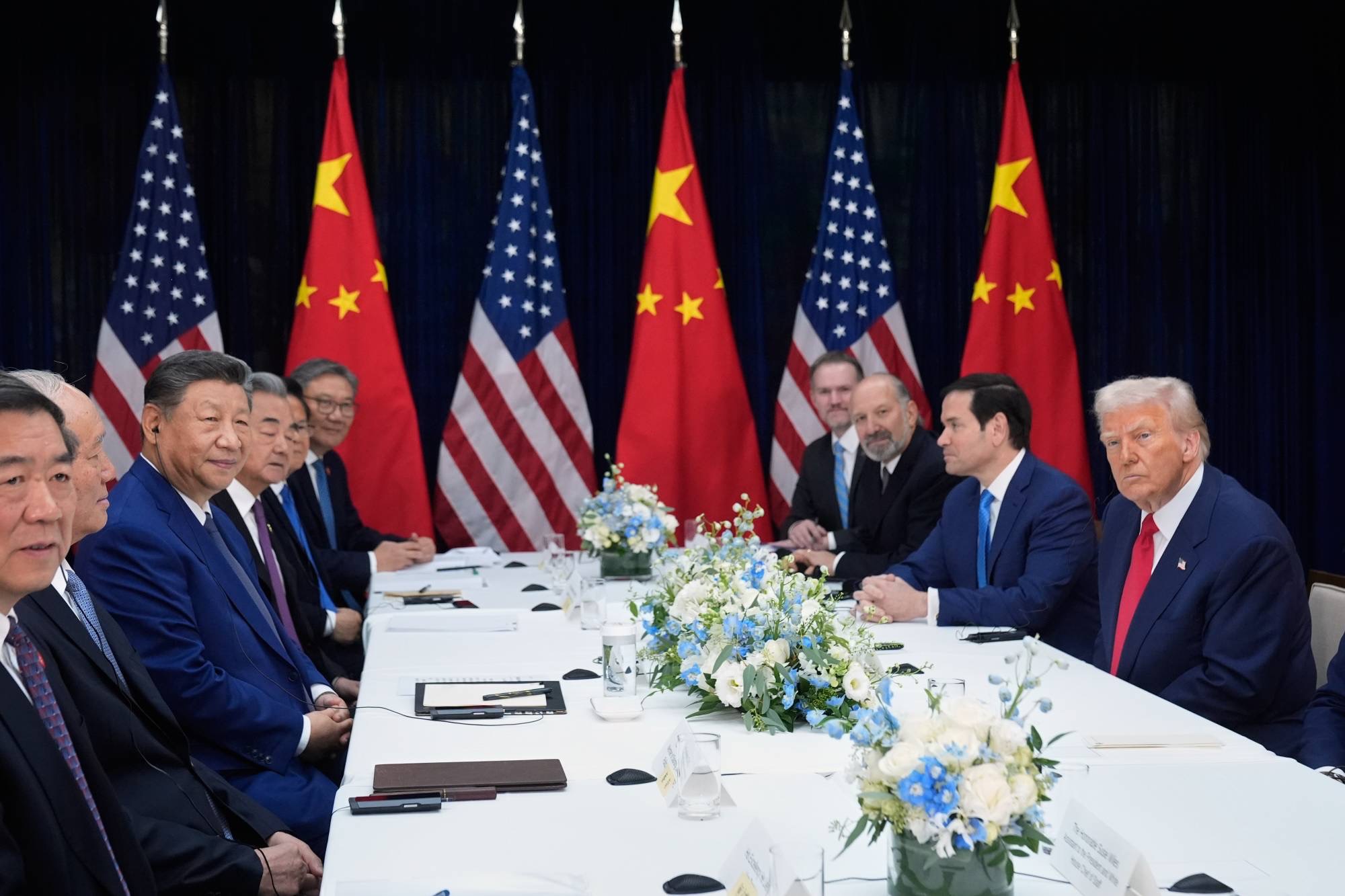
In their first meeting in six years, US President Donald Trump and Chinese President Xi Jinping reached a deal that temporarily averted a full-blown trade war during their summit in Busan, South Korea, on October 30.
The agreement allows Trump to complete his term, or part of it, without risking a trade war that would burden the US economy. This is quite different from the traditional, lasting treaties usually concluded between superpowers.
The meeting concluded with a deal to extend the temporary trade truce for another year, as well as China's suspension of export restrictions to the U.S., effective October 9.
It also stipulated that Beijing would lift restrictions on shipping to US vessels once Washington takes a similar step, significantly easing the trade confrontation and retaliatory measures between the two countries.
Chinese imports will now be subject to a 47% tariff, a 10% point decrease from the average rate before the meeting.
In return, Xi agreed to resume soybean purchases and postpone restrictions on rare earth minerals for a year, granting the U.S. an exemption from controls that could jeopardize supply chains for mobile phones, fighter jets, and numerous other products.
Beijing will also expand cooperation to stem the flow of chemicals used in fentanyl precursors to the U.S.
In the early weeks of his administration, Trump justified the tariffs by accusing Beijing of facilitating the global trade in fentanyl and the chemicals used to manufacture it.
But some key issues facing the two countries remain unresolved.
Trump and his top trade officials reported that the discussion included semiconductor sales, but the next step would be for Beijing to negotiate directly with Nvidia, the largest U.S. chipmaker.
U.S. Trade Representative Jamieson Greer said, “Nvidia will talk to China and see what’s possible,” adding that Xi and Trump did not discuss the company’s advanced Blackwell chips.
Trump did not say whether he and Xi had made progress on a deal to sell TikTok to a consortium composed mostly of U.S. investors, an issue he had previously said would be on the summit’s agenda.
Major Deal
Trade relations between China and the U.S. have escalated this month after Beijing imposed strict restrictions on exports of rare earth minerals and related technologies to international markets, prompting Trump to raise tariffs on Chinese imports to 100%.
However, the past few days have witnessed a de-escalation in rhetoric and increased talk of a possible new deal to restore relations to their pre-escalation state.
The likelihood of a further reduction in tensions increased after the White House confirmed that Trump would meet with his Chinese counterpart, Xi Jinping, in South Korea, as part of his Asian tour, which began with the opening of the ASEAN summit in Kuala Lumpur, followed by visits to Japan and South Korea.
The official Chinese news agency Xinhua reported that President Xi Jinping stated during his meeting with Trump that China and the U.S. should avoid being drawn into a vicious cycle of actions and counter-actions.
“US-China relations still maintain a degree of overall stability, emphasizing that trade relations should be the cornerstone of those relations,” Xi added.
He expressed his hope that both sides would focus on long-term cooperation rather than on points of contention and conflict, noting that the damage from confrontation extends beyond the two countries to the entire world.
In turn, Trump, after leaving Busan, described the meeting as great, announcing that tariffs on Chinese imports would be reduced from 57% to 47% and that soybean purchases would resume immediately.
He confirmed that issues related to rare earth minerals, whose production and processing are dominated by China, had been resolved.
Trump also stated that China had agreed to begin purchasing energy resources from the U.S., starting with oil and gas from Alaska, adding that Energy Secretary Chris Wright, Interior Secretary Doug Burgum, and the administration's energy team would soon meet with their Chinese counterparts to discuss a potential deal.
Chinese media outlets, commenting on the summit between Presidents Trump and Xi, stated that relations between the world's two largest economies are in dire need of stability, noting that this was not the first time a face-to-face meeting between the two leaders was necessary.
They observed that the meeting curbed the escalating trade and political tensions and achieved breakthroughs on some thorny issues.
In this regard, the South China Morning Post stated that the summit was a positive outcome for China and met realistic expectations, given the deep and structural bilateral differences.
It pointed out that Trump mentioned his proposed visit to Beijing in April, considering this highly significant.
It linked the continuation of the deal to the political will on both sides to maintain stability until the next meeting between the two leaders.
For its part, the state-owned Global Times stated that the summit was a milestone in US-China relations and would contribute to stabilizing global sentiment and trade expectations, thus easing pressure on global demand and supply chains.

Nuclear Tests
Despite trade issues dominating Trump's Asian tour, which included Malaysia, Japan, and South Korea, he preceded his meeting with Xi with a surprise announcement.
Hours before meeting Xi, Trump announced, in what was described as a surprise decision, via Truth Social that the U.S. would immediately resume nuclear weapons testing after a 33-year hiatus.
This decision also came hours after Russian President Vladimir Putin announced that Russia had tested a highly capable Poseidon nuclear torpedo underwater.
Last week, Moscow also conducted other exercises, including a test of the Burevestnik nuclear-powered missile, which is capable of carrying nuclear warheads.
These developments reflect a new escalation in tensions between the major nuclear powers, amid the Ukrainian war on one hand, and escalating disputes over North Korea's nuclear program, as well as the trade war and restrictions on rare earth exports, on the other.
Trump justified his decision to immediately begin nuclear weapons testing by citing similar tests being conducted by other countries, arguing that a reciprocal response was inevitable.
He wrote in a post on his Truth Social platform: “Russia is second, China is third by a long way, but will be level in five years.”
Reuters reported that Trump's remarks did not clarify whether he was referring to nuclear explosion tests to be conducted by the National Nuclear Safety and Security Administration, or to missile tests capable of carrying nuclear warheads.
These developments come amid escalating tensions between Washington and Moscow, particularly after the U.S. imposed sanctions on Russian oil and the Kremlin warned of a complete breakdown in relations if the Trump administration decides to supply Ukraine with long-range Tomahawk missiles.
On another front, Reuters concluded that the US decision to resume nuclear weapons testing cannot be separated from the steady increase in China's nuclear arsenal in recent years.
Statistics from the Center for Strategic and International Studies in Washington indicate that China has nearly doubled the size of its nuclear arsenal, now estimated at around 600 nuclear weapons in 2025, compared to only 300 in 2020. US estimates predict that Beijing will possess more than 1,000 nuclear weapons by 2030.
It was noted that the massive Chinese military parade held last September unveiled five new nuclear capabilities capable of reaching all of the United States.
The U.S. nuclear arsenal is estimated at 5,225 warheads, according to the Arms Control Association, while Russia possesses 5,580.
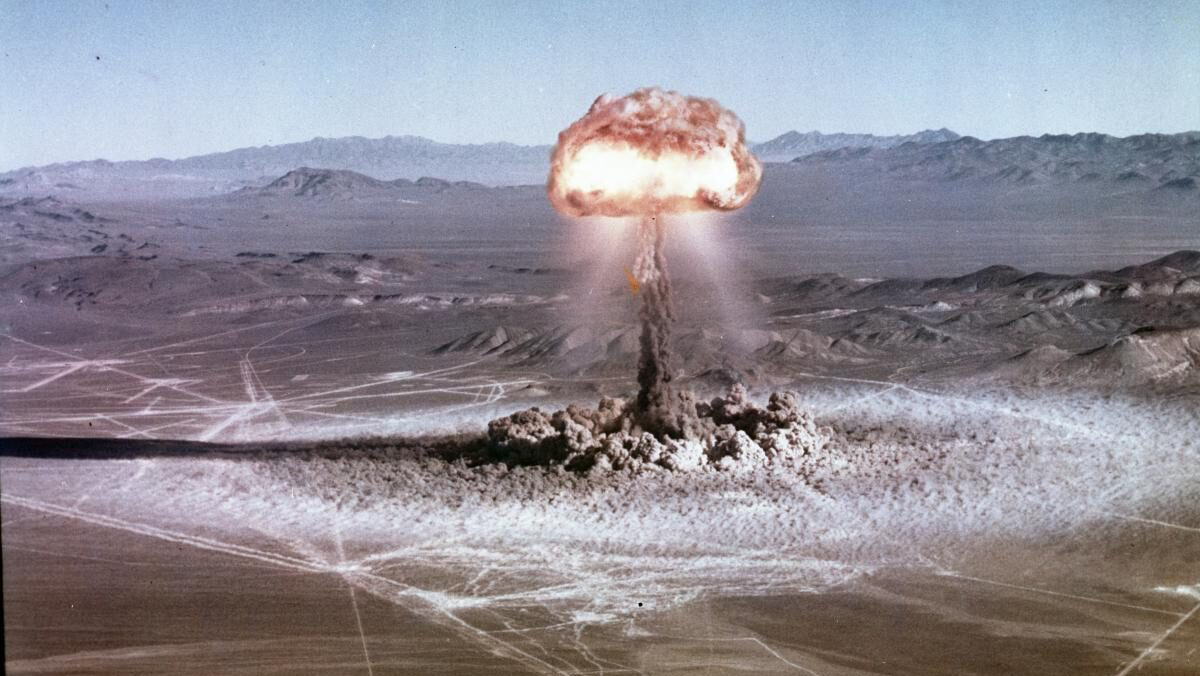
Democrats on Capitol Hill warned Thursday about the dangerous radioactive impacts of resuming testing, while some Republicans cheered the president for seeking to solidify his leverage with adversaries.
Daryl Kimball, director of the Arms Control Association, said in a post on the X platform that Trump's announcement could ignite a new nuclear testing race by U.S. adversaries and destroy the Nuclear Non-Proliferation Treaty.
It’s unclear whether Trump plans to resume explosive nuclear testing or to simply test the missiles that are capable of carrying nuclear warheads.