The Headscarf at the Center of the Presidential Race in France: A Setback for Le Pen and an Opportunity for Macron
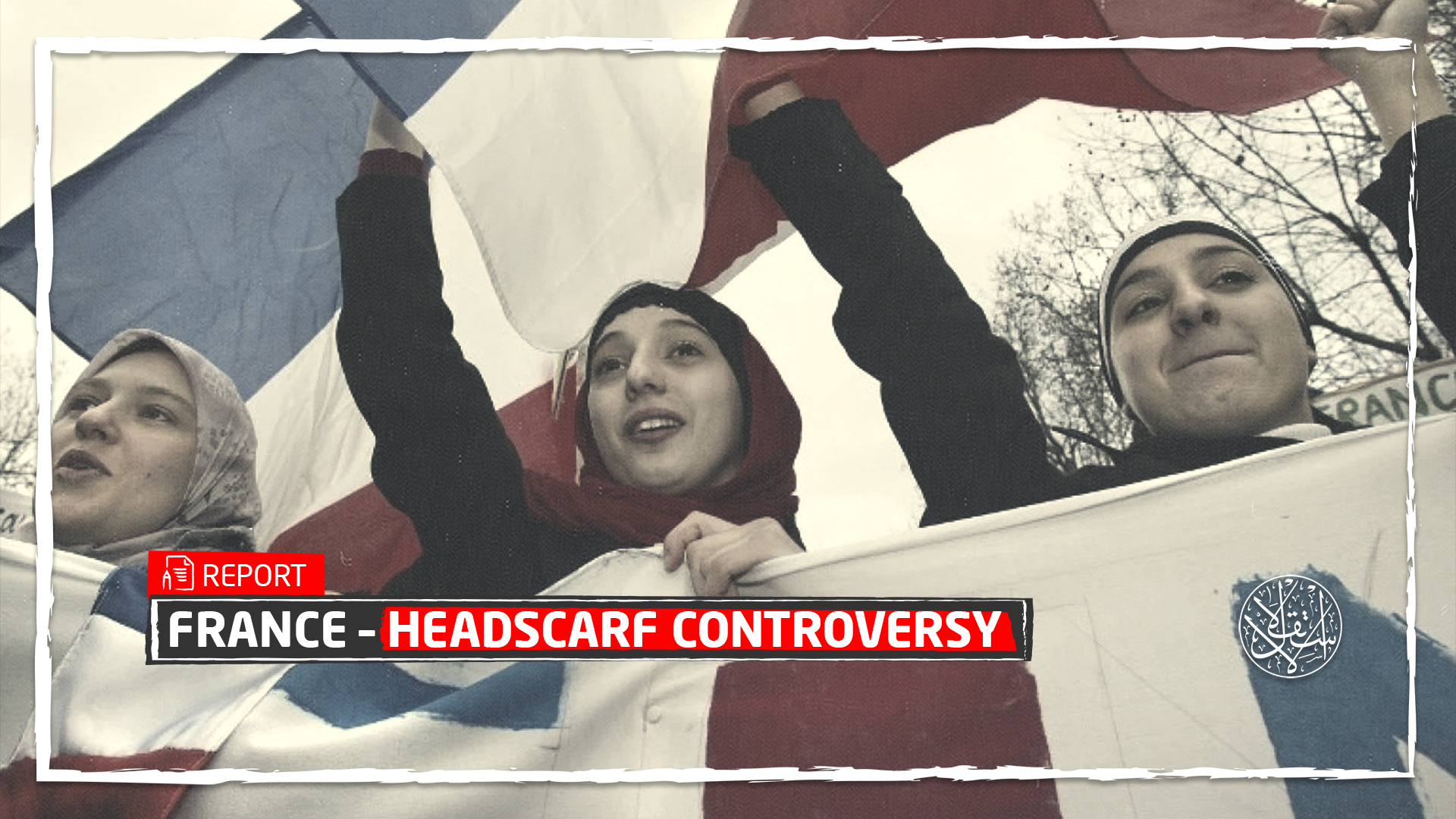
In the most secular European country, the Islamic headscarf had a remarkable role in the struggle of the French left and right for the presidency in the Elysee Palace.
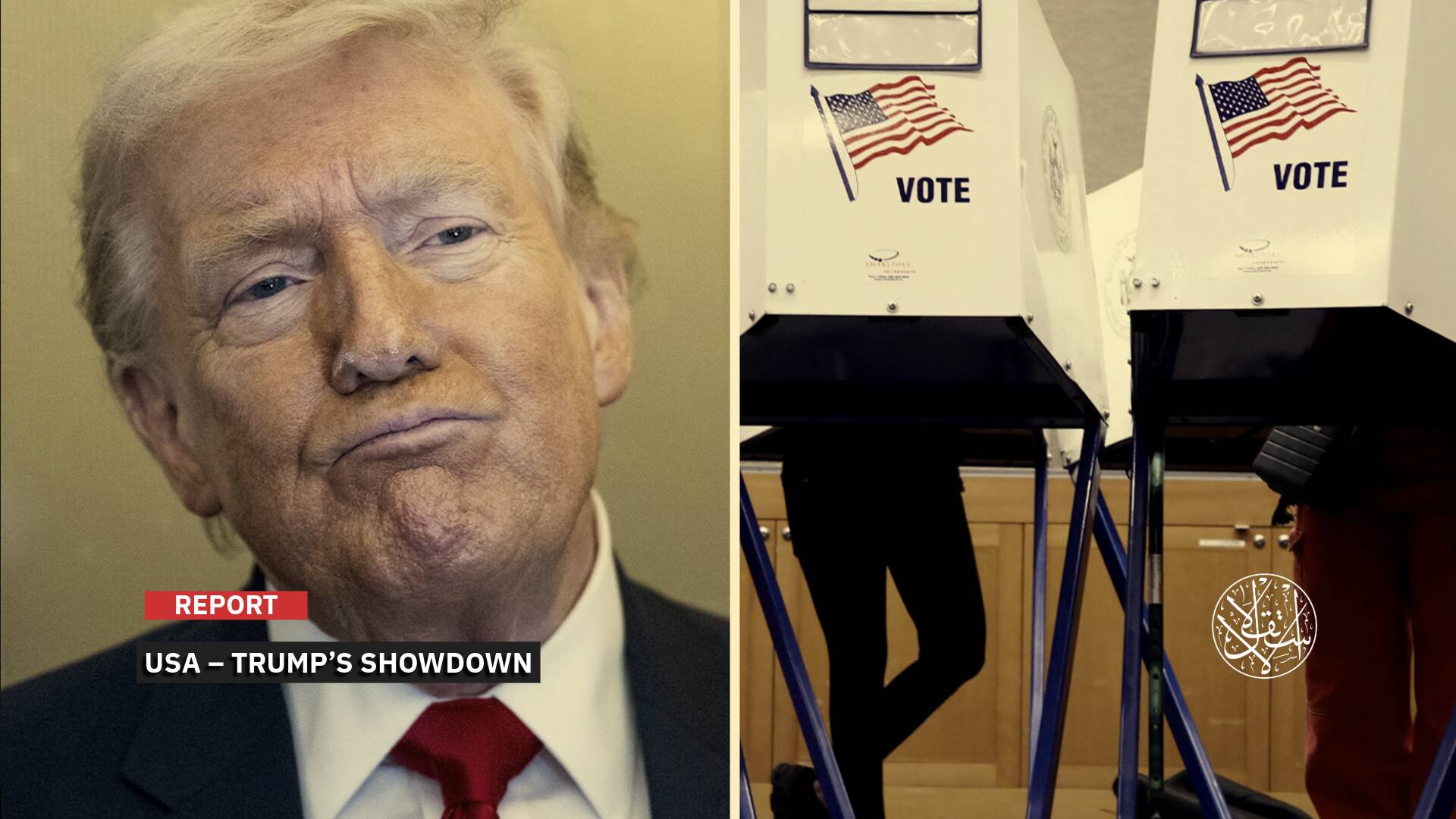
The second round of elections ended on April 24, 2022, with French President Emmanuel Macron winning a new term, at the expense of far-right candidate Marine Le Pen.
Amid international welcome, the French Ministry of the Interior announced on April 25 that Macron officially won a second term, with 58.55%, compared to 41.45% for Le Pen, who admitted her defeat.
Muslim votes played a decisive role in favor of Macron, as about 85% of them voted for him, according to opinion polls.
Hijab Controversy
The issue of the headscarf ban remained strongly present during the electoral campaigns of the French candidates, especially the Jewish loser in the first round, Eric Zemmour, but it escalated in the conflict between Macron and Le Pen, in the second round.
Islam is the second religion in France, and the Muslims constitute the second-largest community, amounting to 5-6 million Muslims, representing between 9-10% of the population of about 67 million people, according to several statistics, and a report published by Agence France-Presse on April 16, 2022.
However, with the beginning of the new millennium, Paris was engaged in cracking down on Muslims and the veil. In 2005, it banned female students from wearing it in the classroom, to continue its laws on April 11, 2011, banning the veil in public places, and later banning the veil in state institutions.
On April 16, 2021, the French Senate voted on a bill prohibiting girls under 18 from wearing the headscarf in public places, in a decision that needs the approval of the House of Representatives.

In the midst of all this, the far-right candidate and leader of the National Rally Party, Le Pen, adopted the idea of banning the headscarf entirely in public places and forcing Muslim women to do so, in an effort to attract left-wing voters.
The French politician has a family history of anti-Muslim and anti-immigrant abuse, dating back to her father, founder of the right-wing National Front party, Jean-Marie Le Pen.
She confirms her strictness about the veil and said that if she is elected, she will impose a fine on its wearer in public places.
This is what Macron exploited to win the second round of the presidential elections and to obtain the votes of Muslim voters, who were angered by his policies for the past five years.
The veil remained the subject of the candidates' struggle throughout the second round, and in a television debate, on April 20, 2022, Le Pen announced her adherence to her hard-line positions against banning the Islamic veil in public places in France.
She claimed that she seeks to liberate women and curb what she described as "Islamic ideology," claiming that it is "a dress imposed by Islamists,” and that 85% of the French reject it.
At the same time, Le Pen tried to flirt with some Muslims who do not adhere to the issue of the veil, claiming during her live debate with Macron, that she "is not fighting Islam and that it is a religion that has its place in France."
A Chance for Macron
Le Pen's ideas represented an opportunity for Macron as Le Pen’s biggest rival, he accused her of creating a regime that equates Islam with terrorism emphasizing that her approach would lead to a "civil war."
Macron, despite his hostility to Muslim issues, especially the issue of the veil itself, mosques, and Islamic societies, and his adoption of cartoons of the Prophet of Islam throughout his first reign, which began on May 14, 2017, approached France's Muslims, vowing to them and the Jews, rejecting Le Pen's approach.
He addressed the two communities during the debate, saying: "With me, there will be no ban on the head covering, and other religious signs."
He confronted his opponent: "You are pushing millions of our citizens out of the public sphere," and said that would be a "law of ostracism."
On an election tour in Strasbourg (eastern France) on April 19, Macron was keen to use the issue of the veil, and asked a veiled woman if she was wearing it by force or by her decision? To answer that it is "completely my choice."
Marine Le Pen veut interdire le port du voile : "Vous allez créer la guerre civile si vous faites ça", répond Emmanuel Macron pic.twitter.com/bvAzhHgGhu
— franceinfo (@franceinfo) April 20, 2022
This is the response that Macron used to undermine Le Pen's plan against the headscarf, saying: "This is the best response to the nonsense I was hearing."
In exploiting Le Pen's extremist tendencies against the veil, he said on April 21, in front of a crowd in the northern coastal city of Havre: "No country in the world bans the veil in public places," asking the French: "Do you want to be the first to do so?"
On April 25, BFM TV reported, citing an IFOP poll for La Croix and Le Pèlerin websites, that "85 percent of Muslims voted for Macron, in the second round of the French presidential elections."
90% of Muslims (2.1 million voters) elected Macron in the 2017 elections that led him to the presidency of the country, based on his promise of a liberal society open to cultural pluralism, in exchange for the bigotry of his rivals such as Le Pen, but those promises evaporated, and France became more extremist and hostile to them.
The French website, Orient XX1, reported Muslims' fears of Macron's victory, and what it considered "a stormy wind blowing on the Muslims of France" so that they became second-class citizens.
Islamic Lobby
The use of the veil in the French presidential elections and the election of about 85% of Muslims to Macron opened a very important file and raised questions about the importance of forming an Islamic lobby in European and Western countries.
It also pointed to the importance of creating blocs that have weight and influence on the endless course of local, presidential, and legislative elections in the West.
It also stressed the importance of the role of those lobbies or blocs in preserving Muslims' gains and not retracting them in the face of the growing right-wing movement and the rise of Islamophobia in Europe.

In answering the question: The presence of the veil in the French presidential struggle, the Egyptian politician residing in Britain, Muhammad Sudan, said: “More than 4.5 million Muslims of multiple origins live in France, from North Africa, Asia, and others, and the country harbors the largest number of Jews in Europe, with more than 500 thousand.”
Speaking to Al-Estiklal, the Islamic leader with experience working in Europe stressed that "the majority of Jews control many arms of the French economy, and Muslims represent the core of industry and employment in France, and therefore these two poles cannot be crossed in any elections."
He added: "These two poles constitute a stumbling block for those who want to bother them or bypass them in the elections, and any candidate must be aware of this and work to win their votes, not antagonize them. Therefore, whoever fought them in France would undoubtedly lose."
As for Muslims, Sudan explained that "their unofficial number is no less than 8 percent of the population of Europe, a number that can increase as a result of the continuous migration of wars and turmoil in many countries, especially Syria, Yemen, Iraq, Egypt, Somalia, Myanmar, China, and others."
On the possibility of creating an Islamic and Arab lobby in Europe, and the obstacles facing it, Sudan expressed his deep regret that this huge number was not able to do so.
He attributed the reason to "the Muslims of Europe being preoccupied with many matters beyond their control, and their confrontation with the phenomenon of Islamophobia, which is widespread in the continent after the extreme right ascended to power in many countries."
Sources
- French presidential election: Macron and Le Pen debate over ban on headscarves in public [Arabic]
- France: Banning the headscarf in public places is no longer a top priority for Le Pen to contain Islamic extremism [Arabic]
- The Elysee elections 2022: All roads lead to the persecution of French Muslims [Arabic]