‘Smuggled Sperm’; A New Palestinian Resistance to the Israeli Occupation Beyond Prison Bars
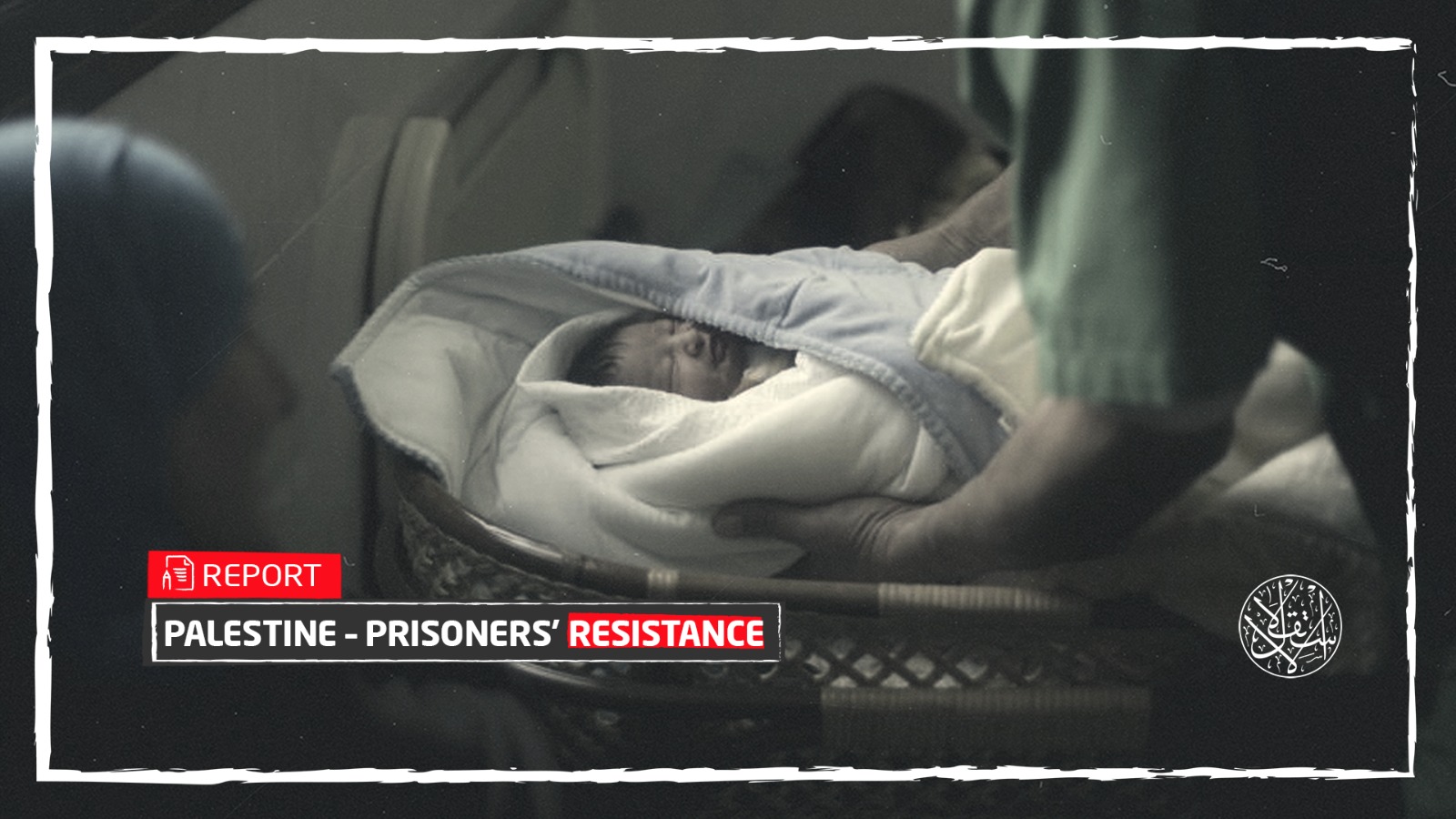
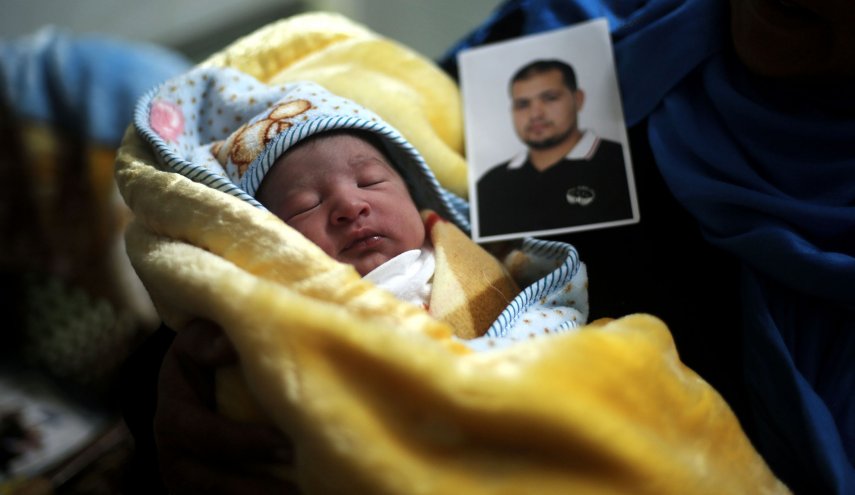
Once again, a Palestinian prisoner in the Israeli occupation prisons managed to overcome his chains and the high walls of his prison, he fulfilled his dream of seeing the light of a new child through “smuggled sperm," according to Palestinian media.
The Palestinians innovate by inventing methods to challenge the occupation, which seeks to destroy any connection between the prisoner and his family, one of these methods is smuggling his sperm and insemination with his wife under the supervision of a fertility center, through which the prisoner who spends his youth behind bars can have children.
Usually, this experience is experienced by prisoners who are subjected to harsh sentences such as life sentences or long years, with which the elderly captive comes out, or even that some of them die while in prison without achieving their dream of having children again, according to the testimonies of several Palestinians.
The innovative phenomenon, which was considered strange at first, later prompted the Palestinians to name the children of the prisoners’ sperm as “Ambassadors of Freedom”.

Challenge Message
On October 7, 2021, The Turkish Anadolu Agency said that “the wife of a Palestinian prisoner gave birth to twins through smuggled sperm from her husband, who is imprisoned in the Israeli occupation prisons.”
Ranan Hamed, the wife of the prisoner Islam Hamed (36 years), said that “her husband has been detained in Israeli prisons for six years, and is still being held without a verdict issued against him.”
“My husband had spent a total of 18 years in Israeli prisons, but at separate intervals,” Ranan Hamed added.
“Palestinian does not give up his right to have children, and if they hide the bodies of our husbands in prisons, we can challenge the occupation in any way, and the prison will not last,” she emphasized.
“The occupation sometimes allows children to visit their father after three years, and often they are not allowed because they do not recognize them,” she also pointed out.
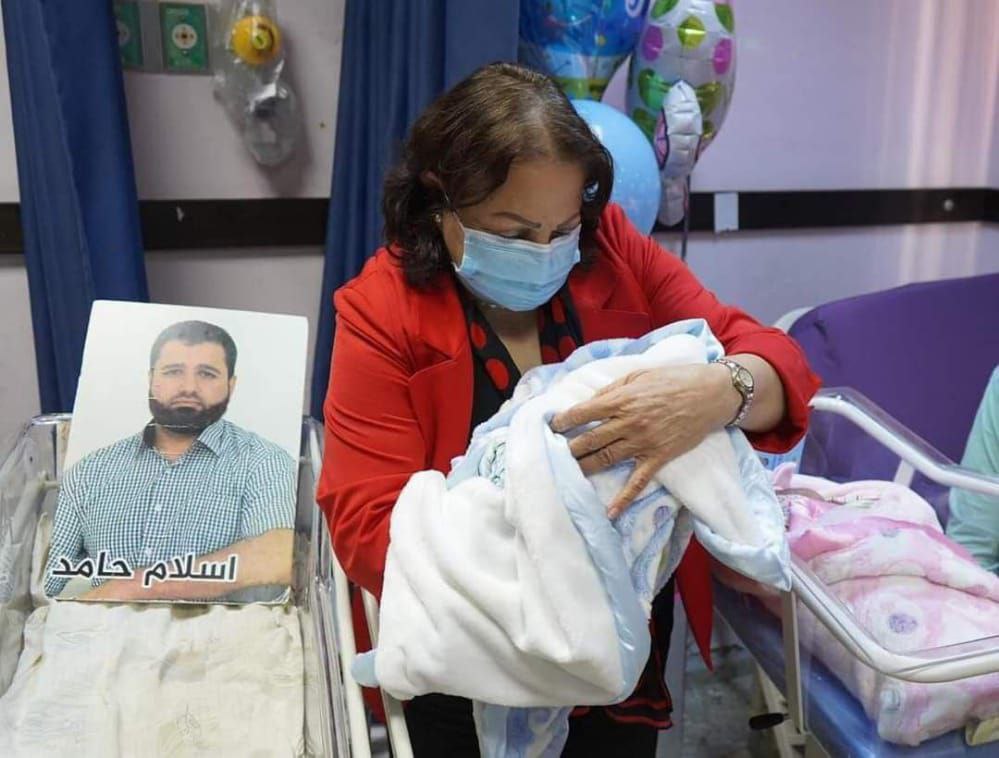
On the birth of the twins “Hamed," Amani Farahneh, media coordinator at the Palestinian Prisoners Club (non-governmental) told Anadolu Agency that “the number of freedom ambassadors reached 99 children.”
According to the Ministry of Prisoners' Affairs, the number of Palestinian prisoners in Israeli prisons is about 4,650, under long prison terms, 54 of them are sentenced to life imprisonment. Which deprives them of naturally forming a family, or of meeting their wives, as stipulated in international agreements, which led them to the idea of smuggling their sperm to fertilize an ovum from their wives; so that their offspring would not be interrupted.
In turn, Abbas (a 37-year-old Palestinian man from Gaza) sees in a statement to Al-
War on Sperm
The process of smuggling sperm from the Israeli occupation prisons is very complicated due to the security restrictions that have turned into a “war on sperm," as difficult as it is to smuggle a person out of prison, according to press reports.
The method in which the sperm is smuggled is not disclosed by the prisoners' families for fear of the Israelis discovering it.
According to doctors, smuggled sperm can live up to two days before being frozen for use in fertilization, sometimes the sperm does not arrive in good condition and fertilization fails the first time, the prisoner is forced to repeat the process of smuggling sperm once, two or three times.
Regarding the position of the Israeli occupation on the issue of smuggling, Saber Abu Karsh, an official in the Palestinian Ministry of Prisoners and Ex-Prisoners in Gaza, explained that “the occupation rejects any achievement of the prisoner, no matter how simple, so what if it is procreation?”
“The occupation followed racist measures against the children of prisoners who were born in this way by preventing them from visiting their parents and not recognizing them, and imposing penalties on fathers who escaped their sperm and transferring them to another prison, or imposing financial fines on them; However, this does not discourage the prisoner from continuing his human revolution and taking away his rights,” he added.
“The process of smuggling the sperm of Palestinian prisoners is a great achievement that cannot be ignored, it is the first of its kind in the world, it is also a great human revolution that they are waging against the arrogance of the occupation, several success stories have yielded, of which the Gaza Strip is a part,” the Palestinian official considered.
“The Israeli prison administration has not yet been able to reveal the methods used by prisoners to smuggle sperm, and the occupation’s knowledge of the case was only through the media, this prompted it to tighten security measures on prisoners,” Abu Karsh pointed out.
According to press reports, the Israeli occupation authorities refuse to issue identity cards to children of smuggled sperm, which prevents them from visiting their families in the occupation prisons or even traveling abroad.

Remarkable Success
The smuggled sperm method has witnessed remarkable success for the wives of a number of Palestinian prisoners, as a result of the Palestinians' hope to have children, even inside the Israeli occupation prisons.
Although the process of smuggling the sperm of Palestinian prisoners in Israeli prisons dates back to the nineties of the last century; But it was not successful in that period, at that time, it was among a small group of prisoners with high judgments, the attempts were timid among them.
The idea was also opposed by religious, political and social discussions at that time, until a fatwa was obtained in this regard, and political support from the Palestinian factions for it.
Where many religious scholars, such as: the former president of the International Union of Muslim Scholars, Dr. Yusuf Al-Qaradawi, and the former Mufti of Palestine and the preacher of Al-Aqsa Mosque, Dr. Ekrima Sabri, the late Hamid Al-Bitawi, head of the Palestine Scholars Association, issued fatwas permitting prisoners’ women to perform artificial insemination from their husbands’ sperm smuggled from Israeli prisons.
The first successful experiment of smuggling sperm from inside Israeli prisons was in 2011, at that time, the prisoner Ammar Al-Zaben (who was sentenced to life imprisonment 25 times) succeeded in smuggling sperm; in August 2012, his wife gave birth to his first child, Muhannad.
What prompted Ammar Al-Zeben and his wife to this decision was the killing of Ammar's only brother and the death of his father and mother, this means that his family’s offspring will be cut off if he does not have children.
The success of their experiment contributed to promoting the idea of procreation through smuggled sperm; after that, dozens of prisoners took this road, forming a family behind bars.
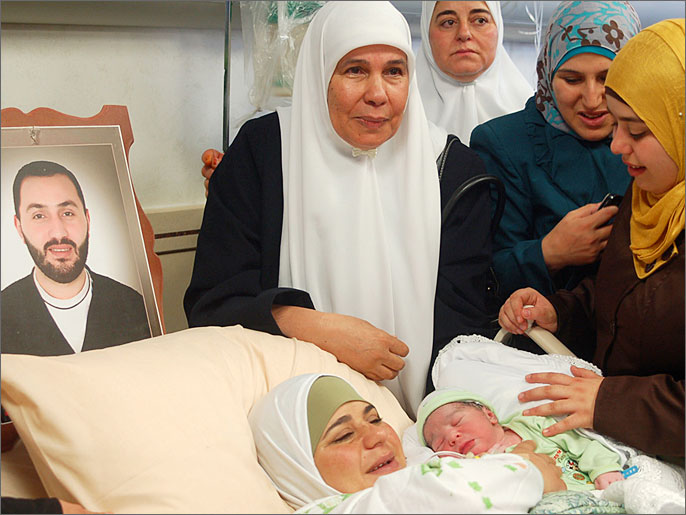
On their part, the prisoners' wives consider pregnancy through smuggled sperm as “a form of resistance to the occupation”; while the prisoners consider it “a picture of hope and victory over the despair that lives with them inside the prison walls, especially since they were able to evade the jailer so that part of them live outside this prison.”