Self-Delusion and Negligence: How the United States Paved the Way for the Civil War in Sudan

After Sudan was close to laying the foundations for a framework agreement that would end the political crisis the country has been experiencing since November 2021, the power struggle once again pushed the country into chaos and armed violence that could last for a long time.
Meanwhile, the United States, its allies, and the rest of the countries rushed to evacuate their citizens, which raised questions about the West’s abandonment of resolving the Sudanese crisis and getting rid of military rule when that was possible several years ago.
According to analytics, the 2019 transitional constitution backed by the U.S. was a bad deal, which stipulated that the Sudanese army would lead the country for the first 21 months of the transition, followed by civilians for the next 18 months; U.S. and Western policies in Sudan contributed directly to today’s violence.
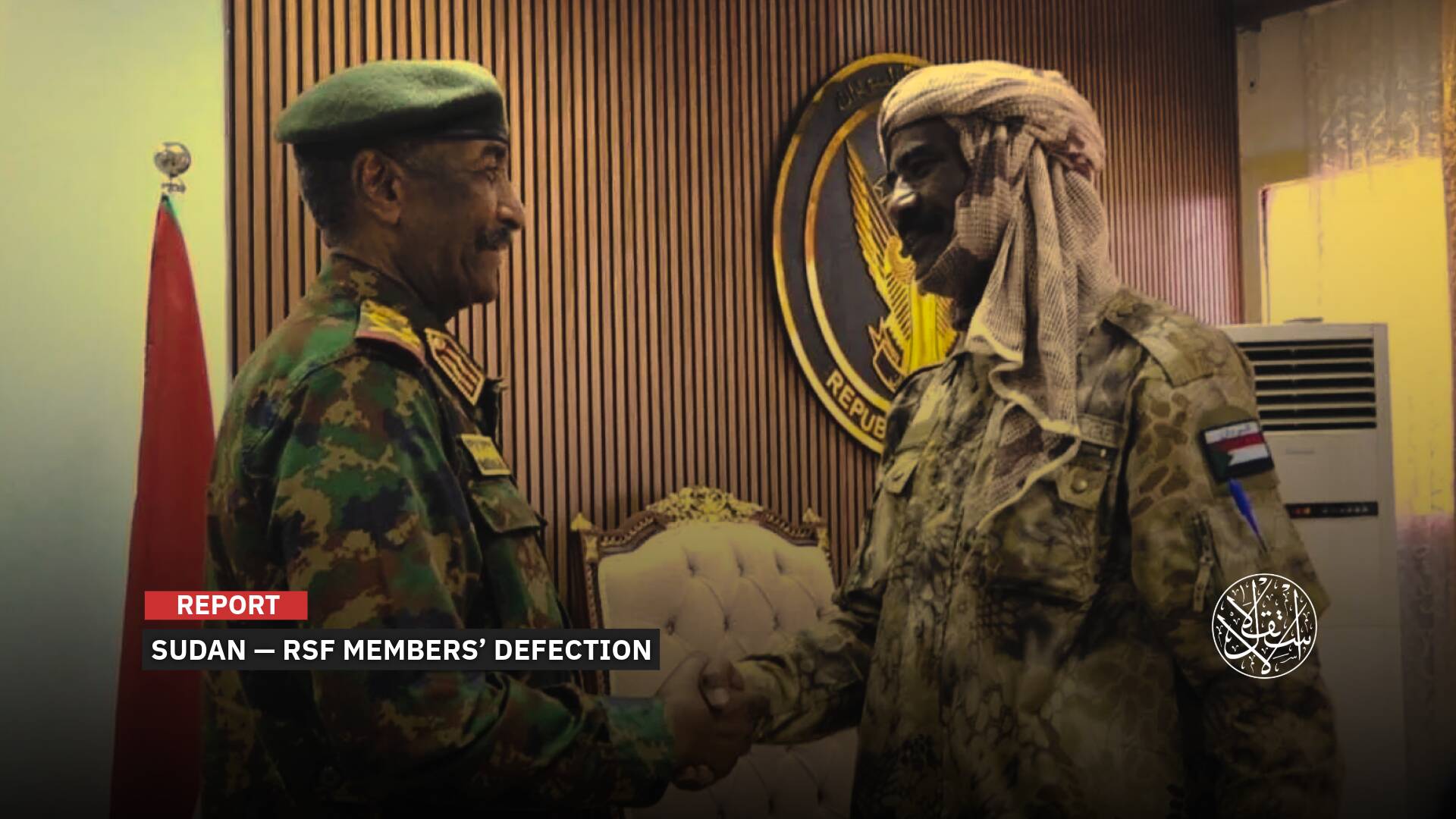
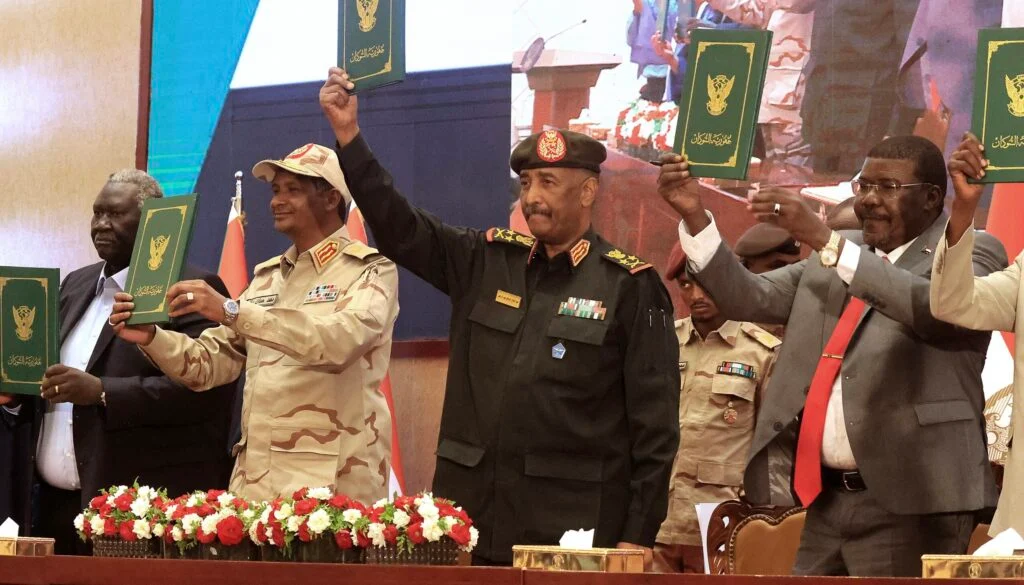
Fighting in Sudan began on April 15 after years of tension between the country’s two power brokers: Gen. Abdel Fattah al-Burhan, the country’s de facto leader and head of the Sudanese Armed Forces (SAF), and Gen. Mohamed Hamdan Dagalo, widely known as Hemedti, who leads the paramilitary Rapid Support Forces (RSF).
After attempts to persuade them to cease fire failed, the two parties to the conflict agreed this week to a new truce for a period of 72 hours, starting on Tuesday, April 25, 2023, to allow all countries seeking to evacuate their nationals from the country.
Sudan Conflict
The U.S. Secretary of State made many statements regarding the situation in Sudan since the outbreak of the current disaster, the latest of which was related to U.S. pressure on the two sides of the conflict to agree to and respect a truce so that American citizens and foreigners could be evacuated, which contradicts his initial statements 10 days ago when he stressed that there would be no evacuations and that efforts focused on an immediate ceasefire and a return to the political track.
Meanwhile, observers believe that the American minister and his fellow Western diplomats have done everything they can to cease fire, but they are too late; in other words, the opportunity for these attempts no longer exists, especially since the West previously missed an opportunity to spare the Sudanese the scourge of internal fighting in the first place.
Foreign Policy magazine provided a direct answer to this question in an analysis dated April 20, 2023, monitoring how Washington and its Western allies missed the opportunity for Sudanese aspiring to get rid of military rule, by focusing on narrow Western interests at crucial moments.
The same fact was confirmed by The Independent newspaper in an analysis it published on April 23, 2023, which also monitored how the West could have helped Sudan move from military rule to civilian rule, but they completely spoiled the matter.
Four years ago, Sudan overthrew its autocratic leader Omar al-Bashir. For the U.S., the U.N., and the international community, Sudan’s revolution was seen as a historic opportunity to transition a dictatorship into a democracy.
The U.S. pledged $700 million to support the transition to democracy, in addition to around $600 million in annual assistance. The U.N. set up a mission to support the elections.
But the U.S. and other Western countries later pressured civilian protesters and the military to form a transitional government, and the final transitional constitution stipulated that elections are scheduled for 2022.
According to the magazine, the moment when this transitional constitution was agreed upon was the moment when the hope for democracy in Sudan was lost, pointing to the process of allowing the army to run the country in the first part of the transitional period.
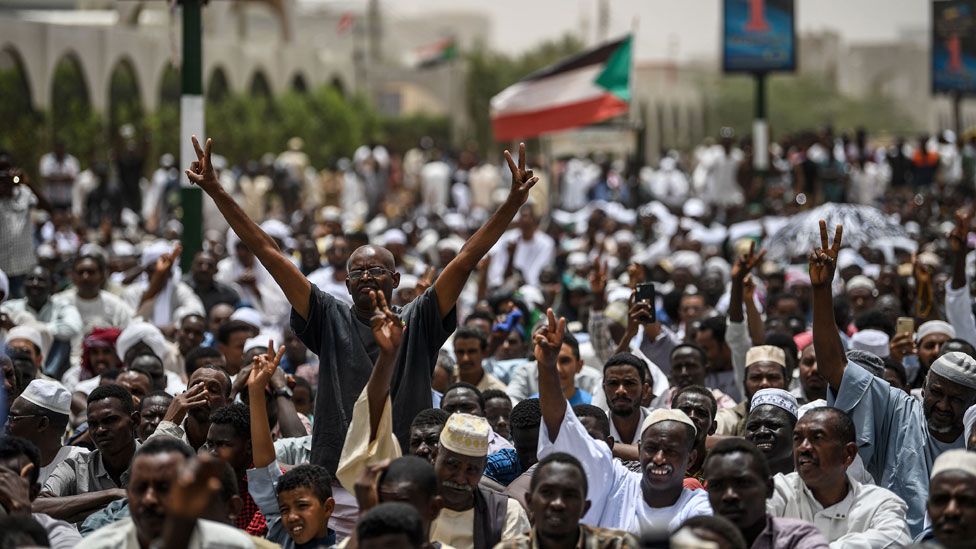
At that moment, dating back to April 2019, the path to transition to democratic rule seemed smooth, but, as The Independent says in its analysis, the West abandoned Sudan, and former U.S. President Donald Trump exploited the situation to achieve personal political interest instead of providing support for the success of the fragile democratic experiment in the Arab African country.
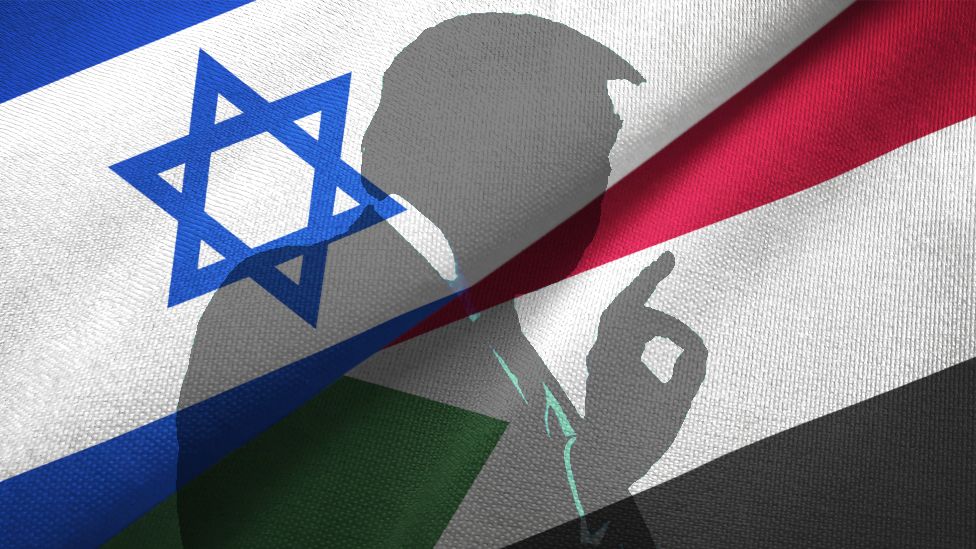
Trump had exercised what most observers described as pressure and blackmail on Sudan to agree to normalization with “Israel,” and had been delaying lifting the sanctions that were imposed on Omar al-Bashir’s regime until Khartoum announced its approval of what was called the Abraham Accords.
Trump also demanded that Khartoum pay $335 million in compensation to the families of the victims of terrorist attacks in 1998 and 2000, in which Washington accused the Bashir regime of being involved, as an additional precondition before removing Sudan from the blacklist.
Western leaders also continued to invoke the American obstacle, despite the visits of the then head of the transitional government, Abdalla Hamdok, to Washington, Brussels, London, and other Western capitals to explain the dangerous situation.
This situation complicated matters in Sudan more than it was, and the economic situation deteriorated with international companies and financial institutions refraining from investing in Sudan for fear of U.S. sanctions, which led to lower hopes of achieving a transition to civilian rule.
This is the pivotal moment when Washington and the rest of its Western allies abandoned Sudan. They could have opened the doors to investments in Sudan, improving the economy and raising the standard of living of the Sudanese, which would have strengthened the country’s civilians and accelerated the transitional path, but that did not happen.
U.S. Neglect
Despite Trump’s departure from the White House and the current president, Joe Biden, assuming the presidency of the U.S., making democracy and human rights the title of his country’s foreign policy, the Sudanese did not find a place for them to include the interests of Biden, who focused on the conflict with Russia and China.
Even when the last coup took place in Sudan, in October 2021, and al-Burhan overthrew the civilian government headed by Hamdok and the entire transitional period and brought Sudan back to another pivotal moment, neither Washington nor the West nor the entire international community moved a finger, which made the civil forces in the country lose their momentum even more, in light of the economic crisis closing in on the Sudanese and the evaporation of dreams of democratic transformation.
“The military’s promise to hand power to civilians has proven hollow. The U.S.-backed transition process has revealed itself as fundamentally flawed,” Foreign Policy said.
The magazine stated that perhaps the greatest example of the delusions of the U.S. is Washington’s insistence on describing the transition in Sudan as civilian-led, as there was nothing related to the transition in Sudan led by civilians.
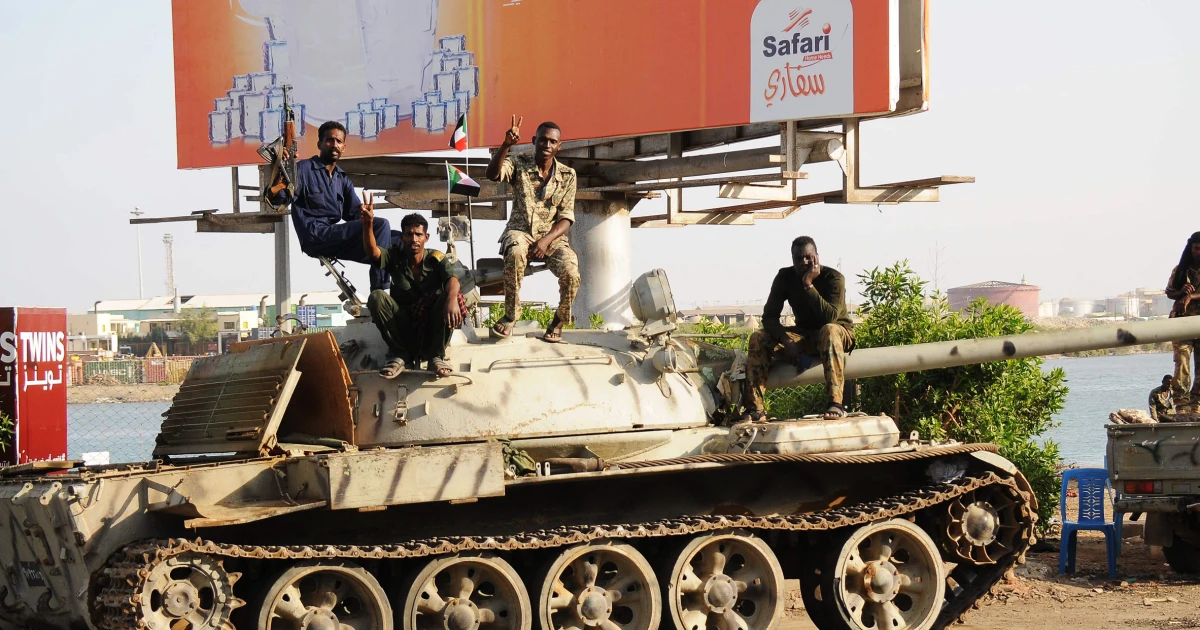
Even when the Sudanese and the world woke up, on April 15, to the explosions of bombs, shells, and the sounds of rockets, the international community did not move a finger, with the exception of diplomatic statements that called on both sides of the conflict to cease fire, statements that did not change anything.
Although the bloody fighting entered its second week, the U.N. Security Council did not meet to discuss the situation, as is usually the case in such matters, it was also not announced that the council would convene to discuss the situation in Sudan until after announcing a truce for the evacuation of foreign nationals. Thus, it was decided to hold the meeting on April 25.
What is remarkable here is that the Secretary-General of the U.N., Antonio Guterres, appealed to the members of the U.N. Security Council to use their influence to end the violence and return Sudan to the path of democratic transition, adding that the violence between the two warring factions portends a disastrous escalation of the war in Sudan that could extend to the entire region and beyond.
Meanwhile, the European Union’s foreign policy chief, Josep Borrell, stated that the EU countries will continue to push for a political settlement to the ongoing conflict in Sudan, despite the evacuation of European diplomats and citizens.
In turn, researcher Mohamed Omer said in a statement to Al-Estiklal newspaper that the current war in Sudan arose for political reasons and cannot be reduced to the recent moves, noting that it was a carefully planned war by the remnants of the former regime.
“There are specific countries that have influence on both sides of the conflict in Sudan, especially the Arab Gulf states, but their capabilities at this stage to put pressure on both sides may be weak because each side decided to win militarily over the other in order to seize power,” he continued.
Mr. Omer added that the countries’ current focus on evacuating their diplomats and citizens is ominous evidence that the confrontations will continue, noting that the scenario of South Sudan between Kiir and Machar may be repeated, as the confrontations lasted two years or more.
Western Interests
In the same context, Foreign Policy magazine revealed that the misleading efforts made by the U.S. in integrating the RSF into the SAF were the main reason for the tragic conflict that Sudan has been witnessing since April 15.
It referred to the presence and signing of the RSF, along with the SAF, on the framework agreement that was signed by civil forces along with the two parties to the military component in 2019.
The weakness of the protest movement in Sudan was a result of infighting as civilian political parties struggled for power, and al-Burhan and his deputy Hemedti prevented the reforms that former PM Hamdok wanted to achieve, and the coup against him later ended the illusion of any civil authority in Sudan, according to Foreign Policy.
It is not clear whether the U.S. or Western governments can prevent a 2021 coup against Hamdok, but the feuding Sudanese generals bear primary responsibility for the current fighting in Sudan.
It is noteworthy that the event precipitating the outbreak of the current conflict was a reconciliation agreement and security sector reform plan supported by the U.S. and the U.N. Mission in Sudan, which was reactivated immediately after the coup against Hamdok.
The basic idea of reforming the security sector in Sudan centered on unifying the SAF and the RSF into one army, although it is difficult to estimate the size of each force, which created a competition that stimulated the two leaders to build their forces.
The number of SAF fighters is about 100,000, while the number of RSF fighters ranges from 30,000 to 50,000, but it has a large reserve force due to its ability to mobilize its tribal allies.
The magazine pointed out that what Sudan is witnessing today of the repercussions of the failure of this plan was expected, and the reason for this is partly because it is a repetition of the same scenarios of the past.
“Peacemaking efforts were mere duplicates of agreements struck in South Sudan in 2013 and 2016, which also led to civil wars,” it added.
Foreign Policy also noted that Sudan is now facing a new form of state collapse, similar to what happened in Yemen.
The magazine believed that, with the passage of time and the intensification of armed confrontations, it seems that Sudan’s slide toward a large-scale civil war is more likely, adding that the outbreak of any civil war may drain the countries of the entire region and some global powers.
It pointed out that the U.S. and its Western allies no longer have a limited ability to shape events in Sudan after the outbreak of the war, after they were an indirect cause of its outbreak.
It said that the U.S. administration is working in coordination with a number of Arab countries to reduce losses and save the Sudanese state from disintegration, but the problem is that these countries stand on opposite sides of what is happening in Sudan since the overthrow of the Omar al-Bashir regime in 2019.