Roads of Death Instead of Planes: How Stranded Syrians in Sudan Are Facing the Journey Home
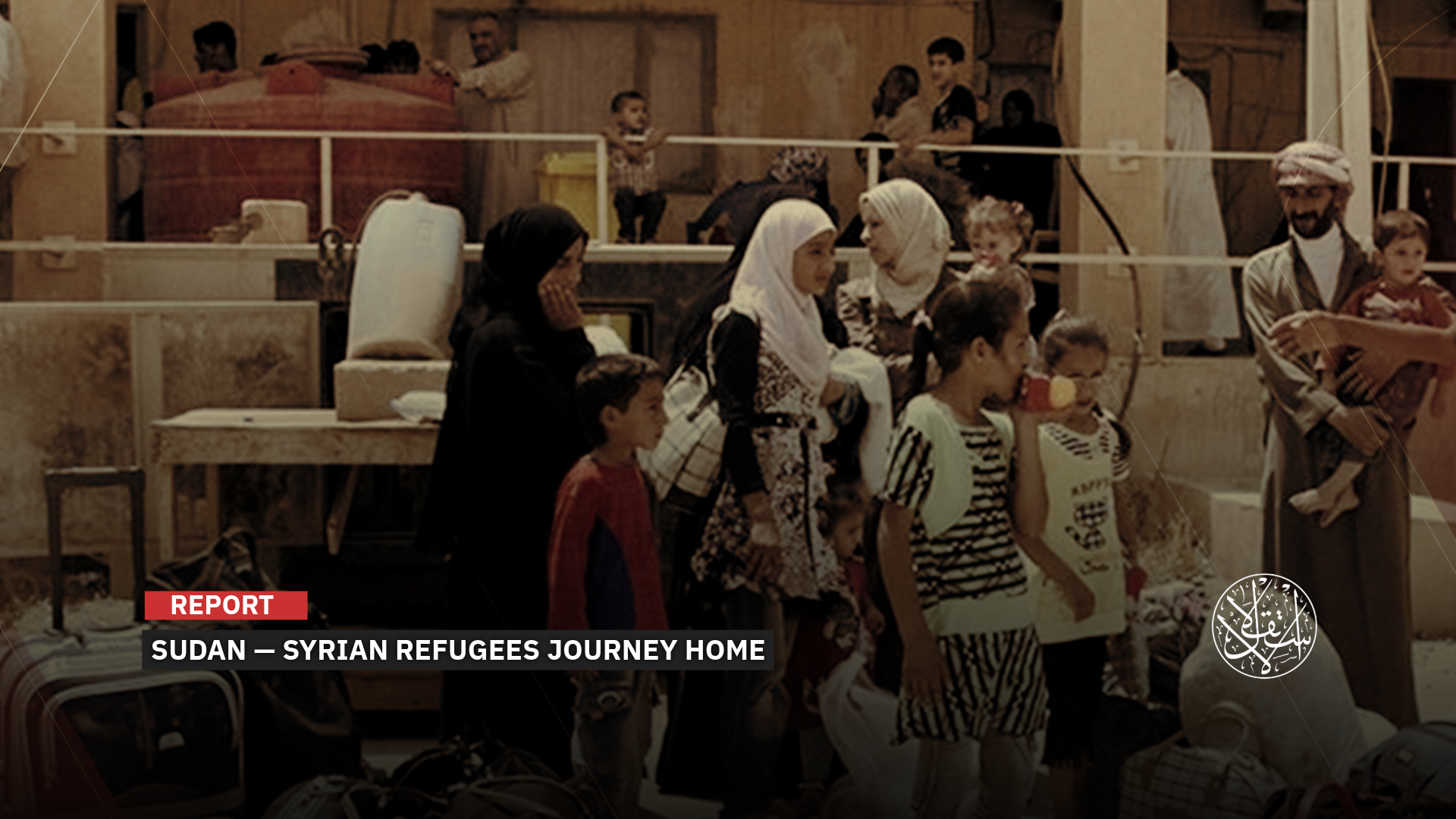
Many members of the Syrian community in Sudan are struggling with extremely dire financial conditions.
After Syria’s liberation and the fall of Bashar al-Assad’s regime on December 8, 2024, Syrians stranded in Sudan suddenly find themselves facing a long-awaited possibility: going home. For many, it is the first real opening after years shaped by war, exile, and uncertainty.
But that hope collides with a harsh reality on the ground. As fighting intensifies across Sudan, the Syrian community is sinking deeper into crisis, hit by the collapse of livelihoods, shrinking job opportunities, and mounting legal obstacles tied to residency.
Basic services are increasingly scarce, security risks are rising, and renewed waves of displacement are compounding an already fragile humanitarian situation, leaving many Syrians trapped between a country unraveling around them and a homeland they are still struggling to reach.
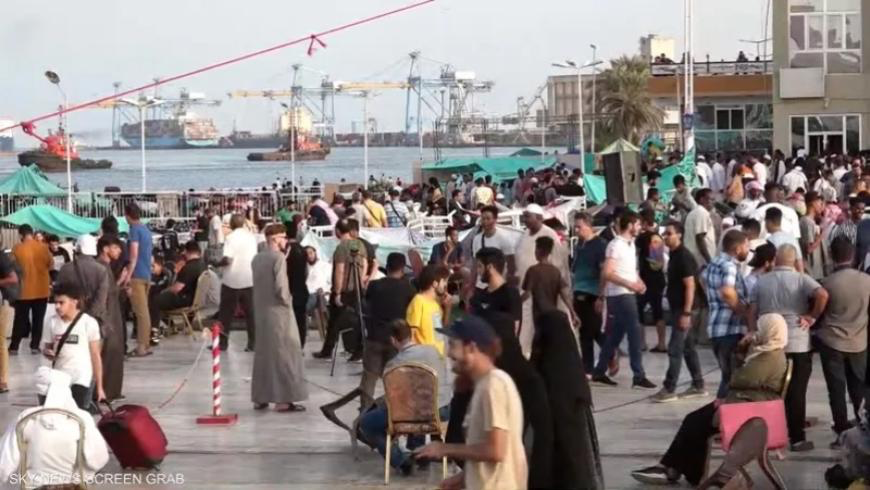
Syrians in Sudan
In an unusual move, Syria’s Foreign Ministry on December 11, 2025, urged Syrian nationals currently living in Sudan who wish to return home to register their details through a dedicated online form.
In a statement published on its official platforms, the ministry said the step was part of preparations to assess the possibility of organizing an exceptional evacuation, subject to available capacity and the realities on the ground. The goal, it said, is to ensure the safety of Syrians in conflict zones while complying with existing administrative frameworks. The ministry also shared a registration code and a contact number for inquiries: +963987759761.
Despite the announcement, Syrians in Sudan continue to face repeated waves of displacement, severe shortages of basic services, and mounting security risks, with little access to protection or assistance.
Against this backdrop, Sudan issued a decision on December 2, 2025, exempting Syrians residing in the country from residency violations. Under a 2025 ministerial decree, Syrians who entered or remained in Sudan before April 15, 2023, were granted a waiver from fines related to delayed residency renewals. The exemption applies for 50 days starting from November 25, 2025.
For many, the decision offered a rare glimmer of hope. Sudanese authorities had previously imposed heavy financial penalties and barred departures until fines were paid, debts that for some had accumulated over years.
The fall of Bashar al-Assad’s regime and Syria’s liberation pushed many Syrians in Sudan to seriously consider returning home, but residency fines had long been the single biggest obstacle. With that barrier eased, the prospect of departure has become more realistic, though still fraught.
The roots of the Syrian community’s hardship in Sudan trace back to April 2023, when fighting erupted between the Sudanese Army and the Rapid Support Forces militias. Many Syrians were forced to flee again, losing livelihoods and stability almost overnight.
At the time, the now-toppled Assad regime made no effort to evacuate Syrians seeking to return, leaving them to fend for themselves amid worsening humanitarian and security conditions. After Syria’s liberation, appeals from stranded Syrians in Sudan intensified, calling on the new authorities to address their plight and facilitate their return.
Unclear Numbers
There are no recent, precise figures from UNHCR or the United Nations that break down the number of Syrians living in Sudan. By the end of 2024, Sudan was hosting around 838,000 refugees and asylum seekers of various nationalities, including South Sudanese, Eritreans, Ethiopians, and Syrians, but official data does not specify Syrian numbers.
Earlier UN estimates and registration data suggested that between 90,000 and 100,000 Syrians may have lived in Sudan in previous years, though the figure has fluctuated amid ongoing conflicts and population movements.
Syrians are mainly concentrated in four areas: Port Sudan, Khartoum, al-Jazirah, and Gedaref, with smaller numbers elsewhere. Some have managed to reach Port Sudan on the Red Sea, once a thriving commercial hub and now a temporary refuge for those desperately trying to escape the war.
Sudan was among the first countries to open its doors to Syrians after the revolution began in 2011, offering broad access to residency, education, and work. It was also the only Arab country to grant citizenship to a number of Syrians.
Roughly 500 Syrians are believed to be registered among the stranded community in Port Sudan alone, while many others remain unable to reach the city because they simply cannot afford the journey.
The picture that emerges is one of prolonged uncertainty: years of restrictive residency rules, official indifference under Syria’s former regime, and now a fragile opening shaped by political change at home and deepening chaos in Sudan. For many Syrians, the road back still feels less like a passage home than another test of endurance.
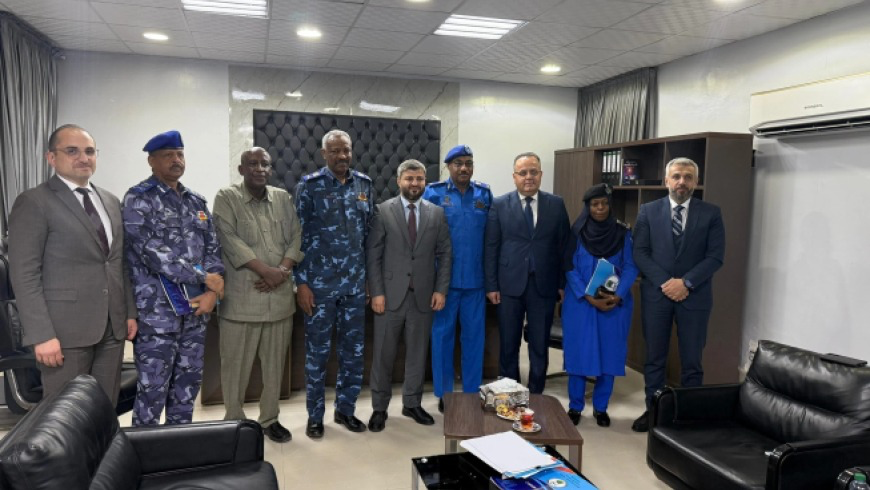
Harsh Realities and Lingering Obstacles
For years, hundreds of Syrians living in Sudan have struggled under the weight of steep residency fines, which in some cases have climbed to nearly $4,000, largely because they were unable to renew their permits after the war erupted in April 2023.
The war has all but paralyzed Sudan’s state institutions, bringing government offices to a standstill and making routine paperwork—residency renewals, document processing, legal follow-ups—an exhausting and often impossible task for Syrians caught in the chaos.
These financial burdens did not begin with the current war. Long before the fighting, Sudanese authorities imposed annual taxes on work permits, varying by profession and employment status, gradually piling years of costs onto Syrian families already living on the margins.
Against this backdrop, the Syrian Foreign Ministry’s call for citizens seeking to return home to register online has been widely seen as a rare opening. The move is meant to pave the way for potential emergency evacuations, depending on available resources, at a time when Syrians in Sudan continue to face severe shortages of basic services and mounting security risks.
Many Syrians view the initiative as a genuine chance to untangle years of legal limbo.
Mahmoud al-Issa, a member of the Syrian community in Sudan, told Al-Estiklal that most Syrians had already registered through the link provided by the Foreign Ministry as part of the evacuation process under a plan drawn up by the new Syrian government.
Speaking from Port Sudan, al-Issa said that attempts to return home after the fall of Bashar al-Assad’s regime were quickly bogged down by legal complications, compounded by the realities of an ongoing war in Sudan.
“The decision to cancel residency fines gave us some breathing room,” he said, “but a major problem remains: the documents issued by a previous Syrian delegation have expired. They were only valid for 45 days.”
Because the exemption decision came too late, al-Issa explained, those documents are no longer usable, leaving Syrians unable to travel to Syria even via transit routes.
“What we urgently need is a representative of the Syrian government on the ground to resolve legal issues and renew documents,” he added, warning that the 50-day exemption window could expire before many people are able to renew their passports.
Al-Issa also stressed that a large portion of the Syrian community is living in extreme financial distress. The war, repeated displacement, loss of income, soaring prices, and complicated money transfers have pushed many families to the brink.
Some Syrian families, he said, are living in tents under scorching heat or sheltering in schools, facing acute shortages of food, clean water, and healthcare. Others suffer from chronic illnesses but have lost access to treatment, unable to afford medicine or high housing costs amid a punishing cost-of-living crisis.
For many, the promise of return to Syria is no longer just political—it is a matter of survival.
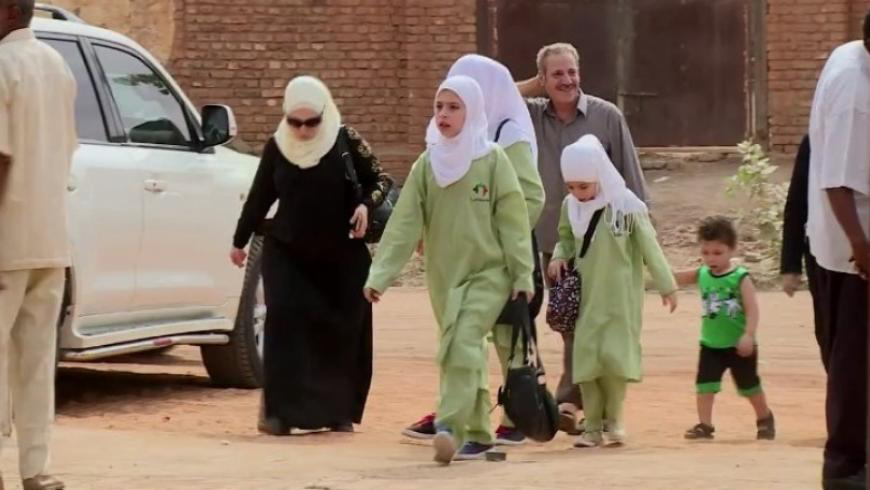
Severe Fears
Under these harsh conditions, some members of the Syrian community in Sudan are forced to seek individual ways out, often taking informal routes that carry serious risks.
Some young Syrians attempt to return from Sudan to Syria via Egypt, a journey fraught with danger and, at times, death. The route involves long desert crossings under brutal conditions, marked by hunger, thirst, and the risk of pursuit by Egyptian regime forces.
Those attempting the journey are also forced to pay large sums to smugglers who exploit their desperation, with individuals paying around $500 to be transported into Egypt in smuggling vehicles.
According to available information, travelers then move from Egypt to Jordan with little interference from the Egyptian regime, on the assumption that Syria is their final destination.
Mahmoud al-Issa stressed the need to appoint an official representative for the Syrian community in Sudan to help determine the number of those wishing to return and to establish a clear and organized evacuation mechanism.
He noted that many Syrians remain stranded and cannot afford travel costs or even reach Port Sudan from other states, especially families, with the cost of traveling to Port Sudan reaching about $200 per person.
Al-Issa added that Syrians stuck in Sudan are now hoping the new Syrian state will secure their return home, following the lifting of accumulated residency fines caused by the war.
“If the deadline set by Sudanese authorities passes without practical solutions, Syrians could once again fall into a cycle of legal and administrative hardship,” he warned.
Sources
- Eastern and Southern Africa Sudan
- Mixed migration consequences of Sudan’s conflict
- The Foreign Ministry Calls on Syrians Seeking to Return from Sudan to Register Their Details [Arabic]
- Syrians in Sudan Undertake a “Journey of Death” to Return Home [Arabic]
- Thousands of Syrians Homeless in Port Sudan as Evacuation Tickets Cost Hundreds of Dollars [Arabic]
- With Conditions: Egypt Approves Entry for Syrians from Sudan [Arabic]