New Monroe Doctrine: How Trump Is Reshaping the Western Hemisphere
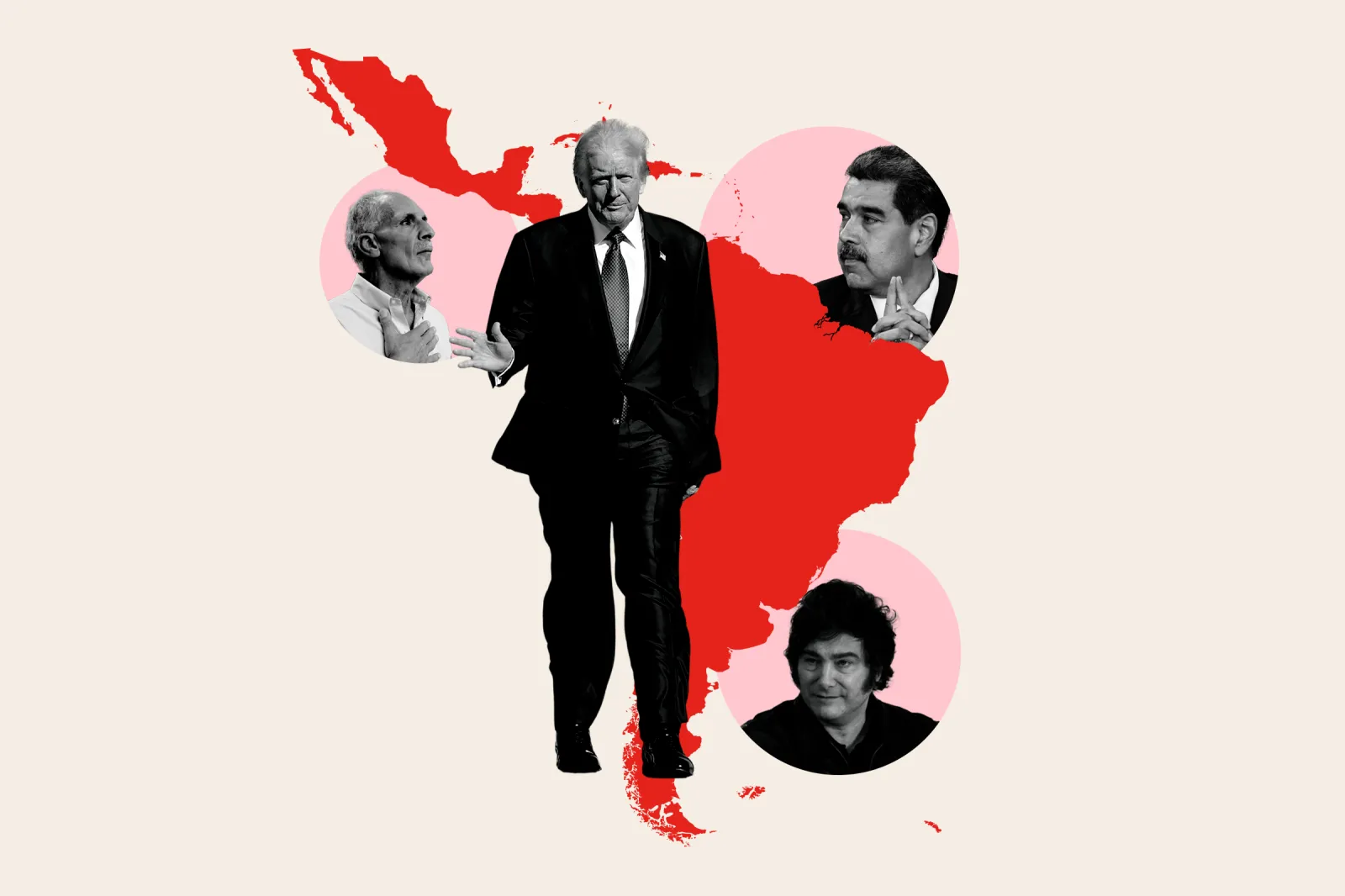
“Most Central American governments have aligned themselves with Trump’s deportation and migration agenda.”
Coinciding with the announcement of the US National Security Strategy, which stipulates reducing its role in the Middle East and strengthening it in the Americas and Europe, Western reports have documented an escalation in Washington's interference in elections around the world, as well as attempts to change political regimes.
According to analysts and experts, no US president in modern history has intervened with such blatant and overtness as Donald Trump.
They believe the Republican leader is seeking to reshape the global order to his country's advantage by interfering in the affairs and governments of Latin America and Europe.
This intervention raises numerous questions about its true objective: Is it a desire to reassert traditional American influence, including cultural and economic hegemony?
Or is it a rearrangement of US national security priorities to focus on its regional neighbors in Latin America?
Unprecedented Intervention
The Trump era has witnessed an unprecedented escalation in US interference in elections around the world, particularly in Latin America and Europe.
Months ago, he threatened the Venezuelan president with resignation or overthrow, both explicitly and implicitly through his administration.
Given his history of unconventional foreign policy moves, it is difficult to predict how these official pronouncements on national security will translate into concrete actions on the ground.
On December 3, Trump publicly announced for the first time that the U.S. would soon conduct ground operations in Venezuela, while defending his decision to launch attacks in September on boats suspected of carrying drugs.
As the Honduran presidential election approached, Trump claimed that the vote count had been prematurely halted, warning of dire consequences if officials attempted to alter the results.
He also publicly endorsed the right-wing candidate, Nasry Asfura, who was running neck and neck with the liberal candidate, Salvador Nasralla.
In the same vein, US Secretary of State Marco Rubio attacked Colombian leftist President Gustavo Petro, calling him crazy.
He also imposed sanctions on a Brazilian judge who oversaw the trial of former right-wing President Jair Bolsonaro for attempting to overturn the election results.
More recently, the increased US military presence in the Caribbean, coupled with threats of ground strikes in Venezuela and other countries battling drug cartel activity, has heightened anxieties in a region with a troubled history of US military interventions.
In Argentina, Trump supported his favored ally, President Javier Melli, in the October 2025 midterm elections with a $20 billion currency swap agreement aimed at stabilizing the economy.
Trump also hosted Melli at the White House, a visit that also included Salvadoran right-wing leader Nayib Bukele, a hero of the American right.
The runoff election in Chile, scheduled for December 14, is expected to see a victory for right-wing candidate Jose Antonio Castro, who also enjoys Trump's support.
Time magazine commented on December 2 that Trump is trying to reshape Latin America in his own image.
It explained that this US intervention reflects a broader shift in the focus of American policy toward the Americas, under Trump's America First movement, which considers Latin America a key area of interest.
This perspective recalls the Monroe Doctrine, established nearly 200 years ago, which has been the basis for US intervention in the region.
It noted that Trump's influence in the Western Hemisphere is evident in his sharp criticism of leaders who oppose him, such as the presidents of Venezuela, Colombia, and Brazil, while simultaneously providing support and endorsement to his allies.
In this context, S-RM Americas associate director Felix Cook said that most Central American governments supported Trump’s deportation and immigration agenda.
However, he warned in an interview with Newsweek that Trump’s hardline tactics could push more self-sufficient regional powers, such as Brazil, Mexico, and Chile, to strengthen their partnerships with US geopolitical rivals, such as China, as a hedging strategy.
Compare this policy to the big stick diplomacy pursued by President Theodore Roosevelt in the early 20th century, which ultimately led to Latin America’s rapprochement with the Soviet Union.
European Shift
Trump recently sought to upend the political landscape in Europe. On May 2, he hosted the conservative candidate Karol Nawrocki at the White House, endorsing him against the liberal-socialist candidate Rafal Trzaskowski. This endorsement helped Nawrocki win the presidential election held in June.
Meanwhile, in Germany, US Vice President Jay D. Vance, during the Munich Security Conference in February, criticized the restrictions imposed on the far-right, anti-Muslim, and anti-immigrant Alternative for Germany (AfD) party.
Although his meeting with far-right party leader Alice Weidel was controversial and broke a taboo in German politics, he skipped a meeting with German Chancellor Olaf Scholz.
Trump’s vice president discussed with Weidel the so-called firewall against the right, which aims to prevent far-right nationalist parties from joining governing coalitions, deeming it a flawed policy.
In his address to the Munich Security Conference, Vance criticized European leaders for refusing to cooperate with their far-right parties.
Meanwhile, US Secretary of State Marco Rubio ridiculed the German intelligence agency’s decision to classify the AfD party as far-right, calling it a form of tyranny in disguise and a new Berlin Wall.
The AfD party achieved record results in the February federal elections, winning 152 out of 630 seats with 20.8% of the vote.
On the British front, Trump and his aides praised anti-immigration British MP Nigel Farage, whose populist rhetoric is similar to Trump’s, even down to his symbols, such as Make Britain Great Again hats.
The Trump administration also criticized the April court ruling in France against far-right leader Marine Le Pen.
The president and his vice president defended her, arguing that European leftists use the law to suppress free speech and deny opportunities to their political rivals.
Amid the US-European tensions, the U.S. warned its NATO allies on December 5 that Europe must assume greater responsibility for its own defense, and quickly.
The Pentagon set 2027 as the deadline for European countries to take over most of the alliance's conventional military capabilities, a shift that could reshape the transatlantic relationship, though some European officials deemed the timeline unrealistic.
Pentagon officials emphasized that the U.S. expects Europe to assume the bulk of NATO's defense capabilities, from intelligence to missiles, and that failure to do so could lead Washington to reduce its role in defense coordination within the alliance.
The US National Security Strategy 2025, released on December 5, clearly demonstrates Trump's focus on restoring American supremacy in the Western Hemisphere, and that maintaining Western white supremacy in Europe is also part of this objective.
The U.S. supports populist parties that are hostile to immigration and Muslims, implicitly warning of a civilizational collapse facing Europe and necessitating a course correction.
Beyond covert CIA operations and covert media campaigns, Trump openly used social media to support his right-wing allies in various countries, urging voters in those countries to support them.
However, Trump did not succeed in Romania, where his far-right ally lost the presidential election, particularly after an earlier vote was invalidated following widespread controversy.
New Monroe Doctrine
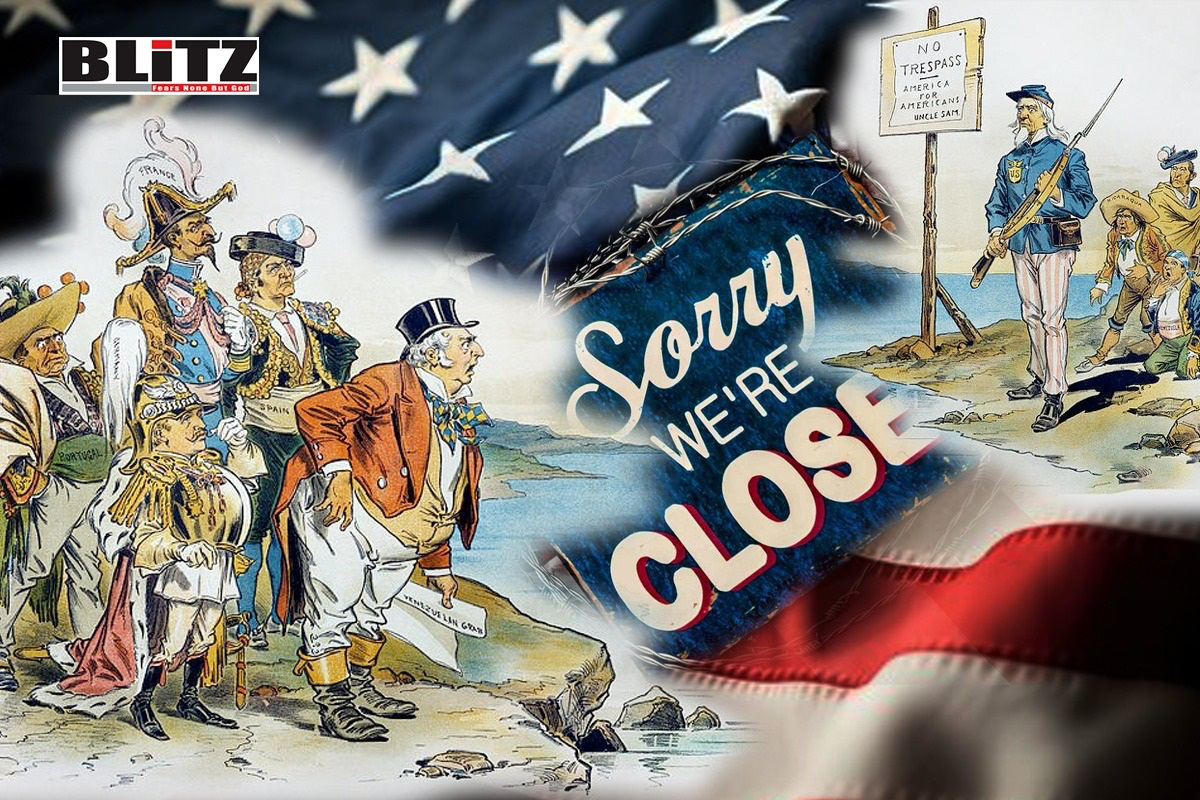
The Trump administration's intervention in the Western Hemisphere appears aimed at reviving the old Monroe Doctrine, issued by US President James Monroe in 1823, but in a new form that reflects contemporary geopolitical challenges and increases US intervention in the affairs of those countries.
The Monroe Doctrine is known as a political principle that prohibits European imperial powers from interfering in the affairs of newly independent Latin American states or US territories.
Ironically, this doctrine later evolved into the basis for extensive US intervention in Latin America, allowing the U.S. to exert its influence and expand its intervention in the region under the pretext of protecting its interests and preventing European intervention.
The Office of the American Historian at the State Department notes that European countries initially paid little attention to the Monroe Doctrine, but over time it became a cornerstone of American foreign policy.
In an analysis published by Fox News on December 5, it was explained that the release of the American National Security Strategy, coinciding with increased intervention in Latin America and Europe, is linked to Trump's pledge to reaffirm the Monroe Doctrine to restore American power and counter the growing influence of adversaries.
It was asserted that this Trumpian reliance on the Monroe Doctrine represents a logical and effective restoration of American power and priorities, in line with its security interests.
Western analysts believe that the National Security Strategy 2025 represents a reactivation of the Monroe Doctrine in a modern geopolitical form, aimed at achieving three main objectives.
These objectives include strengthening American hegemony in the Western Hemisphere, combating illegal immigration and drug trafficking, and countering Chinese and Russian influence in Latin America and the region.
The key difference is that the original Monroe was opposed only to European intervention in the Americas, while the new Monroe rejects intervention by any foreign power—European, Chinese, or Russian—in the region. This clearly reflects the changing global power dynamics.
This shift is a stark indication that the Trump administration is seeking to redefine its strategic priorities through a more self-serving global leadership approach, forging multilateral alliances while limiting the influence of rival powers.
Sources
- Trump strategy document revives Monroe Doctrine, slams Europe
- JD Vance breaks taboo by meeting with leader of Germany’s far-right party
- Trump meets Polish opposition presidential candidate at White House
- Donald Trump Is Trying to Mold Latin America in His Own Image
- Trump pledges to reassert Monroe Doctrine to restore American power
- Exclusive: US sets 2027 deadline for Europe-led NATO defense, officials say