Misleading Narrative: Have Immigrants Become Synonymous With Crime in Germany?
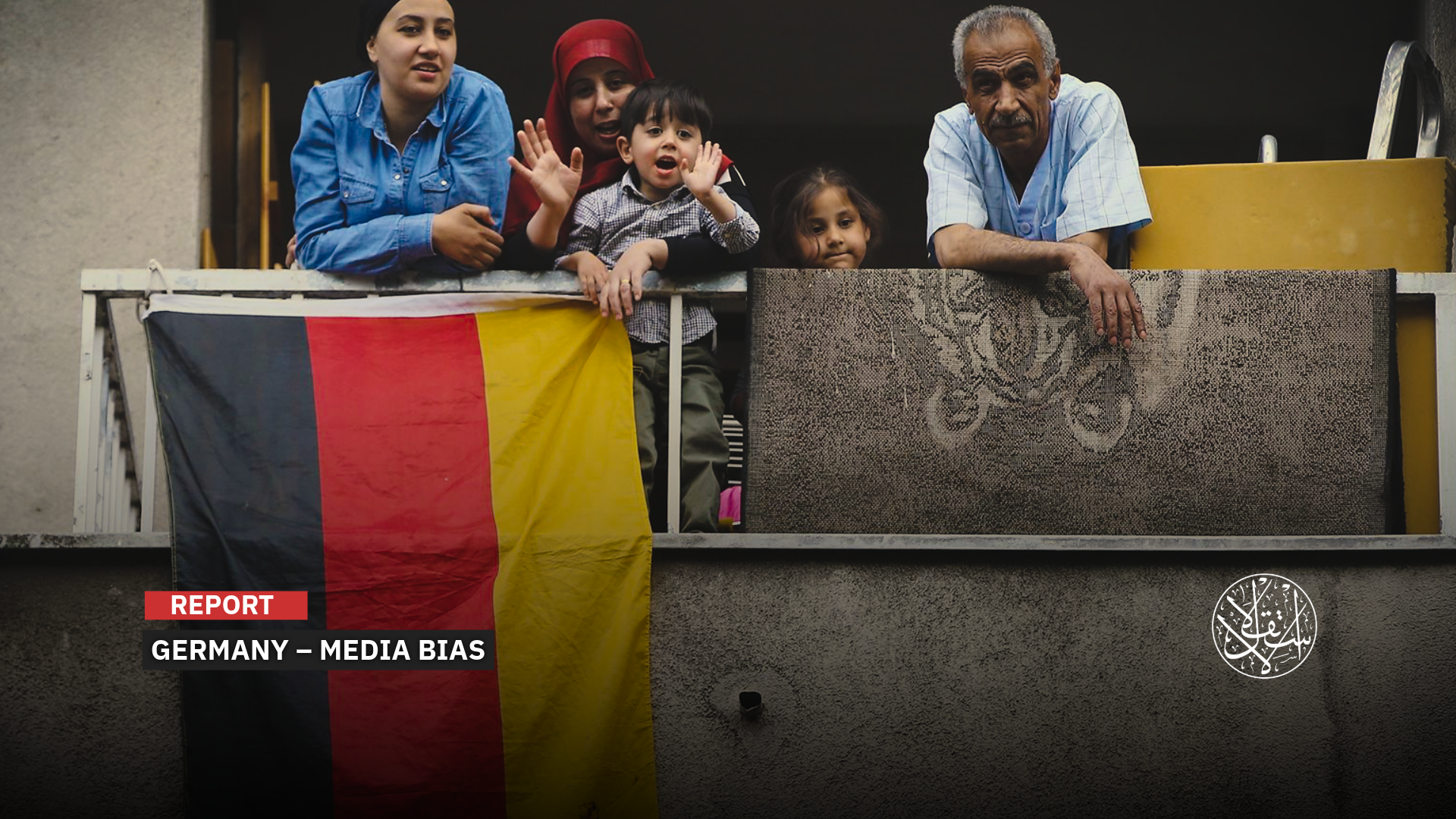
“The suspect’s background is mentioned in about one-quarter of television reports on violent crimes.”
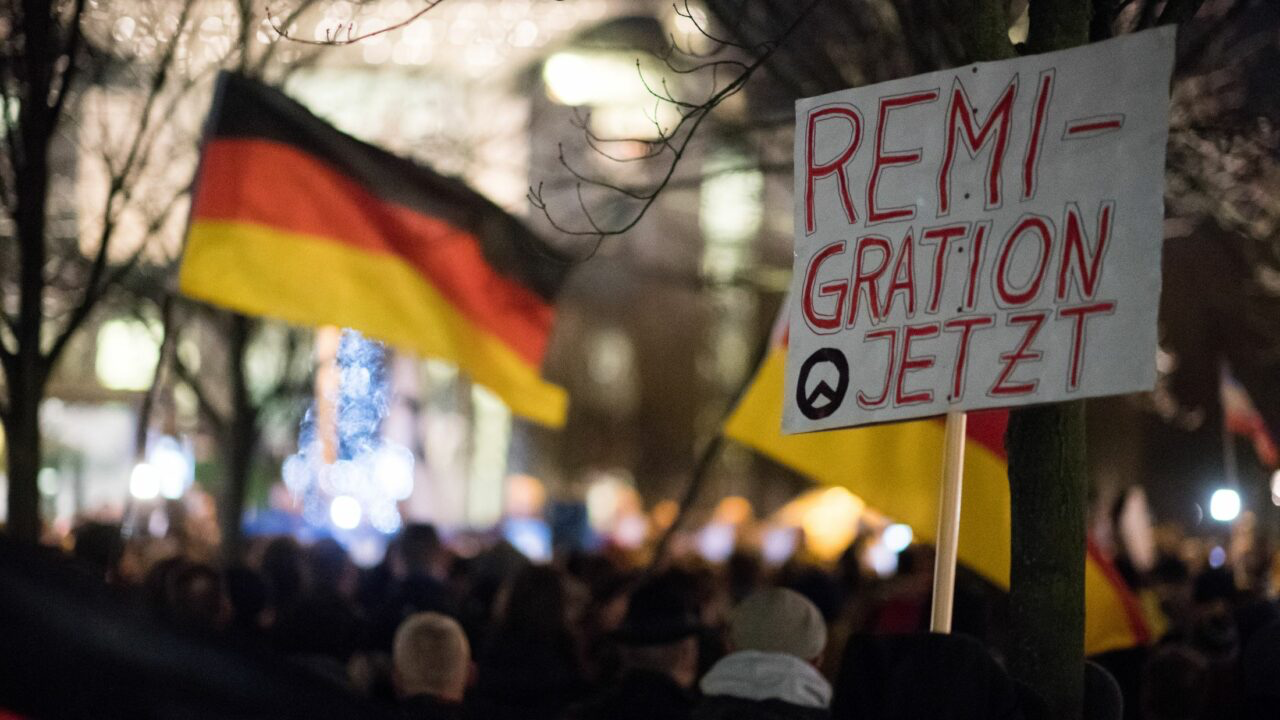
Migration in Germany and Europe is no longer just an election issue that surfaces during campaigns; it has become a topic of discussion among politicians, the media, and cultural elites.
The heated debate surrounding migration has also permeated public life due to the enormous number of immigrants, particularly in recent years, which have witnessed the influx of millions of immigrants to the continent.
These massive numbers are no longer merely a burden on services, the economy, and infrastructure; they are now impacting the very fabric of German society, affecting its values, identity, and way of life.
In light of this reality, clear differences have begun to emerge in discussions about values, individual freedoms, religious education, and customs and traditions between conservative or liberal German society and some immigrants from more traditional backgrounds.
However, what has exacerbated these differences and challenges, according to experts, is that individuals of immigrant origin have been involved in politically motivated crimes, including attacks in the streets and subway stations using knives or vehicles.
Conversely, a recent German study revealed a clear bias in media coverage of crime, showing that media outlets in this European country mention suspects of immigrant origin at a rate more than three times higher than their actual proportion in police statistics.
The study raises questions about the media's role in shaping public opinion and portraying violence in German society.
Media researcher Thomas Hestermann pointed out that this bias has increased since 2015, coinciding with the escalating debate surrounding migration and asylum, which reinforces a stereotype linking crime to foreigners.
Systematic Portrayal
According to the anti-fake news website Misbar, in recent years, particularly since 2014, the term Arab clans (Arabische Clans) has become increasingly common in German media coverage and police reports. It is often used to describe large, extended families of Arab, Turkish, Kurdish, or other immigrant origin.
Over time, this term has shifted from its original social meaning to a security discourse that links these families to organized crime and societal danger, as if they have become a symbol of chaos and lawlessness.
Most of these families trace their origins to Arab-Turkish groups who lived in southern Turkiye before migrating to Germany in the 1970s and 80s. Many settled in major cities such as Berlin, Bremen, Duisburg, and Essen, where they established multigenerational family networks.
German media attention on these families grew following a series of high-profile incidents that captured public interest.
Among the most notable were the 2017 theft of the giant gold coin Big Maple Leaf from Berlin’s Bode Museum and the 2019 robbery of jewelry from Dresden’s Green Vault, valued at roughly 113 million euros.
Certain families, including the Remmo and Al-Zein clans, were linked to these cases, fueling the criminal clans narrative promoted by popular outlets such as Bild and Spiegel.
Over time, coverage of so-called 'criminal clans' expanded beyond individual legal offenses, increasingly generalizing to a wider segment of migrants with similar backgrounds.
The term 'clans' began to appear loosely in news reports and official statements, often without distinguishing between those who had committed crimes and the majority who lived ordinary, law-abiding lives.
Research has shown that this pattern of media coverage exaggerates incidents involving immigrants, portraying all immigrants as belonging to organized family networks or possessing an inherited criminal tendency, ignoring the reality that most members of society are not connected to these stereotypes.
Media and migration studies researchers have also warned that this discourse reinforces long-standing stereotypes and Orientalist metaphors about Arabs and the Middle East.
Furthermore, this discourse fuels fear and suspicion among segments of the German public, despite the lack of scientific evidence demonstrating that these "clans" pose any exceptional threat to public safety.
Through extensive coverage of Arab clans and their frequent association with organized crime, the German media has contributed to the perpetuation of a negative stereotype of immigrants.
Instead of distinguishing between individuals involved in criminal activity and the majority who are law-abiding and integrated into society, reporting often relies on broad generalizations, turning ethnic or linguistic background into a social marker of suspicion.
Selective Media Coverage
A recent report by the German newspaper Die Zeit revealed that the German media exaggerates the nationality of suspects, especially foreigners, compared to their actual representation in crime statistics.
The study found that the suspect's background is mentioned in about a quarter of television reports on violent crimes, with 94.6% of these reports concerning individuals of non-German origin.
In print media, the origin of these individuals is mentioned in about a third of reports, with foreigners accounting for 90.8% of these cases, even though official police data shows they represent only 34.3% of offenders.
This discrepancy highlights a clear bias in German media coverage, portraying immigrants and foreigners as a primary source of crime, with national origin often becoming the focus at the expense of the actual facts of the incident.
Experts explained that selective media coverage that consistently links immigrants or refugees to crime ultimately creates the misconception among Germans that immigrants are more involved in crime than reality.
Most Germans rely on traditional media, such as daily newspapers and national television, as their primary source of reliable news. This makes public opinion highly susceptible to media narratives and government policies, especially on sensitive issues like migration, crime, and public safety.
This media landscape has profoundly impacted German perceptions of immigrants and their daily experiences. Suspicion and distrust often accompany anyone with an Arabic name or immigrant background, whether at school, work, or when searching for housing.
Recent studies have shown that these stereotypes have led some young people and women to conceal their cultural identity or change their names to avoid social discrimination.
Furthermore, biased media coverage exacerbates divisions and fuels political polarization. Perhaps the most striking example of this is the rapid rise of the far-right Alternative for Germany (AfD) party.
Founded in 2013, the AfD has become a formidable force, challenging traditional German political parties. Its anti-immigrant platform is the only explanation for this.
Despite this, experts warned that such selective coverage would undermine trust in media institutions in a country known for upholding freedom of the press and expression.
Recent opinion polls have shown a decline in Germans' trust in their media, which they perceive as concealing the truth or focusing on a fabricated narrative.
Organized Crime
The media has always been at the heart of the debate surrounding migration; in fact, some journalism schools consider it the locomotive driving public opinion.
Perhaps the most prominent role played by the media has been its biased and selective coverage of crimes where the suspects are of immigrant origin.
There is a media bias in crime coverage. When the perpetrator is an immigrant and commits the crime for political and religious reasons, their origins and roots receive more attention.
However, when the perpetrator is German, their identity receives less attention. This creates the impression that immigrants are more likely to be involved in crime.
This conclusion was reached by a study by German journalism professor Thomas Hestermann, which found that media coverage in Germany tends to exaggerate the proportion of suspects with immigrant backgrounds. Their representation in the media is more than three times higher than their actual representation in police statistics.
The study, titled ‘Crime and migration: The Image in the German Media’, confirms that this proportion was not so high before the major waves of migration (2014 and beyond).
Since then, Hestermann has observed a significant distortion in German media coverage of crime and migration.
The study noted that reports on German television programs and newspapers about crimes committed by suspects with immigrant backgrounds are twice as numerous as reports about crimes committed by suspects with German backgrounds.
Despite the ongoing media and political focus Official statistics paint a very different picture regarding so-called migrant crimes.
Data from the Federal Criminal Police Office indicates that crimes linked to so-called migrant clans represent only 1% of all recorded crimes.
Research confirms that the vast majority of individuals from families with a migrant background do not participate in organized crime.
Sociologists emphasize that the problem is not migrant culture itself, but rather structural barriers such as discrimination in the labor market, difficulty in obtaining housing, and lengthy asylum procedures, which create conditions that lead to deviant behavior by small, marginalized groups.
Supporting this, a 2019 study by the ifo Institute for Economic Research, Do Immigrants Affect Crime? Evidence from Panel Data for Germany, found no statistically significant link between higher migrant populations and increased crime rates in Germany from 2003 to 2016.
A 2025 follow-up analysis by the same institute confirms that rising numbers of foreign residents do not drive higher crime rates; economic and social integration, not cultural or ethnic background, is the key factor.
According to experts, this selective German media coverage has created significant resentment among immigrants, who now feel marginalized and treated as second-class citizens, despite many of them being integrated into the German labor market.
This has negatively impacted their ambitions and aspirations to build new lives free from indoctrination, forcing them into isolation and withdrawal at a time when the European economic giant needs their expertise and energy.