Millions Spent: Saudi Arabia’s Lavish Festivals of Fun Backfire on Mohammed bin Salman
Saudi society is repressed and announced that he planned on donating part of the fee he earned to “causes that support free press and human rights.”
Over the course of two weeks, Saudi Arabia hosted two major entertainment festivals, Joy Forum and the Riyadh Comedy Festival, as part of what critics describe as the kingdom’s “politics of fun,” a strategy aimed at distracting the public at home while polishing its image abroad by showcasing openness to the West and a departure from its formerly conservative religious identity.
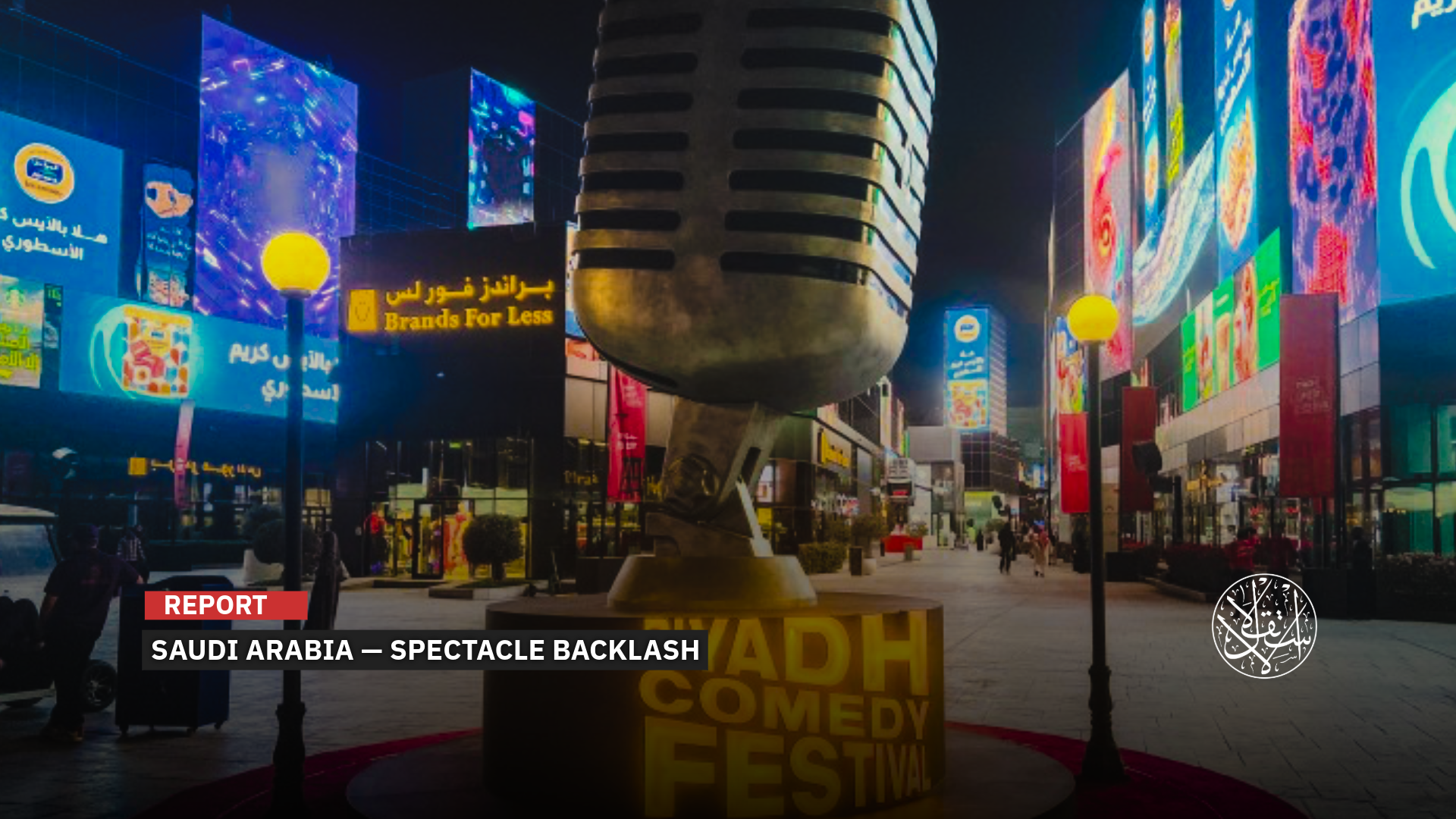
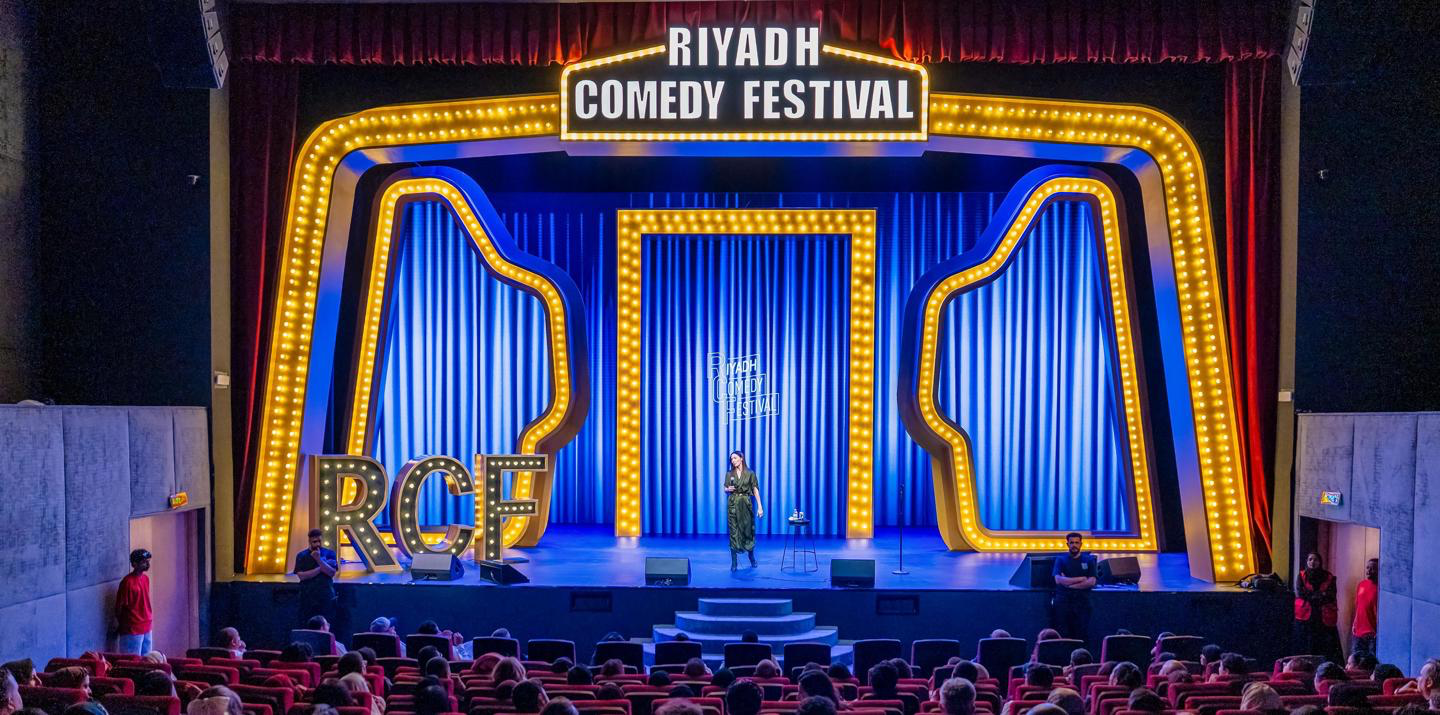
The first, the Riyadh Comedy Festival, is a live entertainment event dedicated to stand-up comedy, featuring top international and local comedians performing before large audiences.
More than 50 global comedians took part in the festival, which emphasized entertainment over technical or industrial aspects. It was held at Boulevard City in Riyadh from September 26 to October 9, 2025.
The second, Joy Forum, is another entertainment-focused gathering held in Riyadh, featuring panel discussions with well-known Indian and international actors and figures from the entertainment industry. It ran from October 16 to 17, 2025.
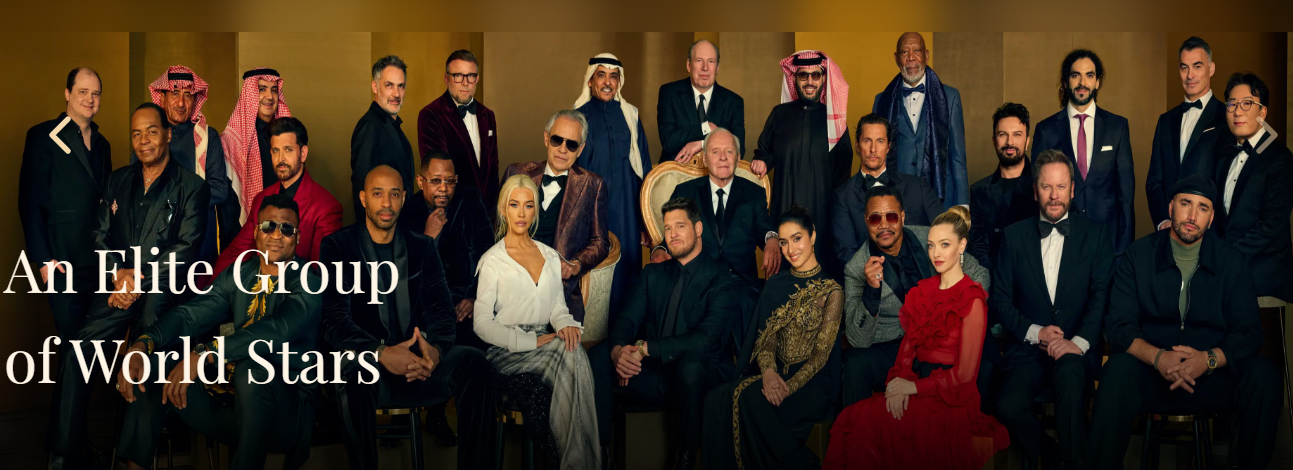
These events followed the Joy Awards in January 2025, an annual ceremony organized by the General Entertainment Authority as part of Riyadh Season, designed to honor Hollywood and European stars, as well as prominent musicians and media figures.
All three events fall under the supervision of Turki al-Shikh, head of the General Entertainment Authority and adviser to Crown Prince Mohammed bin Salman.
Yet, despite the vast sums reportedly spent on these spectacles to burnish the government’s image, the effort appears to have backfired.
Some of the international guests and comedians invited to perform later criticized Saudi Arabia’s human rights record, its restrictions on the press, and its broader crackdown on freedoms.
A few even announced that they would donate part of their fees to support human rights initiatives in the kingdom.
As a result, the state’s attempt to use entertainment as a tool of soft power and image rehabilitation seems to have achieved the opposite effect.
In recent years, Saudi Arabia has poured billions of dollars, under Al-Sheikh’s direction, into sports and entertainment, according to foreign reports.
The government maintains that these initiatives are part of Vision 2030, its sweeping plan to diversify the economy and establish the kingdom as a cultural destination.
Critics, however, argue that the real goal is to rebrand the country internationally and distance it from its history of religious conservatism.
Million-Dollar Festivals
Because both the Riyadh Comedy Festival and Joy Forum 2025 hosted some of the world’s biggest entertainment stars and focused heavily on the business of showmanship, the Saudi government spent lavishly on the two events, from enormous appearance fees for celebrities to extravagant production costs.
Although the exact figures remain secret, and it is unclear how much each international comedian and performer received for appearing at the Comedy Festival, Joy Forum, or the Joy Awards, some details have begun to emerge.
Reports suggest that the fees paid to many of the foreign celebrities, most of whom were flown in mainly to pose for photographs with Turki al-Shikh, reached into the millions of dollars.
One confirmed case is that of comedian Tim Dillon, who revealed that he had been offered $375,000 for a single performance at the Riyadh Comedy Festival, and that his total payment, including accommodation costs, amounted to $569,000 for the trip to Saudi Arabia.
Ironically, Dillon was later dropped from the lineup after making jokes on his podcast about what he called “slavery in Saudi Arabia.”
According to ABC News on September 30, 2025, some other comedians were offered as much as $1.6 million for a single show.
No official figures have been released detailing individual payments, but several high-profile performers, including Craig Shoemaker, as well as major talents like Dave Chappelle and Kevin Hart, are believed to have received enormous sums, Newsweek reported on September 30, 2025.
A similar pattern was seen at Joy Forum, which brought together top film stars from India, Korea, the United States, and beyond.
Millions were reportedly spent to secure their attendance, sparking public anger over what many Saudis saw as wasteful spending on glitzy events that offered little real benefit to citizens, serving instead as displays of political prestige and image management for the regime.
No official figures have been released regarding how much Indian cinema stars such as Salman Khan, Shah Rukh Khan, Aamir Khan, and Razane Jammal were paid for attending the Joy Forum, due to the secrecy of their contracts.
Most appearance agreements reportedly include confidentiality clauses and undisclosed financial terms, according to Indian and Western media outlets.
Several Indian entertainment and business platforms, including SKY Events India and Moneycontrol, have published unofficial estimates suggesting that Bollywood stars receive multi-million-dollar fees for appearances at major events.
Their figures indicate that fees typically range from $500,000 to $3 million per actor, depending on the nature of the engagement, whether it be a single panel appearance, a media interview, or participation in a high-profile international event.
These sums tend to rise in Gulf markets, particularly in Saudi Arabia, where celebrities are often paid significantly higher rates to appear at large-scale festivals with global visibility, such as those held under the Riyadh Season, according to these commercial platforms.
Extravagance and Lack of Freedoms
Despite the enormous sums of money offered, several comedians and performers publicly rejected lucrative Saudi invitations to participate in these festivals, criticizing both the government’s human rights record and their peers who agreed to attend.
American comedian Aziz Ansari, after receiving his payment and returning to the United States, said, “This is something that’s become a big part of the news because people, a lot of comedians especially, are very upset, because the people who paid the comedians to come to this are not good people. It’s a pretty brutal regime. They’ve done a lot of horrible, horrible things,” He added that Saudi society is repressed, and he planned on donating part of the fee he earned to “causes that support free press and human rights.”
Indian-American comedian Nimesh Patel withdrew from the Riyadh Comedy Festival just days before it began, following pressure from fans who opposed his collaboration with the Saudi government.
Comedian Shane Gillis, speaking on his Secret Podcast, said he had turned down an invitation and a large sum of money to perform in Saudi Arabia, while Stavros Halkias made a similar statement on his own podcast.
Comedian Atsuko Okatsuka posted screenshots of her invitation to the festival on social media, declaring that she had refused to attend. Mike Birbiglia and Leslie Liao also confirmed that they had declined offers to perform in the kingdom.
Patel, who had been scheduled to appear, announced his withdrawal on social media, citing ethical reasons. Meanwhile, comedians Marc Maron and David Cross criticized those who accepted invitations to perform in Riyadh.
The dispute between those who accepted Saudi money and those who rejected it drew international attention. On September 29, 2025, Time magazine described the controversy in a feature titled, “How a Controversial Saudi Festival Has Divided the Comedy World.”
The magazine noted that the state-sponsored Saudi comedy festival had “divided the comedy world,” as comedians attacked their peers for accepting large sums from a government accused of brutally repressing free speech.
The festival also sparked moral outrage, with critics describing it as an “ethical disaster” that reflected what they called the moral decline normalized under Turki al-Shikh’s leadership of the General Entertainment Authority.
One controversial performer, Jessica Kirson, who is openly gay, reportedly demanded the right to acknowledge her sexuality on stage and perform material about the LGBTQ community.
Although Saudi organizers agreed to her terms, Kirson later issued a public apology to her audience after her performance, expressing regret for taking part in a government-sponsored event.
According to The Hollywood Reporter, she donated her entire fee from the General Entertainment Authority to a human rights organization supporting LGBTQ causes.
Meanwhile, some Saudis complained that the shows featured obscene content, including jokes about gay and transgender people, the niqab and women driving, and Riyadh residents thinking they are God’s gift to Earth.
They argued that while Saudi comedians dared not mock the state or its leaders, the government had paid foreign comedians enormous sums to make fun of Saudis and their religion.
After returning from Saudi Arabia, comedian Bill Burr discussed his experience at the Riyadh Comedy Festival, noting that he was able to perform explicit jokes without interference from organizers and that a “gay comedian” had also participated in the event.
On October 15, 2025, The Atlantic reported that Saudi Arabia had also hosted another comedian notorious for his explicit humor and sexual gestures, Louis C.K. In its critique of the festival, the magazine asked, “What could stand-up comedy look like in a theocracy? Would enough crude jokes about incest, pedophilia, and anal sex really usher in Western liberal democracy to Saudi Arabia?”
Counterproductive Results
The festivals sparked widespread backlash over Saudi Arabia’s human rights record, with numerous organizations urging artists to use their platforms to speak out against the kingdom’s abuses, according to Newsweek.
According to Human Rights Watch, “The Saudi government is using the Riyadh Comedy Festival 2025 from September 26 to October 9 to deflect attention from its brutal repression of free speech and other pervasive human rights violations, Human Rights Watch said today. The festival dates include the seventh anniversary of the Saudi state-sponsored murder of the journalist Jamal Khashoggi and takes place just months after Saudi authorities executed a journalist apparently for his public speech.”
“Comedians performing in Riyadh should speak out against Saudi Arabia’s serious rights abuses or they risk bolstering the Saudi government’s well-funded efforts to launder its image.” Joey Shea, Saudi Arabia researcher at Human Rights Watch, said. “This whitewashing comes amid significant increase in repression, including a crackdown on free speech, which many of these comedians defend but people in Saudi Arabia are completely denied.”
Writing about the Riyadh Comedy Festival, The Washington Post said, “The General Entertainment Authority, the main organizer of the festival, did not respond to questions about the payments the comedians received or whether participants were contractually obliged to censor their material.”
The paper added, on September 30, 2025, “They accuse participants of “artwashing” — allowing their performances to draw attention away from the Saudi government’s troubling human rights record.”
On October 2, 2025, The New York Times noted, Saudi authorities have relaxed certain social restrictions, they have simultaneously narrowed the space for political discourse at home. As a result, comedians who took part in the festival faced harsh criticism and were accused of engaging in artistic misdirection.
This, the paper explained, meant allowing their performances to “diversify the kingdom’s economy, which is highly dependent on oil, and create a more relaxed social environment for overseas investors and ordinary Saudis alike,” particularly its involvement in the 2018 murder of journalist Jamal Khashoggi at the Saudi consulate in Turkiye, as well as the imprisonment and torture of activists.
Sources
- Saudi Arabia’s high-profile entertainment festivals, meant to polish its global image, backfired as performers and critics condemned the regime’s human rights abuses, repression, and extravagant spending.
- Saudi comedy festival draws big names and backlash
- At Saudi Comedy Fest, American Free Speech Becomes the Punchline
- Why Are Comedians So Fired Up About the Riyadh Comedy Festival?
- Human Rights Watch reject donations from comedians who appeared at Riyadh Comedy Festival
- How a Controversial Saudi Festival Has Divided the Comedy World
- I Watched Stand-Up in Saudi Arabia