'Israel' Turns Border with Egypt into ‘Closed Military Zone’: Mere Provocation or a Warning of War?
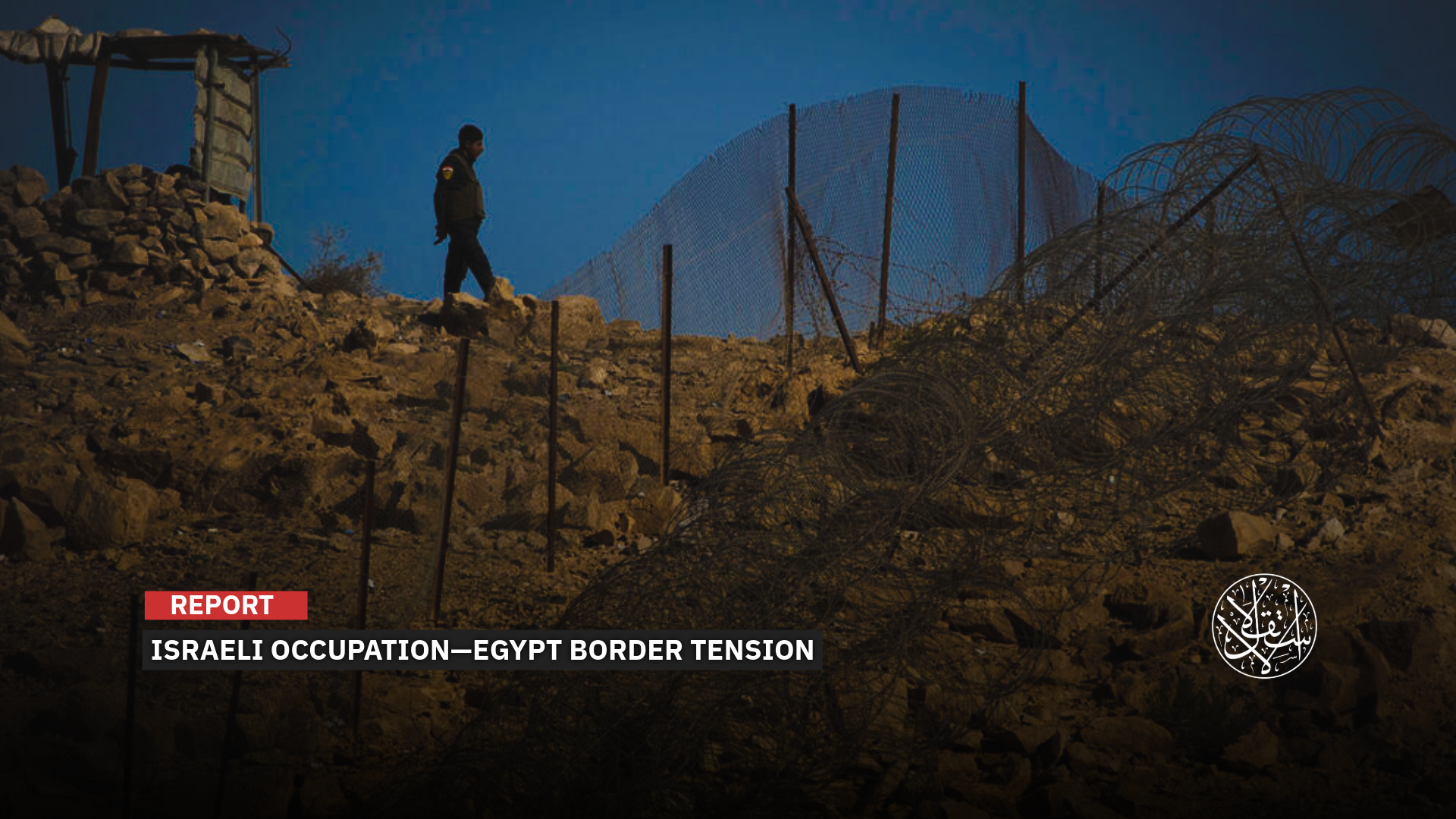
“Israel” has recorded approximately 900 drone smuggling attempts from Egypt.
After months of Israeli media reports claiming settlers had spotted drones flying near the border with Egypt, Israeli Defense Minister Yoav Katz took an unprecedented and escalatory step on the issue, issuing orders that were described in “Israel” as a “field preparation for a potential war.”
On November 6, 2025, Katz “instructed the IDF to turn the area adjacent to the border into a closed military zone and to adjust the rules of engagement in order to strike any unauthorized party that penetrates into the prohibited area, in order to hit the operators and smugglers of the drones,” according to his office, as reported by The Times of Israel.
The minister’s decisions came at a time of rising tension between the two countries since “Israel’s” war on Gaza in October 2023, the occupation by “Tel Aviv” of the border area and the Rafah crossing, and incidents of gunfire targeting Egyptian soldiers.
The latest measures, which resemble a “declaration of war,” followed two other developments that further heightened tensions:
The first, a surge in Israeli Occupation Forces’ violations along the border with Egypt, including the establishment of an aerial command center on the frontier in breach of the Camp David accords, justified as “monitoring smuggling operations from Sinai into Israel,” according to Israeli broadcaster i24NEWS on October 30, 2025.
The second, “Israel’s” suspension on November 2, 2025, of the $35 billion Palestinian gas supply agreement to Egypt signed in September 2025, claiming that it does not serve “Israel’s” interests.
What’s the Story?
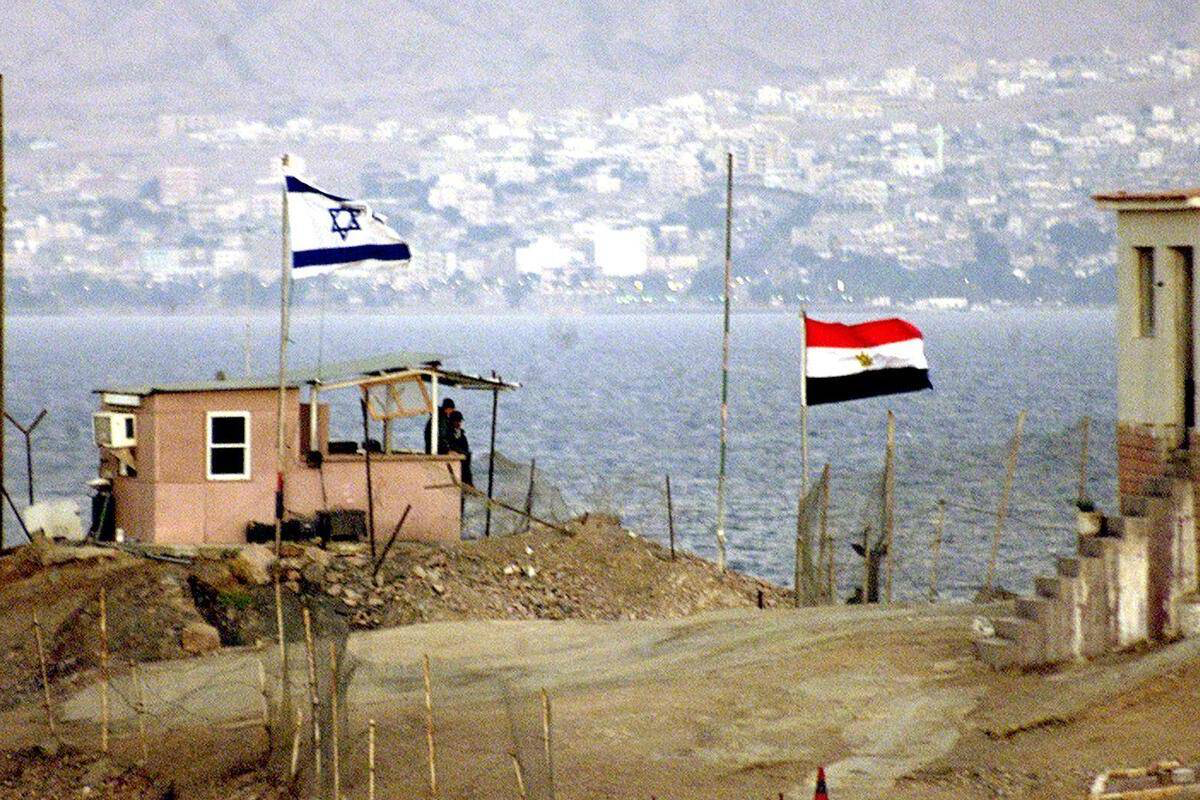
Following Israeli war on Gaza in late 2023, Israeli authorities began claiming that weapons were being smuggled from Sinai to the Palestinian Islamic Resistance Movement, Hamas, using this as justification for the occupation of Rafah and the Salah al-Din axis in May 2024, even as complaints continued from the areas under their control.
Initially insisting that weapons were being trafficked through underground tunnels, “Israel” later claimed that they were being smuggled via pilotless aircraft, or drones, with reports emerging from settlers near the Egyptian border of drones flying continuously overhead.
Each time the Israeli Occupation Forces announced it had intercepted a drone carrying weapons from Egypt into “Israel” along the western border, it claimed the craft “was an attempt to smuggle weapons into Gaza,” according to Media Line on October 17, 2025.
The paradox was that most reports involved only a handful of rifles, with smuggling directed from Egypt into “Israel” rather than Gaza, yet the authorities insisted it represented an attempt to supply Gaza, possibly through Israeli intermediaries, once the weapons reached “Israel.”
According to the Times of Israel, on November 6, 2025, the Israeli Occupation Forces repeatedly stated, “there have been frequent attempts to bring weapons and drugs over the Egyptian border using drones.”
On March 25, 2025, it was reported that “Israel” had also thwarted the smuggling of 50 kilograms of drugs via drones, according to The Times of Israel on April 16, 2025.
In one instance, the occupation police claimed that smugglers in southern “Israel” were using heavy drones to transport animals, including monkeys and lion cubs, across Jordan and Egypt.
These drones, according to Israeli media, “are small, relatively silent, cheap, commercially available, and capable of carrying payloads of several kilograms.”
When “Israel” decided to militarize the border region with Egypt under the pretext of a “drone threat,” according to Yedioth Ahronoth on November 6, 2025, the chief of staff admitted that the drone threat was a criminal threat but also a security threat with terrorist potential, as reported by the Jerusalem Post.
The Israeli escalation was therefore striking, culminating in orders from the defense minister and the chief of staff to close the “200-kilometer-long border with Egypt,” designating it a “closed military zone.”
The decision also included changes to rules of engagement, permitting forces to target anyone crossing the border, effectively resembling a declaration of war.
According to The Times of Israel, the defense minister, Yoav Katz said, “I have convened you here to declare war on drone smuggling on the Israel–Egypt border […] the current situation is dangerous to the country’s security and cannot continue […] deterrence must be created, and it must be made clear to those engaged in smuggling that the rules of the game are changing, and they will pay a very heavy price if they do not cease.”
On October 16, 2025, Yedioth Ahronoth cited Knesset member Zvi Succot, who said they were discussing the escalation of arms smuggling from Egypt after a nearby settler claimed to have observed 550 drone flights over three days.
He said, “I sit on my porch and drones pass overhead. One day, they’ll drop a bomb on a kindergarten.”
Nevertheless, members of the Knesset’s Foreign Affairs and Defense Committee testified in October 2025 that “Israel” had recorded around 900 attempted drone smuggling incidents from Egypt into the country over the previous three months, a sharp increase compared to 464 attempts during the same period in 2024.
Following the Knesset session, Chief of Staff Eyal Zamir called on October 30, 2025, for special deliberations to examine the “phenomenon of smuggling across the Egyptian border,” with particular focus on drone trafficking, according to i24NEWS.
What are the ‘Israel’s’ Goals?
Cairo has not officially responded to the statement from the Israeli Ministry of Defense, but journalist Khaled Mahmoued, known to be close to the authorities, wrote, “If drones were actually coming from Sinai toward Israel, the latter would not have remained silent, and its border with Egypt would not have been secure for even an hour.”
He described Defense Minister Yoav Katz’s announcement, made during an emergency meeting with senior military, intelligence, and police officials about immediate security measures to confront the threat of weapons smuggling via drones along the Egyptian border, as “nonsense.”
Mahmoued stressed that these statements “aim to occupy the Egyptian state and reinforce its stance regarding what is happening in Gaza and near the shared border.”
“This Israeli exaggeration is closer to an attempt to create a new political and security pretext than to describe a real threat. Israel, through these claims, seeks to reset regional security calculations and restrict Egypt’s movement on the Gaza file by manufacturing artificial tension along the border,” he added.
Unofficial Egyptian sources suggested that Cairo may in fact be “countering Israel across the border by turning a blind eye to the activities of these drones,” in response to the occupation’s breach of the peace agreement, its control of the border, and threats to Egypt’s security.
They told Al-Estiklal that if “Israel’s” reports of small-scale smuggling are accurate, the real aim could be to respond to Israeli provocations following the occupation of the border area and the Rafah crossing.
The Israeli Occupation Forces had further provoked Egypt with a new decision to establish an air surveillance center under the command of the Air Force (ACC) within the 80th Division, tasked with monitoring aerial activity along the Egyptian border, including drones used to smuggle weapons and other goods from the Sinai Peninsula.
According to i24NEWS on October 30, 2025, “the decision came after an emergency meeting convened by the Air Force commander with relevant security agencies, following a notable increase in the use of drones to smuggle drugs, such as hashish and Captagon.”
“Occasionally, weapons or espionage equipment are also trafficked from areas of the Sinai Peninsula believed to be controlled by criminal networks and extremist cells,” the report added.
Masrawy reported on November 2, 2025, that Dr. Muhammad Mehran, professor of international law, warned that “Israel’s” establishment of an advanced air command center on the Egyptian border “constitutes a flagrant and serious violation of the Camp David Agreement, and represents a direct threat to Egypt’s national security.”
Dr. Mehran stressed that Egypt would not accept such a move, as it directly affects its security.
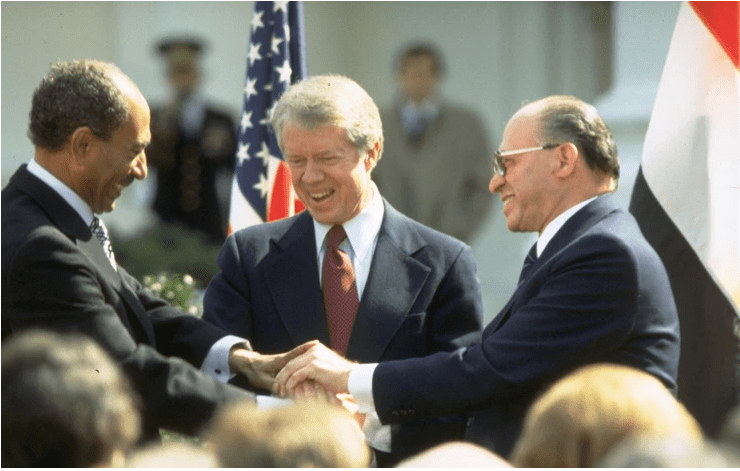
He explained that the 1979 Egyptian-Israeli peace agreement includes a detailed security annex that precisely regulates the nature and extent of Israeli Occupation Forces presence along the border with Egypt.
The annex divides border areas into zones with restricted armaments at varying levels, and specifies in detail the types and numbers of troops and weapons permitted in each area.
Dr. Mehran asserted that establishing an advanced military command center equipped with sophisticated radar systems, electronic jamming devices, and aerial interception capabilities “clearly and blatantly exceeds the limited defensive nature prescribed in the agreement.”
He described the new Israeli center as “an advanced offensive military facility, not merely a defensive border monitoring post.”
Regarding “Israel’s” justification that the center is intended to combat cross-border smuggling, Dr. Mehran said the claim was legally weak and unconvincing.
He pointed out that combating smuggling does not require a military facility of this size or technological sophistication, and that conventional security measures and coordination with Egyptian authorities are sufficient to address the issue.
Dr. Mehran called on the Egyptian government to take a firm and immediate stance on this potential violation, urging the immediate recall of the Israeli ambassador and demanding detailed official clarifications about the center’s nature, capabilities, and actual objectives.
Continued Escalation
Relations between Cairo and “Tel Aviv” have been steadily escalating since the start of the Gaza war, beginning with Cairo’s rejection of the Israeli-American relocation plan, followed by “Tel Aviv” accusing Egypt of violating the peace agreement and amassing reinforcements on the border after occupying the Philadelphia axis.
The tension reached the point where former ambassador to Cairo, David Govrin, wrote in Yedioth Ahronoth on September 23, 2025, and was mentioned in Sada News that Egypt “has been gradually eroding the security annex of the Camp David agreement for years by imposing new facts on the ground.”
On September 22, 2025, Axios reported, citing one American and two Israeli sources, that Netanyahu had filed a complaint against Egypt with the Trump administration, demanding pressure to reduce its recent military build-up in Sinai, describing it as a “point of tension” between the two countries.
According to Middle East Eye, it added that a list of Egyptian military activities in Sinai, which he considered “serious violations of the 1979 Israeli-Egyptian peace treaty” signed with “Israel,” of which the United States is guarantor.
“Israel” claims that Egypt has built military infrastructure, constructed underground facilities for missile storage, and expanded fighter jet runways.
On November 5, 2025, the Israeli minister for the Negev, Galilee, and “national resilience,” Yitzhak Wasserlauf, warned that “increasing security breaches along the border with Egypt and the growing military strength of the Egyptian army.”
In his letter, Wasserlauf wrote, “In recent years, there have been consistent trends of armament and broad growth within the Egyptian army, including major investments in infrastructure, combat equipment, and command and control capabilities.”
Wasserlauf described “this development requires Israel to conduct a thorough review of the Israeli army’s readiness and the security system for a potential confrontation in a conventional theater, and to examine its implications for national security policy.”
The Israeli minister warned that “current battle plans and army directives do not provide an adequate response to this challenge.”
This coincided with a statement from the Ohev Yisrael forum (“Israel’s” Shield), emphasizing the need to be prepared on the Egyptian front, warning that “this is a vital file for Israel’s security.”
Referring seemingly to the Operation al-Aqsa flood and the 1973 October War with Egypt, it added, “We have experienced, firsthand, the consequences of preparing based on the enemy’s intentions rather than its capabilities. This time the mistake must not be repeated. It is a clear warning to decision-makers.”
Egyptian Foreign Minister Badr Abdelatty stated that relations with “Israel” had been severely strained “because of the disasters occurring in Gaza, and some far-right elements promoting falsehoods in the media and transmitting them to external parties.”
Speaking on the program “Happening in Egypt” on MBC Masr on November 4, 2025, he said, “There is a difference between managing relations and their level of exchange, and the peace treaty. The treaty remains valid and binding on both countries, and the two countries respect their obligations under it.”
He stressed that Egypt had been careful to inform the United States that “any claims that Egypt has violated the peace agreement are lies, and this has never happened.”
Why is Egypt not responding?
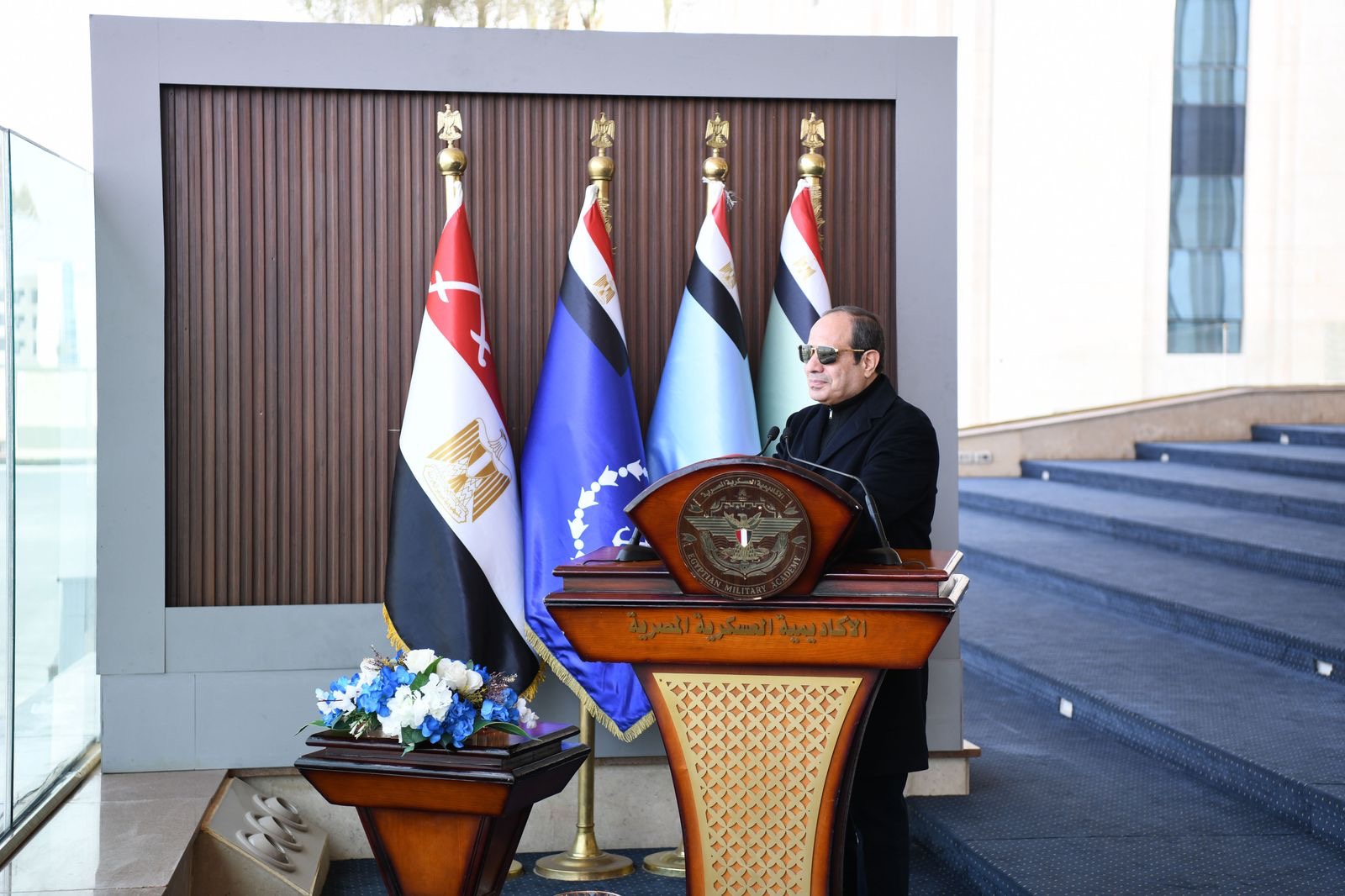
Despite Israeli provocations, Egyptian head of the regime Abdel Fattah el-Sisi responded during a visit to the Military Academy in the new administrative capital on September 27, 2025, by saying he would not fight “Israel” over Gaza, nor would he deliver aid by force.
“No one is asking me to gamble with the lives of Egyptians and enter into a conflict to deliver aid to Gaza by force,” he said which observers interpreted as a clear signal that he would not go to war with “Israel” under any circumstances, and that claims by some of the authority’s committees that war was imminent were simply false.
However, on August 5, 2025, el-Sisi, for the first time since the flood, described “Israel’s” war on Gaza as “constituting a genocide of Palestinians in the Strip.”
The paradox was that two days after this statement, the Egyptian government signed a $35 billion deal to import natural gas from “Israel,” a deal which Israeli Energy Minister Eli Cohen subsequently froze, claiming it did not serve “Israel’s” interests.
An analysis by Responsible Statecraft commented on el-Sisi’s description of “Israel” as “the enemy,” yet the continuation of relations and the gas agreement, noting that some military and economic ties are difficult to sever.
Under the headline “Egypt stepping out from Israel's shadow? It depends.” Responsible Statecraft argued that Egypt plays a leading role in the Middle East, “yet its reliance on Washington limits its ability to take on a truly leading role.”
It added that Egypt is attempting to assert its presence in relation to the Israeli war in Gaza, and perhaps for this reason, el-Sisi called for an “Arab-Islamic security alliance,” though he remains dependent on, and tied to, Trump.
The American magazine noted that “Egypt doesn’t want to be a party to any movement of Palestinians out of their land. They fear, after Netanyahu’s warning that Israel could strike Hamas leaders “wherever they are,” that Egypt could be a target, too, since Cairo hosts some Hamas leaders as part of the mediating process.”
“They fear that Hamas fighters who move into Egypt could attack Israel from Egyptian soil, inviting Israeli retaliation.”
According to Responsible Statecraft, “Also, domestically, Egypt has its own problems with local Islamist insurgencies and does not relish any influx of Hamas fighters.”
“No doubt this is why Egypt is urging Hamas to give a positive response to Trump’s peace proposal for Gaza.”
Responsible Statecraft cited Stephen Zunes, professor of political science and director of the Middle East Studies program at the University of San Francisco, saying that “public opinion may be making Sisi feel emboldened to pursue a more independent foreign policy.”
“Egypt’s economic and military dependence on the United States, Sisi is not that popular, Egypt is struggling economically, they don't have the clout of the smaller but much richer oil monarchies, and regional politics is far more complicated than it used to be,” Zunes added.
On August 25, 2025, the U.S. news network Truthout published an article titled, “Egypt Has Leverage Against Israel. Why Doesn’t Sisi Use It?”
Written by Atef Said, an associate professor of sociology at the University of Illinois in Chicago, the piece called on Egyptians to pressure el-Sisi to support Gaza, outlining the tools Cairo could use to influence both “Israel” and the United States.
It urged Egypt to take the right course of action, to leverage its power, and to stop submitting to U.S. imperial policies and “Israel’s” genocidal campaign.
The article noted that el-Sisi could threaten to terminate the 2005 security protocol, which regulates how Egypt and “Israel” exercise control over the border, after “Israel’s” violations.
The protocol, it explained, prevents “Israel” from maintaining any presence in the Philadelphia axis.
Sources
- Israel declares closed military zone along Egypt border to combat drone smuggling
- IDF Intercepts Drone Smuggling Weapons from Egypt into Gaza Border Region
- Drones smuggling heavy weapons into Israel from Egypt 'with impunity,' officials sound alarm
- Egypt stepping out from Israel's shadow? It depends
- Egypt Has Leverage Against Israel. Why Doesn’t Sisi Use It
- Israel establishes a special unit to counter the drone threat on the Egyptian border [Arabic]
- Israeli minister warns: Egypt is strengthening its capabilities on the border and Israel has no response plan [Arabic]
- Does Israel’s establishment of an air command center on the Egyptian border violate the Camp David agreement? [Arabic]