How the Resistance Dismantled the Israeli Occupation’s Intelligence Network in Gaza
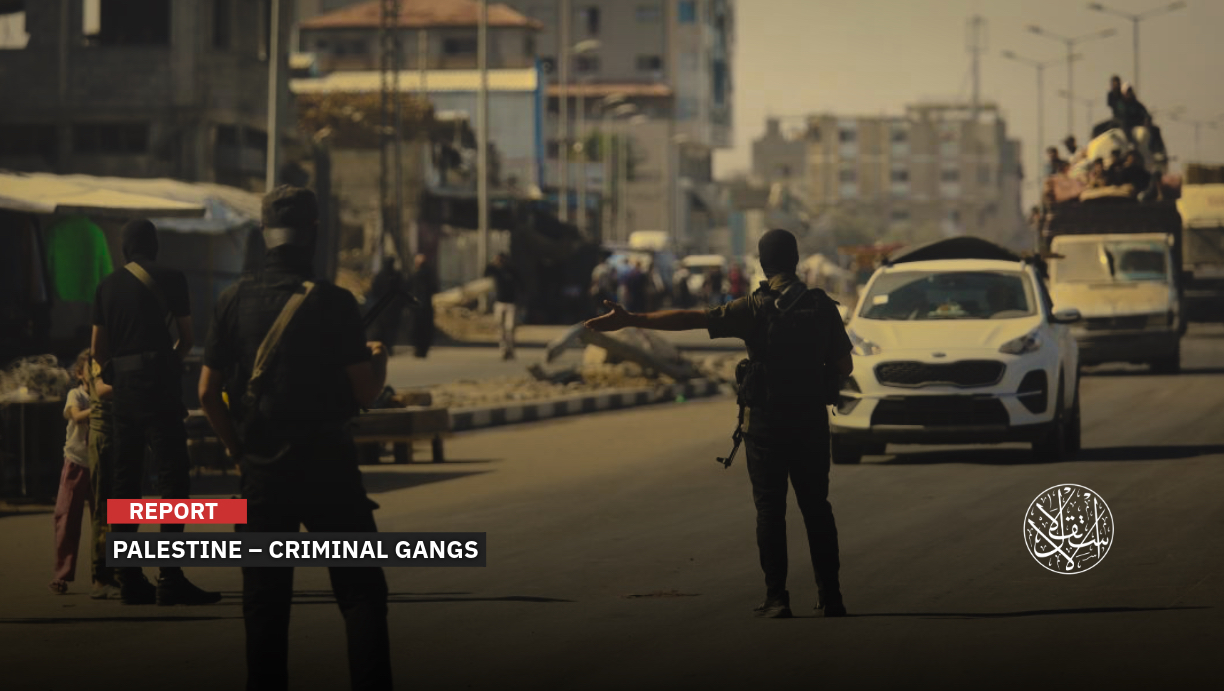
“The Israeli occupation exploited the drug trade as a tool to recruit and fund collaborators.”
The Palestinian resistance and security forces in the Gaza Strip continue their campaigns against the treacherous gangs collaborating with the Israeli occupation during its aggression, which resulted in the martyrdom of more than 70,000 Palestinians and the injury of nearly 171,000, most of whom were children and women.
Since the ceasefire on October 10, 2025, the resistance and the Ministry of Interior have focused their efforts on eradicating an integrated system of traitors in various fields that serve the Israeli occupation.
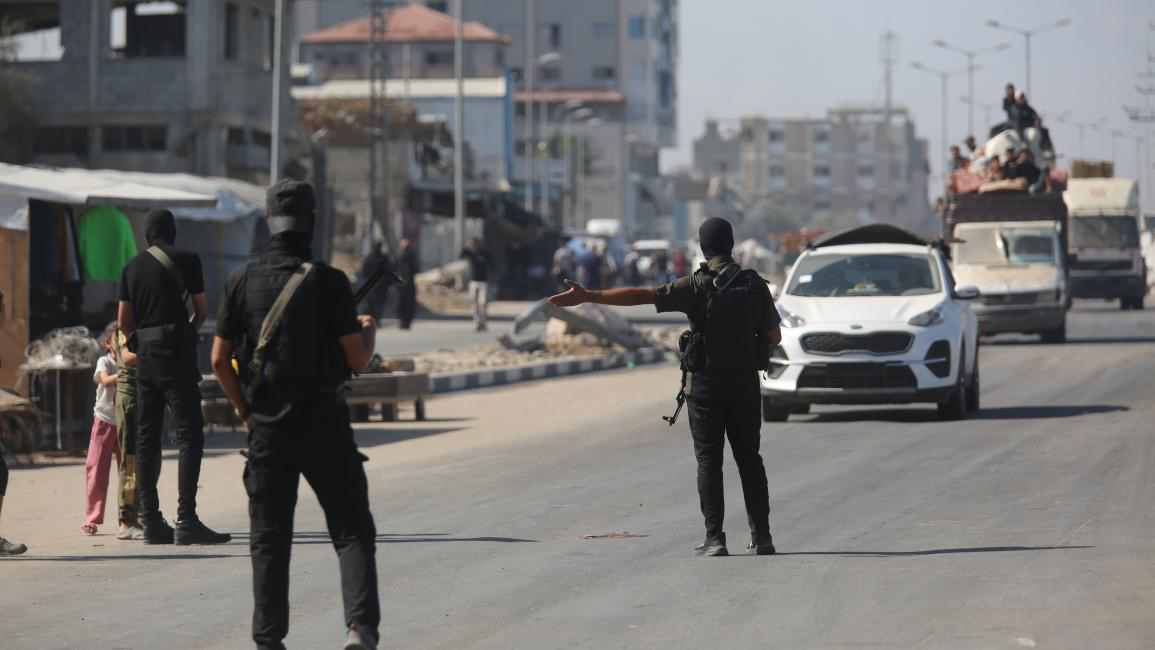
The security forces, alongside the resistance, have carried out hundreds of operations against agents and collaborators of the Israeli occupation, in all their forms, whether individuals or organized groups.
These ongoing operations, according to a report published by the Al-Hares platform affiliated with the resistance security forces on November 7, 2015, have resulted in the arrest of a large number of Israeli agents, who are being interrogated, and from whom sensitive information has been obtained.
In addition, a significant number of agents proven to have provided direct support to the Israeli occupation have been eliminated.
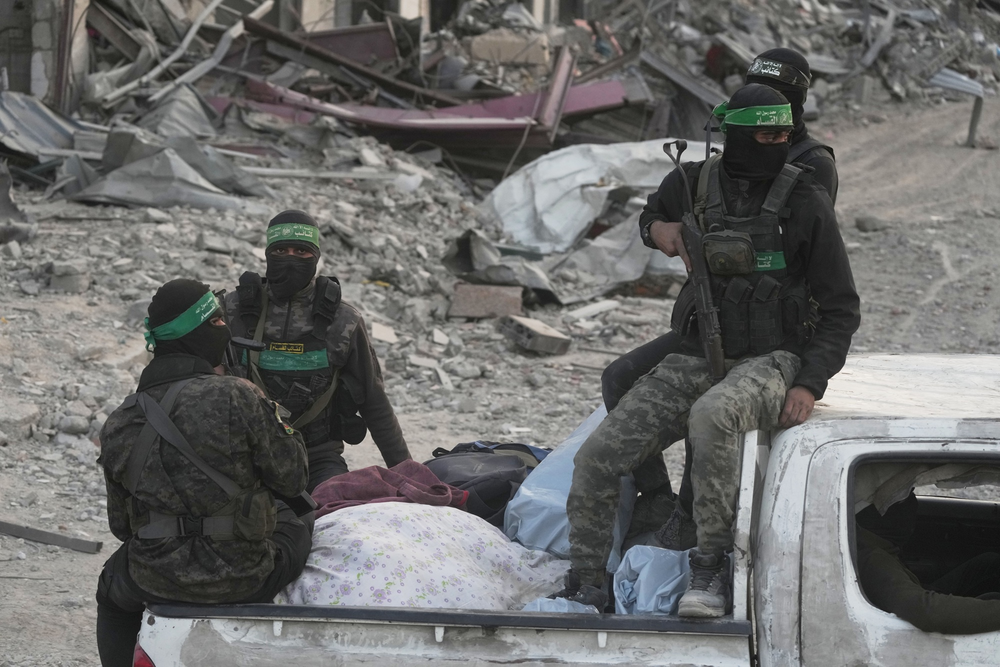
The resistance also succeeded in dismantling gangs loyal to the Israeli occupation, leading to the surrender of families who had been indirectly working with it and the handover of their weapons.
Criminal Gangs
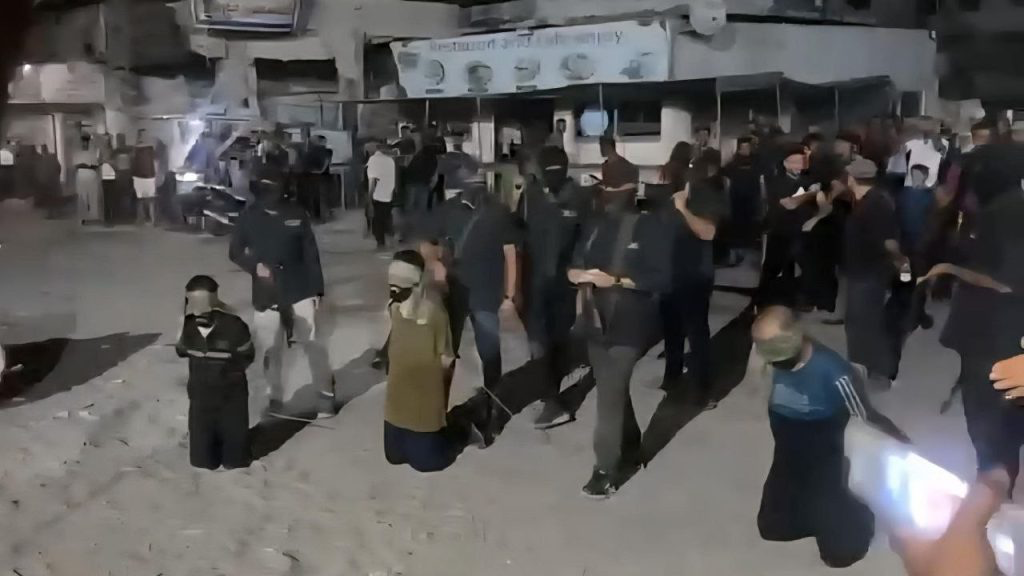
The military judiciary in the Gaza Strip announced a series of death sentences against collaborators with the Israeli occupation who had been arrested. These sentences were carried out in public squares by members of the Palestinian resistance.
With the security crackdown and executions, the noose tightened around the gangs collaborating with the Israeli occupation and the individuals involved in collaboration, amid growing popular cooperation with security forces in efforts to dismantle these groups.
This escalating pressure contributed to tightening the noose around them, prompting many of them to attempt to flee from areas controlled by the resistance towards areas under Israeli occupation, or what is known as behind the yellow line, in an attempt to escape the fate of traitors.
A security source in the Gaza Interior Ministry revealed that security forces have detected the escape of a number of collaborators who were present in areas where the Israeli occupation army withdrew and in populated areas. These collaborators fled to areas beyond the Green Line, seeking protection from the Israeli occupation forces and using these areas as temporary residences.
He told Al-Estiklal: “A number of collaborators fled towards areas east of Khan Younis and east of the village of Al-Qarara, as well as the city of Rafah in the southern Gaza Strip. Some of them resorted to a camp where the Abu Shabab gang and its affiliated families are entrenched.”
“We also detected cases of collaborators fleeing towards the eastern part of Gaza City, where Ahmed Jundiya’s militia is based, in addition to other collaborators who headed towards the northern Gaza Strip, to areas where the Abu Mansi militia is present, which is currently primarily based in the Beit Hanoun area,” he added.
“We have detected the presence of a militia affiliated with Husam al-Astal, stationed inside a school east of Al-Qarara. This militia exerts control over a number of residents living in the areas known as the yellow zone or beyond the Green Line, which are areas under Israeli occupation,” he said.
“This militia is active in searching for tunnels and military infrastructure belonging to the resistance. Its areas of operation have become something of a gathering place for collaborators and those who cooperated with them in the southern Gaza Strip,” he added.
The source emphasized that “many gangs loyal to the Israeli occupation, in addition to collaborators, were also targeted within the designated safe zones. They were arrested and apprehended through targeted operations, and some were even lured from those areas in well-executed ambushes by the security services.”
He explained that these individuals believed those areas would provide them with a safe haven, but the expansion of security operations, which posed a clear challenge to the Israeli occupation, prevented this.
The source affirmed that “with the Israeli occupation beginning to implement the second phase of the agreement, these individuals will have no escape to flee.”
He indicated that “the security services and the resistance security forces have opened the door for collaborators and those who were misled and wish to repent and rectify their actions, and have been given the opportunity to regularize their status and contact the relevant authorities.”
“Indeed, a significant number of individuals have responded positively to the Israeli occupation's schemes, including some who were part of pro-Israeli militias, and others who were lured or blackmailed with food and various other methods that compelled them to become collaborators,” he added.
The source emphasized that “those who did not directly commit massacres or carry out targeted attacks will be treated fairly and mercifully, taking into account their circumstances and level of involvement.”
Recruitment Networks
Investigations with collaborators revealed that the Israeli occupation had established networks specializing in recruiting agents using various methods and means.
Tel Aviv exploited every possible means to blackmail and threaten individuals in order to coerce them into treason and security cooperation, even if the price was committing massacres against the people of Gaza.
A Palestinian police officer, identified only as M.J. for security reasons, stated that “since the beginning of the war, the Israeli occupation has established specialized networks to recruit agents, employing various entrapment methods, some of which are being used for the first time and were previously unknown.”
He explained to Al-Estiklal that “these networks operated covertly and systematically, exploiting the difficult circumstances faced by the population to expand their recruitment efforts and diversify their methods of blackmail, enticement, and intimidation.”
He added that “the Israeli occupation exploited the various crises in the Gaza Strip, using them as effective recruitment tools, such as periods of famine and medicine shortages.”
“The Israeli occupation also used humanitarian aid as leverage and created fake social media pages advertising travel for medical treatment, which later turned out to be mere fronts for recruitment attempts,” he said.
The officer indicated that the Israeli occupation also resorted to direct threats, arresting individuals at checkpoints and in areas subjected to ground attacks, and blackmailing them into working for the occupation in exchange for their release.
“It didn’t stop there; they also used threats of assassination or killing family members to obtain information and coerce some individuals into becoming collaborators,” he noted.
Dirty Tactics
Regarding the US aid centers, the officer confirmed that the main objective of these centers was to recruit agents for the Israeli occupation, noting a significant Shin Bet presence within the centers.
Investigations revealed the recruitment of large numbers of agents, as well as the Israeli occupation’s attempts to recruit others at these centers.
He cited one real-life case; A resident received a visit from his neighbor, who told him he could obtain aid from the American aid center in Netzarim, provided he accompanied him the following morning.
When he arrived, he was surprised to find an Israeli occupation officer in a room in the eastern section of the center. The officer demanded information from him in exchange for a daily food parcel.
The officer explained that the drug trade, despite being a fully-fledged crime, was also exploited by the Israeli occupation as a tool to recruit and fund collaborators.
He pointed out that the Israeli occupation allowed and facilitated the flow of drugs to gangs loyal to it, enabling them to become involved in the illicit trade and reap enormous financial gains.
“At the same time, the Israeli occupation achieved two goals: flooding the Gaza Strip with drugs and using the proceeds to fund and encourage collaboration,” he added.
“Investigations have shown that many of those arrested on drug trafficking charges during the war have direct ties to the Israeli occupation and cooperated with it to achieve its security objectives,” he said.
He revealed that “recruitment networks relied heavily on moral blackmail during the war; their mission was to exert pressure on specific individuals to exploit them in espionage and collaboration with the Israeli occupation.”
He pointed out that this method, despite its age and previous reliance on it by the Israeli occupation, succeeded during the war in ensnaring a number of collaborators, thus helping it expand its network of agents.
He explained that the Israeli occupation also relied on the tactic of buying the loyalty of entire families by contacting family leaders or influential figures within them, with the aim of turning them into tools serving its interests.
This method manifested itself in the form of gangs loyal to the Israeli occupation, such as the Daghmush gang, or other gangs that aim to destabilize security within the Gaza Strip and gather intelligence for its benefit.
The officer confirmed that this method was very effective and contributed to strengthening the interests of the Israeli occupation during the war periods, especially in the last months of it.