From Covert Support to Open Deterrence: Why Has Egypt Revealed Its Hand in Sudan Now?
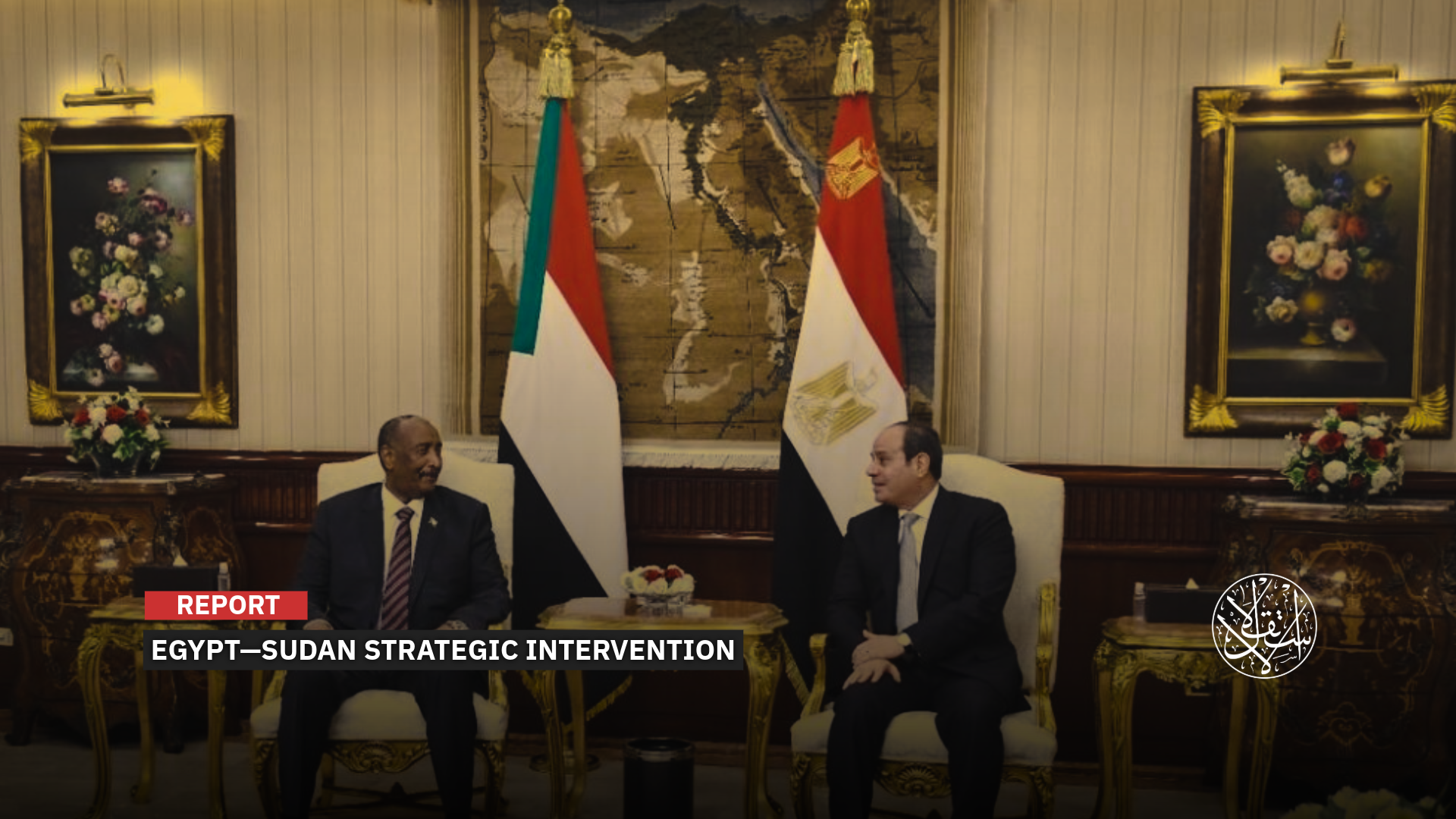
A source in Hemedti’s advisory council called the move a ‘declaration of war’ on the Rapid Support Forces militia.
When Cairo speaks publicly of “red lines” in Sudan and invokes a joint defense agreement in place for nearly half a century, it is not seeking a military adventure, nor an expansion of a war already raging.
Rather, it is making clear that the Sudanese state, its institutions, unity, and security, are no longer open to bargaining or armed blackmail.
At a moment of acute regional turmoil, and as Sudan’s war enters a phase that threatens the very existence of the state, Egypt appears to have chosen to move its messages from closed rooms into the open.
It is affirming that protecting Sudan is not a temporary tactical option, but a strategic commitment directly tied to Egypt’s national security.
The Moment of Announcement
On January 8, 2026, former Egyptian parliamentarian Emad Gad said in remarks to the Saudi-owned channel Al Arabiya that Egypt was moving toward activating the joint defense agreement with Sudan, and that it could intervene directly to support the Sudanese Armed Forces.
He said the move was consistent with comments made by Egypt’s Foreign Minister, Badr Abdelatty, following his meeting with the European Union’s Foreign Policy Chief, framing it as a direct message to the Rapid Support Forces militia and their regional backers, foremost among them the United Arab Emirates.
This point carries particular significance because it shifts the issue from the realm of bilateral coordination to the level of regional balances and deterrence messages directed at parties supporting the conflict.
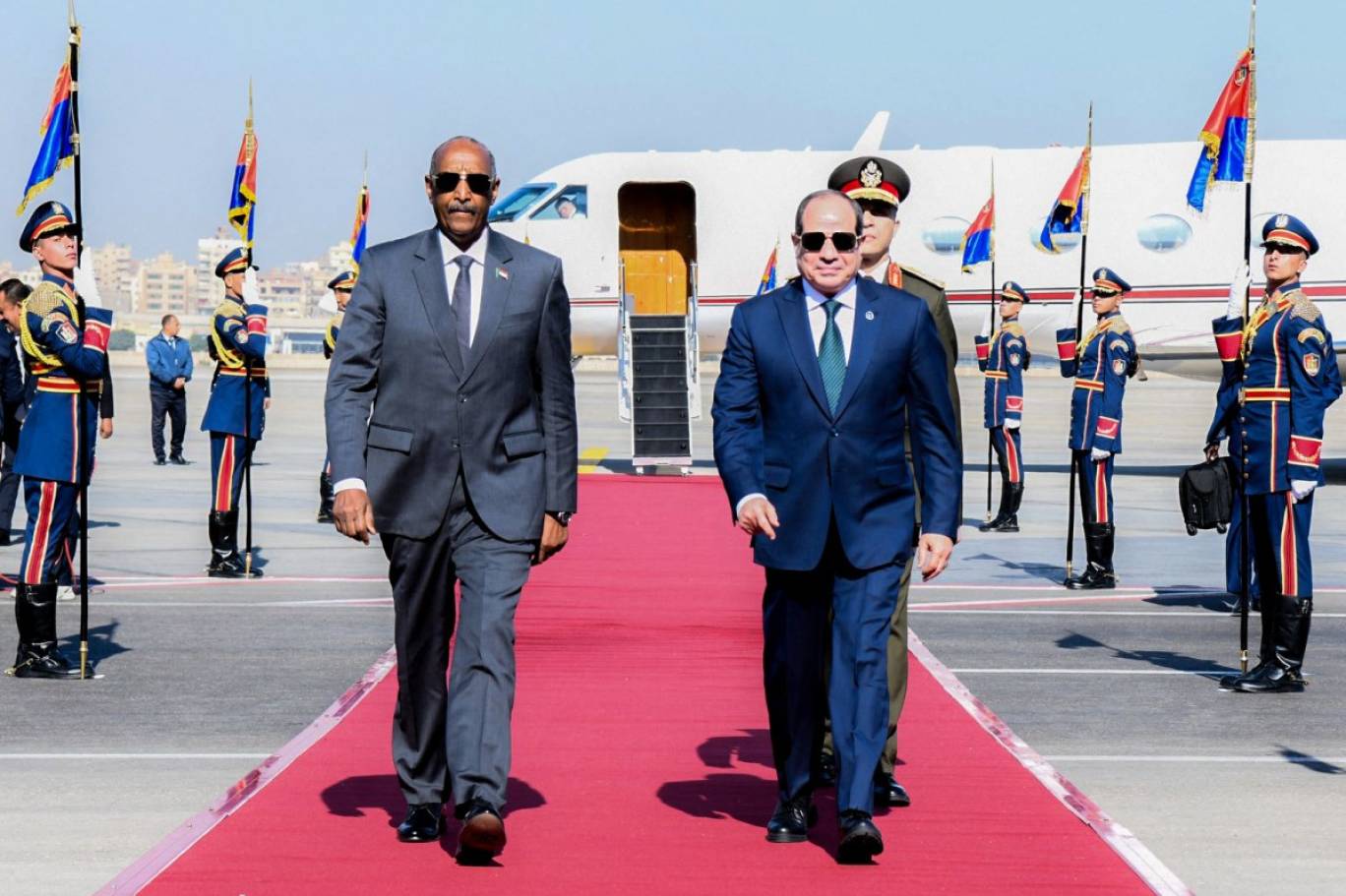
About three weeks earlier, on December 18, 2025, Egyptian President Abdel Fattah el-Sisi and Sudan’s Sovereignty Council chairman, Abdel Fattah al-Burhan, called for activating the joint defense agreement between the two countries during their meeting in Cairo.
With that call, explicit official language appeared for the first time, speaking of Egypt’s full right to activate the agreement in response to any threats crossing red lines, foremost among them Sudan’s state institutions and Egypt’s national security.
In this way, Cairo moved from the language of general political support to that of commitment and deterrence grounded in an existing legal agreement.
Here, the turning point comes into focus. While Egypt has, according to circulating accounts, supported the Sudanese army since the outbreak of the war, this statement marked the first public signal that joint defense agreements might be activated.
The Rapid Support Forces militia were quick to pick up the message. On December 24, 2025, the local outlet Mada Masr quoted a source in the RSF militia advisory body describing the move as an “announcement of war.”
The source said Cairo had shifted its support for the Sudanese army from secrecy to openness, and called on the RSF militia commander to engage in direct dialogue with Egypt instead of what he described as “military interference in Sudanese affairs.”
The 1976 Agreement
The joint defense agreement between Egypt and Sudan dates back to July 15, 1976, when the two countries signed an accord comprising eight articles that established the principle that any armed attack on one would be treated as an attack on both.
The agreement committed the two sides to taking all necessary measures, including the use of armed force, to repel and deter aggression.
It also stipulated the exchange of information and consultation in cases of sudden attack or any emergency deemed potentially dangerous, the unification of plans and movements, and coordination in the development of the armed forces and the adoption of advanced weaponry.
In addition, it called for the creation of the necessary executive structures, foremost among them a Joint Defense Council and a Joint Chiefs of Staff.
Notably, the agreement did not remain merely ink on paper. In 1976, early implementation steps were taken, beginning with a meeting of the Joint Defense Council in Cairo from September 7 to 10, followed by the first meeting of the Joint Chiefs of Staff in Khartoum in November of the same year, during which an agreement was signed to strengthen military cooperation.
In April 1977, the second meeting of the Joint Chiefs of Staff was held in Cairo, before the announcement on October 12, 1982, of the Charter of Military Integration, which explicitly spoke of a unified defense and security strategy.
However, a statement by Sudan’s then-president, Jaafar Nimeiri, just 15 days later, stirred domestic concerns when he spoke of integrating theaters of operations from north to south.
The remarks fueled Sudanese voices calling for the cancellation of the agreement, out of fear that it could open the door to interference in internal affairs.

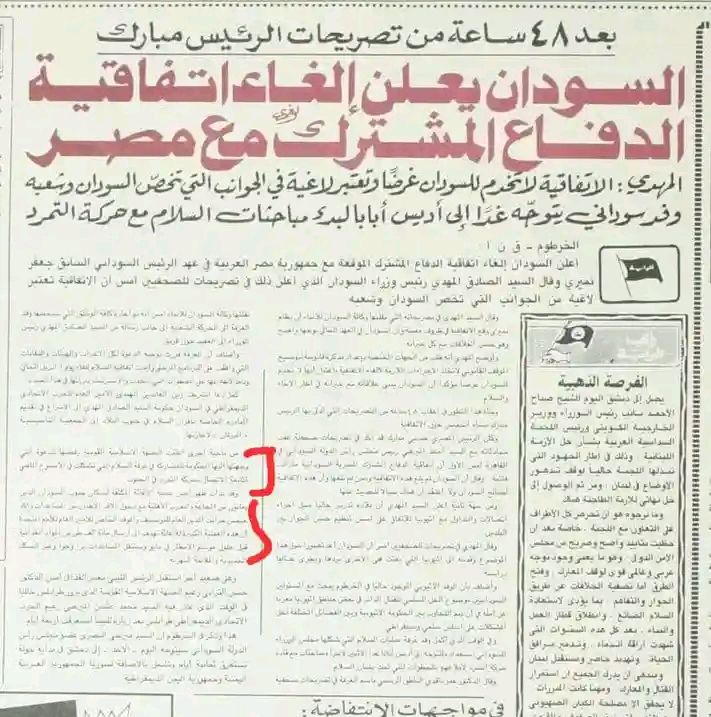
Within this trajectory, a pivotal moment emerges on April 2, 1989, when Sudan’s then–prime minister, Sadiq al-Mahdi, announced the cancellation of the joint defense agreement with Egypt.
According to Sudanese press reports, he argued that the agreement had been signed during the era of Jaafar Nimeiri. No official Egyptian statement was issued at the time to confirm or deny the cancellation.
Between this moment and the signing of the so-called “Charter of Brotherhood” on February 21, 1987, by Mahdi and his Egyptian counterpart, Atef Sedky, a document that contained no explicit text canceling or even addressing the defense agreement, a state of legal and political ambiguity can be traced.
Was the cancellation primarily an internal political decision rather than a legal measure that fulfilled the formal requirements for withdrawal? And did the agreement, from the Egyptian perspective, remain in force due to the absence of completed cancellation procedures as stipulated in its text?
Here, a key clause in the agreement comes into focus. It states that the agreement is valid for 25 years and is automatically renewed for five-year periods unless one of the two states notifies the other of its desire to withdraw at least one year before the end of the term.
Such withdrawal also requires ratification in accordance with constitutional procedures, and the exchange of instruments of ratification.
An Existing Trajectory
Setting aside the historical debate, the decisive word came from Cairo on December 18, 2025, when Diaa Rashwan, head of Egypt’s State Information Service, confirmed that the joint defense agreement between Egypt and Sudan is “valid and in force,” and that it covers confronting any dangers or threats affecting the security of both countries.
The statement leaves little room for interpretation. From the perspective of Egypt’s official institutions, the agreement remains operative.
This position comes against the backdrop of years of accumulating shared challenges, most notably the crisis over Ethiopia’s Grand Renaissance Dam since 2011, which pushed Cairo to revive the spirit of the agreement through intensified military and security cooperation with Sudan.
In November 2011, the two sides agreed to form joint forces and border patrols to combat terrorism, cross-border crime, and to secure their shared frontier, during military talks held in Khartoum.
Then, in March 2021, the two armies signed a military agreement to strengthen the national security of both countries. It included cooperation in confronting threats, Egyptian training and technical support for the Sudanese army, and coordination to protect the common border.
These milestones did not explicitly announce the activation of the 1976 agreement, but they rebuilt its practical foundations and created a cumulative context that makes today’s talk of activation an extension of an existing trajectory, rather than the launch of a new one.
The central question, then, is why Cairo has chosen to raise the agreement publicly now. Sudanese politician Dr. Ibrahim Abdel-Ati answers this question in remarks to Al-Estiklal, linking the move to three interlocking factors.
First is the shift in the military landscape, with violent clashes erupting in recent weeks across the three Kordofan states, and triggering large waves of displacement.
This front represents a new center of gravity in the war, one that could open pathways threatening the cohesion of the Sudanese state and its institutions, a scenario Cairo considers a red line.
Second is a redefinition of the threat. Egyptian discourse no longer focuses solely on supporting Sudan, but on preserving its territorial unity, preventing scenarios of fragmentation or secession, and protecting state institutions from collapse.
“When the war shifts from a conflict between two forces to a threat to the unity of the state, activating the agreement becomes logical within the narrative of Cairo and the Sudanese army, as an act of protecting the state rather than intervening in politics,” Abdel-Ati said.
Third is the regional messages. Cairo sees what is unfolding in Sudan as part of a broader struggle for influence, and believes that raising the level of public signaling is an attempt to recalibrate the calculations of the parties backing the Rapid Support Forces, foremost among them the United Arab Emirates.
Putting the Agreement into Effect
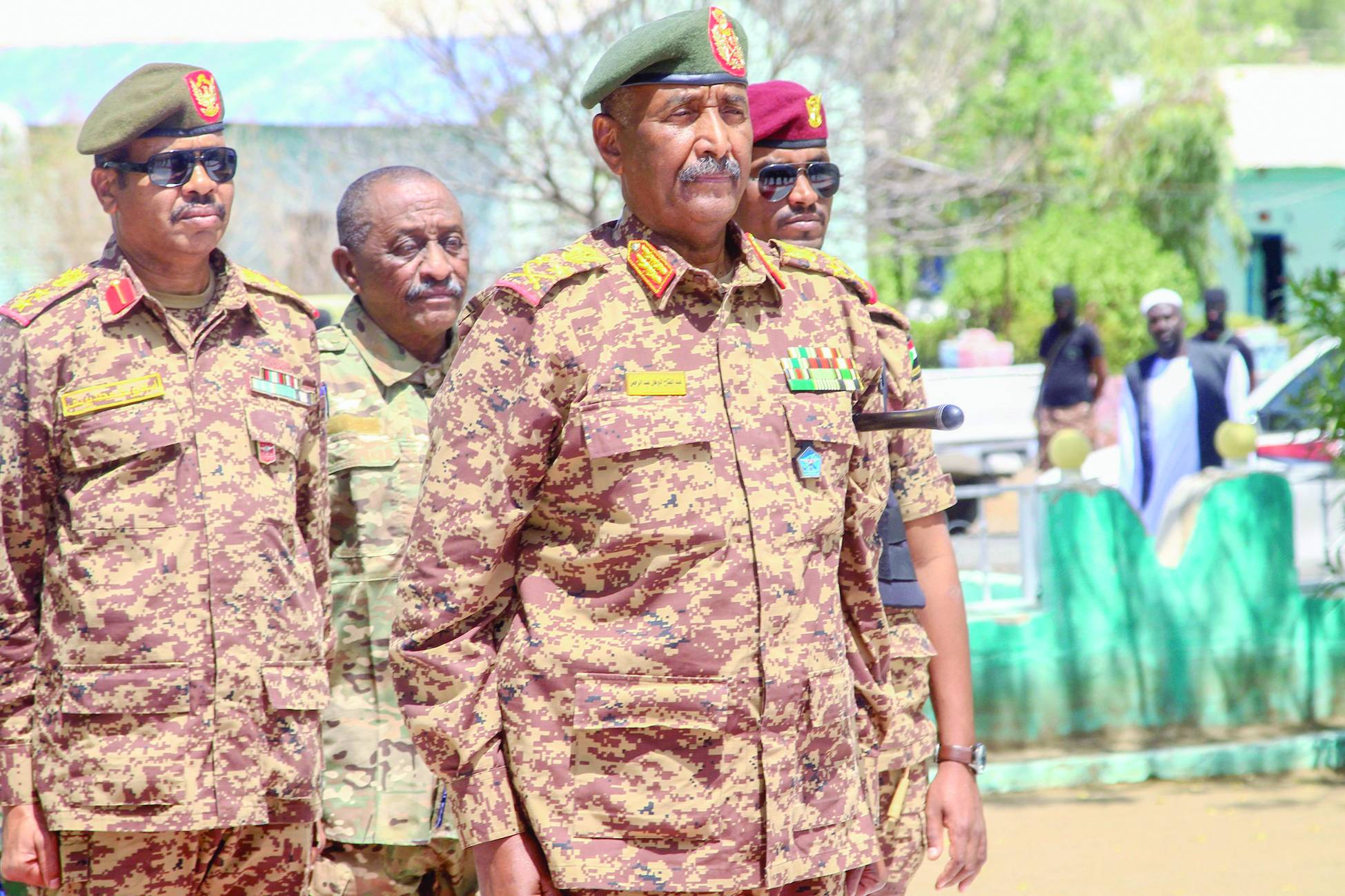
According to a report by the Sudanese newspaper Al-Taghyeer on December 25, 2025, conflating the activation of the agreement with immediate military intervention serves the Rapid Support Forces militia narrative more than it reflects reality.
Activation, the report argues, is a gradual process. It begins with political and security deterrence that declares the collapse or partition of the Sudanese state a red line for Egypt.
It then escalates to raising the level of overt military coordination, including intelligence sharing, planning, training, and logistical support, in ways that strengthen the Sudanese army’s capacity to protect state institutions.
The third level, direct military intervention, remains a conditional option, one that would only be pursued if Egypt’s national security or Sudan’s unity were exposed to a direct threat that could not be contained by other means.
In this sense, activation does not mean widening the war, but rather an attempt to contain it and prevent it from spiraling into open regional chaos.
Looming behind this picture is a humanitarian catastrophe, tens of thousands killed, more than 13 million displaced, a collapsed economy, and institutions on the brink of disintegration.
From this perspective, Cairo views its support for the Sudanese army not as siding with a military faction, but as supporting the concept of the state itself, as the only framework capable, despite all its distortions, of halting total collapse.
For this reason, Egypt continues to play a diplomatic role within the so-called Quartet Committee overseeing the political track, and presses for a humanitarian ceasefire.
At the same time, it recognizes that any political process without a balance of power and without real deterrence against the militia will remain futile.
Amid this gradual escalation, a lengthy post by Sudanese political analyst Makkawi Elmalik on the X platform drew wide attention. He warned that “what is happening behind the scenes is far more dangerous than what appears on the surface.”
He said the region is on the cusp of “a complete strategic transformation in the Sudan and Horn of Africa file,” speaking of accelerating military flows, including air shipments arriving in Port Sudan from several countries, among them Egypt, and Turkiye, while shipments reach the Rapid Support Forces militia and Ethiopia from the United Arab Emirates, alongside the transfer of mercenaries on Emirati aircraft in recent days.
Unanswered Questions
Elmalik added that a massive arms deal passing through Pakistan, financed by Saudi Arabia and estimated at around $1.5 billion, is part of a broader reordering of the balance of power.
This, he said, coincides with a “strongly worded” Egyptian statement issued after coordination with Saudi Arabia, affirming rejection of any scenario that would divide Sudan and backing the army as the country’s legitimate national institution.
At the end of his post, he posed questions that reflect the depth of anxiety surrounding the next phase: Are we witnessing preparations for a major battle, or the effective entry of Egypt and Saudi Arabia to break the Emirati project in Sudan and close the file militarily and politically?
He concluded with a warning that “what is happening behind the scenes is bigger and deeper than Sudan alone,” and that the entire region stands on the threshold of a historic turning point that could redraw maps of influence and alliances for years to come.