An Unprecedented Crisis: Could Algeria’s ‘Kabylie Region’ Trigger a Diplomatic Break With the UAE?
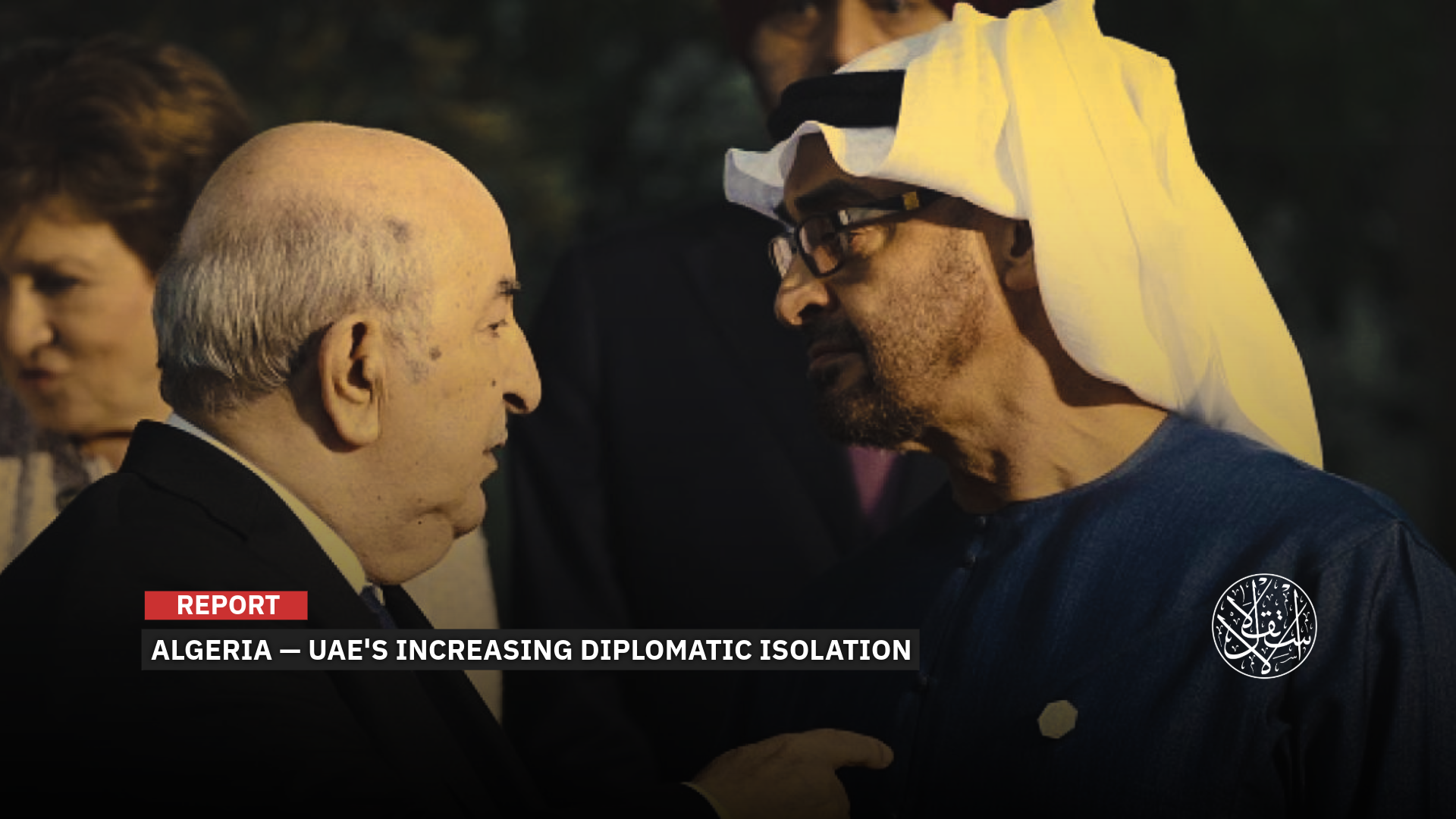
The UAE had "crossed all red lines".
The crisis between Algeria and the United Arab Emirates continues to escalate, as talk has grown in recent days among Algerian sources about the possibility that it could move toward a diplomatic rupture in the coming period.
The newspaper El Khabar, which is close to the Algerian presidency, said in an analysis published on January 3, 2026, that “such a rupture is possible in the coming days.”
The paper attributed this to what it described as “hostile Emirati actions and support for separatist movements in Algeria,” referring to the Movement for the Self-Determination of Kabylia (the MAK movement), which seeks the independence of the Kabylie region in the east of the country.
El Khabar cited what it called “official information” indicating that investigations are underway in France into Emirati financing of the MAK movement, which Algerian authorities have designated as a terrorist organization.
The newspaper did not clarify whether the investigations are being conducted by French authorities or by Algerian agencies.
A Series of Crises
The newspaper also said that “the UAE is engaging in unprecedented activities aimed at destabilizing Algeria, by supporting elements hostile to national unity and by intervening with France to facilitate their residence there, which constitutes a clear attempt to undermine Algeria’s sovereignty.”
The same newspaper had previously published a report stating that the Emirati ambassador to Algeria had effectively become persona non grata and that no Algerian authority was dealing with him.
The paper quoted what it described as “informed sources” as saying that “the actions carried out by the UAE bear no relation to Arab consensus or unity, but rather endanger the interests of the Arab nation and serve divisive agendas,” a reference to developments in Yemen and the UAE’s support for the separatist Southern Transitional Council.
The newspaper said the UAE’s recent role in Yemen had caused “significant Algerian resentment toward practices that can only be described as hostile and that have no connection to Arab brotherhood or to the bonds of shared history and common destiny.”
Algerian President Abdelmadjid Tebboune has previously criticized the UAE, accusing it of using money to stir unrest in Sudan, Libya, Yemen, and the Sahel, and warning it against approaching Algeria.
In October 2025, Tebboune said Algeria’s relations with “the Gulf states are good, except for one country whose name I will not mention,” a remark widely understood to refer to the UAE.
He added, in comments that appeared to point to the Emirates, “The problem lies with those who seek to sabotage my home for suspicious reasons and attempt to interfere in internal affairs in which we have not even allowed major powers to intervene. Everyone must respect their place so that we can remain brothers without problems.”
Earlier, in May 2025, Algeria said via state television that the UAE had "crossed all red lines" and every boundary that Algeria could overlook or remain silent about.
The broadcaster added that “Algeria will not stand weeping over ruins, but will respond in kind.”
Following remarks made by Algerian historian and researcher Mohamed Lamine Belghit in an interview with Sky News Arabia, in which he said that “Amazigh identity is a French Zionist project,” Algeria escalated its stance against the UAE, even though the speaker said the comments reflected his personal opinion.
However, in October 2025, the Criminal Chamber of the Algiers Court of Appeal sentenced Belghith to five years in prison, including two years suspended.
Earlier, a statement by Algeria’s National Security Council had implicitly accused Abu Dhabi, referring to it as a “brotherly Arab country,” of playing a role in regional tensions and engaging in hostile behavior toward Algeria.
Algeria has accused Abu Dhabi of enabling Morocco to obtain surveillance equipment used to spy on Algeria, financing campaigns aimed at tarnishing Algeria’s role in the African Sahel, and undermining relations between Algeria and Mali and Niger.
The accusations became official when President Abdelmadjid Tebboune, in April 2024, accused an unnamed Arab country of deploying its money “in hotspots around the world,” a reference widely understood to point to the UAE.
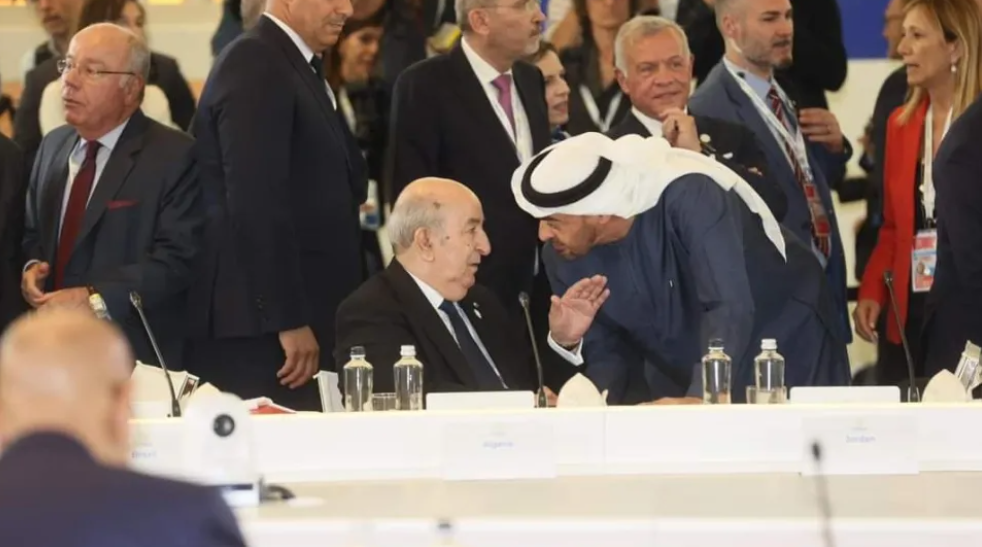
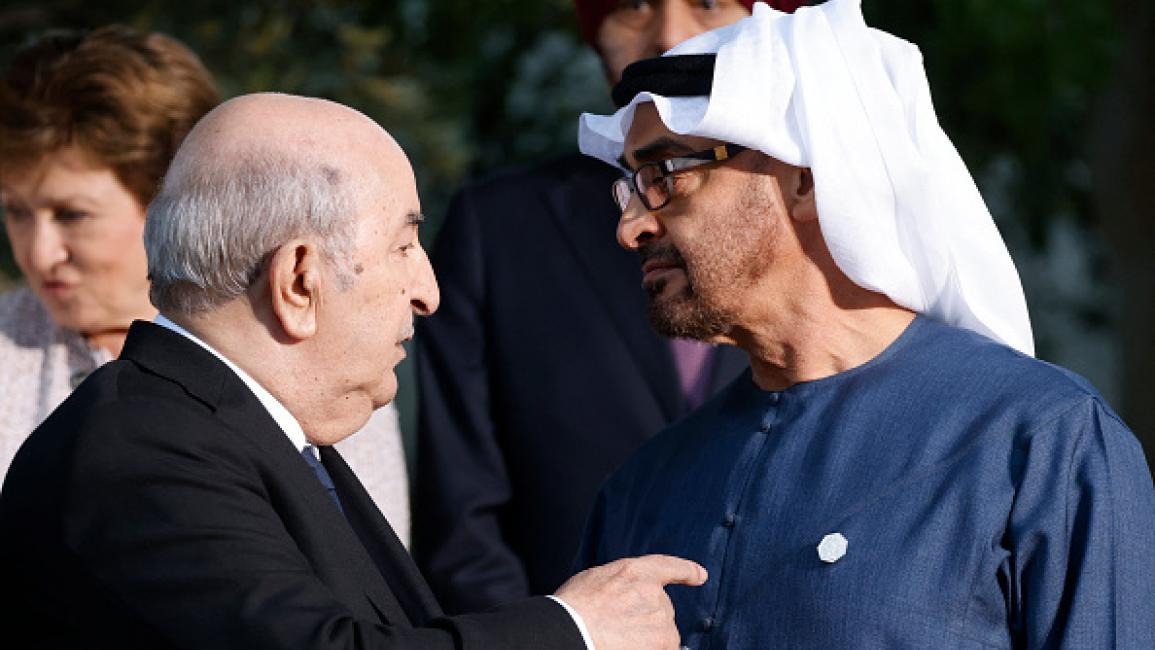
Yet in June 2024, Tebboune met with UAE President Sheikh Mohammed bin Zayed on the sidelines of the Group of Seven summit in Italy, where the two leaders exchanged brief remarks in front of cameras.
The dispute reached a point where the UAE president did not attend the Arab League summit hosted by Algeria in 2022.
Relations deteriorated further when Algeria’s transport minister, in late November 2024, issued a warning to Algerian officials against transiting through UAE airports.
Sovereignty Is a Red Line
The report prompted other Algerian media outlets to question whether the country is nearing a rupture with the UAE, arguing that recent developments have brought renewed regional tensions back to the forefront.
In this context, the website El Khabar Algeria said in a post dated January 3, 2026, that prevailing analyses point to growing official dissatisfaction with Abu Dhabi’s policies, which it described as practices that do not align with the logic of Arab brotherhood or with the principle of respect for state sovereignty.
The website added that the Algerian position is clear and is based on the view that “national sovereignty is a red line that is not open to bargaining, the rejection of any foreign interference that affects the country’s unity and stability, and a warning against supporting parties or networks that work to undermine security or fuel separatist projects.”
In the same context, the source quoted President Abdelmadjid Tebboune as stressing on more than one occasion that “Algeria is not hostile to anyone, but it does not tolerate provocations or attempts to impose a fait accompli,” adding that “patience has its limits.”
The website underscored that “Algeria, which for decades has chosen a calm and independent diplomacy, rejects the logic of axes and tutelage, and insists on resolving crises through dialogue rather than money, media or influence networks,” arguing that this choice has made it “a target of disinformation campaigns and external pressure.”
Despite the absence of an official announcement of a rupture, the source said that “the continuation of these policies could push relations to the point of no return, including the possibility of a diplomatic break, unless there is a fundamental change in how Algeria and its sovereignty are handled.”
By contrast, the Maghreb-focused website LEMED24 said that Algeria is preparing to add a new diplomatic crisis to a record already burdened by failures, as an official announcement severing relations with the UAE draws closer, in its words.
In an analysis dated January 4, 2026, the website said the decision to break ties is being prepared within the corridors of El Mouradia Palace, with the involvement of generals and intelligence services, in a move it described as nothing less than an ill-calculated gamble whose political, economic, and strategic costs Algeria will bear.
The website said that “this hostile orientation is not based on any direct Emirati provocation, as Abu Dhabi has not insulted Algeria, interfered in its internal affairs or taken hostile positions against it.”
“The UAE is simply exercising its full sovereignty in building its regional alliances, foremost among them its strategic partnership with Morocco, which appears sufficient, in the eyes of the Algerian regime, to turn a major Gulf state into an adversary,” it continued.
The website added that “the danger of this decision lies not only in its reflection of a narrow, retaliatory mindset, but also in the fact that it once again confirms that the regime gives no consideration to the interests of Algerians, whether inside the country or abroad.”
It said that “thousands of Algerians living in the UAE are at risk of becoming the first victims of this rupture, without any regard for their legal or living conditions, as if they were mere numbers without value.”
According to the available indications, the website said, “the decision has already been finalized, with no intention of reversing it. It reflects the mentality of a regime that confuses national dignity with blind obstinacy, and sovereignty with isolation, and believes that cutting relations sends a message of strength, when in reality it is yet another declaration of weakness, the price of which is paid by an entire country.”
An Emirati Perspective
No official Emirati reaction has been issued so far to these analyses. However, reference can be made to a previous report published by the Gulf House for Studies and Publishing, which examined Abu Dhabi’s position on the crisis with Algeria.
The website said in a report published on May 24, 2025, that the media sparring and diplomatic tension between the two countries hardly ever subside before flaring up again, particularly since Algerian President Abdelmadjid Tebboune came to power in 2019 following the ouster of Abdelaziz Bouteflika.
According to the same source, circles close to the UAE have viewed Algerian reactions as “offensive and lacking diplomatic decorum,” and as being “based on illusions and misguided perceptions.”
The website said one factor behind this situation was the announcement by the Emirati company Mubadala that it had signed an agreement with Rabat to explore for oil and gas off the coast of Morocco in early 2025.
It added that “this development has irritated Algeria, a major oil producer, particularly after the UAE resumed talks to acquire the largest stake in the Spanish gas company Naturgy, after having previously suspended them following an Algerian threat to halt gas shipments if Naturgy sold its shares to another party.”
In May 2025, the website continued, “Rabat announced the completion of preliminary engineering studies for the giant gas pipeline project linking Nigeria to Morocco, running from the city of Dakhla in the Moroccan Sahara, and revealed that the UAE is among the project’s main financiers.”
The massive gas pipeline is expected to link 15 countries to Europe at an estimated cost of nearly $25 billion, with production projected to reach 30 billion cubic meters of gas annually.
The project represents direct Moroccan competition to Algeria, with several observers cited as saying that Algeria’s attack on the UAE stems directly from this project.
The website said the UAE does not tend to respond directly or be drawn into a war of statements, preferring instead to keep its positions within diplomatic and economic frameworks.
It added that Abu Dhabi views investment in Morocco or cooperation with Sahel countries not as a challenge to Algeria, but as part of its broader strategy to strengthen its presence and strategic investments in Africa and in new spheres of influence amid rapidly shifting geopolitical dynamics.
On the Western Sahara issue, the source added, “the UAE denies that its position is specifically directed against Algeria,” and stresses that “the opening of its consulate in Laayoune came within the framework of supporting realistic and mutually agreed political solutions under the auspices of the United Nations,” a stance that does not differ from those of many Arab and African countries.
From this perspective, the website said, “the UAE sees no interest in escalation, but instead calls for restraint and for prioritizing the logic of shared interests, while recalling that political differences can be contained through dialogue, if the political will exists on both sides.”
National Security
Amid these developments, the French-language website Le Boite Noire, or the Dark box, reported confirmations it said it obtained from informed sources close to Algeria’s ruling circles that the Algerian leadership no longer views the dispute with Abu Dhabi as merely a divergence in political positions, but rather as an issue touching on national security and the principle of national sovereignty.
In a report dated January 6, 2026, the website said that “At the center of the dispute is the Movement for the Self Determination of Kabylie, known as the MAK, which the Algerian state classifies as a terrorist organization.”
It added that this comes alongside attempts to shift its activities toward European platforms in order to give them an international character.
According to the source, Algerian officials say that “tracking the paths of these funds could reveal the threads of a broader intervention network targeting the country’s stability from abroad.”
Algeria believes that some actions attributed to the UAE represent a departure from accepted norms in Arab relations, particularly with regard to supporting entities that Algeria describes as seeking to undermine its territorial integrity.
“According to Dark Box sources, the lobbying of France is viewed as especially provocative. Algeria’s leadership interprets it as an effort to use European legal and residency frameworks to shield individuals accused of threatening Algerian unity. Officials argue that such actions go beyond political disagreement and cross into deliberate destabilization.”
“Algerian officials are said to be reviewing a range of options, from downgrading relations to a full severing of diplomatic ties. The fact that a public announcement is being contemplated suggests that internal deliberations have reached an advanced stage,” the Dark box concluded.
According to figures close to the leadership, the Algerian authorities are keen to stress that any potential escalation would be justified as a defensive measure rather than an offensive one, and that its aim would be to protect national sovereignty, not to undermine Arab relations.
Sources
- The UAE Engages in Unprecedented Activities Aimed at Destabilizing Algeria [Arabic]
- Algeria on the Brink of a Catastrophic Break With the UAE [Arabic]
- The Cold War Between Algeria and the UAE, Causes and Consequences [Arabic]
- Dark Box Exclusive Report Algiers at a Breaking Point: Algeria Weighs Severing Ties with the UAE over Destabilization Campaign