Growing Signals and Rising Interest: Is Indonesia Moving Closer to Normalizing Ties with the Israeli Occupation?
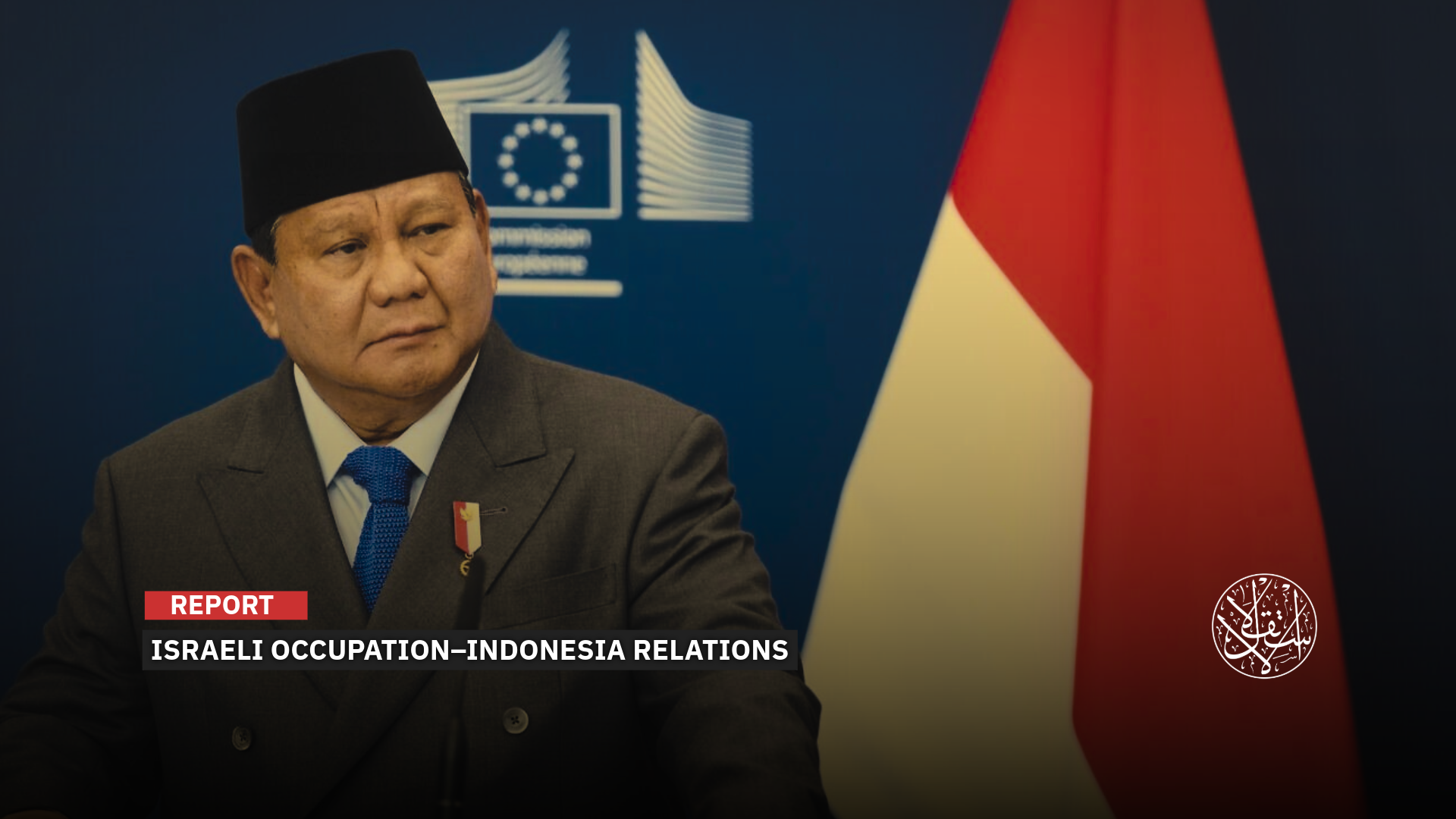
Indonesia’s only condition for normalization is the establishment of a Palestinian state.
Since the signing of the Abraham Accords in 2020, the Israeli Occupation has viewed Indonesia as a key target for normalization, while Jakarta has shown cautious interest in exploring diplomatic and economic openings without abandoning its support for the Palestinian cause.
Although past efforts stalled, talk of rapprochement resurfaced unexpectedly during “Israel’s” war on Gaza between 2023 and 2025, signaling a quiet but mutual willingness to re-engage.
With the cease-fire in Gaza taking effect in October 2025, many now expect renewed Israeli Occupation attempts to breach the political and diplomatic wall of the world’s most populous Muslim nation.
A Striking Appearance
Suddenly and without warning, Indonesia found itself at the heart of high-stakes discussions over the future of Gaza and the Palestinian cause, joining regional powers in diplomatic meetings to shape what comes next.
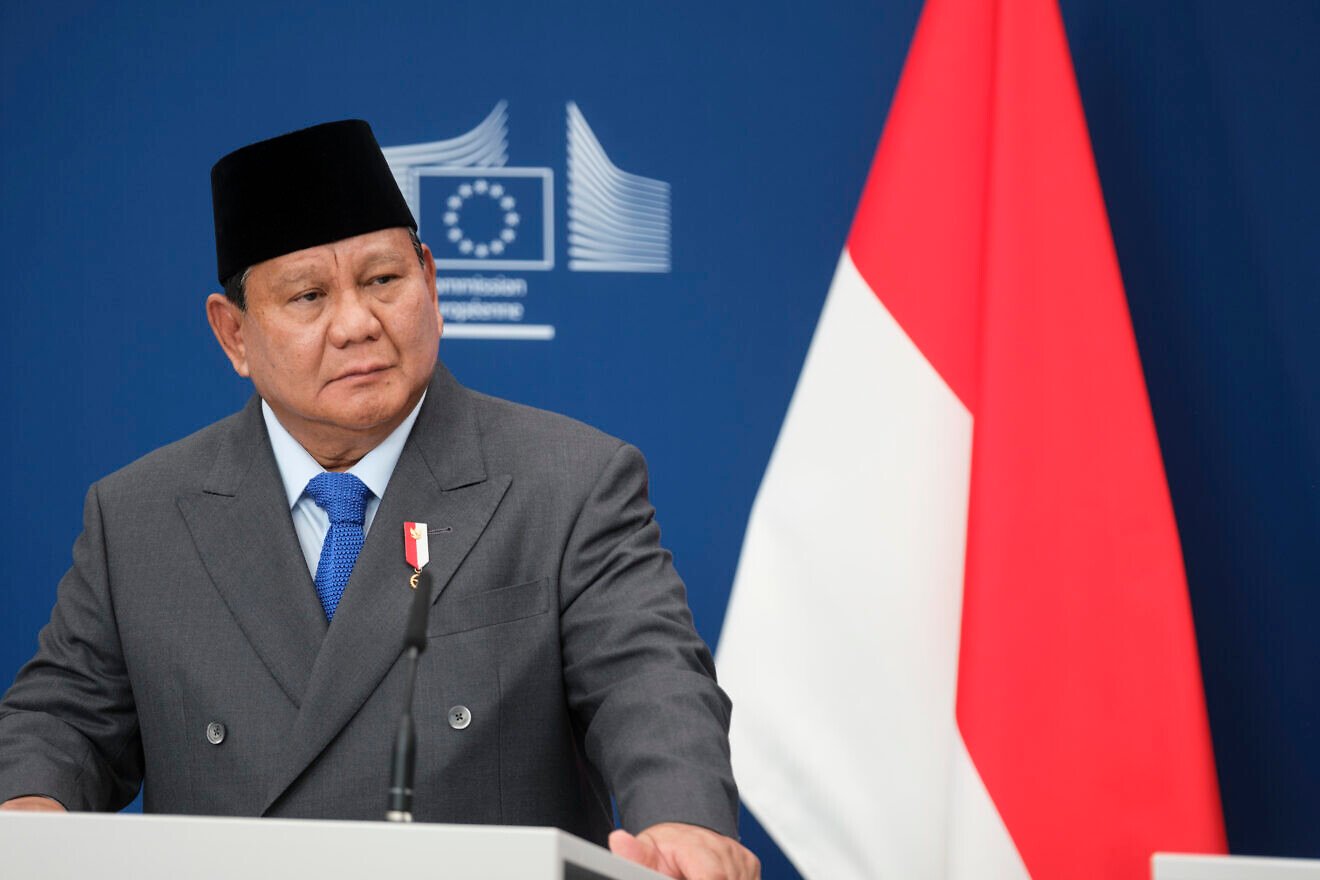
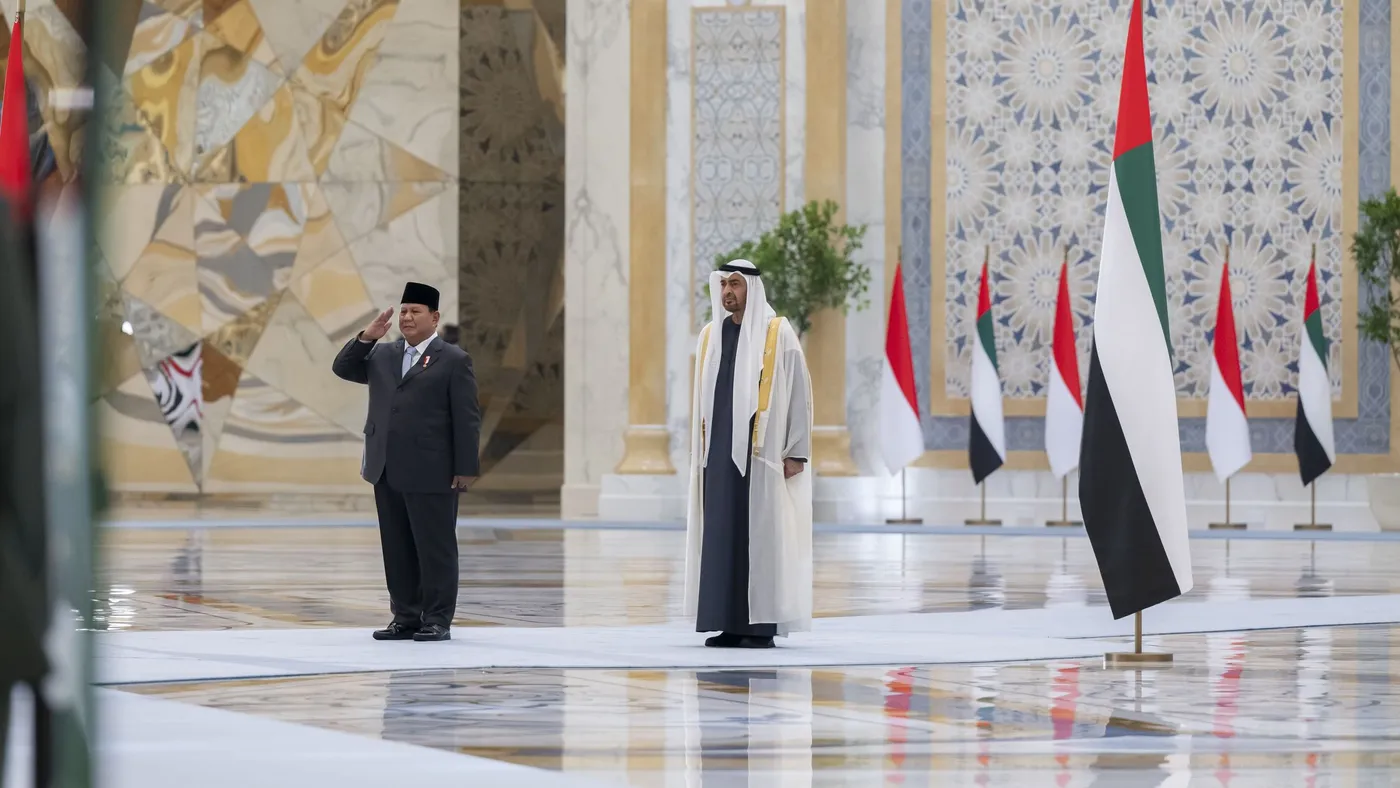
Indonesian President Prabowo Subianto took part alongside leaders from nearly 20 Arab and Western nations, including U.S. President Donald Trump, at the Sharm el-Sheikh Summit on October 13, which aimed to broker an end to the Israeli war on Gaza.
The summit sought to rally broader international backing for Trump’s “peace plan” for Gaza, at a time when thorny issues—from postwar governance and security to reconstruction—remain unresolved.
Prabowo’s presence also stood out during another high-profile meeting in New York on September 23, held on the sidelines of the UN General Assembly. The gathering brought together leaders and officials from eight Arab and Islamic countries for talks with Trump.
That meeting led to the U.S. president’s announcement of a new plan placing Gaza under a temporary transitional administration run by a non-political Palestinian technocratic committee responsible for managing municipal affairs and basic public services for Gaza’s population.
The committee would consist of qualified Palestinians and international experts, operating under a newly proposed “Peace Council,” an international transitional body chaired by Trump and joined by other world leaders to be named later.
The plan also mentioned former British Prime Minister Tony Blair as a potential overseer of Gaza’s administration, though Trump said on October 12 he was uncertain whether Blair was an acceptable choice for everyone, amid criticism of Blair’s legacy from the war on Iraq.
During the New York summit, Trump praised Indonesia’s president, calling his UN General Assembly speech “great,” saying, “A great speech. You did a great job pounding on that table. You did a great job.”
That praise came after Prabowo Subianto’s speech stood out from other leaders’ remarks for its emphasis on Israeli Occupation’s security, fueling speculation that Indonesia may be showing quiet interest in normalization despite “Israel’s” two-year genocide and war crimes in Gaza.
“We must also recognize, we must also respect, and we must also guarantee the safety and security of Israel. Only then can we have real peace,” Subianto said, adding once “Israel” recognizes Palestine, “Indonesia will immediately recognize the State of Israel.”
“The only solution is the two-state solution. The descendants of Abraham must live in reconciliation, peace, and harmony. Arabs, Jews, Muslims, Christians, Hindus, Buddhists, all religions must live as one human family.”
Indonesia is committed to being part of making this vision a reality. Is this a dream? Maybe. But this is the beautiful dream we must work toward together. Let us continue humanity’s journey of hope, a journey started by our forefathers, a journey that we must complete,” he added.
“Indonesia is prepared to deploy 20,000 or even more of our sons and daughters to help secure peace in Gaza, Ukraine, Sudan, Libya everywhere peace needs to be enforced and guarded.”
President Prabowo Subianto’s remarks carried a notably serious and practical tone, as reports from the Israeli outlet i24 revealed that he was planning a first-ever visit to “Israel” on October 14 or 15, following secret talks about the move.
Israel’s Channel 12 reported that preparations were underway in Tel Aviv to receive the Indonesian president on October 14. Dmitry Gendelman, a political adviser in the Israeli Prime Minister’s Office, told Russia’s Novosti agency that Subianto was expected to visit “Israel” on that date.
Shortly after these reports emerged, however, Indonesia’s Foreign Ministry firmly denied them, stating that the president’s schedule included only a visit to Egypt before returning home.
According to Channel 12, an Israeli official said that Indonesia was angered by the leak, suggesting that Jakarta had wanted to keep the visit secret.
The controversy came as Jakarta maintains no diplomatic relations with Tel Aviv and has consistently tied any formal recognition of the Israeli Occupation to the establishment of a Palestinian state through a peace agreement.
Subianto has repeatedly declared that Indonesia’s sole condition for normalization with “Israel” is its recognition of a Palestinian state and a two-state solution. Yet, despite “Israel’s” failure to take that step, the Indonesian leader has begun moving cautiously closer to Tel Aviv.
Serious Moves
In August 2025, Indonesian government spokesperson Hasan Nasbi reaffirmed a previous offer to receive wounded and sick Palestinians from Gaza, noting that President Prabowo Subianto had doubled the proposed number to 2,000 people.
Nasbi explained that Subianto, during a cabinet session, called for accelerating preparations to welcome the patients, most of them children injured in the Israeli war, along with their families.
Subianto had first made the offer in April 2025, before a Middle East tour, proposing to take in around 1,000 victims from Gaza, including the wounded, orphans, and those suffering from trauma, to receive medical treatment in Indonesia.
At the time, he set a key condition: approval from the Palestinian Authority, neighboring countries such as Egypt and Jordan, and the Arab League—without any mention of needing “Israel’s” consent.
However, domestically, growing concerns have surfaced among Indonesia’s Islamic organizations about the humanitarian evacuation plan.
Anwar Abbas, a senior figure in Muhammadiyah—the country’s second-largest moderate Islamic group—and deputy chairman of the Council of Ulema, warned that Israeli Occupation Prime Minister Benjamin Netanyahu and U.S. President Donald Trump “would be delighted” if Indonesia were to transfer wounded Palestinians out of Gaza for treatment.
He questioned, “Will Israel and the United States even allow them to return to Gaza once they recover?” as reported by the German newspaper Taz. “And what if the recovered patients choose not to go back? It’s better to treat them within Gaza or in nearby regions,” he added.
Oleh Soleh, a member of parliament from the National Awakening Party (PKB), voiced similar reservations, saying that “evacuating Gaza’s residents could give the impression that Indonesia tacitly accepts Israel’s desire to seize all Palestinian lands.”
He warned that “if Indonesia is the one removing Gaza’s residents from their land, it would be equivalent to Jakarta agreeing to Israel’s plan to take over the entire Palestinian territory.”
Opposition MP Tubagus Hasanuddin echoed those concerns, calling the evacuation plan “a possible Israeli trap.” He noted that “the Palestinian Authority has not approved the Indonesian proposal,” a fact confirmed by Deputy Foreign Minister A. M. Fachir.
Although the new ceasefire deal effectively nullified “Israel’s” mass-displacement schemes in Gaza, Jakarta’s next move remains unclear.
A Palestinian source told Al-Estiklal weeks before the war’s end that Indonesia had been indirectly involved in an evacuation initiative led and financed by the United Arab Emirates.
The source, a young man from Gaza now living in Dubai, said, “An organization working with the UAE government was registering families who had relatives in the Gulf state for possible evacuation.”
“I registered my own family to be evacuated first to the UAE and then to Indonesia, because there was no solution in sight for Gaza,” he explained.
“Evacuees were required to sign a pledge not to return to Gaza and were offered $5,000 per person upon departure to the host country.”
“This plan may have ended with the war and the collapse of displacement schemes,” he said, “but the UAE was driving it, funding it, and planning to send thousands of Palestinians to countries like Indonesia, Malaysia, and Libya”—implying Jakarta’s quiet involvement in the effort.
The Motive and the Tradeoff
Political science professor Khalil al-Anani believes efforts are underway to draw new countries into the Abraham Accords, with Indonesia at the top of the list.
“Israel wants normalization with one major Arab country, Saudi Arabia, and one major Muslim country, Indonesia. The idea is that once these two take the step, smaller nations will follow more easily and more quickly,” he said during a video posted on YouTube.
Although Indonesia is not officially an Islamic state, it is home to the world’s largest Muslim population—about 230 million people.
Al-Anani predicted that formal normalization between Indonesia and “Israel” could happen soon, saying, “Jakarta feels little embarrassment over the massacres in Gaza and will claim it has done its part.”
The U.S.-based Egyptian analyst also noted growing signs that Indonesia may become a potential destination for accepting Palestinians from Gaza.
He linked U.S. President Donald Trump’s interest in involving leaders from Pakistan, Indonesia, and other Muslim nations in recent meetings about Gaza to his broader goal of pulling them into the normalization process.
“Normalization,” al-Anani added, “might be one of the concessions Trump tried to persuade Netanyahu to accept in exchange for halting the war, even temporarily.”
The Jewish News Syndicate (JNS) reported that the Indonesian president’s now-denied visit to “Israel” would have signaled a potential breakthrough toward normalizing relations with the Jewish state.
In its October 13, 2025, report, JNS noted that Washington views Indonesia as one of the key targets for expanding the Abraham Accords. In recent years, limited cooperation has already emerged between the Israeli and Indonesian militaries, alongside modest tourism exchanges.
According to Yedioth Ahronoth, understandings were reached before Operation al-Aqsa Flood on October 7, 2023, for Indonesia to join the Abraham Accords. The paper added that around a year and a half ago, Indonesia agreed to normalize relations in exchange for “Israel’s” support for its bid to join the Organization for Economic Cooperation and Development (OECD).
The OECD, founded in 1961 and based in Paris, brings together 31 advanced economies that adhere to democracy and free-market principles, including the Israeli Occupation.
Other Israeli media reports say President Prabowo Subianto is particularly interested in cooperation with “Israel” in advanced agricultural technologies, as well as in strengthening his country’s defense industry and military capabilities.
Dr. Giora Eliraz of the Truman Institute at the Hebrew University said Indonesia has global ambitions, and normalization is part of its self-image as a nation that must play an active role on the international stage, including in the Middle East.
He told Channel 12 News in July 2025 that Indonesia’s engagement in the region “remains limited for now, largely because it lacks relations with both sides of the conflict, Israel and Palestine.”
From “Israel’s” perspective, Eliraz said, “Indonesia is the dominant power in Southeast Asia, and some expect it to become one of the world’s top five economies within two decades. It is already a member of the G20.”
Regarding Jakarta’s position, he noted that “Indonesia’s only formal condition for normalization is the establishment of an independent Palestinian state—though there is room for political flexibility.”
Eliraz described President Prabowo as “highly pragmatic and open to political shifts,” suggesting that “Saudi Arabia, as a leading and influential Muslim nation, could play a pivotal role. If Riyadh agrees to a softened version of the two-state commitment in exchange for normalization, it could have a direct impact on Indonesia and encourage a similar compromise.”
On the ground, Channel 12 reported that Israeli businesspeople are already conducting trade in Indonesia, while some Indonesian citizens visit “Israel” for economic purposes.
The channel concluded that achieving a normalization agreement with Indonesia “would mark a major diplomatic milestone with far-reaching economic consequences.”
Sources
- Indonesia denies president to visit Israel
- Indonesia Clarifies the Truth About President Subianto’s Expected Visit to Israel [Arabic]
- Breaking the Wall of Hatred: Interests and Feasibility Behind Israel’s Diplomatic Moves in Southeast Asia [Hebrew]
- Indonesian president reportedly planning historic visit to Israel, though Jakarta denies it
- Indonesia – Remarks at the 80th UNGA General Debate (Excerpts on the Question of Palestine)