Georges Abdallah: 40 Years in French Prisons Expose How Justice Has Become a Tool of Oppression
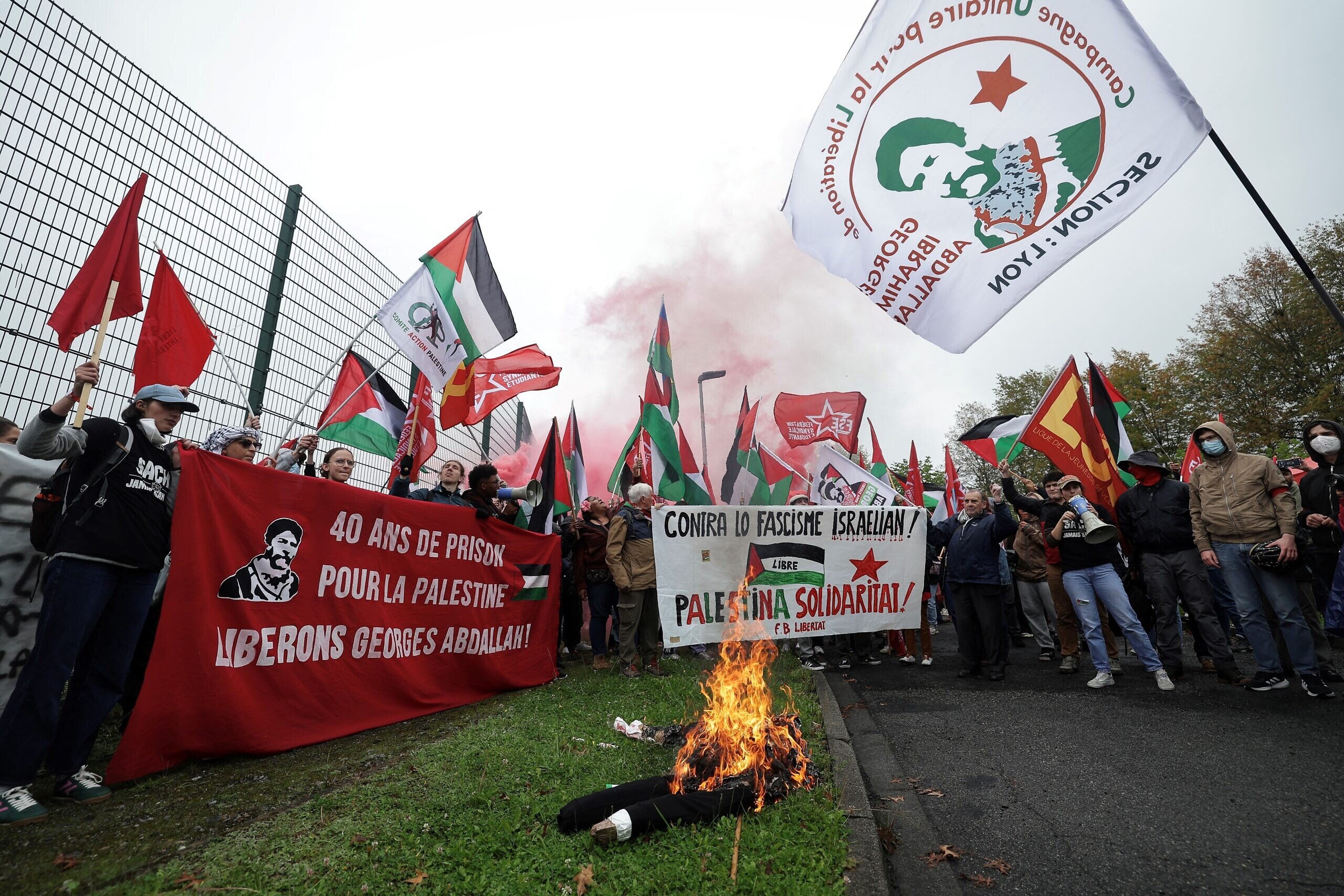
“Inmates serving life sentences in France are typically freed after fewer than 30 years.”
On July 17, the Paris Court of Appeal ordered the release of Lebanese activist Georges Ibrahim Abdallah after more than 40 years in prison, bringing an end to one of Europe's longest-running and most controversial court cases and another end to accusations of political domination of judicial decisions.
This decision coincided with French President Emmanuel Macron's announcement of his intention to recognize the State of Palestine at the UN General Assembly meeting in New York next September.
Observers have indicated that geopolitical shifts, including declining French influence in Lebanon, may be a strong impetus for Paris to resolve this decades-old case.
On the other hand, others have argued that behind the court's decision lies a decades-long grassroots campaign, recently invigorated by Israel's genocide on Gaza.
They considered Abdallah's case to have exposed how major powers can turn the law into a tool of repression when political positions conflict with the principles of justice.
Several capitals around the world have witnessed demonstrations and protests over the past years demanding his release.
Judicial Victory
In a rare moment in the French political and judicial context, Lebanese activist Georges Abdallah, 74, who had spent more than half his life behind bars, was released on July 25 and left France for his home country, a condition included in his release order.
Although he completed the minimum term of his sentence in 1999, the French judiciary rejected more than a dozen requests for his release, citing his lack of remorse and the legal struggle between the French judiciary, the Ministry of Justice, and US and Israeli security services.
In December 2024, a leaked document revealed that the US Department of Justice had sent a memorandum opposing his release, arguing that his return to Lebanon would incite unrest in the complex Middle East and pose a threat to US diplomats.
The French Court of Appeal ordered in November 2024 his release pending the completion of deportation proceedings.
However, the prosecution appealed and postponed the execution until this July, on the condition that he leave French territory and not return.
The court ruled that his continued imprisonment for more than 41 years was disproportionate to the crimes committed and his old age.
It noted that the organization he led had not committed any violent acts since 1984 and that he did not pose a threat to public security.
It described his conduct in prison as impeccable and stated that he did not pose a serious risk of committing new terrorist acts.
Jean-Louis Challancet, Abdallah's lawyer, stated the decision as a political, emotional, and legal victory after all these years.
He pointed out that the reason he has not been released from prison is the behavior of the U.S. and successive French presidents.
Statements by French officials, leaked documents, and delayed release decisions reveal that Abdullah's case was driven by a political agenda rather than legal evidence.
The European Court of Human Rights (ECHR) ruled in 2021 that life imprisonment without a realistic prospect of release is incompatible with the European Convention on Human Rights.
It cited cases like Abdullah, who spent 40 years behind bars, while life sentences in France are typically released after less than 30 years.
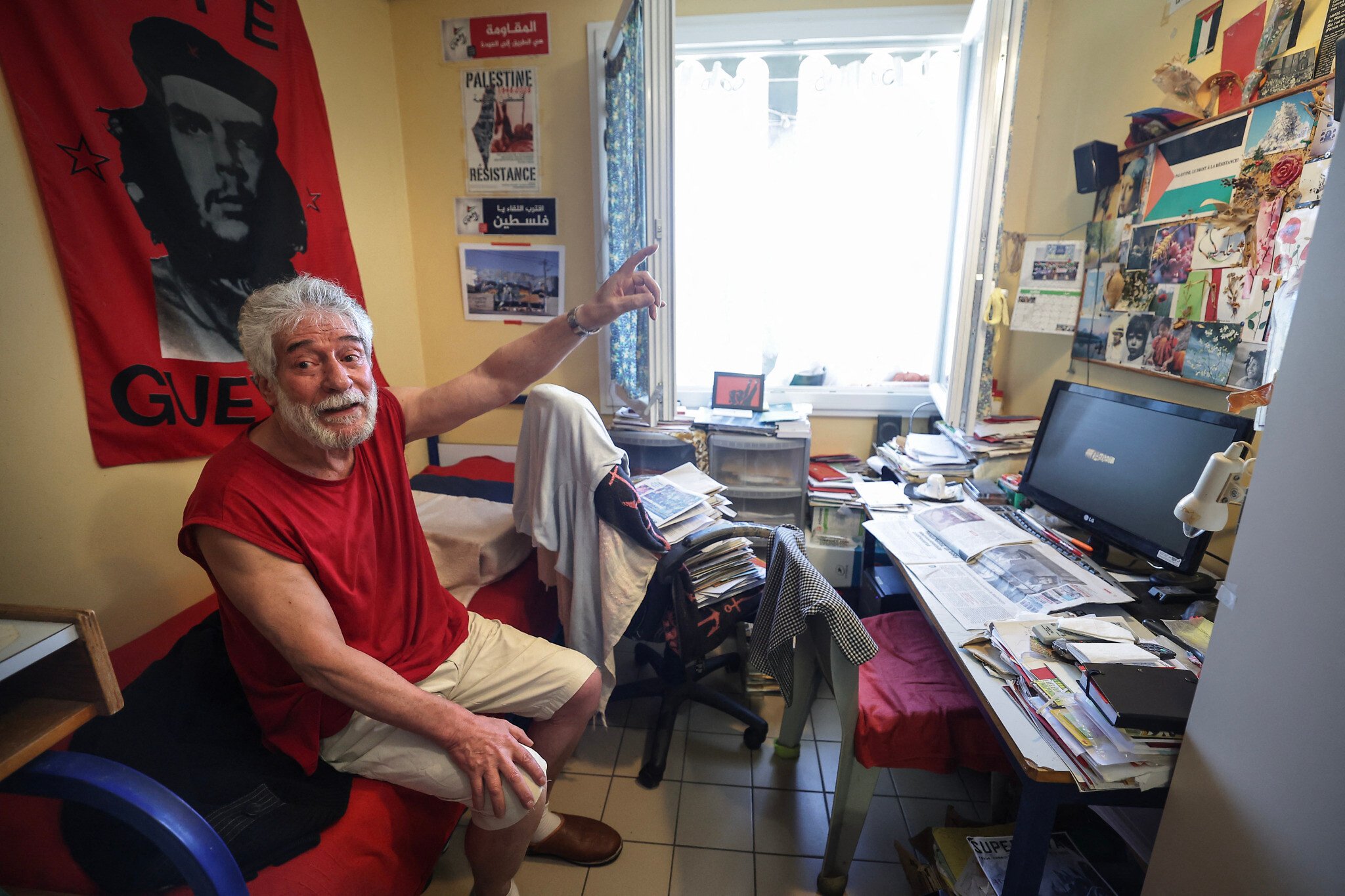
Pro-Palestinian Activist
Georges Abdallah was born on April 2, 1951, in the town of Qoubaiyat in the Akkar district of northern Lebanon, a town bordering Syria.
He grew up in a Maronite Christian family of 11 (his father, mother, 5 sons, and 3 daughters). His father was a soldier in the Lebanese Army.
He was interested in politics from an early age and joined the Syrian Social Nationalist Party at the age of 15.
He completed his studies at the Teachers' College in Beirut, graduating in 1970. He then began his career as a teacher at a school in the Akroum region of Akkar.
At the time, he closely followed the Palestinian cause and became involved in Palestinian rights and Arab nationalist circles.
In the late 1970s, he joined the Lebanese National Movement, an active coalition during the Lebanese Civil War.
Abdallah was wounded during the Israeli invasion of southern Lebanon in 1978 and later joined the Popular Front for the Liberation of Palestine, the leftist movement led by George Habash.
In 1980, he and others founded the Marxist, anti-imperialist Lebanese Armed Revolutionary Factions.
The movement claimed responsibility for five attacks in Europe between 1981 and 1982 as part of his pro-Palestinian activism, four of which resulted in fatalities in France.
On October 24, 1984, Georges Abdallah was arrested in Lyon, France.
He was sentenced in 1986 to four years in prison for criminal conspiracy and possession of weapons and explosives.
However, in 1987, he was tried before the Special Criminal Court in Paris for complicity in the assassinations of US military attache Charles Ray and Israeli diplomat Yacov Barsimantov in Paris in 1982, as well as the attempted murder of US Consul General Robert Homme in Strasbourg in 1984.
Abdallah never admitted his involvement in the assassinations, which he characterized as acts of resistance against Israeli and US oppression during the Lebanese Civil War (1975-1990) and the Israeli invasion of southern Lebanon (1978).
Throughout his trials, Abdallah remained steadfast in his position, insisting that he was a political activist who chose his path as a result of the violations committed against the Palestinians.
The true perpetrators, pro-Iranian militants, were identified two months after Abdallah was sentenced to life imprisonment.
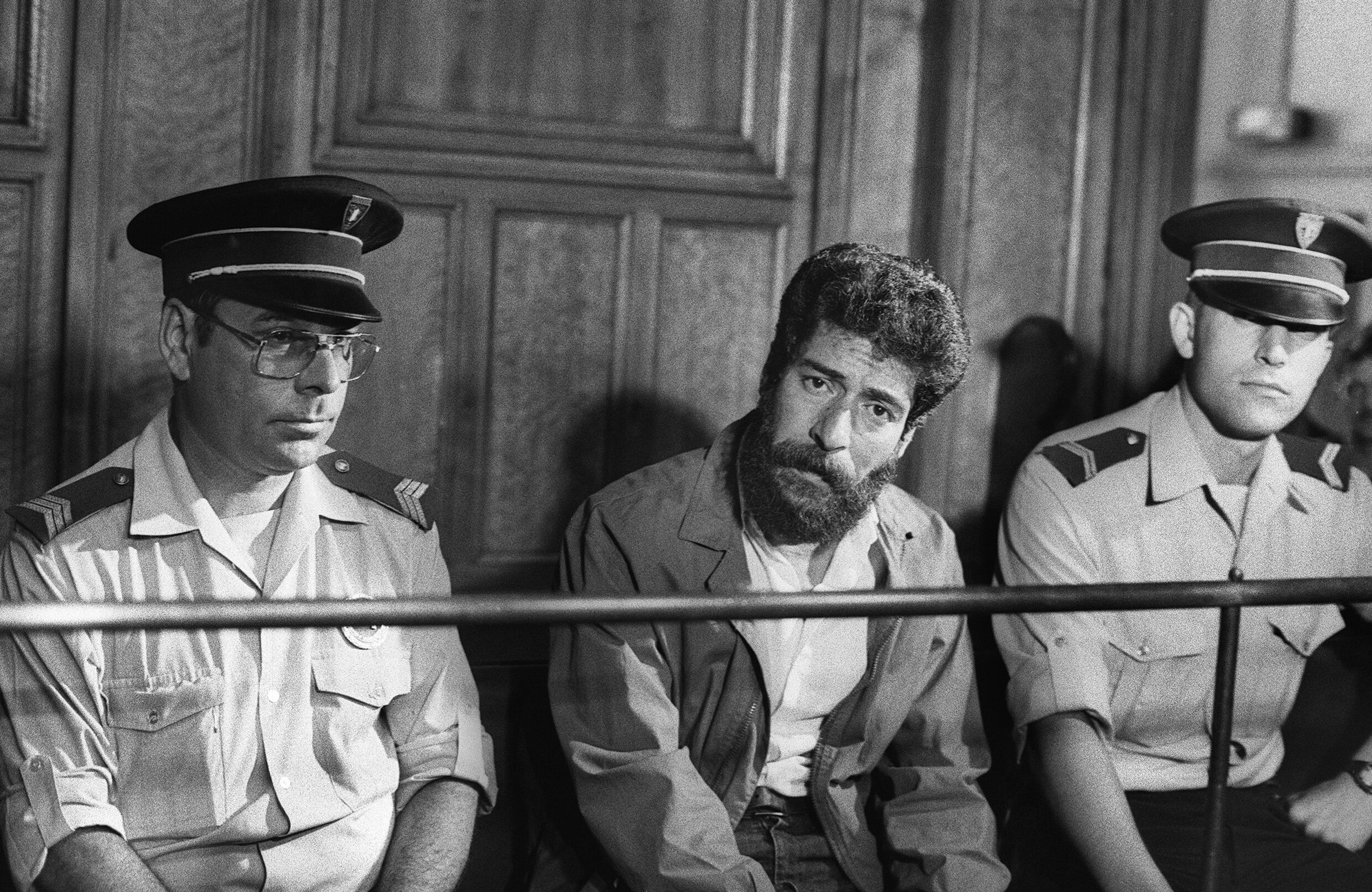
Political Scandal
In major French newspapers such as Le Monde, analysts described this move as a rare attempt to restore respect for the legal principle after years of political delay.
They viewed the decision as an implicit response to foreign pressure that has weighed heavily on the French judiciary, especially after the interventions of the U.S. and “Israel” to prevent his release over the past years.
The French left was also present, with some French leftist thinkers and writers, such as Annie Ernaux and Jacques Gaillot, asserting that France's treatment of Abdullah revealed a blatant double standard.
They pointed out that successive French governments insisted on keeping him in prison despite the fulfillment of his release conditions, while granting release to others from movements far removed from the Palestinian cause, sparking sharp criticism of the values of justice in the French Republic.
In contrast, American media outlets, such as the AP, described the case as a battle between justice and politics, questioning whether Abdullah's case could be transformed from a court decision into a diplomatic bargaining chip.
The US Department of Justice viewed the decision to release him as a threat to American diplomats, and that his release would not serve the interests of Washington or its allies.
For its part, the Israeli embassy in Paris expressed its regret over the French judiciary's decision, saying in a statement that “terrorists like these should spend their lives in prison.”
The Israeli media described him as a first-class terrorist, criticizing his portrayal as a fighter or symbol of resistance, as in some Arab and international coverage.
The Times of Israel described Abdullah as a Lebanese terrorist, considering his release from prison a prize for terrorism.
It highlighted Israeli government positions that described the decision as an ongoing threat, not just a historical event from the past, and that his release could encourage Iranian-backed groups to carry out attacks.
The Jerusalem Post reported that Abdullah remains a staunch defender of the Palestinian cause, asserting that a dangerous security precedent is being set that will open the door to future setbacks in Europe's counterterrorism policy.
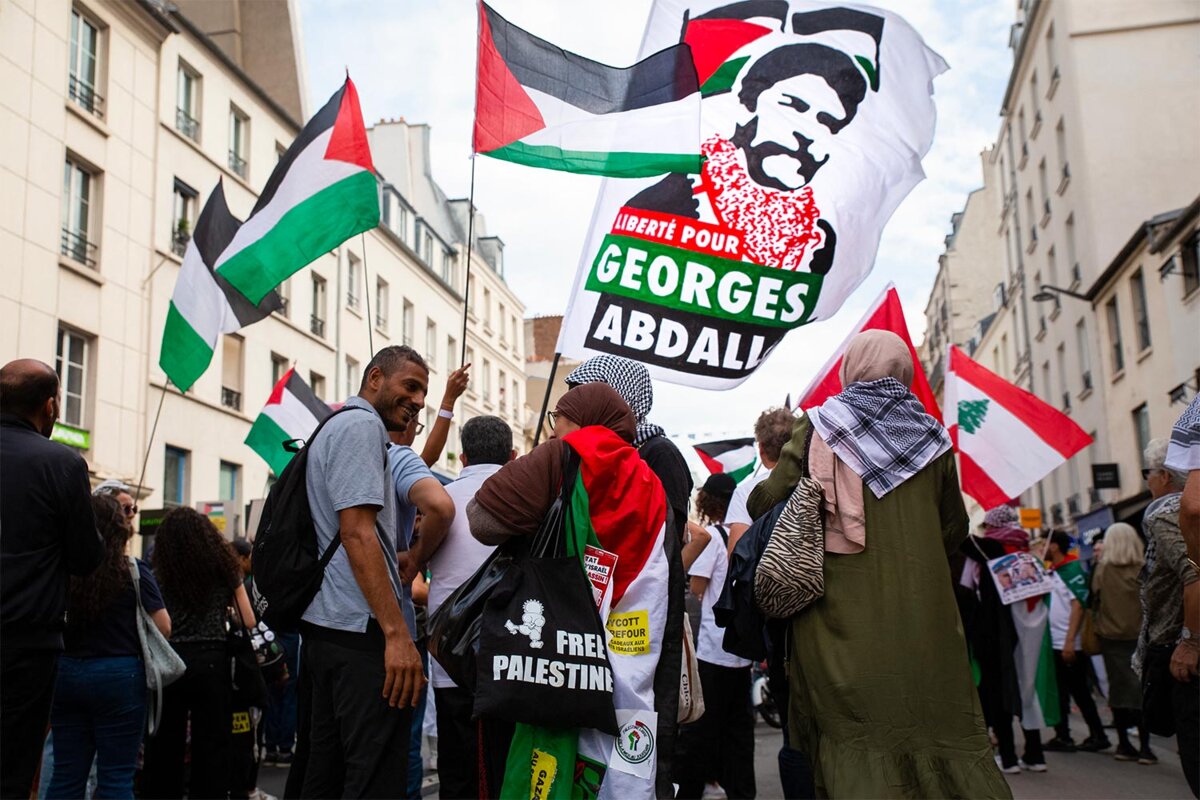
Georges Abdallah represents a rare case in contemporary European history: not just as a defendant brought before a court, but as a victim of a judicial system abused for political interests despite having served his sentence.
Several lawyers have revealed egregious legal violations in Abdallah's case, pointing to the former head of French intelligence's admission that the charges were fabricated.
In 2013, WikiLeaks revealed that then-secretary of state Hillary Clinton sent a direct message to France’s foreign minister Laurent Fabius, urging him to find a way to prevent Abdallah’s release, even after a court had approved it.
That same year, then-interior minister Manuel Valls refused to sign the expulsion order that would have allowed Abdallah to return to Lebanon.
However, Abdallah’s release today is a glimmer of hope, reflecting shifts in the international balance of influence on legal processes when dealing with cases considered red lines, both from a security and political perspective.
Sources
- After 40 years behind bars in France, Lebanese militant Georges Abdallah returns home
- Lebanese man convicted in slaying of Israeli diplomat to be freed from French prison
- French court orders release of Lebanese militant Georges Ibrahim Abdallah
- Georges Abdallah, the Israeli-Palestinian conflict's longest-held prisoner, wants out
- French court backs release of Lebanese terrorist jailed for US, Israeli diplomat murders