From the Red Sea to Khartoum: How Saudi Arabia Is Reshaping Power in Sudan
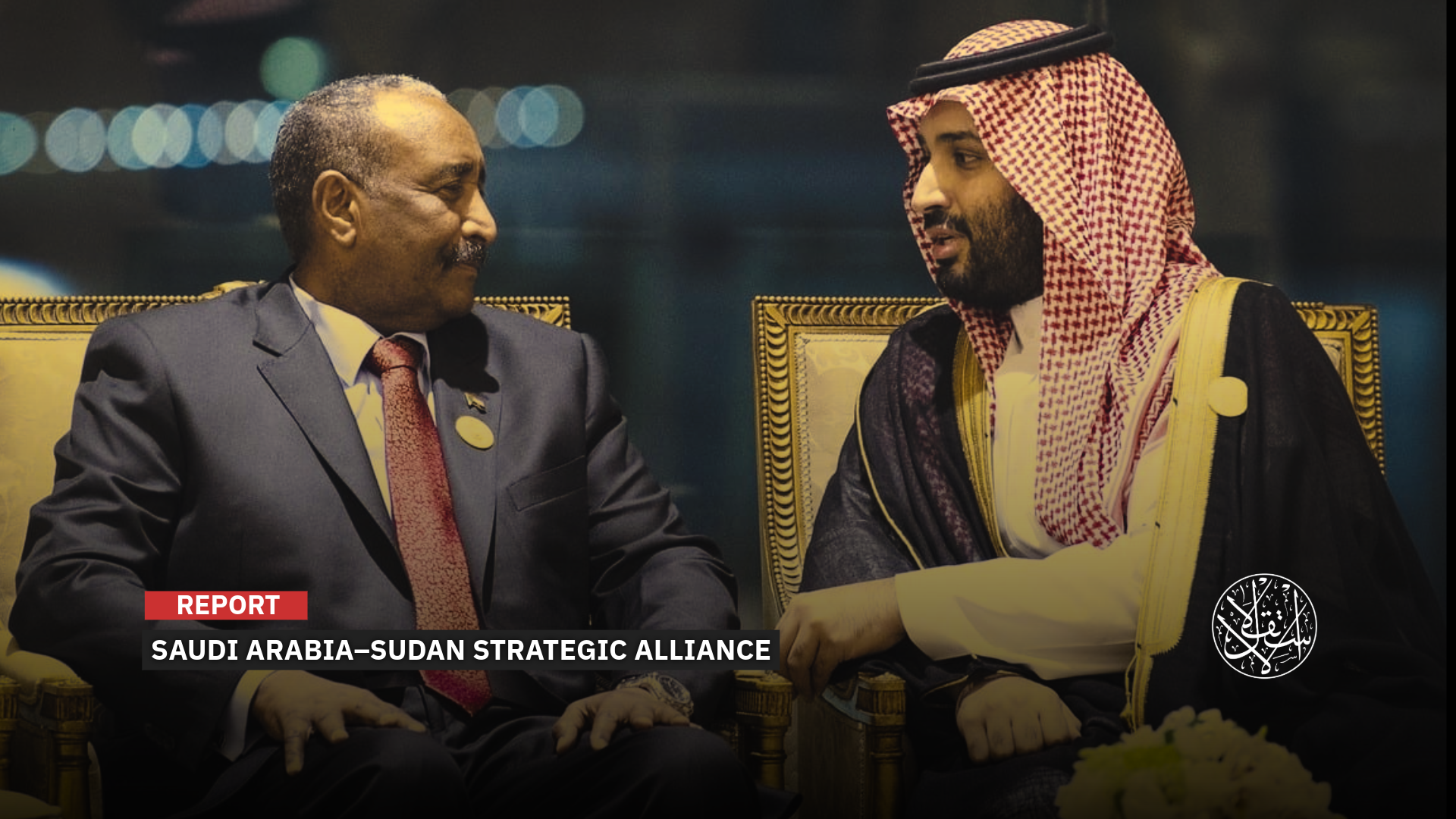
The Pakistani arms deal is not just a weapons transfer, but a strategic pivot in the dynamics of Sudan’s conflict.
Military support for the Sudanese army is no longer a minor detail in a complex internal war.
It has become a marker of a broader regional shift led by Saudi Arabia, unfolding amid unprecedented tension with the United Arab Emirates.
As disagreements between Riyadh and Abu Dhabi intensify over Yemen, the Red Sea, and influence in the Horn of Africa, Saudi Arabia has moved to settle its position in Sudan.
It has done so by backing the state’s regular army and tilting a balance of power long shaped by the Rapid Support Forces militia, which has benefited from direct and indirect Emirati support.
The large Pakistani arms deal for the Sudanese army, revealed on January 9, 2026, marked the first concrete expression of this Saudi shift.
It was both a military transaction and a political signal, one intended to underline that Sudan is not an open arena for fragmentation projects, nor an extension of cross-border militia experiments.
In a region already on edge, Riyadh appears to have decided to move from the role of cautious mediator to that of indirect actor.
This repositioning is aimed at countering an Emirati project Saudi officials increasingly view as a threat to state unity and to the stability of vital corridors, foremost among them the Red Sea.
Details of the Deal
Figures close to decision-making circles in Khartoum and Islamabad have announced that Pakistan is on the verge of signing a landmark arms deal with Sudan worth $1.5 billion.
The agreement includes 10 attack aircraft, more than 200 drones for reconnaissance and strike missions, advanced air defense systems, and training aircraft, with the possibility of incorporating JF-17 fighter jets as part of an expandable package.
The stated aim of the deal is to strengthen the capabilities of the Sudanese army in its ongoing war against the Rapid Support Forces militia, in what has become one of the region’s most dangerous conflicts since 2023.
Yet this military development goes beyond a routine weapons transfer.
It signals a strategic shift in Sudan’s internal balance of power and may form part of an indirect Saudi initiative to undermine what is described as a separatist project led by the Rapid Support Forces militia with Emirati backing, by tipping the scales in favor of the Sudanese army and the state.
The Pakistan-Sudan deal, financed by Saudi Arabia, represents a qualitative boost to the Sudanese army’s air capabilities.
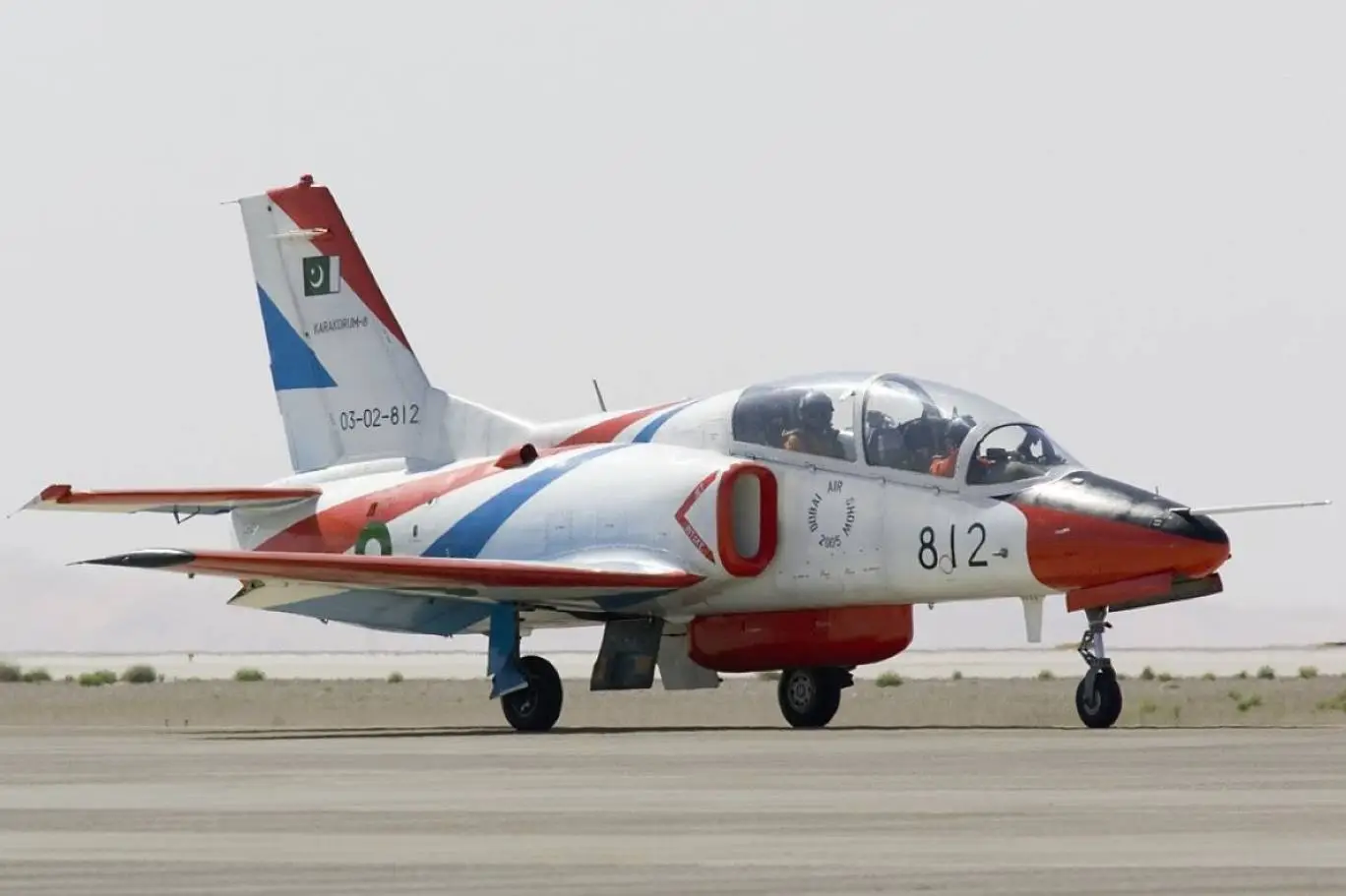
It includes Karakoram-8 light attack aircraft, which offer the ability to strike Rapid Support Forces militia positions in urban areas and along supply lines, platforms well suited to the demands of unconventional warfare against mobile threats.
The package also features more than 200 drones, including reconnaissance systems to track enemy movements and armed and loitering munitions designed to hit Rapid Support Forces militia targets, enhancing the army’s surveillance and strike capacity at the same time.
Supplying the army with advanced air defense systems is seen as a critical step toward closing a long-standing gap, particularly in countering drones used by the Rapid Support Forces militia in attacks on cities such as Kassala and Port Sudan during 2025.
The Sudanese army will also receive PAC MFI-17 Mushshak training aircraft, contributing to the development of qualified local pilots and reducing reliance on overseas training programs.
Reports further suggest the possible inclusion of JF-17 fighter jets, which, if brought into service, would give the Sudanese army tangible air superiority and alter the rules of engagement in what has become a protracted war.
According to a report by the British news agency Reuters on January 9, these systems collectively address the airpower weaknesses the Sudanese army has faced since 2023, particularly in confronting Rapid Support Forces militia drones, and lay the groundwork for air control capable of protecting cities and vital supply routes.
From Mediation to Engagement
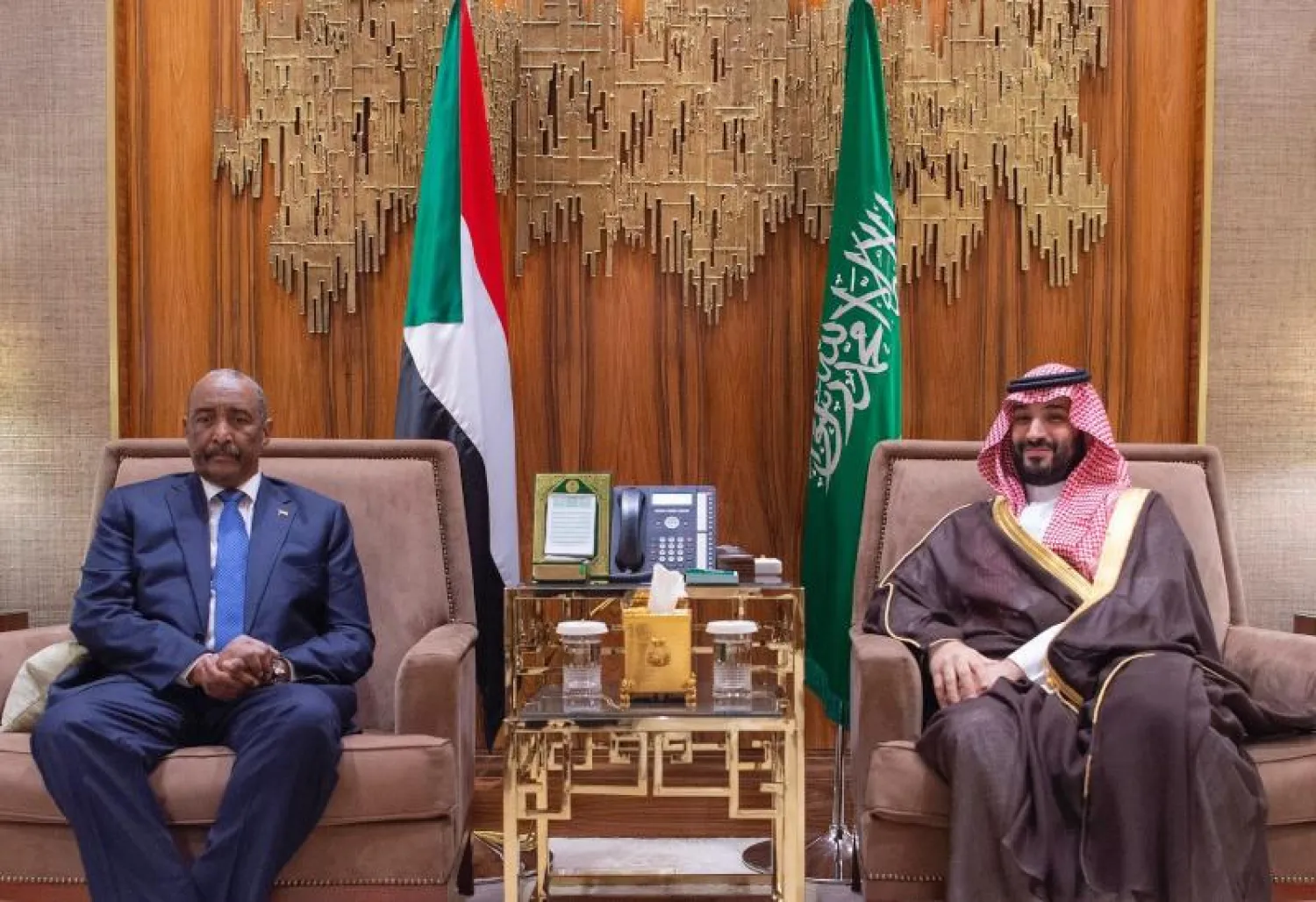
Although Riyadh did not appear officially as a party to the signing of the deal, multiple indicators link Saudi Arabia to facilitating its completion.
Analysts say the kingdom acted as an intermediary and possibly as the political sponsor of the defense agreement, without publicly presenting itself as a direct financial backer.
This approach is not without precedent. Saudi ties with Pakistan’s military establishment stretch back decades and include training, strategic cooperation, and financial support, making this channel a familiar instrument in Saudi strategic calculations.
A report by the Washington-based Taqaddum Policy Center, published on January 10, attributes Saudi Arabia’s reliance on the Pakistani gateway rather than direct intervention to several factors.
These include avoiding the high political and diplomatic costs of overt involvement and steering clear of a direct escalation with the United Arab Emirates on the Sudanese front.
The same approach allows Riyadh to test a broader alliance model, one that strengthens regular armies in conflict zones without openly engaging in initiatives that could provoke international sensitivities.
Since the outbreak of Sudan’s war in April 2023, the United Arab Emirates has faced widespread accusations of being the largest military backer of the Rapid Support Forces militia, through opaque channels involving money, weapons, and mercenaries, extending to claims that Emirati officers were involved in operations.
Sudanese leadership has framed this support as an effort to weaken the army, undermine the central state, and threaten the unity of Sudanese territory, particularly after Abu Dhabi was accused of backing drone attacks on Sudanese airports and cities during 2025.
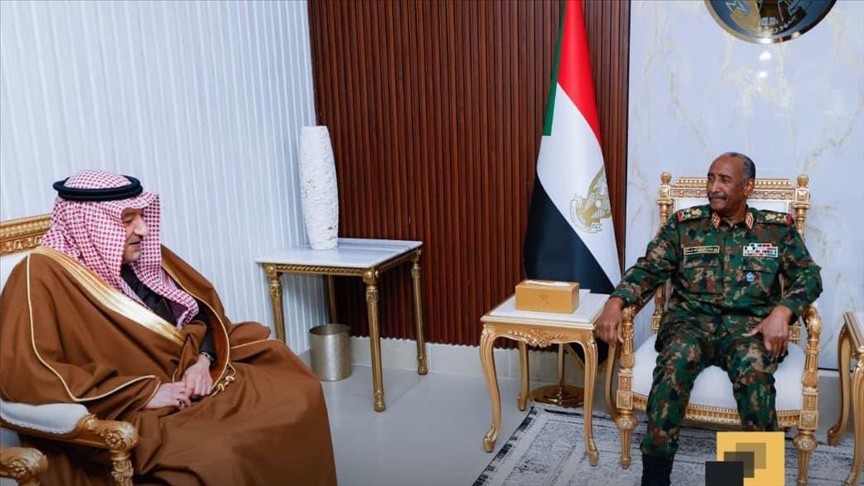
These developments pushed the Port Sudan government to sever relations with the United Arab Emirates and escalate the issue in international forums, while deepening coordination with regional allies, foremost among them Saudi Arabia and Egypt.
The Clash of Axes
According to a report by Bloomberg on January 8, “Saudi Arabia, which sees itself as a leader of both the Arab and Islamic worlds, is moving to rein in Emirati influence across the region.”
Mona Yacoubian, director of the Middle East Program at the Center for Strategic and International Studies in Washington, said that “Saudi Arabia has decided to confront Emirati influence on multiple fronts, including the Horn of Africa and Sudan, where the two sides back rival camps in a brutal civil war that has triggered the world’s largest humanitarian crisis.”
The U.S. news agency added that Saudis and others within the Gulf Cooperation Council, which includes Bahrain, Kuwait, Oman, the United Arab Emirates, and Qatar, believe Abu Dhabi has pursued its own economic priorities at the expense of the bloc’s collective interests.
While the core of the Saudi-Emirati rift initially crystallized around the Yemen file, Bloomberg noted that Sudan became the flashpoint that pushed tensions into the open.
The agency reported that “Saudi officials believe the United Arab Emirates, and specifically President Mohammed bin Zayed, approved recent advances by Yemen’s Southern Transitional Council as a retaliatory move against Saudi Crown Prince Mohammed bin Salman.”
Bloomberg added that this assessment emerged “after the Saudi crown prince raised the UAE’s role in Sudan with U.S. President Donald Trump during a visit to the White House,” citing people familiar with Riyadh’s position.

A Key Pillar
Sudanese researcher Mohamed Nasr told Al-Estiklal that strong Saudi support for the Sudanese army cannot be separated from Riyadh’s deep understanding that Sudan’s unity and stability constitute a central pillar of Gulf security, foremost among them Saudi national security.
Nasr explained that Sudan, by virtue of its geographic position, demographic weight, and direct oversight of the Red Sea, forms a core link in the regional stability architecture.
Any comprehensive collapse of the Sudanese state, he warned, would not be confined to domestic consequences alone.
Such a collapse, he said, would open the door to an extended arc of instability stretching from the Horn of Africa to vital maritime corridors, threatening global trade security and the stability of Red Sea littoral states, above all Saudi Arabia.
Within this framework, Nasr argued, Saudi support for the Sudanese army should be understood as backing for the national state and its legitimate institutions, rather than a simple military alignment in a transient internal conflict.
He stressed that a decisive outcome in favor of the Sudanese army represents, from Riyadh’s perspective, a forward line of defense for Gulf security, before it is a Sudanese domestic matter, or even part of a temporary Saudi-Emirati dispute.
In the same context, Nasr said the United Arab Emirates’ actions in Sudan, through backing the rebellion and prolonging the war, have not harmed Sudan alone.
Their negative effects have rippled across the region by feeding a process of state fragmentation and turning Sudan into an open arena for militias and parallel economies.
He warned that the fall of Sudan as a central state would not result in a temporary vacuum, but in a prolonged security explosion, intersecting irregular migration, arms trafficking, human smuggling, and the expansion of armed groups.
This scenario, he said, would impose high costs on the entire region, particularly Gulf states whose security and maritime interests are closely tied to the Red Sea.
Nasr concluded by emphasizing that the Pakistani arms deal is not merely a conventional weapons agreement.
It reflects a strategic shift in the trajectory of the Sudanese conflict and in regional power equations, between a Saudi-Egyptian-Arab vision that supports the national state and its unity, and an Emirati vision that bets on militias and pathways of state fragmentation.
Sources
- Exclusive, Sources Say Pakistan Is Close to Finalizing an Arms and Aircraft Deal With Sudan [Arabic]
- Saudi Arabia Moves to Purchase JF-17 Fighter Jets for Sudan [Arabic]
- arabia-moves-to-rein-in-uae-after-yemen-exposes-rivalry
- Burhan Discusses Sudan Peace Efforts With Senior Saudi Official [Arabic]
- Pakistani Arms Deals with Sudan and Libya and Their Regional Implications
- Pakistan nears $1.5 billion deal to supply weapons, jets to Sudan