From Stuxnet to France's Refrigerators: How Iran's Cyber War Has Evolved
The IRGC's Electronic and Cyber Center oversees the "Shahid Kaveh" and "Shahid Shushtari" units.
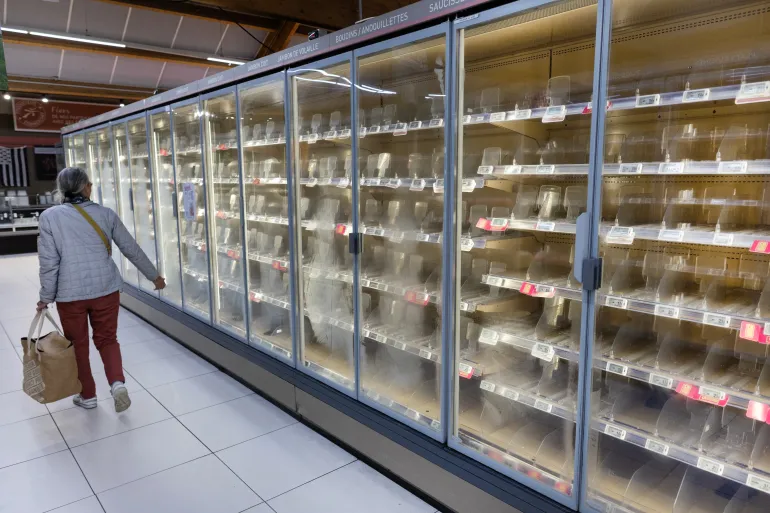
Cyber warfare has reached the refrigerators of French stores, where digital commands turned into spoiled food and fires. On November 9, 2026, the French authorities attributed to Iran's Revolutionary Guard Corps (IRGC) an attack that targeted about 700 commercial sites on the night of October 11–12, 2026 and caused at least 15 fires.
Tehran denied the accusations. The incident has nonetheless reopened the file on the capabilities Iran has built since its nuclear facilities were hit by the Stuxnet virus. From the centrifuges at Natanz to European cooling systems, the list of targets attributed to Iran during the war keeps growing.
How has this weapon changed? Who runs its operations? And what has artificial intelligence added to its ability to cause physical damage far from Iranian soil?
How Did the Shift Begin?
The discovery of Stuxnet in 2010 was a turning point in the digital confrontation with Iran. The malware targeted the centrifuges at the Natanz facility, and its development was attributed to the United States and "Israel." It showed that industrial equipment could be sabotaged by altering its operating commands.
An analysis by Symantec documented that the malware's ultimate purpose was to corrupt an industrial control system. Iran's cyber program accelerated after the attack, according to The Wall Street Journal.
Two years later, the scale of the destructive capability attributed to Tehran became clear in the "Shamoon" attack on Saudi Aramco on August 15, 2012, which damaged about 30,000 of the company's workstations. Company employees resumed normal work on the 25th of the same month.
The operation forced the company to fall back on manual procedures for some of its work, while oil production continued, as the International Energy Agency explains.
In parallel, US financial institutions were hit by attacks that disrupted customer access to their services between late 2011 and mid-2013.
In indictments announced in 2016, the US Department of Justice linked seven Iranians to operations that hit 46 institutions, most of them financial.
The case included a breach of the Bowman Dam system in New York. However, the dam's gate had been disconnected from the electronic control system for maintenance, so the attacker could not operate it.
The geographic scope later widened. In July and September 2022, attacks that Washington attributed to Iran targeted the Albanian government with tools that encrypted and wiped data, disrupting public services.
After the Gaza war broke out in October 2023, Microsoft observed that the number of Iranian groups it tracked as active against "Israel" rose from nine to 14 in about two weeks.
During the same month, the company recorded 11 hack-enabled influence operations that combined stealing and leaking information with threats and propaganda. In this phase, the development of sabotage tools went hand in hand with a wider use of cyber operations for intelligence and media purposes.
Who Runs the Attacks?
Behind the names that claim the attacks, government documents and technical analyses identify several institutions within the Iranian state.
According to the French attribution, the IRGC's Electronic and Cyber Center oversees two units, "Shahid Kaveh" and "Shahid Shushtari."
The first uses fronts such as "CyberAv3ngers" to publicize operations against industrial equipment. The second has been linked to leak and influence operations targeting French interests.
Alongside the IRGC is the Ministry of Intelligence and Security. US and British authorities attribute to it the group "MuddyWater," which is active in espionage against the government, telecommunications, defense, and energy sectors.
The US Department of Justice linked the "Handala" front to the same ministry. In March 2026, it announced the seizure of four domains used to publish stolen data and threaten journalists, dissidents and Israeli individuals.
The firm Mandiant attributes the group "APT42" to IRGC intelligence and links it to the targeting of researchers, media workers and activists.
Government bodies also rely on companies and contractors, as the US charges in the banking case show. This widens the circle of perpetrators beyond the official units.
In industrial operations, the targeting focuses on programmable logic controllers. These devices turn digital instructions into commands that run pumps and equipment and regulate production processes.
A US advisory documented the breach of at least 75 Unitronics devices during a campaign that began in November 2023 and covered multiple sectors.
A year later, the firm Claroty analyzed the "IOCONTROL" malware from a sample found in a fuel management system. It showed that the malware could run on different types of connected devices and industrial operating systems.
The tools observed therefore include malware built for specific equipment as well as the exploitation of weak device configurations.
The many names, however, do not by themselves give a count of Iranian units. Tracking names differ from one company to another and may cover the same group's activity or overlapping parts of it, with functions ranging from espionage to sabotage and influence.
What Has the War Changed?
During the current war, Microsoft has observed a wider targeting of US interests, including by Iranian groups that had not previously attacked the United States.
Its 2026 Digital Defense Report recorded that Iranian actors kept operating despite internet outages and damage to infrastructure inside the country. They drew on earlier access to targeted networks and on available openings for intrusion.
The monitoring mainly covers the period from July 2025 to June 2026. Events in the following months showed the targeting spreading to civilian services and smaller facilities.
The US medical technology company Stryker was among the hardest hit. An attack on March 11 disrupted order processing, manufacturing, and shipping across its global network.
The company affirmed that its connected products were safe, while "Handala" claimed the operation. The economic impact lasted beyond the incident.
In its third-quarter disclosure, the company linked higher manufacturing and supply chain costs to the production halt the attack caused in the first quarter.
In the water sector, the July incidents spread across several US states. Later updates reported that more than 100 internet-exposed systems in the water and wastewater sector had been targeted, with weak protection on some remote access interfaces.
Testimony before the New York State Senate in October explained that utilities generally kept drinking water safe, sometimes by reverting to manual operation.
It also noted that no official intelligence attribution of the campaign had been made public at the time, even though "CyberAv3ngers" had claimed it.
An updated US advisory on July 22 also documented disruptions and losses linked to the targeting of control devices in the government, water, and energy sectors. It cited a case in which functions related to safe operating parameters had been altered.
Espionage continued alongside these attacks. In March, Proofpoint observed a phishing attempt against a target at a US think tank, as part of correspondence that had begun before the war. This adds the continuity of intelligence operations to the declared waves of sabotage.
What Has Artificial Intelligence Added?
The widening of targets has gone hand in hand with the use of AI tools at several stages of the operations. The Wall Street Journal report quotes Shalev Hulio, CEO of the firm Dream, as saying that Iranian actors have expanded their use of these tools from supporting social engineering, which relies on deceiving users, to scanning code and reverse-engineering security updates in search of weaknesses.
Technical disclosures offer more specific evidence of some of these uses. In October 2024, OpenAI announced that it had disrupted accounts believed to be linked to "CyberAv3ngers."
These accounts had used its models to research control systems and vulnerabilities, debug code, and get help with programming.
At the time, the company assessed that the gains were incremental compared with the tools and information already available. That assessment applies to the monitoring period in question.
In September 2026, Google documented how an Iranian group it tracks as "CALANQUE ION," formerly known as "APT42," used AI models.
The group used them to gather information on targets and find their email addresses, draft pretexts for contact in local languages, and summarize stolen data.
Google also observed the group using the models to develop supporting infrastructure for its operations and to attempt to reverse-engineer software, including efforts to understand licensing mechanisms and bypass protections.
In another operation first observed in January, Group-IB found indications, based on its analysis of samples, that "MuddyWater" had likely used AI to generate parts of its code.
Such an inference carries different weight from direct visibility into how model accounts were used. The investigation into the refrigeration attacks contains a detail that calls for precision: Sequoia researchers used AI to analyze the exploit, but this does not prove that the attackers used the same tool.
Google says it has not observed attackers running fully autonomous attack chains against real targets, despite growing experimentation and automation. It noted that the models are being used to speed up the development of tools that exploit publicly disclosed vulnerabilities and delays in installing their fixes.
How Far Does the Danger Reach?
Sergey Shykevich, threat intelligence group manager at Check Point, ties the danger Iran poses to its readiness to carry out more aggressive and direct operations, even though it still lags technically behind China and Russia.
He expects part of its attention to turn to the United States and Europe, where some less protected facilities allow a greater impact.
In the refrigeration attacks, the technical analysis documented the exploitation of unpatched, internet-exposed devices and the manipulation of operating and alarm settings, which delayed the detection of the damage.
The defensive response shows how much exposure has changed. Censys recorded a 53 percent drop in internet-visible systems within two families of refrigeration devices between October 9 and November 5.
This figure is not a count of compromised devices, nor does it explain why each device disappeared. In other incidents, the physical damage remained limited or unproven.
A US statement on September 16 about two oil tankers investigated after hacking reports in August said there had been no reports of operational disruption, risk to crews or environmental impact, and it named no responsible party.
European investigations have also not reached a common position on the November wave. On November 13, Reuters reported a disagreement between Belgium's interior and foreign ministers over whether the evidence was sufficient to accuse Iran. An assessment by DomainTools pointed to limited independent verification of who carried out that wave.
France based its attribution of the October attacks on overlaps between the infrastructure used and earlier operations, along with technical and propaganda evidence.
It announced its intention to propose European sanctions and to use other means of response.
Paris estimated the value of the spoiled food at the affected sites at tens of millions of euros. European cybersecurity agencies continue to coordinate joint investigations and respond to incidents that have spread from food stores to a blood refrigeration facility, where staff managed to protect the stock.
Sources
- Iran's New Cyber Playbook: Create Real-World Havoc
- Iranian-Affiliated Cyber Actors Exploit Programmable Logic Controllers Across US Critical Infrastructure
- Belgian Ministers at Odds Over Iran's Alleged Role in Refrigerator Cyberattacks
- Shahid Kaveh: A Cyber Hacking Group Targeting Iran's Adversaries [Arabic]