Al-Zaidi's Mediation Between Washington and Tehran: Limited Progress or an Initiative Hitting Iranian Rejection?
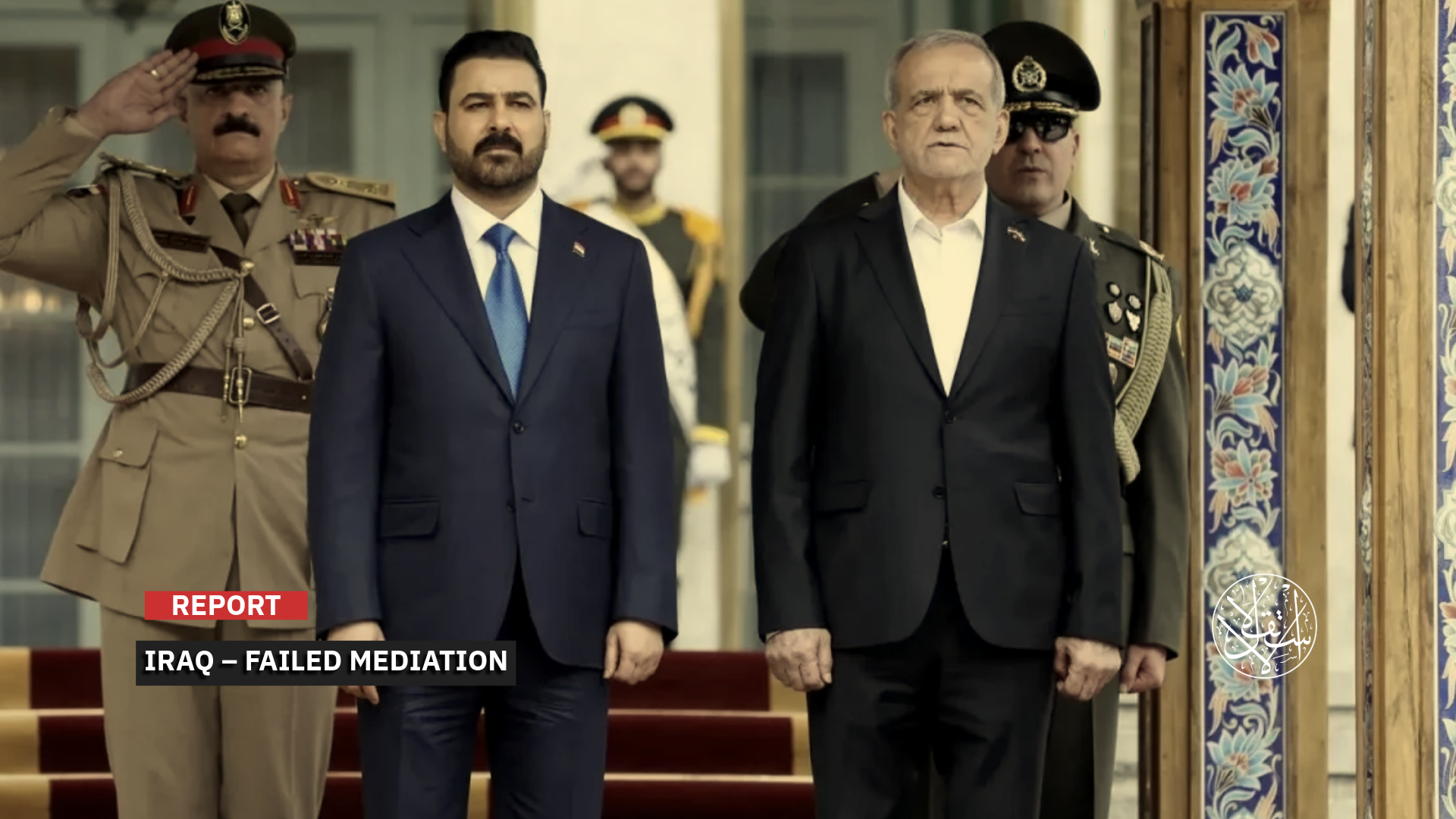
Al-Zaidi led a mediation between Iran and the United States with Trump's approval.
Iraqi Prime Minister Ali al-Zaidi has stepped into mediation between the United States and Iran. He carried proposals to end the war, which threatens a new escalation in the region, after US President Donald Trump approved them.
Accounts of what al-Zaidi's secret visit to Tehran achieved, however, contradict each other. One says understanding has advanced. The other holds that the initiative was not accepted by Iran. Local Iraqi reports spoke of agreement on four of the seven points Iran had set as conditions for negotiating.
A Secret Visit
On November 10, the Al-Mada newspaper quoted sources as saying that al-Zaidi's visit to Tehran had covered more than half the distance toward a possible understanding between Washington and Tehran. It said he had reached agreement on four of the seven points that Iran set about two months ago as conditions for entering negotiations.
According to the sources, whom the paper did not name, the points concern the nuclear file, the naval blockade and an end to the all-out war in the region. Three points remained in dispute, and al-Zaidi was continuing his efforts to complete the understanding. The paper did not, however, disclose the details of each point or the nature of the agreement it said had been reached.
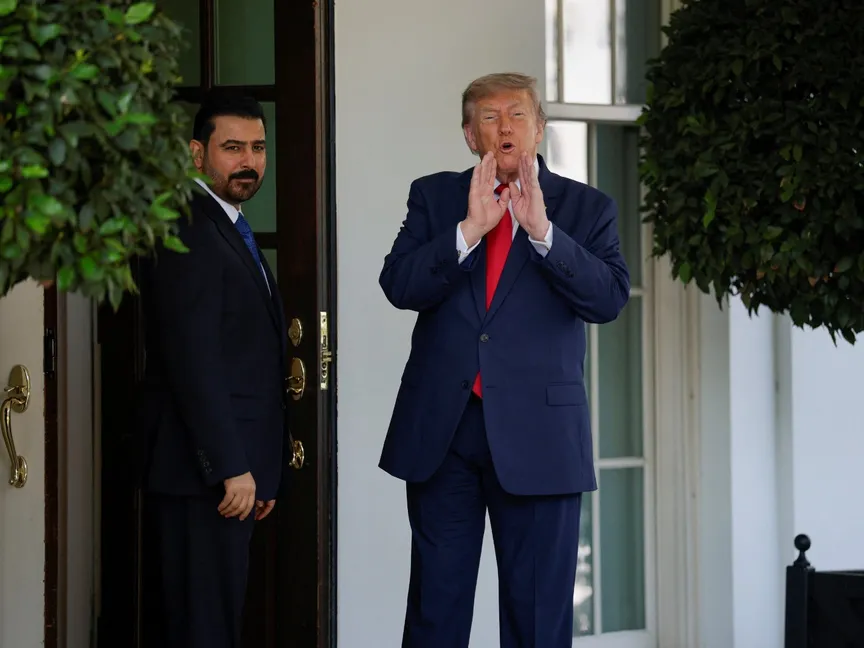
Al-Zaidi visited Tehran on Friday, November 6, 2026. The visit was unannounced and was preceded by contacts with Trump, according to media reports. They said the US president had approved Iraqi proposals to end the war and asked the prime minister to convey them to the Iranian side and act as a mediator.
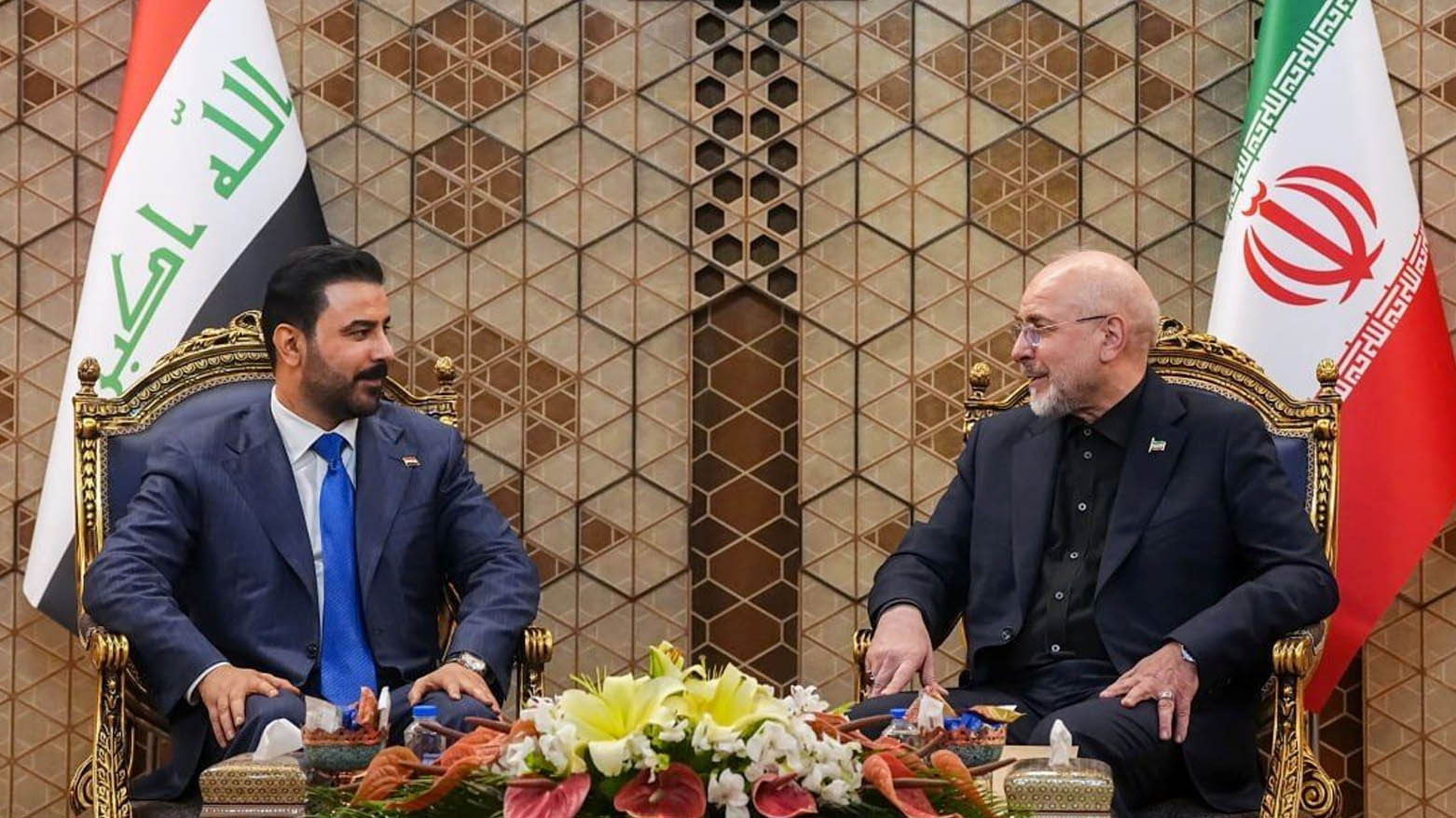
The reports did not reveal the details of those proposals or the commitments Washington had agreed to carry out. Iranian media reported that al-Zaidi met with Iranian President Masoud Pezeshkian and with Mohammad Bagher Ghalibaf, the speaker of the Islamic Consultative Assembly, who heads the Iranian negotiating team.
The semi-official Iranian Fars news agency also reported that the Iraqi delegation included Faleh al-Fayyadh, head of the Popular Mobilization Authority, and Hadi al-Amiri, secretary-general of the Badr Organization. No further details were available on the nature of their participation or the files discussed during the visit.
On November 10, Iraqi Foreign Minister Fuad Hussein said al-Zaidi's visit to Iran was an attempt to bring the positions of Tehran and Washington closer together. He stressed that Iraq advocates peace and de-escalation and that its relations with both sides allow it to play the role of mediator.
The account of agreement on four points, however, has not been met with any official joint announcement from Tehran and Washington. And since neither the three disputed points nor the content of the Iraqi proposals have been disclosed, it is hard to gauge how much progress the visit achieved.
Tehran's Position
Iraqi observers, by contrast, believe al-Zaidi's mediation failed to achieve its goals. They point to the Iranian side's rejection of the initiative and its lack of interest in it, especially given the prime minister's insistence on disarming the militias linked to Iran.
Iran affairs expert Mustafa al-Nuaimi offers a skeptical reading of the mediation's chances. He told Al-Estiklal that the issue is not what form a breakthrough takes, but how far Iran is willing to accept compromise solutions that would end the intermittent fighting between it and the United States and "Israel."
Al-Nuaimi added that "those leading Iran today are the Iranian Revolutionary Guard." In his assessment, the military is steering the country's political process and has so far rejected attempts to reach political solutions.
The analyst linked this position to Iran's economic crises. He pointed to the crisis of the toman exchange rate and its successive collapses, as well as the energy crisis, both in domestic consumption and in exports.
Al-Nuaimi said ordinary Iranians are paying a heavy price for these policies, which he described as undisciplined and as having produced no solutions. He noted that these conditions have not pushed those who make decisions in Iran to change their stance on the confrontation and move toward a political settlement.
This reading conflicts with what Shiite sources told Al-Mada about progress in the understanding between the two sides. Those sources spoke of partial agreement, while al-Nuaimi believes the position of the decision-makers in Tehran shows no real readiness to accept solutions that would end the confrontation.
Even so, the available information includes no official Iranian announcement rejecting the Iraqi initiative. Nor have any details been made public about Tehran's response to the proposals al-Zaidi conveyed.
A Green Light
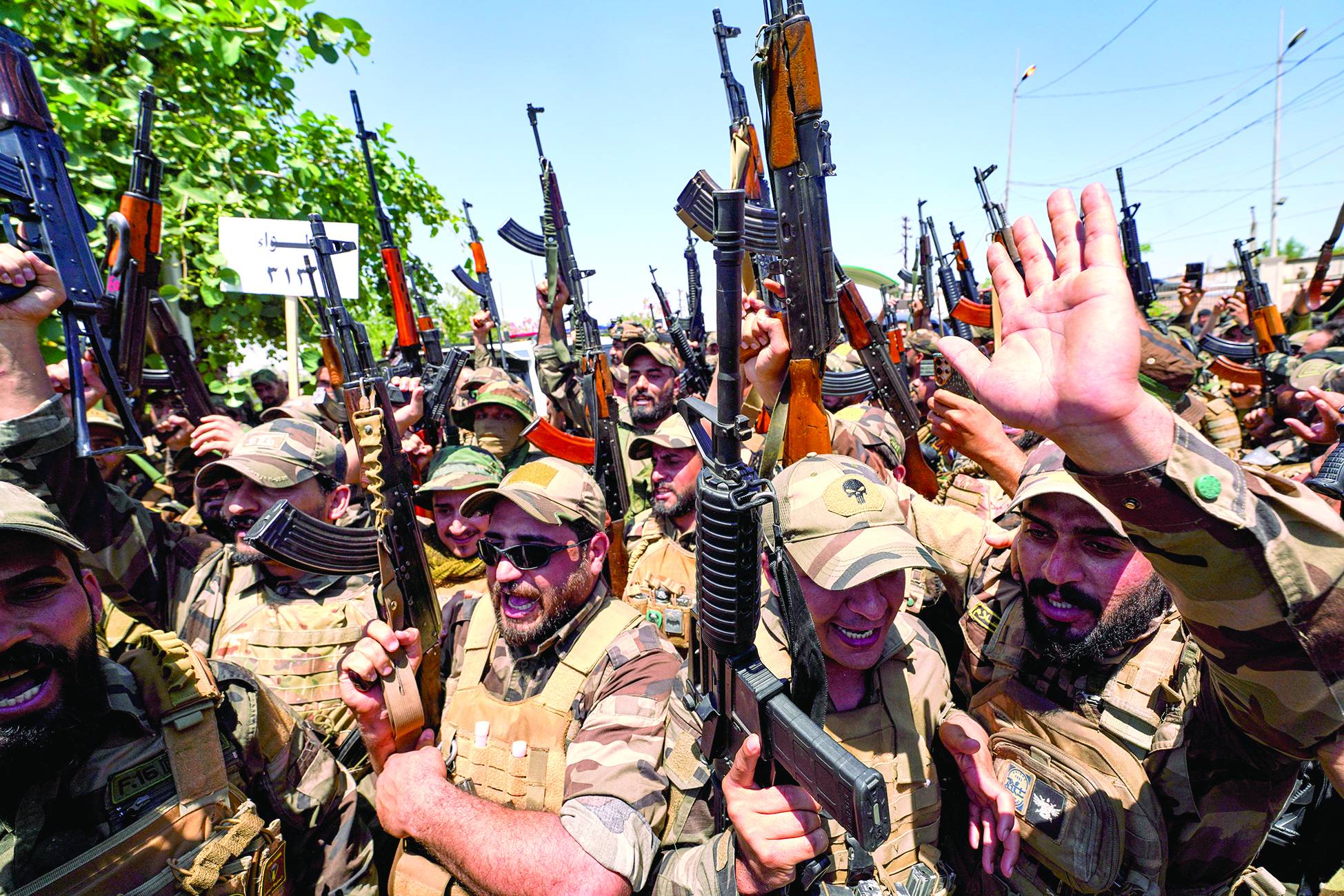
The weapons of the militias linked to Iran are one of the most prominent challenges al-Nuaimi raised in his assessment of al-Zaidi's move. In his view, the prime minister's insistence on disarmament is tied to international understandings and to the support he receives for ending the presence of armed groups outside the framework of the state.
Al-Nuaimi said that "the question of Jurf al-Sakhar is part of that larger equation from which the building of Iraq, away from proxies, will begin." In his assessment, the weapons of the Iran-linked groups have become a burden on the country and are no longer acceptable regionally or internationally.
On whether the weapons might be handed over, al-Nuaimi said there are still no signs that Iraq's Hezbollah is willing to surrender its arms to the state. He considered a clash likely, but said how any confrontation is contained will depend on the scale of escalation from the group.
He added that an escalating confrontation could push al-Zaidi to use different means to end the crisis. In his assessment, the government's success in handling the file depends on how the armed groups respond and how far they abide by the state's decision.
On another front, al-Nuaimi pointed out that the decision to hand over weapons does not rest with these groups alone. It depends on Tehran's directives, because the groups are subordinate to Iran and because of the way they are used. In his assessment, this poses an additional difficulty for the Iraqi government in dealing with the file.
He noted that al-Zaidi will try by every available means to close the file of uncontrolled weapons and to contribute to local, regional and international peace. But he warned of the difficulties these efforts will face as long as the armed groups' decisions remain tied to Iran.
This is where the mediation file meets the internal security file. Al-Zaidi is seeking to bring Washington and Tehran closer while also insisting on ending the phenomenon of uncontrolled weapons. Al-Nuaimi believes Iran's position on the groups linked to it could obstruct both goals.
Iraqi writer Ihsan al-Shammari wrote in an article published by the Lebanese newspaper An-Nahar on November 12 that the problem with Prime Minister Ali al-Zaidi's mediation is not his ability to open a channel of dialogue between Washington and Tehran.
Rather, it is the absence of the trust needed for it to succeed. He noted that Tehran appeared more rigid toward the Iraqi initiative amid what he called "the illusion of victory" over the Republicans in the United States.
Al-Shammari added that the green light US President Donald Trump gave al-Zaidi came as part of international, regional and Arab moves to prevent the confrontation in the Middle East from widening. He argued that the prime minister is using the mediation to strengthen his regional and international standing and to draw on US support against domestic pressure.
That pressure includes his disputes with the armed factions and the waning support of some Coordination Framework parties for his measures against Iran's allies.
He noted that al-Zaidi is betting on achieving a diplomatic breakthrough before the other countries involved in mediation. Such a breakthrough would give him a foreign policy achievement to make up for setbacks on some domestic files, namely fighting corruption and rescuing the economy. He also argued that the initiative could help al-Zaidi build trust with the circles close to the son who is now Supreme Leader, and strengthen his position with Iran's allies in Iraq.
Baghdad's Calculations
When it comes to mediation, Iraq's ability to bring positions closer does not rest simply on its having relations with Washington and Tehran. It depends on how far the two sides are willing to respond to the proposals on the table. The Iranian and American conditions still contain points of disagreement over ending the war, economic restrictions and security arrangements.
On November 10, Foreign Minister Fuad Hussein said Iraq's strong relations with Iran and excellent relations with the United States give it the ability to play the role of mediator. He also noted, however, that other countries are playing a similar role.
Hussein explained that the closure of the Strait of Hormuz had hurt Iraq's financial and economic situation. It had also caused casualties and widened the war to include Iraq and the Gulf states. He warned that continued escalation would affect global energy prices, including oil and minerals.
Ahmed al-Ansari, director of the Al-Rimal Center for Strategic Studies, said the Iraqi move aims to open direct channels of dialogue between the United States and Iran and to convey messages of calm that would keep the confrontation from widening. He was quoted by the Lebanese newspaper Al-Akhbar on November 11.
Al-Ansari added that the move is not limited to the political track. It is also tied to the security of navigation in the Strait of Hormuz, the management of border crossings, and the stability of energy markets and supply chains, all files that directly affect Iraq's economic security.
On November 11, the Iraqi Al-Nabaa network said the outcome of the mediation depends on the goals of the parties involved. Washington wants arrangements that prevent security threats from recurring and protect its regional interests. Tehran demands the lifting of economic restrictions, an end to military operations and guarantees for its interests.
Baghdad is focused on keeping the confrontation from spreading to its territory and on preserving its relations with both sides. This difference reflects the diverging priorities of the three countries. It leaves the mediation with the task of reconciling demands that may not be reconcilable.
Continued contacts do not mean an agreement is near, and the absence of final results does not mean the initiative is over. The known facts are limited to al-Zaidi's visit, the sources' account of agreement on four points, and the continuing dispute over three others.
The key test of al-Zaidi's mediation therefore remains how far Tehran and Washington respond to the Iraqi proposals. It also remains to be seen whether upcoming contacts will lead to understandings on ending the war and the other disputed files, while Baghdad continues to deal with the fallout of the confrontation and the issue of militia weapons.
Sources
- Undisclosed Talks in Tehran Between al-Zaidi and Ghalibaf to Discuss the Path to De-escalation [Arabic]
- Al-Zaidi Went Secretly to Tehran After Trump's Ultimatum: Mediation to Stop the War or an Attempt to Contain the Factions? [Arabic]
- Will al-Zaidi's Mediation Succeed in Persuading Trump and Tehran? [Arabic]
- The Mediator Who Fell from Favor [Arabic]
- An Iraqi Initiative to Bridge the Gap: Al-Zaidi Conveys Trump's Demands to Iran [Arabic]
- Iraq Confirms al-Zaidi Made an "Unannounced" Visit to Iran [Arabic]
- Carrying Trump's Proposal: Al-Zaidi on an "Unannounced" Visit to Tehran [Arabic]