The Cyber War in Yemen: How Did the Houthis Turn Telecommunications Technology into a Weapon?

Control of telecommunications has become a component of security and military control.
The conflict in Yemen is no longer confined to traditional battlefields. It has spread into the digital domain, where telecommunications networks and information infrastructure have become tools for surveillance, espionage, intelligence gathering, and the management of military operations.
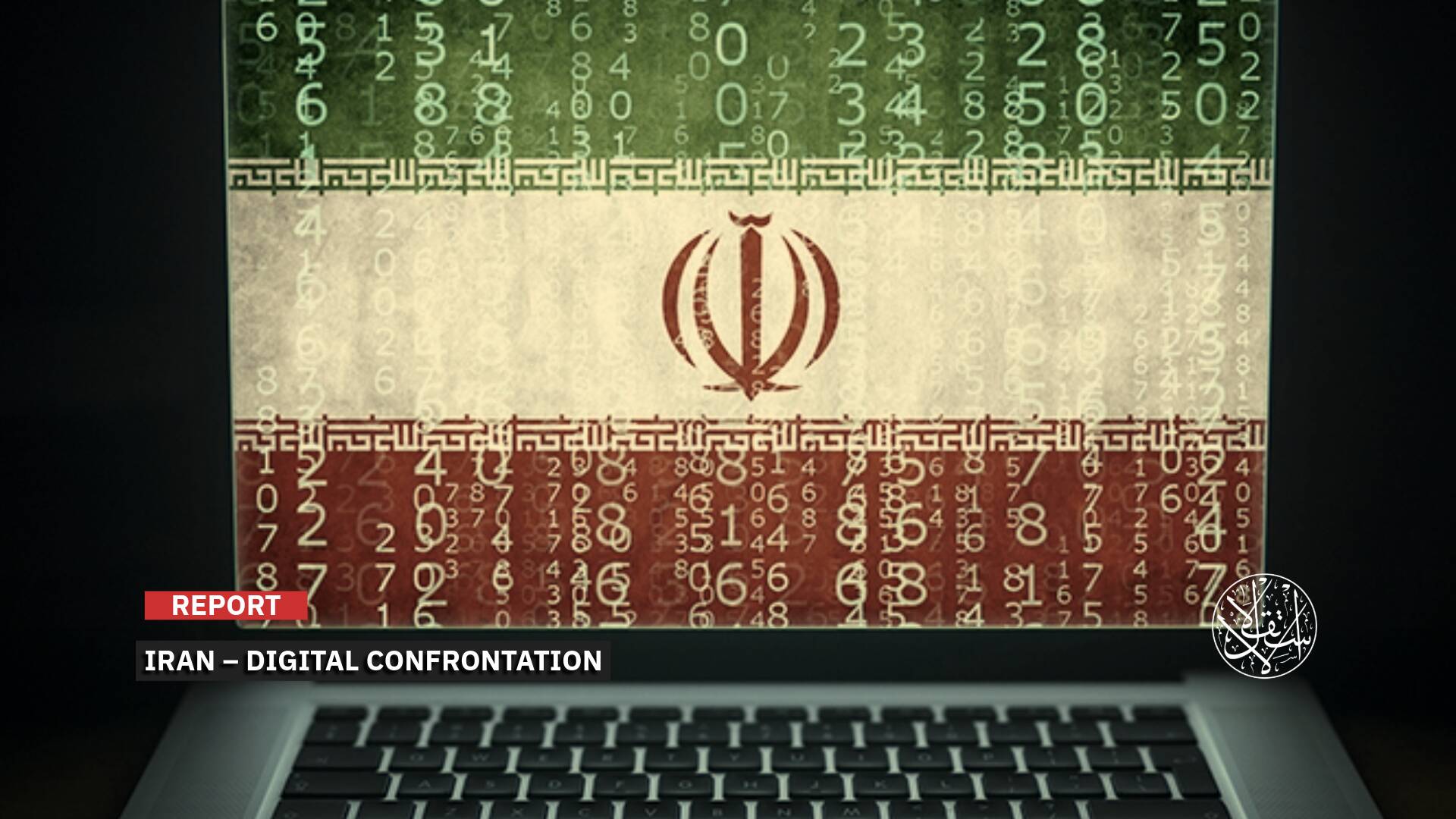
In this domain, the Houthi group has built a system that goes far beyond civilian uses of technology. It has drawn on its control of the telecommunications sector and its institutions since it seized Sanaa in September 2014, and on foreign technical support and expertise, particularly from Iran.
The system matters for more than the money it brings the group. It also lets the group access user data, track communications, and analyze information in ways that serve its security, intelligence, and military activities.
Control of telecommunications has thus become a component of security and military control, and a source of information that can be used to target opponents and monitor society.

Taking Control of Telecommunications and Building a Spy System
Since seizing Sanaa in September 2014, the group has imposed its influence over the Public Telecommunications Corporation and the YemenNet network, the country's main fixed internet provider, as well as other telecom institutions and companies.
The UN Panel of Experts on Yemen documented that the Houthi authorities control the sector's institutions and profit from telecom service revenues, including international calls and roaming.
In its 2025 report, the panel pointed to substantial income linked to incoming international calls routed through regional companies.
According to an investigation by Independent Arabia, the group began building a system to spy on Yemenis in 2016. It did so through a committee made up of officials from the National Security Bureau and two representatives of the group's leadership, Dhaifallah Zubara and Abadi al-Owairi.
The investigation says the committee set up specialized units staffed by experts trained in Iran, Iraq, and Lebanon, and divided their tasks among the various telecom sectors.
The system operated under joint security and military coordination. It aimed to gather information on the government's military commanders and officers and to track their phone numbers and calls. It also monitored figures opposed to the group, including notables, educators and tribal sheikhs. According to the investigation, this work drew on the records of Yemeni telecom companies, among them Yemen Mobile, SabaFon and MTN.
The military importance of telecommunications comes from the fact that civilian networks are not merely a means of making calls or browsing the internet. They are a system of access networks, switching and control centers, data transmission lines, international gateways, and subscriber management systems. Some of these components can become a source of sensitive information if a party to the conflict gains access to their data or misuses it.
Militarizing Networks and the Digital Kill Chain
In October 2026, a statement by the Yemeni government's Ministry of Telecommunications and Information Technology brought the issue of control over telecom networks back to the forefront of the conflict.
The ministry accused Ansar Allah (the Houthis) of using civilian infrastructure for military and intelligence activities, including surveillance, information gathering, and the operation of drones and projectiles.
The ministry warned citizens in areas under the group's control of "the risks of surveillance and espionage through the networks it runs, calling on workers in the telecom sector in Sanaa to reject any instructions to harness civilian networks for military operations, espionage or harming citizens."
In a statement to Independent Arabia, Yemen's Minister of Telecommunications and Information Technology, Shadi Basurrah, held "the Houthi movement fully responsible for dragging this vital sector into its terrorist military operations, and for the resulting dangers threatening the sector, its facilities, its assets and the interests of citizens."
In an official statement, the ministry revealed "the use of the sector's infrastructure to operate drones and projectiles and to gather information on citizens, violating their privacy and security."
Against this background, the attack on al-Alam camp in Shabwa governorate was not merely a conventional military strike carried out with a ballistic missile or a drone.
According to an investigation by Yemen Monitor, it was the culmination of what modern warfare engineering calls the "digital kill chain."
The intelligence system behind such operations relies on full, centralized control of the main exchanges and of the routes through the international telecom and internet gateway in Sanaa. This allows extensive penetration without any direct human presence inside the targeted camp.
The process began with precise analysis of metadata. Traffic on the cell towers around al-Alam camp was monitored for what is known as sudden digital density: an unusual spike in call frequency or the activation of new SIM cards. Such a spike gives a decisive indication that significant reinforcements have arrived or that senior military commanders are present.
Spying on the Military and Developing Hacking Tools
Houthi-linked cyber activity has not stopped at institutional control of telecom networks. It has extended to spyware that targets mobile phones to reach the data and information stored on them.
In July 2024, in the discovery of one of the most serious security breaches in Yemen, the US cybersecurity firm Lookout announced that a Houthi-affiliated hacking network had been eavesdropping on the phones of military commanders and officers in Yemen and across the Middle East, according to Independent Arabia.
Lookout researchers said a Houthi-affiliated threat actor used malware called "GuardZoo." Its basic task is to collect data from phones, such as photos, documents, and files related to specific locations.
The campaign targeted military personnel in seven Middle Eastern countries: Saudi Arabia, Oman, Egypt, Yemen, the UAE, Qatar,r and Turkiye, according to a Yemen Daily News report on July 19, 2024.
The global cybersecurity firm Recorded Future also tracked a group, likely linked to pro-Houthi actors, that used "social engineering" techniques in WhatsApp messages to trick victims into installing malicious Android applications. Its targets were mainly people working in media, humanitarian work, and human rights, according to an analysis by Yemeni digital security expert Fahmi al-Baheth.
According to the Organized Crime Index, cybercrime has risen markedly in Yemen in recent years, driven largely by political actors, most notably the Houthis. Groups such as OilAlpha have carried out sophisticated cyberattacks on humanitarian organizations, media outlets, and civil society actors.
These campaigns reflect a shift in cyber activity away from hacking websites and accounts and toward targeting personal devices and harvesting sensitive data.
The shift widens the scope of surveillance and makes mobile phones one of the main security weak points for military personnel, activists and humanitarian workers.
The Houthis Enter the Claude Era
Anthropic, the company that developed the artificial intelligence model "Claude," reported that it had uncovered a cell in Houthi-controlled northern Yemen that used Claude to develop software for conventional weapons, including guided missiles. The case was documented by the United Cause foundation and the Zee News website.
Anthropic described how the cell used the model as a software engineer. It drafted guidance and stabilization code, reviewed it, and diagnosed and fixed errors after a failed live test.
After a guided missile test failed, the operators came back to Claude within hours to ask for diagnostic help. Anthropic said it identified and disrupted the operation, banned the accounts, and saw no evidence that an operational weapon had been deployed.
According to Zee News, Houthi operatives working with specialists from Iran's Revolutionary Guard devised a systematic way around the safety protocols.
They created hundreds of separate accounts across different locations and time zones so as not to trigger automated monitoring alerts.
They also framed their questions as physics problems or hypothetical academic inquiries rather than direct requests for weapons manufacturing.
The War on Undersea Cables and the Internet
Intelligence and media reports have warned that Iran, in coordination with the Houthi group, may be planning to target undersea internet cables in the Arabian Gulf, the Red Sea and Yemeni waters. The plans would be a retaliatory option if Tehran comes under new US or Israeli military strikes.
A report published by the Sheba Intelligence platform has renewed concerns that the Houthis could be used in operations against undersea telecom cables in the Red Sea.
The report came amid warnings that Iran may target this infrastructure if military confrontation with the United States and "Israel" resumes.
On October 23, 2026, Reuters quoted Iranian security officials as saying that Tehran had drawn up plans to target undersea telecom cables in the Gulf if it came under a new military attack. The officials said Iran might also obstruct repairs to prolong the communication outages.
These threats carry particular weight because the region depends on undersea cables for international internet connectivity, financial services and digital communications.

The Iranian Role
Iranian support is one of the main reasons the Houthis' technical and intelligence capabilities have grown. On November 3, 2026, the Yemeni Interior Ministry announced that 21 foreign experts were working with the group: 14 from Iran's Revolutionary Guard and 7 from Lebanon's Hezbollah. They are spread across six areas: Hodeidah, Sanaa, Saada, Hajjah, Amran and al-Khawkha.
According to a statement by Interior Minister Ibrahim Haydan, the experts specialize in: operations management and command and control; ballistic missiles and drones; surveillance, communications and electronic warfare systems; supply networks and the smuggling of military components.
Haydan described the group as "a complete general staff." He accused Iran and Hezbollah of overseeing part of the group's military operations and of developing its combat capabilities.
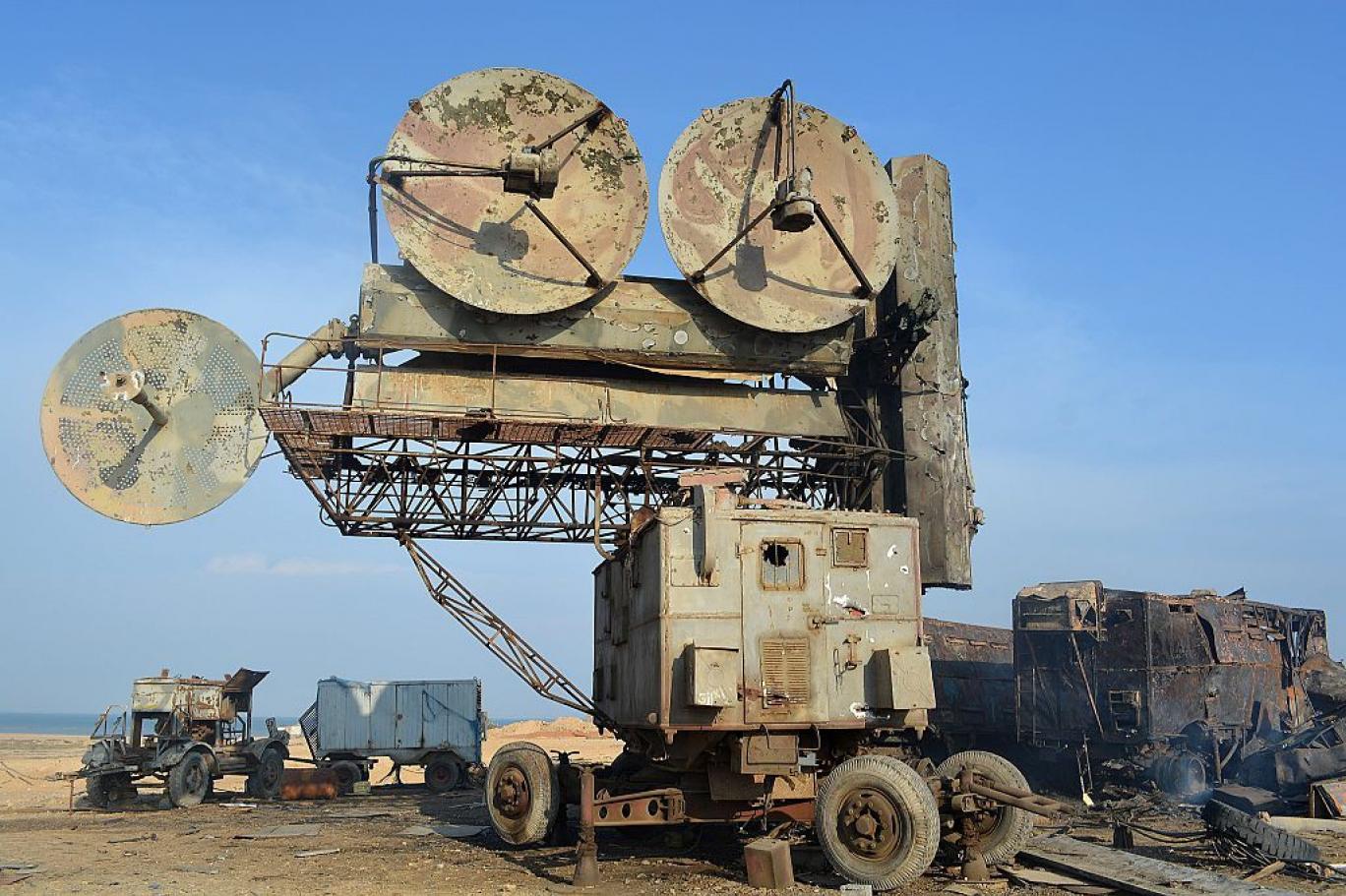
In the same vein, a report published by Sheba Intelligence in September 2026 revealed that the Revolutionary Guard had set up a hybrid military communications system for the Houthis that combines fiber optics and wireless networks. The work involved supplying equipment, installing systems at existing sites, and building new stations on Aiban and Attan mountains in the Sanaa area. According to the report, the equipment was integrated into the fiber-optic network alongside an independent wireless network, giving the group communications better suited to managing operations and transmitting data.
This information is consistent with an Associated Press investigation published on September 23, 2026. Drawing on accounts from ten officials and military personnel, it described the direct role of Revolutionary Guard advisers in the Houthi advance on the western coast and in their seizure of Mokha, Bab al-Mandeb and Mayun (Perim) Island.
The investigation said the advisers took part in field planning and analyzed communications and satellite-derived intelligence, capabilities the Houthis did not have at that level. It also described how government forces' communications were penetrated and how field commanders lost contact with some of their units.
These findings show that Iranian cooperation goes beyond transferring weapons and technology. It extends to building command, control, communications, and electronic warfare systems, and to linking intelligence with field planning and execution.
Houthi Cooperation with China and Russia
There is no sign of a formal, declared alliance between the Houthis and China and Russia. The evidence does, however, point to operational and intelligence ties, smuggling networks, and technical support. It also points to diplomatic cover that allows the group to diversify its sources of support.
At a hearing of the US House Subcommittee on the Middle East and North Africa on September 1, 2026, Yemeni expert and Middle East Institute fellow Nadwa al-Dawsari said there was evidence that the Houthis had built relations with Moscow and Beijing. She pointed to reports that Russian personnel in Sanaa were providing information and technical support for targeting ships in the Red Sea.
She also spoke of intelligence given to the Houthis by a satellite company linked to the Chinese military, and of US documents indicating that the group had been supplied with weapons, dual-use components, and missile and drone parts. She added that both countries had given the group diplomatic protection at the United Nations.
A further sign that the Houthis benefit from Russian space capabilities came in an Associated Press investigation published on October 27, 2026. It reported that the firm AURORAH GeoSignal Intelligence examined 40 missile and drone attacks on Saudi Arabia by the Houthis and Iraqi militias between July 1 and October 19. The firm found a pattern of Russian government and military satellites monitoring the targeted areas before and after the attacks.
According to the company's founder, Nawaf Obaid, the satellites include the Bars-M, Persona, Lotos-S1, Pion-NKS and Kondor-FKA systems. These are designed for mapping, optical reconnaissance, electronic and naval intelligence, and radar imaging.
Obaid explained that the discovery matters because it shows how Russian intelligence capabilities fit together with, and, in his words, supported, the system led by the Iranians. He cited the Houthi offensive on the western coast toward Bab al-Mandeb, where Russian intelligence, Iranian command and local human intelligence combined to undermine coordination among government forces.
Chinese support extended to military components and technologies. In October 2026, Conflict Armament Research (CAR) published a report titled "Houthi Ballistic Missile Manufacturing." It revealed Houthi efforts to manufacture the "Kheibar Shekan" missile using Chinese components. Separately, the US State Department accused the Chinese company Chang Guang of supplying the group with satellite images that were used to target US military sites during the air campaign in spring 2025.
The group has also set up closed communications networks using Russian and Chinese technologies to protect its leaders and tighten surveillance of the population, according to Asharq Al-Awsat newspaper on May 30, 2025. These networks run on infrastructure that is not connected to the internet and link surveillance cameras and listening devices placed in streets and buildings.
The Houthis Are Also Vulnerable to Penetration
The group has tightened its grip on telecommunications and uses them for surveillance and espionage, yet its own security system is not immune to breaches.
On October 15, 2026, the Houthi militia acknowledged sensitive security breaches in the capital, Sanaa. The interior ministry of the group's unrecognized government announced that it had busted a cell it accused of carrying out four operations against various sites in the city.
Earlier, the Defense Line website had revealed, based on leaked documents and sources, that the Houthis were working hard to upgrade their communications infrastructure. They were importing advanced equipment from China, Russia, and other countries to replace the Iranian-developed equipment they had used for years. The aim was to reduce their dependence on the Iranian system and to avoid the kind of security breaches that hit Hezbollah.
According to a document published by Defense Line, the group requested the import of "data extraction" devices from China worth more than $60,000. The devices were for the "Jihadi Preventive Security" apparatus, its secret security and intelligence arm, which is overseen by Houthi leader Ahsan Abdullah al-Hamran.
The two incidents show that the Houthi security grip is not immune to breaches, despite the group's tight control over telecommunications and its use of them for surveillance and espionage.
The group's efforts to import technology from China and Russia also show that it is trying to strengthen its security and intelligence agencies, diversify its technical sources, and reduce its dependence on Iran. The group therefore uses technology not only to penetrate its opponents but also to protect its own security system from penetration.
Fragile Cybersecurity of the Legitimate Government
While the Houthis' technical and security capabilities have grown, a Yemen Science study titled "Yemen's Digital Collapse" shows how fragile the legitimate government's digital infrastructure has become. It attributes this to war, institutional division, weak funding, and the lack of an integrated national cybersecurity strategy.
According to the study, several factors have deepened the weakness of Yemen's digital environment: Houthi control over YemenNet, the main fixed internet provider; the halt in equipment upgrades; many institutions' reliance on old systems and software; the absence of a national computer emergency response team; the absence of an independent regulatory body.
The effects of this fragility became visible during a wave of cyberattacks in July and August 2025 that targeted government websites, the telecom and water sectors, and financial institutions. According to the study, the group "S4uD1Pwnz" breached DNS servers, disrupted internet services, and gained access to the industrial control systems of water supplies. The authorities announced no official response and no public technical investigation.
One of the most serious gaps is that the legitimate government's institutions still rely on telecom and internet networks under Houthi control, such as Yemen Mobile, SabaFon and YemenNet. This includes military units, soldiers, ministers, and commanders.
The report noted that these networks were used for military communications and for commanders' meetings at al-Alam camp and in Marib. This raises concerns that sensitive information is exposed to surveillance and leaks.
These shortcomings have several causes: divided decision-making among the relevant institutions in Aden, Marib and Riyadh; weak funding and a shortage of specialized personnel; the departure of experienced staff; a lack of training and of the necessary tools; reliance on public applications, especially WhatsApp groups, to manage communications and military coordination.
On top of this, institutional will is weak, and cybersecurity is treated as a secondary technical matter rather than as part of the security of the state and the armed forces.
Closing these gaps requires several measures: establishing a national cybersecurity center in Aden, with a specialized emergency response team working around the clock; updating legislation on cybercrime, data protection and privacy; separating military communications from civilian networks; banning the use of Houthi-controlled networks in sensitive operations.
It also requires building an independent government and military communications network and training specialized personnel. Citizens and institutional staff need to be made aware of the risks of espionage and of suspicious applications and links. International technical support should also be used to protect the country's digital infrastructure.
Taken together, recent developments show that the conflict in Yemen is no longer only about who has missiles, drones and conventional weapons. It now also involves control over information and communications, the ability to penetrate networks, and the use of data in military and security operations.
The Houthi group has used its control of the telecom sector, together with Iranian support and foreign expertise, to build a system that combines electronic espionage, information warfare, and command and control.
The legitimate government, by contrast, faces a digital and institutional gap that leaves its communications and military information open to surveillance and penetration. It still relies on networks it does not control, and it lacks an independent national cybersecurity infrastructure.
The battle over telecommunications is therefore no longer a marginal technical issue or something separate from the military confrontation. It has become part of the balance of power in the Yemeni war. Whoever can protect their own information and communications, and deny the adversary access to them, holds a significant advantage in managing the battle and deciding its outcome.
Sources
- UN Panel of Experts 2025 Report: The Role of the Quds Force and Hezbollah in the Houthi Command [Arabic]
- Electronic Espionage: An "Unknown Soldier" Tipping the Scales in Sanaa [Arabic]
- Ministry of Telecommunications: Houthi Militia Uses Civilian Telecom Networks to Support Its Terrorist Military Operations Against Civilians [Arabic]
- The Information Network… A Houthi Weapon That Has Bloodied Yemenis [Arabic]
- Anatomy of the Digital Kill Chain and the Houthis' Use of Telecom Networks in Targeting al-Alam Camp in Shabwa [Arabic]
- Lookout Uncovers Houthi Spyware Targeting Military Personnel in the Middle East [Arabic]
- On the Report of Houthi Spying on Neighboring Countries: Intelligence Superiority or Exploitation of Telecom Dominance? [Arabic]
- OilAlpha: A Spy Group Likely Linked to the Houthis Targets Entities Across the Arabian Peninsula [Arabic]
- Dismantling a Guided Weapons Engineering Cell in Yemen That Used Claude to Develop Guidance Software [Arabic]
- Officials: Iran Has Drawn Up Detailed Plans to Target Undersea Telecom Cables in the Gulf If War Resumes [Arabic]
- Reports of Iranian–Houthi Coordination to Target Undersea Internet Cables If US Strikes Resume [Arabic]
- Nadwa al-Dawsari Testifies Before the US House Foreign Affairs Committee on Countering the Houthis [Arabic]
- Houthi Communications: The Sensitive Code to Dismantling the Group [Arabic]