Life Sentences for 64 Shiite Clerics in Bahrain: National Security or a Crackdown on the Opposition?
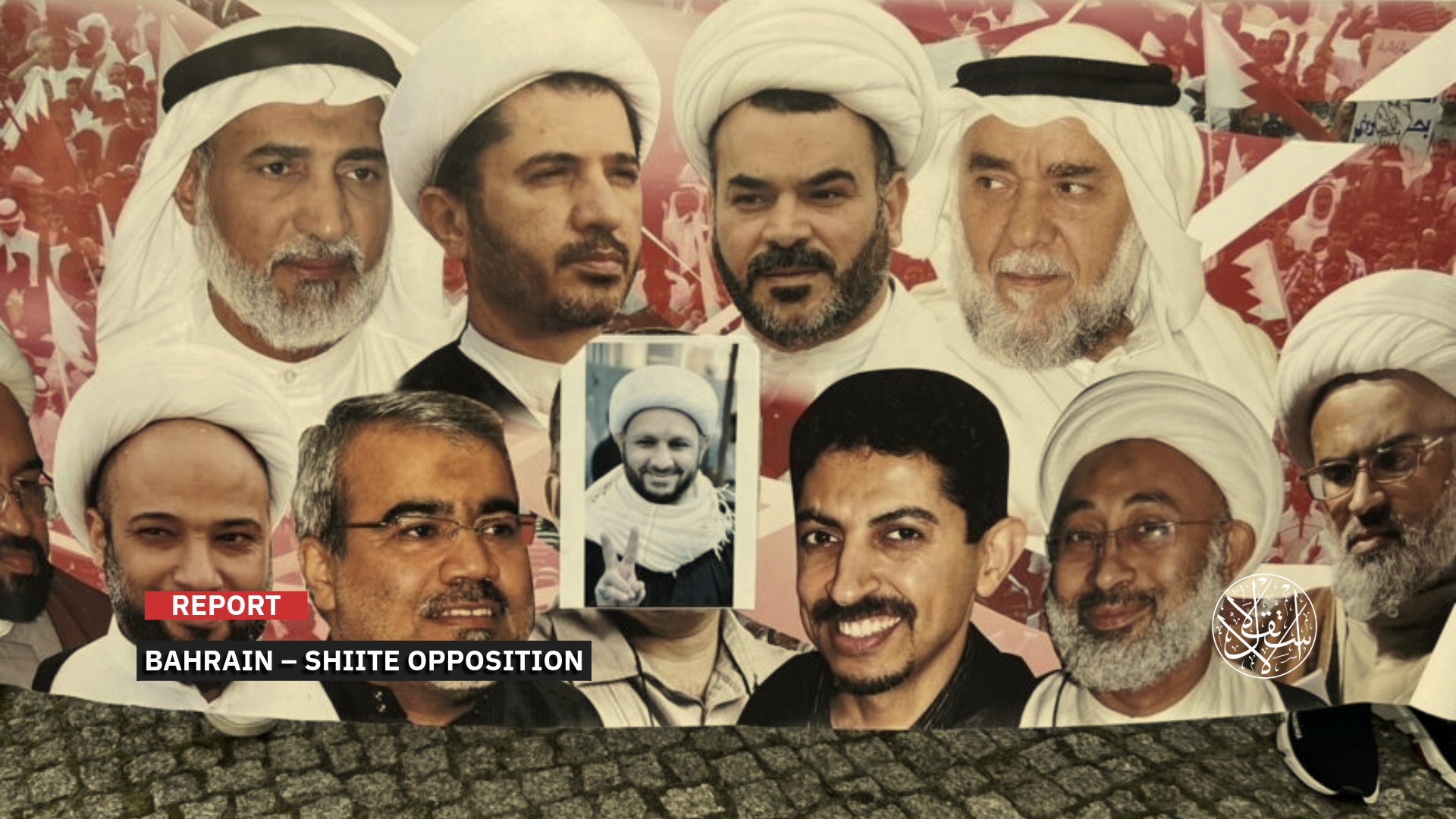
The conflict between Bahrain’s ruling establishment and its Shiite opposition began as a political and social struggle before evolving into a confrontation with sectarian and regional dimensions.
Amid escalating regional tensions between Iran, the United States, and “Israel,” and Iranian attacks targeting U.S. military sites and facilities in Bahrain, Manama has opened a broad domestic front against the Shiite community, which makes up nearly half the population. Some members of the community look to Iran as a religious authority.
Following a wave of arrests targeting prominent Bahraini Shiite clerics and opposition figures, courts on November 16, 2026, sentenced 64 of them, most of them religious leaders, to life in prison on charges of forming a terrorist group linked to Iran’s Islamic Revolutionary Guard Corps (IRGC) and seeking to overthrow the ruling system. Five others received 15-year prison sentences.
The case appears to be more than an isolated criminal trial detached from the country’s political context. Bahrain has been ruled by a Sunni royal family for more than two centuries, while Shiites are estimated to make up a relative majority of the population, according to varying estimates.
There are no recent official statistics on the country’s sectarian makeup. Foreign sources estimate that Shiites account for between 40 and 65 percent of the population, while an old government estimate implicitly put their share at 49 percent, compared with 51 percent for Sunnis.
Relations between the two sides have long been strained by disputes over power-sharing, political representation, and economic rights. Tensions escalated further with the 2011 protests, part of the Arab Spring, which called for political reform and became one of the most significant turning points in the conflict.
The life sentences have therefore raised questions that go beyond the fate of the defendants: Is Bahrain genuinely targeting a security network linked to the IRGC, or have authorities exploited the war on Iran and Iranian attacks on Bahraini territory to widen their crackdown on the Shiite opposition?
Can Manama distinguish between confronting Iranian interference and protecting the rights of its Shiite citizens? Or will conflating political opposition with loyalty to Tehran push the country into a new phase of domestic polarization?
The Trials and the Conflict
Following the outbreak of the U.S.-Israeli War on Iran in February 2026, and Tehran’s attacks on U.S. bases in the Gulf, including the headquarters of the U.S. Fifth Fleet in Bahrain, Bahraini authorities launched a sweeping arrest campaign in May and June of the same year.
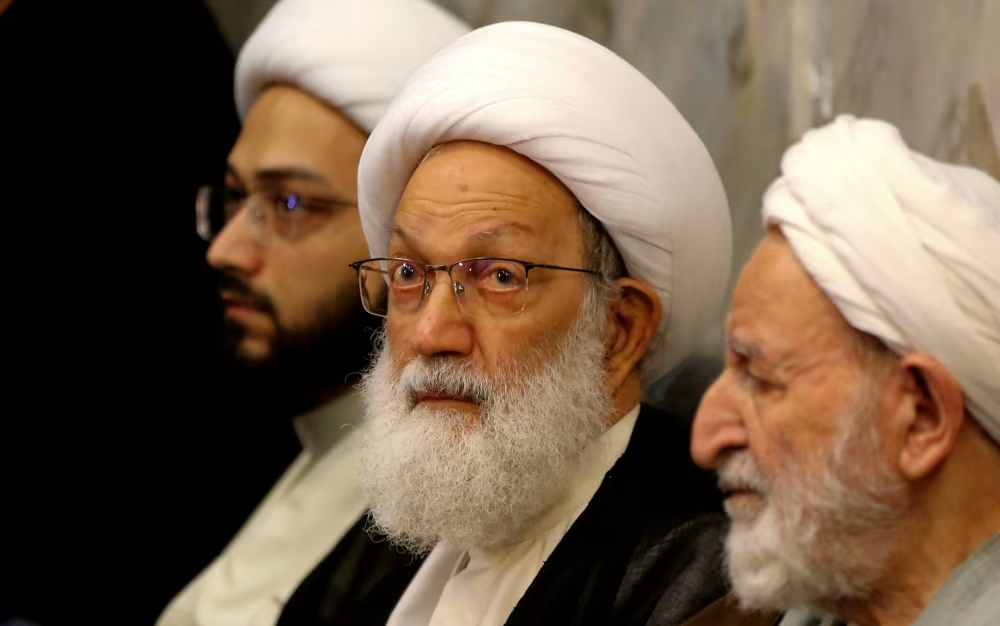
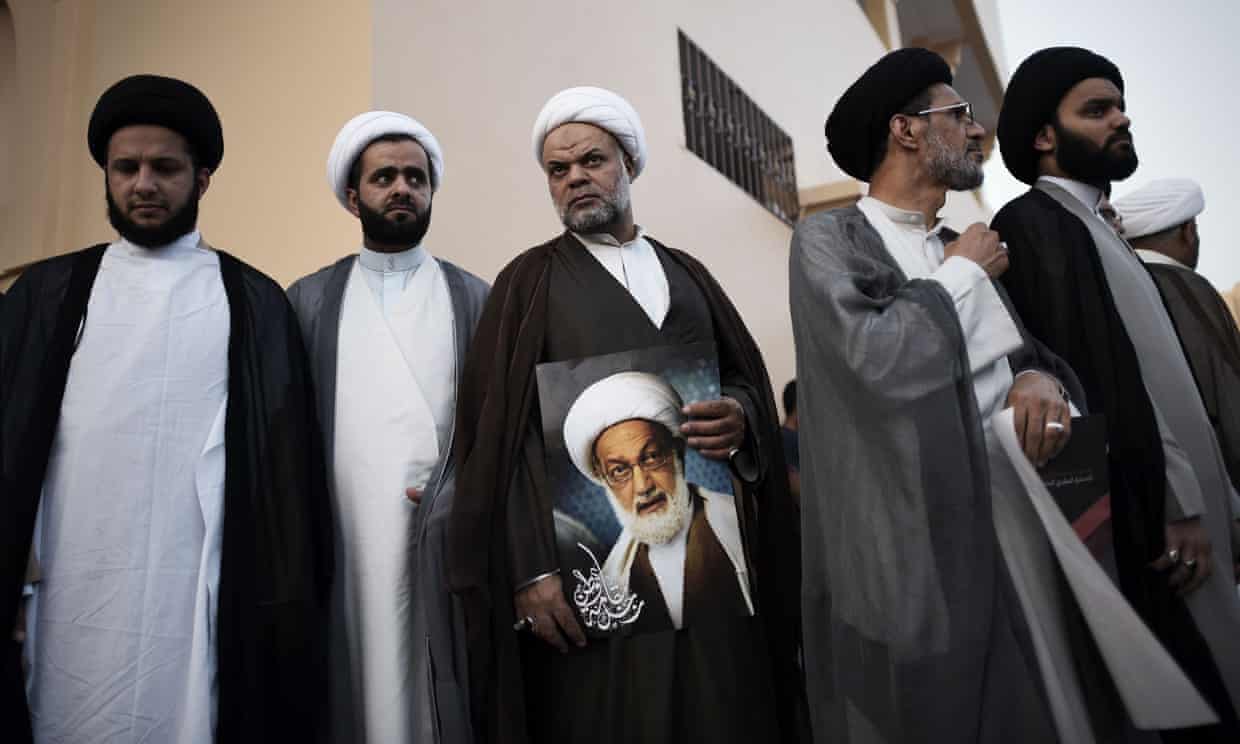
Bahraini security forces arrested dozens of prominent Shiite religious figures and clerics. Among the 13 defendants tried in absentia was Ayatollah Sheikh Isa Qassim, the exiled spiritual leader of Bahrain’s Shiite community.
A total of 69 defendants were tried in the case, including 60 Shiite clerics and nine people associated with them, among them activists and journalists. They were accused of seeking to overthrow the ruling system in coordination with Iran’s Islamic Revolutionary Guard Corps (IRGC).
As the Gulf war intensified and Iranian attacks on Bahrain continued, Bahrain’s High Criminal Court sentenced 64 Shiite defendants, the vast majority of them religious leaders, to life in prison on November 16, 2026.
The court also sentenced five defendants to 15 years in prison on terrorism-related charges and ordered the “confiscation of more than 8 million dinars ($21.1 million) for charitable purposes,” according to the Bahrain News Agency (BNA), which provided no further details.
The UK-based Bahrain Institute for Rights and Democracy (BIRD), citing lawyers who attended the trial in Manama, reported that 56 defendants were sentenced in person, including 51 detained clerics.
Another 13 defendants were tried in absentia, including Sheikh Isa Qasim, Bahrain’s highest-ranking Shiite religious authority, and Sheikh Abdullah Daqqaq.
BIRD condemned the verdicts, citing confessions extracted under coercion and “severe restrictions on the right to defense.
BIRD said 47 of those sentenced were Shiite clerics, including Sheikh Mohammed Sanqour and Sheikh Ali al-Sadadi, who had led Friday prayers at the Grand Imam al-Sadiq Mosque in Diraz, west of Manama.
Also among them was Sayyed Musa al-Aloudai, who served as an imam at the Grand Mosque in the Ras Rumman district, along with nine people affiliated with the clerics, including religious reciters.
According to a joint statement issued by 20 human rights organizations, including Human Rights Watch and Amnesty International, nearly all 69 defendants in the Bahraini case were Shiite religious figures, including prominent scholars and imams.
Sayed Ahmed al-Wadaei, advocacy director at BIRD and a signatory to the statement, said, "Since Bahrain's judiciary was established in the 1920s, the country has never witnessed persecution of Shia clerics on this scale.”
"Clerics who have led prayers and served their communities for decades now face judicial harassment."
In response, a Bahraini government spokesperson said the defendants “were not prosecuted for their beliefs, but were convicted of criminal acts,” citing evidence that included seized documents and devices, as well as recorded sermons.
Bahrain’s police chief, Lt. Gen. Tariq bin Hassan al-Hassan, said in November 2026, “We are confronting an ideology that demands obedience to Iran’s leadership over Bahrain’s sovereign authority.”
A History of Conflict
The conflict between Bahrain’s ruling establishment and its Shiite opposition began as a political and social struggle before gradually evolving into a confrontation with sectarian and regional dimensions, increasingly shaped by concerns over Iranian influence.
The 1979 Iranian Revolution marked a turning point, prompting Bahraini authorities to link the Shiite opposition to the Iranian threat. The 2011 uprising, which erupted during the Arab Spring, became a major flashpoint in this longstanding tension.
Political tensions between Bahrain’s Sunni monarchy and its predominantly Shiite opposition date back decades. However, the conflict did not begin as a purely sectarian confrontation. At its core, it was a dispute over political participation, the distribution of power, and civil rights, before taking on sectarian and regional dimensions following the Iranian Revolution.
Since the Sunni Al Khalifa family took power in Bahrain in 1783, its disputes with the opposition were not initially sectarian. Forces calling for democratic reforms included both Sunni and Shiite figures. Even the National Union Committee, established in 1954 to demand political reforms and an elected legislative council, brought together members of both communities.
The Iranian Revolution, however, transformed the nature of the conflict. Fears grew within Bahrain’s ruling establishment that the Islamic Revolution could spread to the island, while the revolution emboldened Bahrain’s Shiite opposition to make its demands more forceful.
The first confrontation of this kind came in 1981, when authorities announced they had foiled an alleged coup attempt aimed at overthrowing the Al Khalifa family and establishing an Islamic system modeled on Iran. Several Shiites were arrested. From that point on, the official security narrative increasingly linked the Shiite opposition to Iran.
Between 1994 and 1999, Bahrain experienced a wave of widespread protests and unrest demanding the reinstatement of the suspended 1973 constitution, the revival of the dissolved elected parliament, and greater employment opportunities. The period was marked by a security crackdown and mass arrests.
After ascending to the throne in 1999 following his father’s death, King Hamad bin Isa Al Khalifa sought to launch a political reform initiative. In 2001, he introduced the National Action Charter, released political detainees, and abolished the State Security Court.
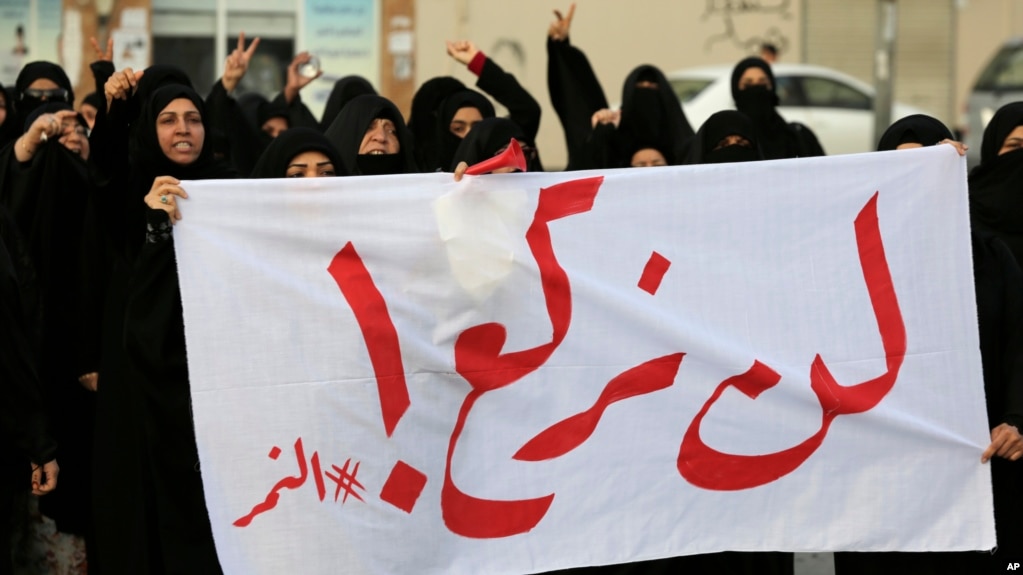
However, disputes later resurfaced over the powers of parliament and the nature of Bahrain’s political system, as the opposition objected to the limited authority of the elected legislature and the king’s retention of sweeping powers.
The establishment of the Islamic National Accord Association, known as al-Wefaq, in 2006, led by Shiite figures, marked a turning point in the organization of the opposition. It became the country’s largest political opposition group, with prominent figures including cleric Sheikh Ali Salman.
Al-Wefaq played a role in the February 2011 uprising, which followed the Arab Spring protests in Tunisia, Egypt, Libya, and elsewhere. The group led demonstrations demanding political reforms, a genuinely empowered elected parliament, and a more representative government.
Authorities crushed the 2011 uprising, and violence spread. Saudi Arabia, with the participation of the United Arab Emirates, intervened in Bahrain through what was known as the Peninsula Shield Force to support the authorities in confronting the protests, dispersing demonstrators, and arresting opposition leaders. Al-Wefaq, the largest Shiite opposition organization, was dissolved and its assets confiscated in 2016.
The space for organized opposition continued to shrink after a court ordered the dissolution of al-Wefaq in July 2016 and stripped Sheikh Isa Qassim of his citizenship, accusing him of fomenting sectarian divisions and serving foreign interests. Qassim has lived in Iran since 2018.
Before the latest confrontation and trials, the king attempted to ease tensions. On April 9, 2024, he issued a royal pardon for 1,580 prisoners and detainees, including hundreds of opposition activists and politicians who had been arrested, tried, and handed harsh sentences by Bahraini authorities for taking part in the 2011 protests during the Arab Spring.
However, the continued imprisonment of prominent Shiite leaders and clerics, alongside an estimated 690 Bahraini opposition figures, activists, bloggers, and human rights defenders, kept tensions simmering. Many had been jailed over their participation in the 2011 protests or more recent political activities.
The U.S.-Israeli War on Iran, along with Tehran’s attacks on Bahrain and U.S. bases across the Gulf, reignited tensions and arrests, ultimately leading to the life sentences.
The crackdown began shortly after the Israeli-U.S. attack on Iran was launched, with more than 300 people detained, according to the al-Amal Center for Human Rights and Justice.
On April 27, Bahrain’s Interior Ministry announced that it had revoked the citizenship of 69 people, claiming they were “of non-Bahraini origin.”
The ministry justified the decision by citing what it described as their “sympathy for and glorification of Iran’s heinous acts of aggression, as well as their cooperation with foreign entities.” The measure was implemented immediately against those targeted and their families, including dozens of children and grandchildren.
This is not the first time Bahrain has stripped people of their citizenship for allegedly opposing the government. Authorities adopted the same approach between 2012 and 2019, following the 2011 Arab Spring protests. Before the latest wave of citizenship revocations, 434 people had already been stripped of their Bahraini nationality over activities linked to political opposition to the government.
The latest verdicts, issued 45 years after Bahrain’s fears over the influence of the Iranian Revolution first emerged and 15 years after the 2011 uprising, raise questions about whether the authorities imposed such harsh sentences because they considered the defendants members of a security organization linked to Tehran, or whether they exploited the war and hostility toward Iran to intensify their crackdown on the Shiite opposition and its religious institutions.

The Significance of the New Verdicts
Bahrain’s November 16, 2026, verdicts carry implications far beyond the punishment of 69 defendants in a security case. They affect the position of the Shiite religious establishment and its relationship with the state.
The rulings open a new chapter of tensions between the authorities and a broad segment of Bahrain’s Shiite community, particularly amid the regional confrontation with Iran.
The most significant implication is that the state has expanded its confrontation with what it describes as Iranian influence beyond the security and political spheres into religious and social life, linking Bahrain’s domestic affairs directly to its conflict with Iran.
This does not mean, however, that all Shiites in Bahrain are accused of wrongdoing or that the verdicts establish Iranian ties across the community as a whole.
While Bahraini officials portrayed the prosecutions as a “defensive response to sabotage and foreign treason (the Iranian Revolutionary Guard Corps),” the Shiite opposition viewed the verdicts as part of the country’s domestic political conflict.
Western and opposition assessments suggested that Bahrain’s accusations against senior Shiite opposition figures, including clerics, of forming and running a terrorist organization linked to the IRGC to overthrow the government and suspend the constitution were intended to exploit the war to confront the opposition and impose harsh sentences on its members.
Those assessments warned that the severe sentences would intensify tensions between the ruling system and the Shiite opposition in particular, threaten coexistence, and deepen sectarian divisions. The rulings targeted Shiite imams and religious leaders, extended to charitable institutions, and affected funds associated with khums and other religious affairs.
The Shiite opposition, including the al-Wefaq Association, described the verdicts as “a dangerous escalation in relations between the authorities and the Shiite community, following the targeting of religious scholars and figures with collective life sentences.”
It said the rulings “threaten further domestic unrest and place religious freedoms and fair-trial guarantees under an extremely serious test,” according to the opposition-aligned Bahrain Mirror magazine, in statements published on November 15 and 16, 2026.
Warnings from Bahrain’s opposition groups focused on the risk that continued measures would turn the political crisis into a confrontation affecting a fundamental component of Bahraini society: the Shiites. The opposition argued that the verdicts targeted the community, its beliefs, and its religious figures, further complicating the political crisis and threatening national cohesion.
Human rights organizations and lawyers said the monarchy had used the war as a pretext to crush what remained of the religious and political opposition. They also said the case was marred by allegations of torture and raised concerns about religious persecution, according to The New York Times on November 16, 2026.
The new verdicts are particularly sensitive because they affect dozens of prominent figures in Bahrain’s Shiite religious establishment, including Ayatollah Isa Qassim, who was tried in absentia.
These developments leave Bahrain facing a highly complex dilemma. On one hand, Manama fears that its territory, which hosts the headquarters of the U.S. Fifth Fleet, could become a battleground for settling scores between Washington and Tehran. It also fears that Iran could exploit sectarian ties and religious influence to build domestic networks loyal to it.
On the other hand, expanding the security crackdown to encompass a broad segment of Shiite religious leaders could reproduce the divisions that fueled the 2011 protests, turning a political and social dispute into a deeper sectarian crisis.
The verdicts therefore do not, in themselves, prove that Bahrain has decided to target Shiites on the basis of their sectarian identity. Nor do they establish that all those sentenced, or Shiite clerics generally, are linked to Iran.
However, the scale of the case, involving 60 Shiite clerics and life sentences for 64 defendants, combined with allegations involving mosques, religious institutions, and religious authorities, means its consequences for Bahrain’s Shiite community extend far beyond the boundaries of a criminal case.