155 Countries Bring Palestinian Refugee Properties Back to the Fore: Who Reaps the Revenues of the Plundered Wealth?
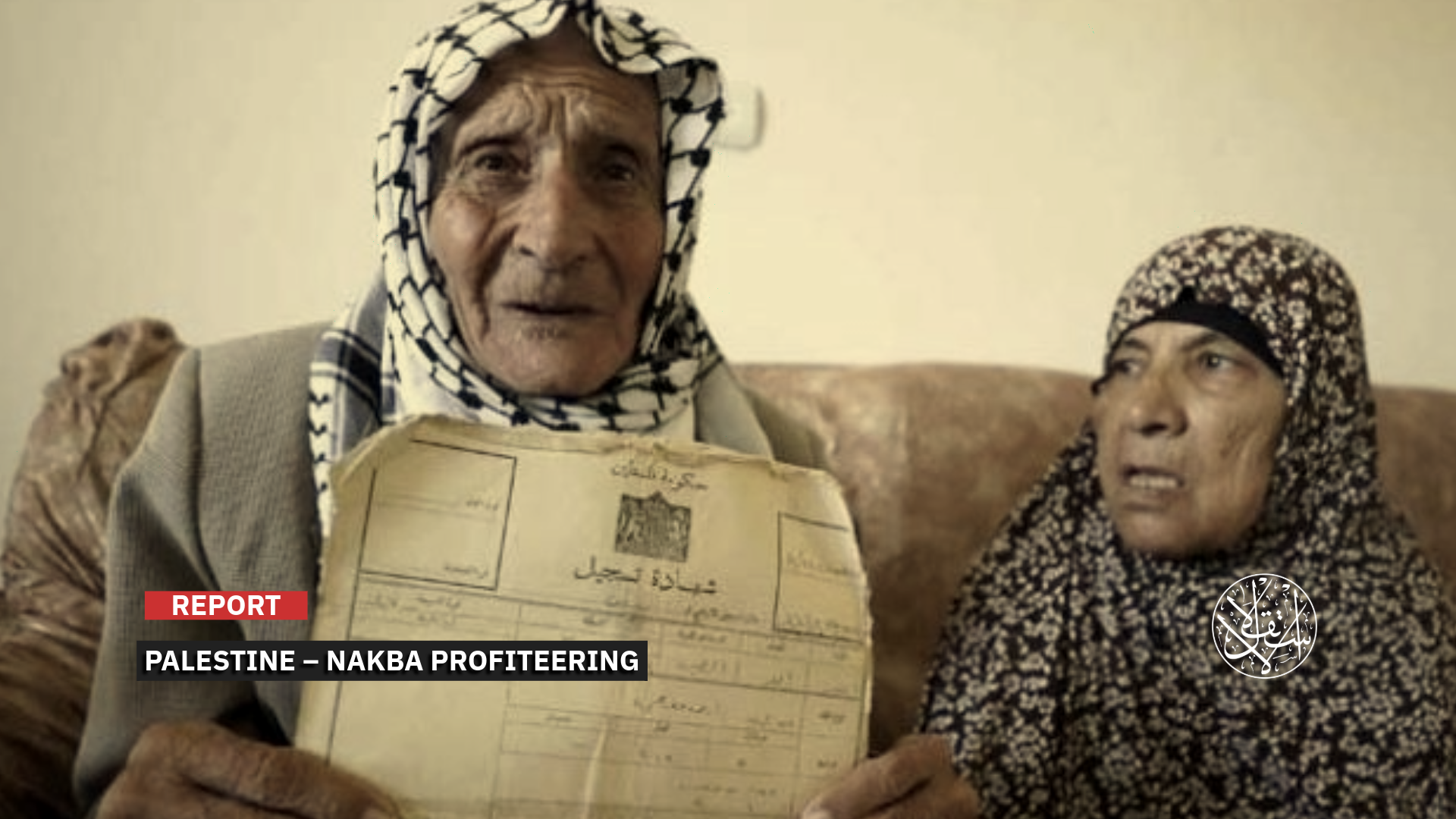
UN and Israeli documents reveal sales and leases that generated revenues over decades.
Seventy-eight years after the Nakba, the properties of the Palestinians displaced by Zionist gangs still appear in ownership registers, maps and financial ledgers. The occupation authorities seized vast areas of them and transferred their ownership to Israeli institutions, which used them for settlement, agriculture and a range of other projects.
UN and Israeli documents reveal sales and leases that generated revenues over decades. It remains difficult to trace where these revenues went or how large they were.
On November 18, 2026, 155 countries backed a draft resolution on Palestine refugees' properties and their revenues, putting the issue back in the spotlight. The draft was approved by the UN General Assembly's Fourth Committee ahead of a final vote in December.
The vote comes as demands continue for the recovery of the properties and compensation for their revenues, while efforts to turn these rights into enforceable measures remain stalled.
What Do the Records Reveal?
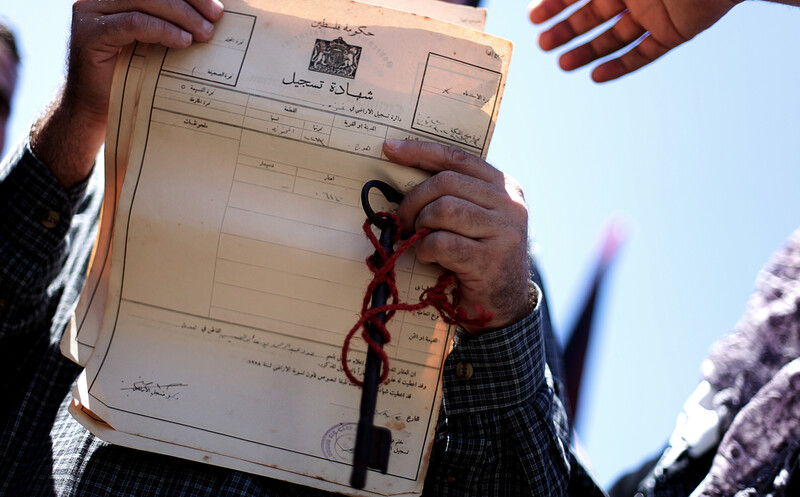
The documentation of Palestinian properties began after the Nakba through the UN Conciliation Commission for Palestine, established under General Assembly Resolution 194 of December 11, 1948.
In the commission's tenth report in 1951, its Refugee Office estimated that the land from which Palestinians were displaced and which occupation forces seized covered about 16.324 million dunams, of which 4.574 million dunams were cultivable.
The estimated value of the land and real estate stood at about 100.38 million Palestinian pounds. Rural properties accounted for nearly 69.5 million of that, urban real estate outside Jerusalem for about 21.6 million, and the occupied city itself for 9.25 million.
That value was equivalent to about $280 million at 1951 exchange rates, or roughly $3.6 billion in 2026 purchasing power. The figure does not account for the rise in property prices or the returns the properties generated in the following decades.
The valuation was based on November 1947 prices and excluded the potential development value of most of the non-cultivable land outside the cities. The commission separately estimated movable assets, including equipment, commercial stock, vehicles and household furniture, at about 20 million Palestinian pounds.
These calculations reflect the scale of the losses inflicted on the Palestinian economy. The agricultural sector was hit especially hard, losing vast lands, orchards and production facilities, along with homes and commercial properties in the cities that saw mass displacement.
In the following years, the Conciliation Commission's work expanded to identifying owners and their shares, drawing on land registry (tabu) records, British tax records and maps of villages and cities.
In a 1962 assessment by its technical office, the estimated value of private Arab-owned real estate in the areas on which "Israel" was established reached about 235 million Palestinian pounds. Of that, 204 million belonged to refugees, equivalent to nearly $825 million at 1947 prices.
These documents make it possible to identify the owner, the village or neighborhood, the parcel number, its area, and the owner's share in it. The strength of the evidence varies, however. It is stronger for land whose settlement was completed under the British Mandate than for land whose documentation relied on tax records and the names of those in possession.
American historian Michael Fischbach, a specialist in the history of Palestinian refugee property, examined these records in his 2003 book Records of Dispossession: Palestinian Refugee Property and the Arab-Israeli Conflict.
He explained their importance in reconstructing the map of Palestinian land ownership, along with the difficulties that gaps in land registration create when preparing compensation claims.
In February 2020, the Yasser Arafat Foundation, which works to preserve Palestinian national heritage, launched an electronic system that gives access to ownership documents. It contains data on about 210,000 owners, 540,000 plots of land, and around 6,000 maps, covering nearly 5.5 million dunams of documented private property.
That figure is lower than the broader UN estimate of the land Palestinians lost in 1948, because vast areas of the Naqab (Negev) remained outside individual ownership records.
These records grow more important as property rights pass down to successive generations of heirs. They make it possible to identify the original holdings, their location,s and their owners' shares, despite subdivision and changes in land use.
Estimating the value of this wealth today is complicated by the transformation of farmland and depopulated villages into urban and commercial zones. Current property prices therefore differ greatly from the land's historical value.
In a study published on February 21, 2018, Rex Brynen, a professor of political science at Canada's McGill University, estimated that the historical value of refugee real estate, about $825 million, was equivalent to nearly $8.6 billion in 2016 purchasing power.
Brynen, a specialist in refugee and compensation issues, explained that the estimates rise further once movable property and the economic returns lost over the following decades are taken into account.
Where Did the Properties Go?
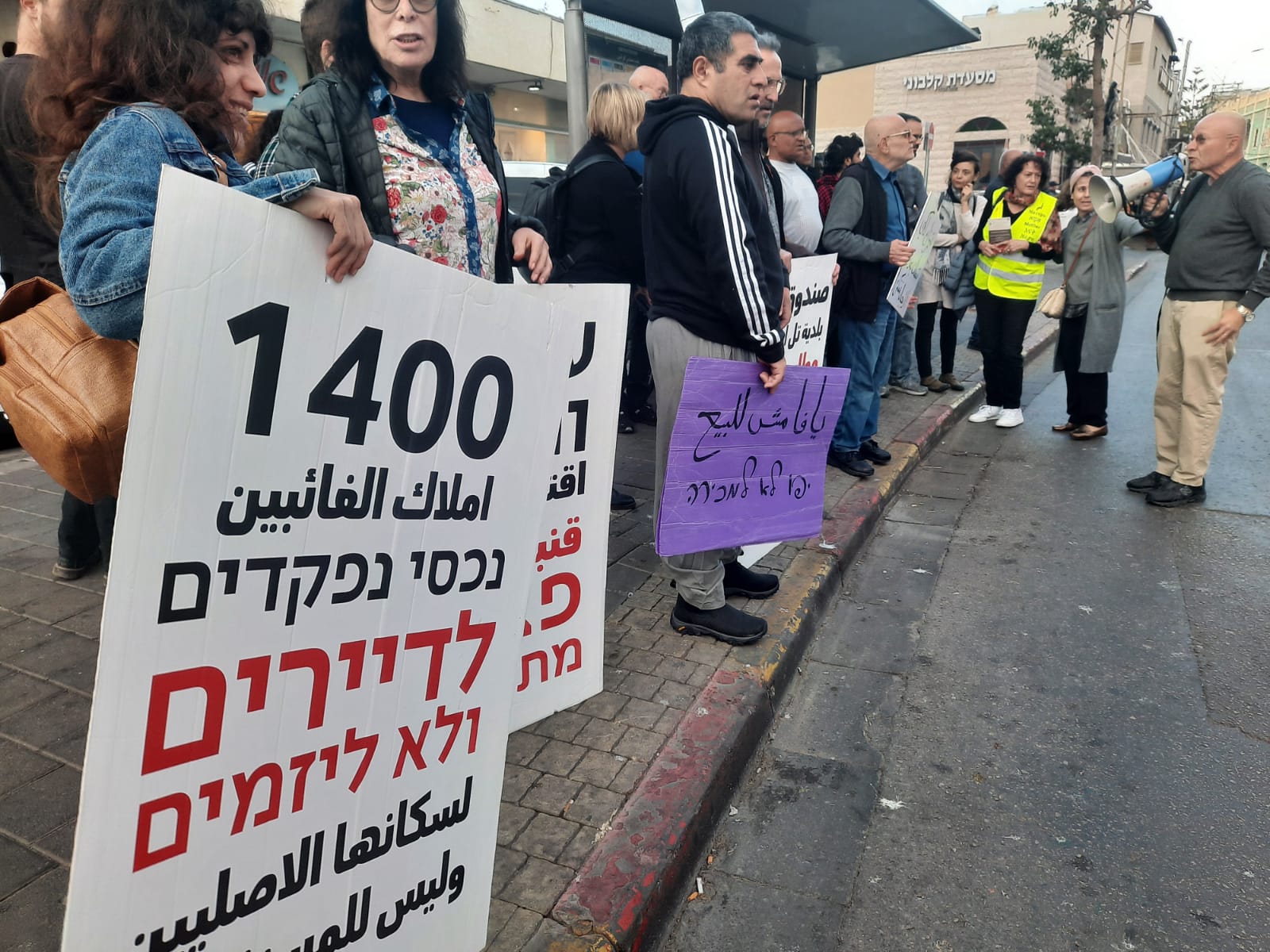
The occupation built a legal and institutional system to seize Palestinian properties. It began with the Absentees' Property Law of 1950, which transferred the rights of Palestinians classified as "absentees" to the Custodian of Absentee Property. The law covered both those displaced abroad and those internally displaced.
That same year, the Development Authority was set up to dispose of the confiscated real estate. The Land Acquisition Law of 1953 then allowed the occupation to consolidate its control over additional areas.
In 1960, a unified system was adopted to manage the lands of the state, the Development Authority, and the Jewish National Fund. The fund is a Zionist institution that played a leading role in buying and developing land in the service of the settlement project.
After seizing these properties, the Israeli authorities allocated large parts of them to settlement neighborhoods, public facilities, and economic projects.
One example is the village of Ein Hawd, south of Haifa. The Conciliation Commission documented more than 1,200 parcels of its land before it was turned into the artists' colony of "Ein Hod."
Parts of Tel Aviv University were built on the land of the depopulated village of al-Sheikh Muwannis. Palestinian real estate confiscated by the Israeli authorities in Jaffa, Acre and Haifa was used for housing, shops and facilities run by government bodies and real estate companies.
Reports by Israel's State Comptroller, the official body responsible for auditing government accounts, reveal the revenues that the institutions under its oversight earned from managing real estate and land from the early years after the Nakba.
In a report issued in 1959, these bodies recorded revenues of nearly 125.1 million Israeli lira between May 1948 and March 1958, against expenses of about 68.7 million lira, leaving an accounting surplus of nearly 56.4 million.
The revenues were equivalent to about $69.5 million at the official 1958 exchange rate. This is a rough estimate, since exchange rates changed during the years covered by the report.
The revenues included about 49.5 million lira from urban rents and related fees, 19.3 million from the sale of citrus crops, and about 17 million from the sale of buildings and land inside cities.
These accounts also covered absentee property and other government real estate. Their details show how the returns from land and buildings flowed to the managing institutions and to the beneficiaries of the contracts.
One example is the leasing of citrus groves for up to 49 years in return for modest annual sums compared with their previous agricultural income. This led the State Comptroller to criticize the terms of some of the deals.
The management problems extended to bookkeeping. A 1991 audit report revealed gaps in tracking the shares and movable funds managed by the Custodian of Absentee Property, which makes it harder to determine the total revenues accumulated.
Over the following decades, Israeli institutions continued to sell real estate they had confiscated from its Palestinian owners, transferring ownership of some of it to private individuals and companies.
In June 2009, the Palestinian rights center Adalah objected to Israeli tenders for the sale of properties classified as absentee property in cities including Haifa, Acre, Lydd and Nazareth. It warned that transferring ownership to new parties would affect the rights of the original owners and their chances of recovering the properties.
The financial statements of Amidar, "Israel's" state-owned housing company, offer a more recent picture of this process. They show that since 1953 it has managed about 50,000 properties transferred from the Custodian of Absentee Property to the Development Authority, about 4,000 of which remained under its management at the end of 2025.
During that year, the company transferred to the Israel Land Authority about 96 million shekels from property sales and 18 million shekels from rents. Determining how much of this money relates to refugee property would require identifying the holdings covered by each sale or lease.
These facts point to Israeli institutions and their business partners profiting from confiscated real estate through rents, agricultural production, sales, and land development. The sale of parts of it to private individuals and companies has made it harder to trace its ownership and financial returns.
The movement of properties between government bodies, companies, and buyers makes it even harder to determine what each asset has generated since its confiscation, especially given the gaps documented by "Israel's" own oversight bodies.
A study published in the peer-reviewed journal Omran, issued by the Arab Center for Research and Policy Studies, in winter 2026 estimated the material losses linked to the Nakba at about $3 billion in 1948 prices.
That is equivalent to $37.9 billion in 2022 purchasing power, rising to about $719 billion when an assumed compound real return of 4 percent a year is applied.
The estimate covers material losses broader than private real estate and reflects the economic return the lost resources could have generated. Calculating the revenues that Israeli institutions actually collected, by contrast, would require tracing the sales, leases and returns tied to each property.
What Are the Chances of Recovering Them?
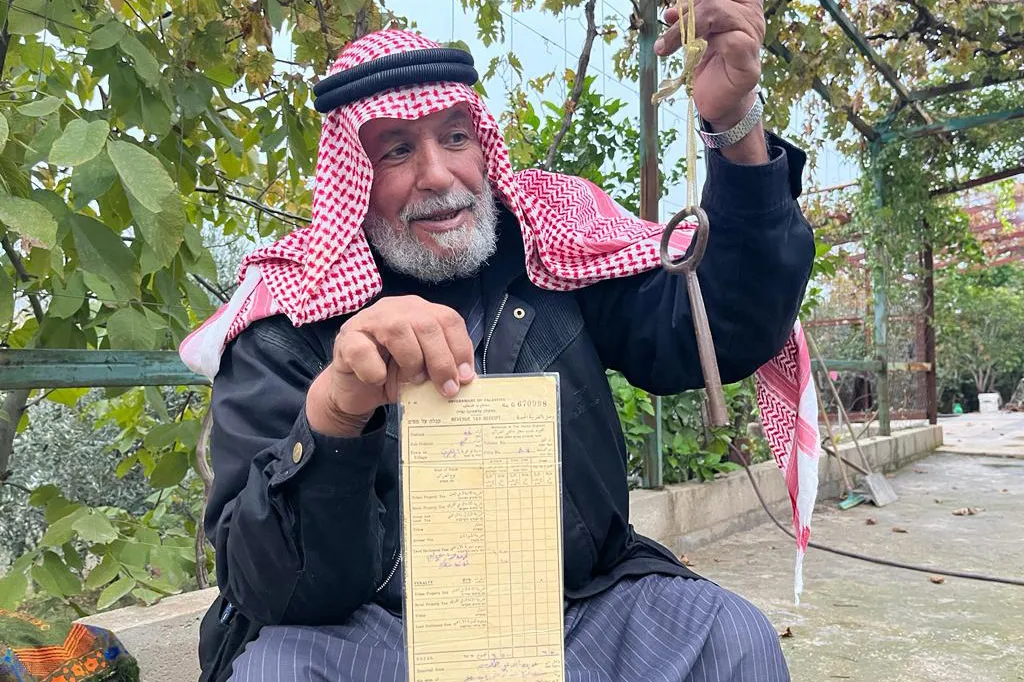
Palestinian claims rest on UN General Assembly Resolution 194 of 1948, which addressed the return of refugees and compensation for property and losses. Later resolutions reinforced it by affirming the refugees' entitlement to the income derived from their properties.
Yet decades of continued international recognition have not produced a mechanism capable of compelling "Israel" to return the properties or compensate their owners. The issue has remained tied to final-status negotiations and to the dispute over financial responsibility.
Israeli legislation has restricted individual claims. Most notable is the Absentees' Property (Compensation) Law of 1973, which tied eligibility for compensation to residence in "Israel" and to application deadlines, limiting the benefit to refugees living in the diaspora.
A court case decided in July 2025 showed that some heirs can obtain compensation for lost rent. But the Israeli Supreme Court valued disputed land according to its agricultural classification at the time of confiscation, even though housing was later built on it.
Legal scholar Michael Kagan argued in a 2007 study published in the Florida Journal of International Law that Palestinian refugees have a strong legal basis for claiming restitution of their properties. In his view, compensation should apply to cases where restitution is practically impossible or where the rights holder chooses it.
He based his analysis on studies of land use inside "Israel," which indicated that parts of the Palestinian properties were still free of construction at the time. In theory, this would allow some of them to be restored without the complications tied to existing neighborhoods and projects.
Rex Brynen, by contrast, argued in his 2018 study that compensation is likely to be the most negotiable path in any future settlement, given Israeli political positions rejecting large-scale restitution and the changes the properties have undergone since the Nakba.
He based his assessment on the Camp David negotiations of 2000, Taba in 2001, and Annapolis in 2007–2008. These reflected "Israel's" effort to limit compensation to a fixed financial contribution to an international fund, while the Palestinians demanded that their properties and losses be valued and that the entitlements of rights holders be determined.
The difference between the two approaches reveals the gap between the legal possibility of restitution and the political chances of implementing it.
Land that remains undeveloped may be easier to reclaim, while cases involving properties that have passed to new owners or have large facilities built on them are more complicated, amid continued disputes over their valuation and returns.
Brynen also warns that agreeing on a lump sum for compensation before claims are tallied could result in amounts far below the actual losses. It would also draw objections from refugees who see compensation as an individual right tied to what they lost.
These findings suggest that, in the foreseeable future, property recovery may remain limited to a small number of individual claims, especially with Israeli restrictions still in place and no negotiating track capable of addressing the issue comprehensively.
Any broader settlement would require an independent body to review ownership and inheritance records, identify the properties that can be returned, value those that cannot be recovered, and calculate the returns linked to them.
This would have to take place within an agreement that defines financial responsibility and guarantees the implementation of decisions.
As some properties continue to be sold and others leased, preserving the historical records and linking them to current ownership and revenue statements is becoming more important, as groundwork for claims that can be verified.
This step remains valuable even without a political settlement in sight. It helps protect the rights of new generations of heirs and identify the money owed to them.
Still, recovering these rights or obtaining full compensation for them remains blocked by Israeli restrictions and by the absence of a binding international mechanism to guarantee the return of the properties or justice for their owners and heirs.
Sources
- Palestine Welcomes Adoption of Three Draft Resolutions on UNRWA, Refugees' Property Rights and Israeli Colonies
- Palestine Refugees' Properties and Their Revenues (A/RES/80/79) – General Assembly Resolution
- Progress Report of the United Nations Conciliation Commission for Palestine
- State Property: Its Scope and the Efficiency of Its Use [Hebrew]
- United Nations Conciliation Commission for Palestine
- Amidar, the National Housing Company in Israel Ltd. [Hebrew]
- Adalah to Attorney General and Custodian of Absentee Property: Israel's Sale of Palestinian Refugee Property Violates Israeli and International Law
- The Cost of the Settler Occupation for the Palestinian People [Arabic]
- Compensation for Palestinian Refugees: Law, Politics and Praxis
- Restitution as a Remedy for Refugee Property Claims in the Israeli-Palestinian Conflict