Enforced Disappearances on the Rise in Libya: Who Is Behind Them?
Silence is no longer acceptable in the face of enforced disappearances and arbitrary detentions.
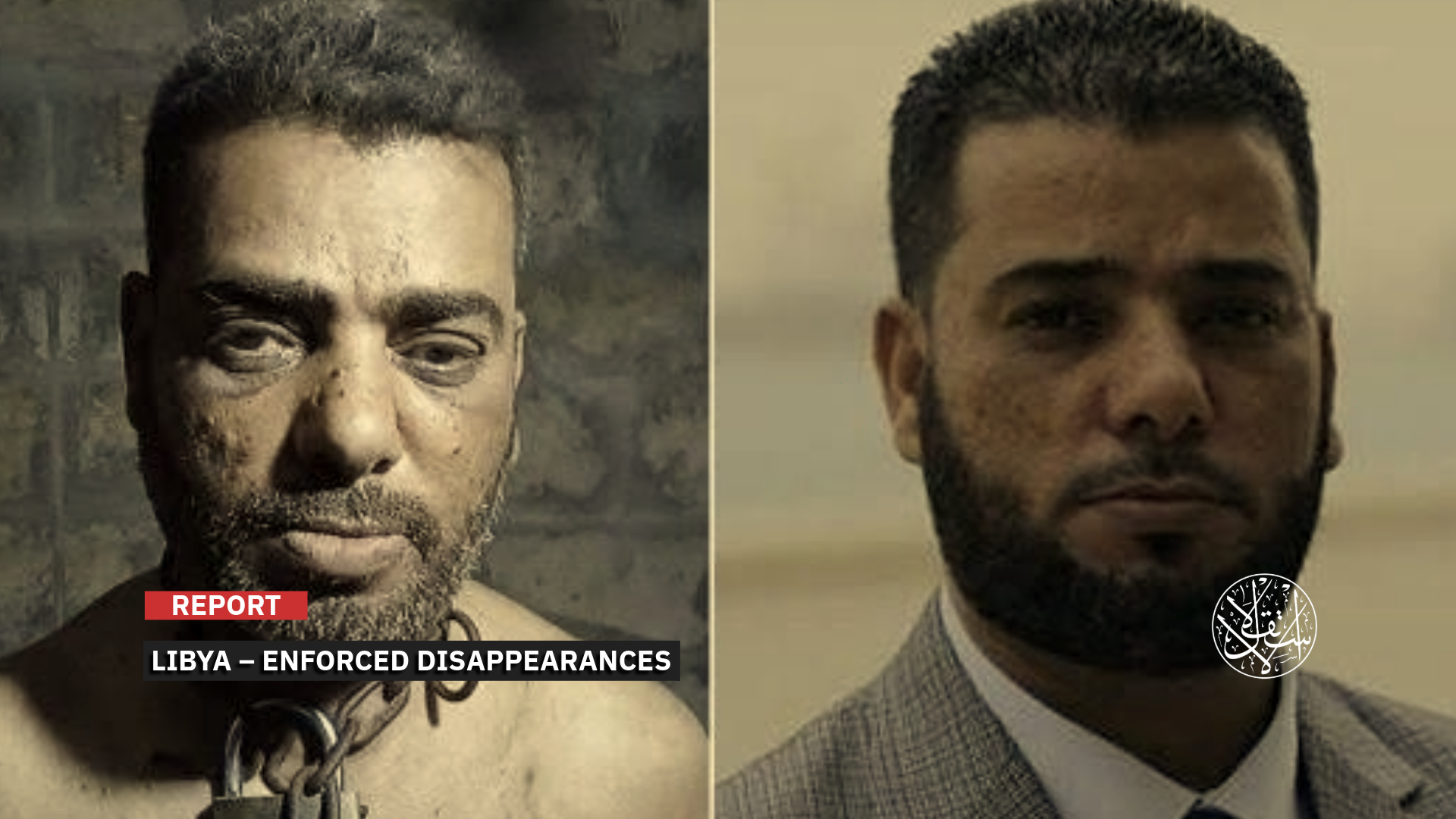
The issue of enforced disappearances remains a major human rights and political challenge for authorities in both eastern and western Libya, as international efforts call for action to end the practice.
The issue has once again come under scrutiny following the disappearance of Libyan civil activist and translator Mohamed al-Bawandi in the capital, Tripoli, on the evening of 9 November 2026. Calls have mounted for authorities to establish his whereabouts and ensure his safety.
The National Institution for Human Rights in Libya confirmed that contact with al-Bawandi, 37, had been lost and that he had disappeared under what it described as “mysterious circumstances,” with no reliable information available about his fate.
In a statement published on its Facebook account, the institution urged the Interior Ministry and the Tripoli Security Directorate to launch a comprehensive investigation into the circumstances of al-Bawandi’s disappearance, establish his whereabouts, and ensure his safe return.
The institution also expressed concern over the growing number of kidnappings, arbitrary arrests, and extrajudicial killings reported across numerous Libyan cities, regions, and municipalities.
It attributed the rise in such crimes to the security chaos gripping many parts of the country, the absence of an effective role for the Interior Ministry and relevant security agencies, and their failure to protect the safety, lives, and property of citizens and residents. It also pointed to the growing influence of armed groups and other lawless actors, alongside an increase in the crimes they commit.
A History of Disappearances
The latest case comes just weeks after similar incidents involving academics, media figures, and activists in different parts of the country.
It has brought back memories of the disappearance of Libyan academic and media figure Mohamed Sharafeddine al-Fitouri and his colleague Abu Bakr al-Jarrari on 4 October 2026. The two went missing after leaving the Libyan Academy for Postgraduate Studies in Janzour, west of Tripoli. Al-Fitouri’s car was later found in al-Najila, south of the capital.
Al-Fitouri is a prominent figure in Libya’s academic and media circles. He previously served as information minister, president of the University of Benghazi and Libya’s ambassador, and taught media studies at Libyan universities.
In this regard, the rights monitor platform “Rassed” said the circumstances of the case amounted to kidnapping and unlawful detention, both criminal offenses punishable under Libyan law, specifically Law No. 10 of 2013 on the criminalization of torture, enforced disappearance, and discrimination.
The platform called on all relevant authorities to step up search and investigative efforts and gather information about the incident, establish his whereabouts, and secure his release. It also urged authorities to identify and apprehend those responsible, bring them to justice, and put an end to impunity for such crimes and grave human rights violations, which undermine the rule of law.
On 29 October 2026, Mohamed Amer Shneiba, 65, director of the Capital Academy for Sports, was arbitrarily detained by unidentified armed men driving a military vehicle on a street in Tripoli’s al-Hadba district. He was taken to an undisclosed location, and his whereabouts and fate remain unknown.
Shneiba’s arrest came on the same day he delivered a video statement during a protest attended by residents of the Al-Hadba housing project. He criticized plans to turn the neighborhood’s popular sports ground into an investment project, describing it as the last sports and recreational facility available to local residents.
In eastern Libya, the disappearance of House of Representatives member Ibrahim al-Dersi remains one of the most prominent cases to draw widespread human rights concern. He lost contact with his family in Benghazi in May 2024. The circulation of video recordings said to document the circumstances of his detention has further fueled calls for authorities to disclose his fate and investigate the case.
In September 2026, brothers Mustafa and Mohamed Khalifa al-Sheikh were forcibly disappeared inside prisons run by the “General Command.” According to accounts from people close to them, an armed group had raided their home in the city of Ghat and taken them to an undisclosed location without presenting any legal justification.
Local media reported that the arbitrary arrests were intended as retaliation and political pressure over the brothers’ involvement in media and political activities opposing the authorities in eastern Libya, led by their brother Bashir al-Sheikh. His profile had recently risen after he became associated with what is known as the “Southern Liberation Operations Room,” which opposes the “General Command’s” policies in the region.
Calls for Urgent Action
In response to the issue, the United Nations Support Mission in Libya (UNSMIL) expressed deep concern over recent reports of enforced disappearances, arbitrary detention, and abductions in the country.
In a statement published on the UN website, UNSMIL cited the disappearance of Dr. Mohamed Sharafeddine al-Fitouri and Mr. Abu Bakr al-Jarrari in Tripoli, as well as the arbitrary detention of Mustafa and Mohamed al-Sheikh in Ghat, followed by uncertainty over their whereabouts.
UNSMIL urged the relevant authorities to urgently establish the fate and whereabouts of those concerned, ensure their safety and health, and immediately inform their families.
It stressed that any measure involving deprivation of liberty must be carried out in accordance with the law and accompanied by due process guarantees.
Human Rights Watch’s 2026 World Report also highlighted the continued cases of disappearances and detention in Libya, noting that activists, journalists, and political figures have been targeted amid ongoing political divisions and the presence of multiple security agencies and armed groups across the country.
Marking the International Day of the Victims of Enforced Disappearances, established by the UN General Assembly in 2010 and observed annually on August 30, Libya’s Solidarity for Human Rights organization issued a statement strongly criticizing the persistence of the practice and the lack of an adequate official response.
The organization stressed that this year’s commemoration comes as victims and their families continue to suffer, enforced disappearances grow more widespread in Libya, and state efforts to establish the fate of the missing and hold perpetrators accountable continue to weaken.
It added that the anniversary finds victims of enforced disappearance and their loved ones caught between hope and despair: hope of learning the truth, and despair over the lack of political will, weak institutions, and continued impunity.
The statement said the Working Group on Enforced or Involuntary Disappearances (WGEID) reported that Libya began the reporting period with 58 unresolved cases of enforced disappearance. Only two cases were referred to the WGEID during the period through the standard procedure, with none submitted through the urgent action procedure, bringing the total number of unresolved cases to 60 by the end of the period.
The organization also warned that Libyan authorities had provided no clarifications during the reporting period under the six-month rule, reflecting continued weak official cooperation with the WGEID.
It further noted that 10 cases of enforced disappearance had been referred to what is known as the Libyan National Army, led by Khalifa Haftar, as a non-state entity exercising governmental functions or effective control over parts of Libya.
Since 2019, the WGEID has referred 24 cases to this entity as part of a systematic update allowing cases of enforced disappearance to be referred to non-state actors exercising effective authority.
Limits of State Authority
Regarding Libya’s legal framework for combating enforced disappearance, legal adviser and human rights researcher Ahmid al-Murabit al-Zaidani said that torture and enforced disappearance are crimes punishable under national legislation.
In comments to Al-Estiklal, al-Zaidani explained that unlawfully depriving people of their liberty or exceeding the legal authority to do so is a criminal offense that exposes perpetrators to prosecution and punishment under domestic law. He added that such acts may also constitute crimes against humanity if committed systematically and on a widespread scale, making their perpetrators liable to international prosecution under the Rome Statute or the principle of universal jurisdiction.
He noted that enforced disappearance and torture are violations that threaten human life and liberty. The International Convention for the Protection of All Persons from Enforced Disappearance, which Libya has not ratified, defines enforced disappearance in Article 2.
The convention states that enforced disappearance involves the arrest, detention, abduction, or any other form of deprivation of liberty by state officials, or by individuals or groups acting with state authorization, support,t or acquiescence, followed by a refusal to acknowledge the deprivation of liberty or concealment of the fate or whereabouts of the disappeared person, thereby placing them outside the protection of the law.
Al-Zaidani explained that Law No. 10 of 2013 criminalizes torture and enforced disappearance as violations of citizens’ legally protected rights. The law also treats these offenses as aggravated when committed by a public official abusing the powers of their office.
He quoted Article 1 of the law, which explicitly states: Anyone who abducts, detains, imprisons,s or otherwise deprives a person of their personal liberty by force, threat, or deception shall be punished by imprisonment.
The law provides for a prison sentence of at least seven years if the offense is committed by a public official who exceeds the powers associated with their position.
Al-Zaidani added that the same law also establishes the responsibility of political officials and commanders for such crimes. Article 5 stipulates that the same penalty applies to any political, executive, or administrative official, military commander, er or person acting in a military command capacity who commits the crimes outlined in the preceding articles through forces under their command and control, or through a subordinate, if they fail to take the necessary measures to prevent or uncover the crimes despite having the ability to do so, or in any way obstruct their referral to the relevant disciplinary, investigative, or judicial authorities.
A Deepening Crisis
Libyan human rights activist Ahmed Abdel Karim Hamza said kidnappings and arbitrary arrests have become an open and brazen practice in Libya under the leadership of the acting interior minister, whose glaring security failures at every level have emboldened criminals to commit offenses in broad daylight without fear of consequences.
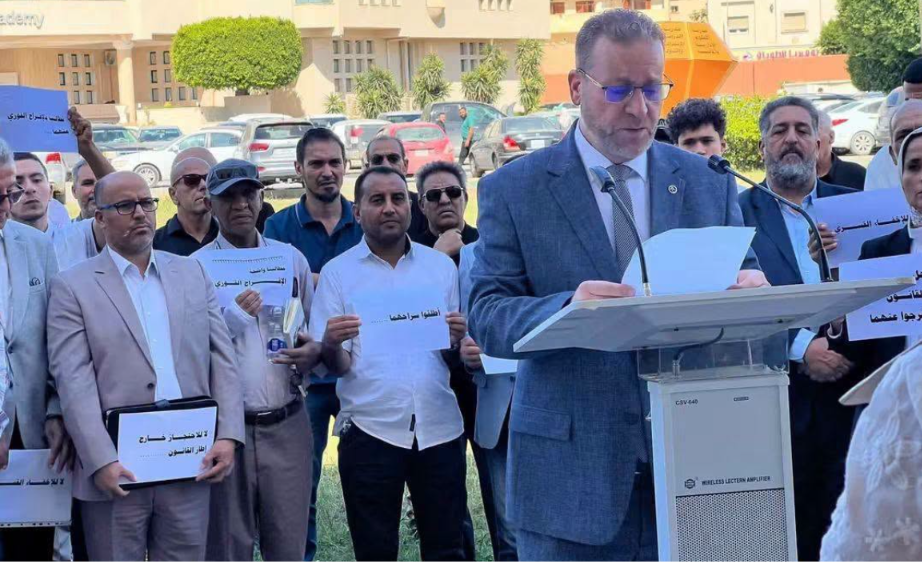
“Silence is no longer acceptable in the face of enforced disappearances and arbitrary detentions of citizens by security and military bodies that are supposed to uphold the law and protect human dignity, personal safety and freedom,” Hamza told Al-Estiklal.
“Liberty can only be taken away through a judicial order or ruling.”
Hamza said there is an urgent need to overhaul criminal legislation and toughen penalties for those responsible for these crimes and violations to ensure both general and specific deterrence. He singled out kidnapping, unlawful deprivation of liberty, enforced disappearance, torture, complicity in intentional murder, and rape.
Hamza also addressed the UN’s activities on the ground in Libya, including a meeting held on November 12 by Stephanie Khoury, the UN Secretary-General’s Special Representative for Political Affairs, with Abdul Mawla Ramadan al-Fitouri, acting head of Libya’s National Council for Public Freedoms and Human Rights, along with the council’s department heads and staff.
He argued that the visit sought to confer a degree of legitimacy and political support on the de facto authorities running the institution, which he described as having become a tool for whitewashing those responsible for grave human rights violations, covering up their crimes, and striking deals with individuals accused of smuggling and exploiting migrants in detention centers.
“This is in addition to whitewashing those responsible for crimes and violations against prisoners and detainees in prisons run by the Justice Ministry, as well as the failure of the administration in charge to issue Libya’s annual national report on the state of human rights and public freedoms since 2022,” he added.
“No national reports covering the intervening years have been released to date.”
More broadly, Hamza attributed Libya’s ongoing human rights violations to the country’s legitimacy crisis and the loss of legitimacy by all existing institutions, including social legitimacy, legitimacy based on performance, and legitimacy derived from consensus. He said the political and institutional divisions have only deepened.
He further pointed to the growing dominance of the legislative and executive branches over other institutions, the usurpation of their powers, and attempts to entrench de facto rule in both eastern and western Libya, including by forces affiliated with the General Command.
Hamza concluded that these practices have deepened and prolonged the political crisis. He argued that the country’s disastrous situation stems primarily from the absence of a permanent constitution and the obstruction of the constitutional referendum project by those with a vested interest in prolonging chaos and entrenching de facto authority.