Threatening Financial Reforms: Senegal’s Faye-Sonko Rift Reaches Parliament
Senegal is entering a period of institutional turmoil.
The political rift between Senegal’s president and prime minister has spilled into parliament, where lawmakers are now clashing over legislation and bill passage.
The standoff threatens to further worsen the country’s already strained social conditions, with rising prices and mounting debt putting additional pressure on the population.
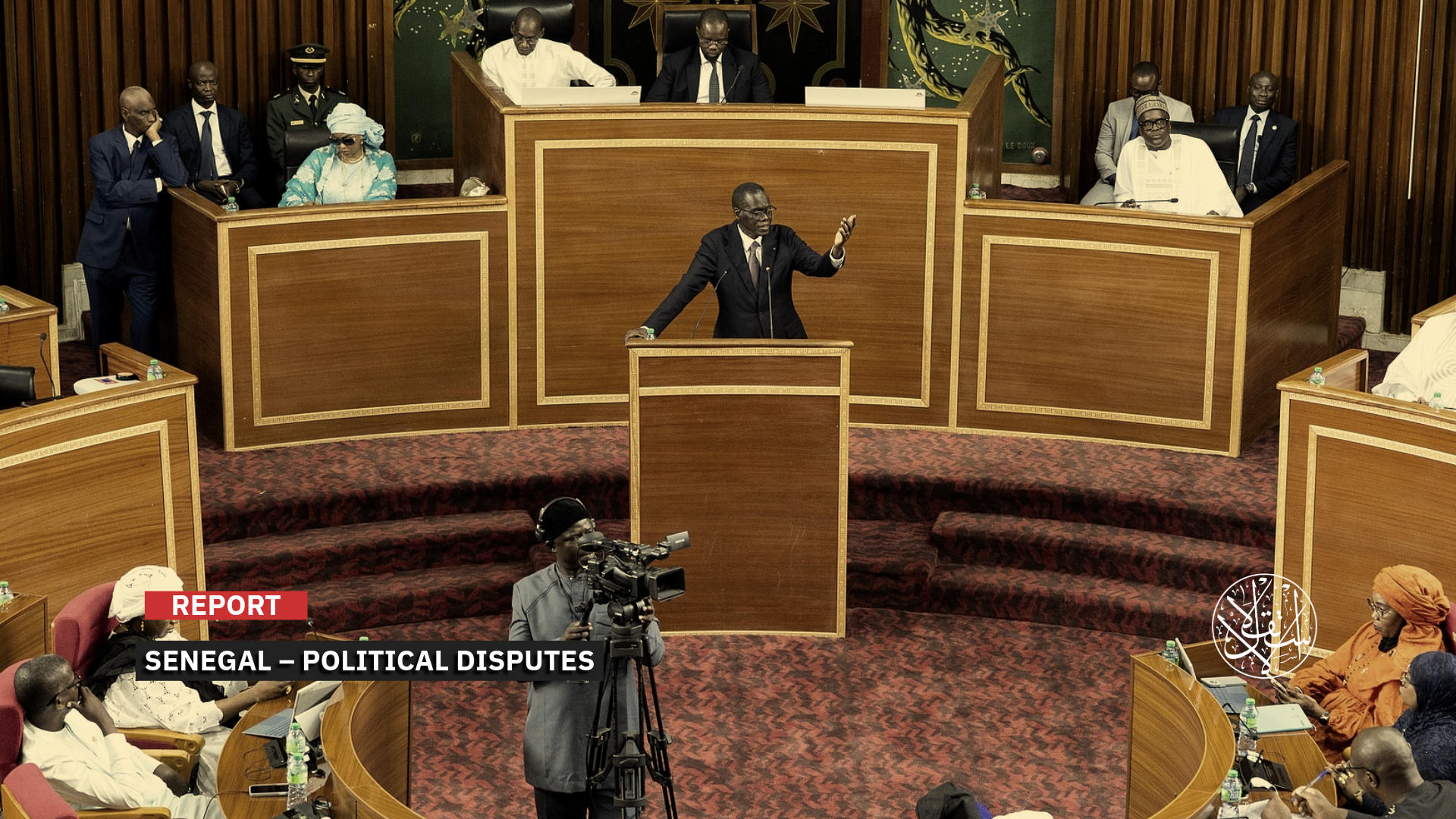
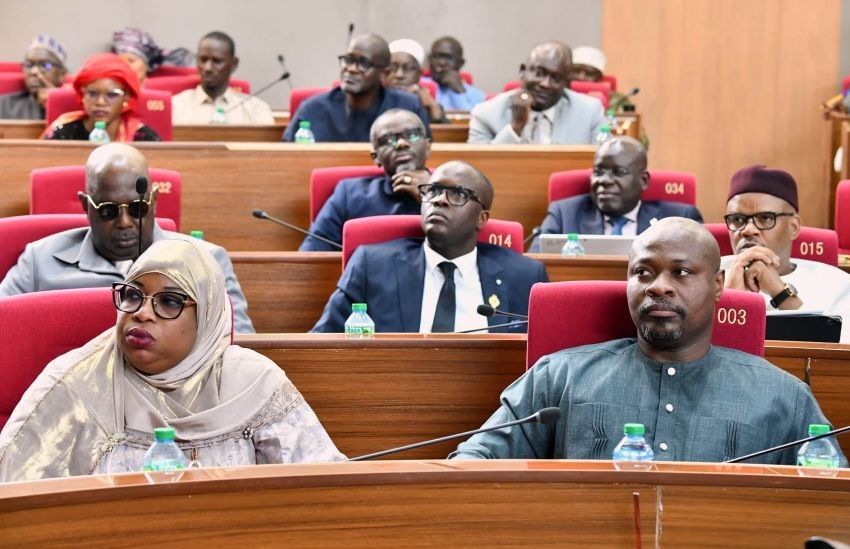
On 3 November 2026, the National Assembly, dominated by the African Patriots of Senegal for Work, Ethics and Fraternity (PASTEF), rejected the government’s supplementary budget bill during a relatively brief plenary session that saw no substantive debate.
Of the 149 lawmakers who took part in the vote, 126 rejected the bill, 20 voted in favor, and three abstained.
The session was cut short after Amadou Ba, a PASTEF lawmaker, called for an immediate vote without further discussion.

The IMF Is Watching
The bill had already been rejected twice by the parliamentary committee in October 2026.
The revised 2026 budget is a key measure, particularly in light of the demands made by the International Monetary Fund (IMF), whose 36-month assistance program aims to stabilize Senegal’s public finances.
The revised budget also seeks to account for a sharp rise in hydrocarbon prices, driven in part by tensions in the Middle East, an expected drop in tax revenues following the government’s latest recovery plan, and rising debt-servicing costs.
For example, the allocation for subsidies to electricity and household gas tariffs has been raised from an estimated 250 billion CFA francs (more than 381 million euros) to over 790 billion CFA francs (more than 1.2 billion euros).
Senegal’s public debt is projected to reach around 132 percent of GDP by the end of 2024.
The opposition party PASTEF, which holds a parliamentary majority, is led by former Prime Minister Ousmane Sonko, who is at odds with President Bassirou Diomaye Faye, his longtime ally. Faye’s newly formed party has no official representation in parliament.
The rejection of the revised budget has cast doubt on the expected $2.2 billion (1.93 billion euros) in IMF assistance to Senegal.
The IMF’s executive board has yet to approve the preliminary agreement reached in September 2026 between the international institution and Senegalese authorities.
In response to the latest developments, IMF spokesperson Julie Kozack said the fund was closely monitoring developments related to Senegal’s revised budget bill.
According to French broadcaster TV5MONDE on November 3, 2026, Kozack said that budget decisions are the responsibility of Senegal’s sovereign institutions, and we fully respect the parliamentary process. She added that the IMF continues its dialogue with the Senegalese authorities.
The spokesperson said the IMF did not wish to speculate on the implications of the parliamentary process or the timing of a meeting of its executive board. She stressed that the board’s decision on the financing depended on Senegal taking the necessary steps.
From the IMF’s perspective, the main concern is that the fiscal framework ultimately adopted is consistent with the standards and objectives underpinning the preliminary agreement reached with Dakar in September, according to Kozack.
Political Dispute
The parliamentary session saw heated exchanges between the ruling majority and the opposition over the bill.
PASTEF lawmaker Amadou Ba said they were unable to obtain all the relevant data needed to assess the revised budget, accusing the government of failing to provide the assembly with the necessary documents.
Another lawmaker, Ayib Daffe, questioned the budgetary transparency of the government’s proposal.
“The measures in the bill that were aimed at combating the cost of living do not suit us. There are no measures planned to stabilize fuel prices,” Daffe added.
Economy, Finance and Planning Minister Cheikh Diba, speaking from the parliamentary podium, responded, “Fooling around is no food. You are using budgetary transparency as a pretext to challenge an important bill such as this one.”
Before the session, during discussions in the Finance Committee, PASTEF said the responses provided by the economy and finance minister on October 30 to the committee’s October 26 memorandum remained inadequate and unsatisfactory.
In a statement, the party’s parliamentary bloc said disagreements remained over the budget deficit, public debt, protecting purchasing power, and public investment.
The party also criticized the executive branch for refusing to provide certain documents it considered essential.
One day after the Finance and Budget Oversight Committee rejected Senegal’s 2026 supplementary budget bill, the Ministry of Economy, Finance and Planning acknowledged the second rejection of the bill, according to SenePlus.
The ministry said it had addressed all concerns raised by lawmakers and called for another plenary session to focus on the main issue: passing the bill.
It said that, in the spirit of fiscal transparency and constructive dialogue, a highly detailed document had been submitted to the committee on October 30 in response to a memorandum issued on October 26 outlining the main concerns of PASTEF’s parliamentary bloc.
According to the ministry, several rounds of discussions that day had addressed all the concerns raised, particularly those relating to energy subsidies, family security benefits, and priority spending.
The ministry added that lawmakers had been given the requested explanations and supporting documents to enable them to make an informed and well-documented decision.
Despite these detailed clarifications, the committee voted against approving the 2026 supplementary budget bill, the ministry said.
It noted that the committee had not put forward any amendments or counterproposals at that stage, stressing that revising the finance law was essential to align the budget with available resources and spending whenever the assumptions underpinning the original finance law undergo major changes, as is the case now.
Media Reaction
The National Assembly’s rejection of the 2026 supplementary budget bill dominated the headlines of Senegalese newspapers on November 4, 2026.
Amid political power struggles, disputes over the government’s budget choices and questions about the economic consequences of the parliamentary rejection, newspapers portrayed PASTEF’s parliamentary majority as determined to impose its demands on the executive.
Sud Quotidien ran the headline PASTEF Majority Backs Rejection, noting that the bill had been rejected without substantive scrutiny.
Similarly, Le Soleil headlined its report Rejection Without Debate, saying the bill had been turned down without a thorough examination.
The paper also quoted Cheikh Diba criticizing PASTEF lawmakers for depriving the public of a transparent debate on the state of public finances and the government’s policy choices.
For EnQuete, the conclusion was clear: “PASTEF Challenges the Executive.” The newspaper highlighted tensions between the parliamentary majority and the government, particularly over the accuracy of revenue forecasts, public spending, and the risk of budget overruns.
Walf Quotidien described the dispute as the “Beginning of a Mortal Kombat,” a phrase reflecting the intensity of the political battle over power.
The newspaper portrayed a confrontation between members of the executive and lawmakers from the ruling majority, who are now openly divided over how the country should be governed.
Le Temoin, meanwhile, described a Showdown Amid Fiscal Tensions, highlighting divisions within the ruling camp. It quoted Cheikh Diba defending the government’s fiscal policies, alongside reactions from several political figures.
Vox Populi summed up the situation with the headline “PASTEF Majority Tears Up the Finance Bill, Ball Now in Diomaye’s Court.”
The daily stressed that President Bassirou Diomaye Faye must take responsibility and find a way out of the institutional deadlock.
It also presented the arguments of both sides, from calls for budget transparency to criticism of a bill seen as disconnected from urgent social needs.
Le Quotidien focused on the circumstances surrounding the parliamentary session in its article “Majority Dictates.”
The newspaper said PASTEF had bypassed the general debate, highlighting criticism from various political figures. It also pointed to uncertainty surrounding the initial budget bill and the government’s expected response.
Finally, Yoor-Yoor Bi struck a sharply critical tone with the headline “A Scathing Rebuke from the Executive.”
According to the newspaper, the sweeping rejection was a political setback for Prime Minister Ousmane Sonko’s government. It exposed disagreements over revenue projections, public spending, and budgetary decisions, all of which have laid bare the fragile relationship between the executive and its parliamentary majority.
The President’s Options
After the government failed to pass its budget bill, attention turned to what might happen next and what steps the executive branch, particularly the president, could take.
In an analysis published on November 3, 2026, Senegalese news outlet Ndar Info said the next move is now in the hands of the head of state, emphasizing that this was the key message conveyed to the press by Minister Cheikh Diba.
The outlet explained that President Bassirou Diomaye Faye faces a dilemma, especially since parliament rejected a bill the executive considers indispensable.
“How Bassirou Diomaye Faye will handle this situation remains to be seen,” the outlet wrote, outlining three main options. The first is for the president to seek renewed dialogue with his parliamentary majority.
The second option would be to address budgetary constraints through administrative measures, while the third would involve considering the dissolution of the National Assembly in the longer term.
However, the outlet noted that the constitution allows dissolution only after the first two years of the legislative term, which began on December 2, 2024. That means the measure could be considered starting in December 2026.
“Each of these paths carries risks,” the outlet warned, pointing to mounting cash-flow pressures, ongoing negotiations with the IMF, and already downgraded sovereign credit ratings.
At the same time, it warned of the risk of a deeper institutional crisis. The next major test will come with debate over the 2027 initial budget, which is likely to bring the executive and the National Assembly into another confrontation.
Senegal’s prime minister referred to some of these options in remarks reported by France 24 on November 4, 2026. He stressed that the opposition could not “block” the country over the budget bill, arguing that the executive had constitutional means to resolve the dispute.
The outlet said the government could consider bypassing the National Assembly by invoking Article 86.6 of the constitution, which allows the prime minister to make the government responsible for passing the bill. Such a move, however, would expose the government to a no-confidence vote.
Dissolving the National Assembly as soon as possible, potentially on December 2, 2026, and calling new legislative elections could help clarify Senegal’s political situation, the outlet added.
Political Implications
In an analysis published on November 4, 2026, Info Gabon said Senegal was entering a period of institutional turmoil.
It argued that the National Assembly’s rejection of the supplementary budget was not merely a dispute over revenue, spending, or public debt. Rather, it exposed a deep political divide that now threatens the executive’s ability to implement its agenda.
The opposition’s stance is particularly significant because PASTEF, the party that brought Faye and Sonko to power in 2024, is now at the center of a confrontation with the executive. The budget crisis has thus revealed a political rift that the country’s institutions can no longer contain.
The outlet cautioned that rejecting the supplementary budget does not mean Senegal will be left without a budget. The original finance law remains the framework for public spending, although it does not necessarily account for economic and financial developments since its adoption.
Without an amended budget, the government will have to operate within its existing powers, even as mounting pressure on public finances forces difficult choices.
The consequences could affect cash flow, payment schedules for suppliers, investment, and funding for social programs. The deadlock does not automatically bring the state to a standstill, but it limits the government’s ability to adjust its fiscal course.
The government will therefore need to demonstrate that its projections are based on reliable data and that its proposed measures will help reduce imbalances. Otherwise, uncertainty could erode the confidence of investors and lenders.
The media outlet emphasized that the real danger lies in a gradual paralysis, where every economic decision becomes an opportunity for confrontation between two competing centers of political legitimacy—and Senegal cannot be governed indefinitely amidst such uncertainty.